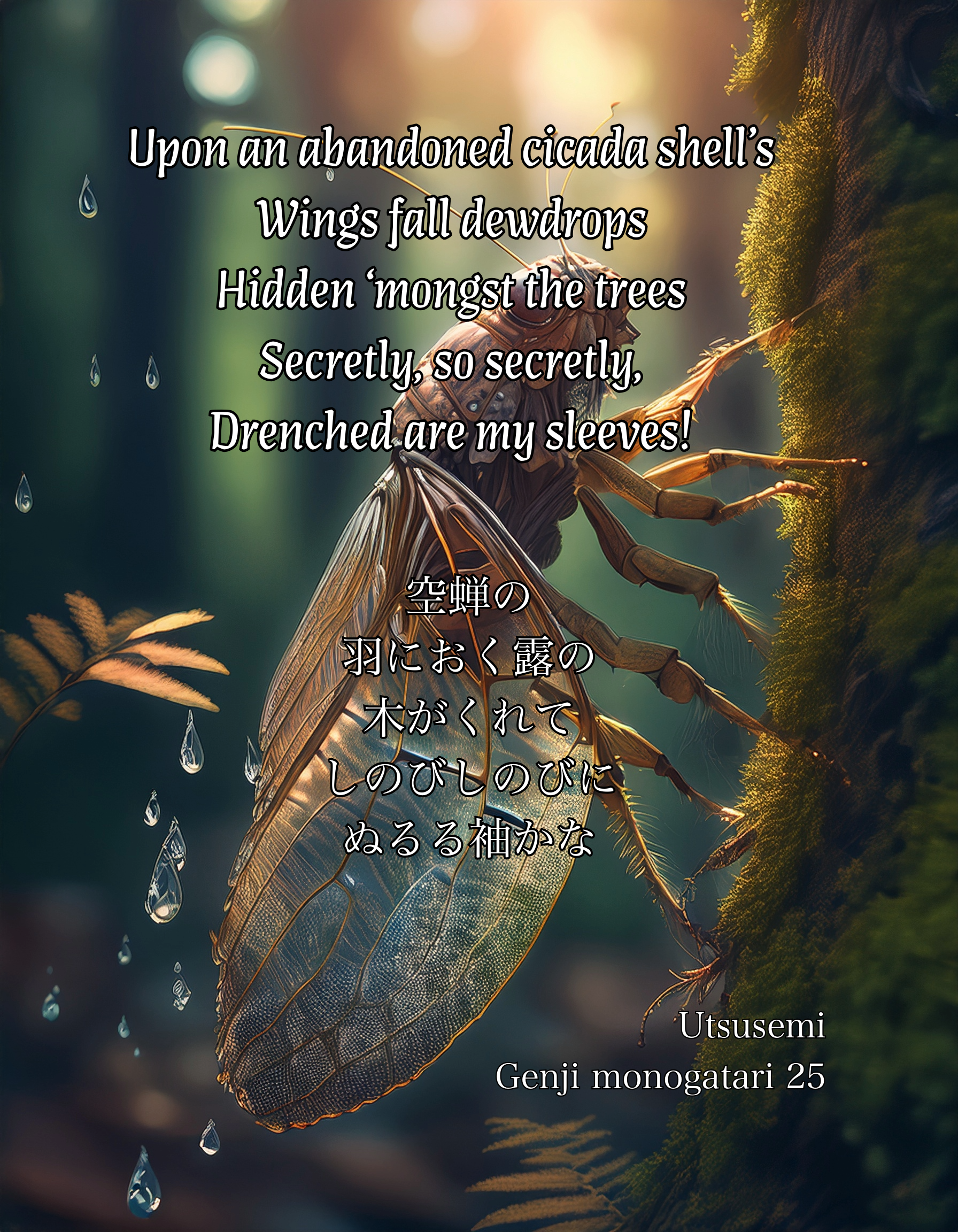
見るほどぞしばしなぐさむめぐりあはん月の都は遥かなれども
| miru hodo zo shibashi nagusamu meguri awan tsuki no miyako wa harukanaredomo | While gazing on it Briefly am I consoled: A meeting will come around once more, Though the capital as the moon Is distant… |
Hikaru Genji
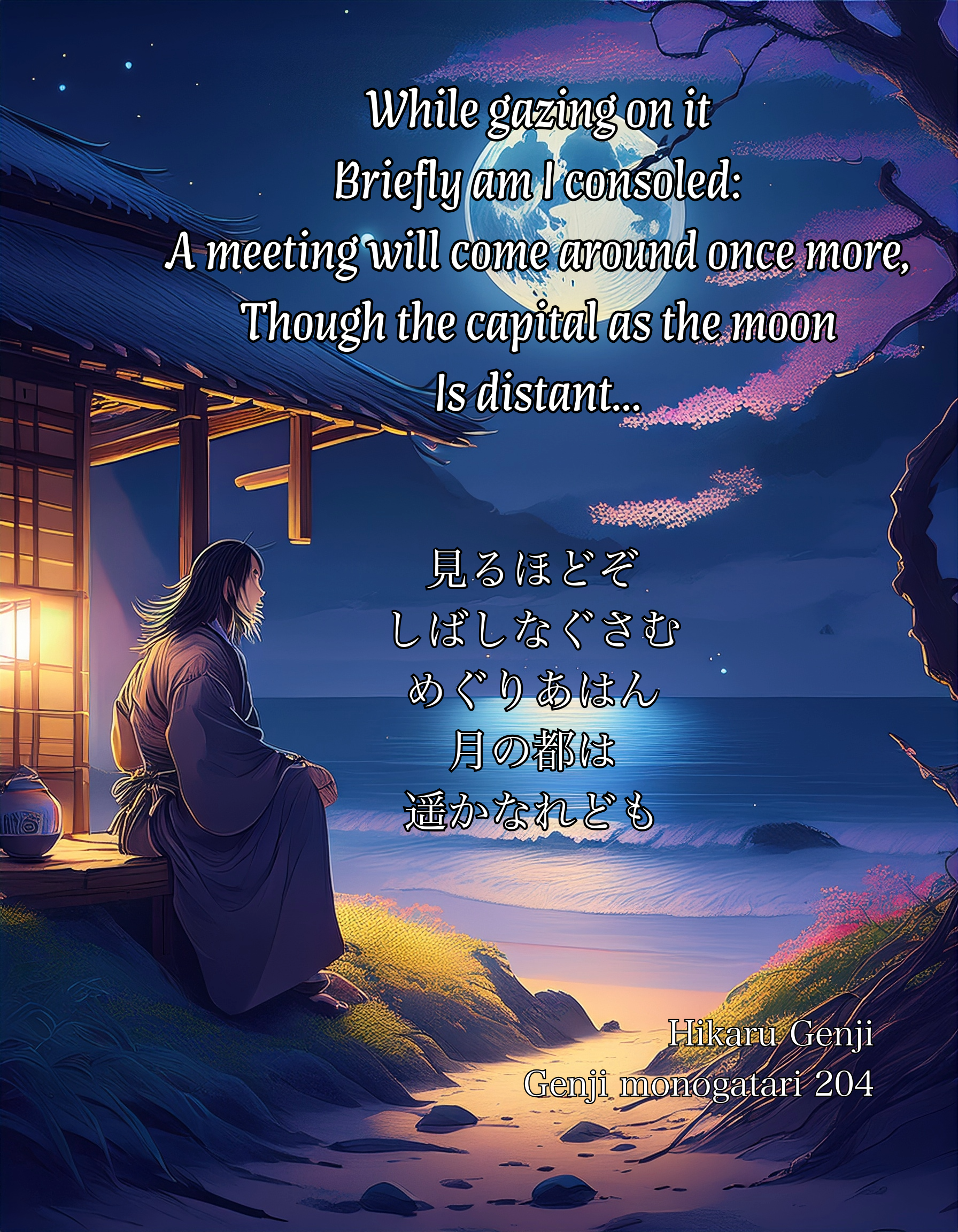
On seeing that an attendant to His Majesty had thrown herself in Sarasawa Pond.
わぎもこがねくたれがみをさるさはの池のたまもと見るぞかなしき
| wagimoko ga nekutaregami wo s arusaFa no ike no tamamo to miru zo kanasiki | A maiden’s Sleep-tangled hair in Sarusawa Pond among the gemweed— The sight is so very sad… |
Hitomaro
Also Yamato monogatari 252.

Sent to a lady with whom he had once been intimate, after some years had passed.
いにしへのしづのをだまき繰りかへし昔を今になすよしもがな
| inishie no shizu no odamaki kurikaeshi mukashi o ima ni nasu yoshi mogana | In times long gone Thread upon a bobbin was Wound back— Just so, the present into the past I wish we could make! |
65
It seems, though, that the lady thought nothing of it.

In days long past, when a man was passing a certain lady’s apartments at the palace, the lady, seeming to bear him some ill will, called out, ‘Go on, then, you creeper and see what becomes of you!’[1] The man replied:
罪もなき人をうけへば忘れ草おのが上にぞ生ふといふなる
| tsumi mo naki hito o uke’eba wasuregusa ono ga ue ni zo ou to iu naru | When a sinless Man you curse, Forgotten, among the day-lillies Upon you Growing, will you be, they say! |
64
Some among the women were very vexed by that.

[1] Sanjōnishi Sanetaka (1455-1537) identifies this as part of a poem from Shoku man’yōshū:
忘れゆくつらさはいかにいのちあらばよしや草葉よならむさがみむ
| wasureyuku tsurasa wa ika ni inochi araba yoshi ya kusaba naramu saga mimu | To gradually forget Your cruelty, somehow Had I but life left, Go on, then, you creeper, and See what becomes of you! |
Shoku man’yōshū is no longer extant, and so the accuracy of this cannot be determined (Horiuchi and Akiyama 1997, 111).
Kusaba (‘blade of grass’), which I have translated as ‘creeper’, was a slang term used to refer to an unfaithful man.