あかつきの夢のまくらに雪つもりわがねざめとふ峰の松風
| akatsuki no yume no makura ni yuki tsumori wa ga nezame tou mine no matsukaze | At dawn, Dreaming on my pillow, Covered with drifting snow, I awaken to a visit from The pinewinds from the peaks. |
588
Left
こひわぶるひとにあふよのしののめにはわかるといかでみぬよしもがな
| koi waburu hito ni au yo no shinonome ni wa wakaru to ikade minu yoshi mogana | Suffering with love’s fire, After a night with her At the edge of dawn Parting—somehow ‘Twould have been better to have seen her not! |
38
Right
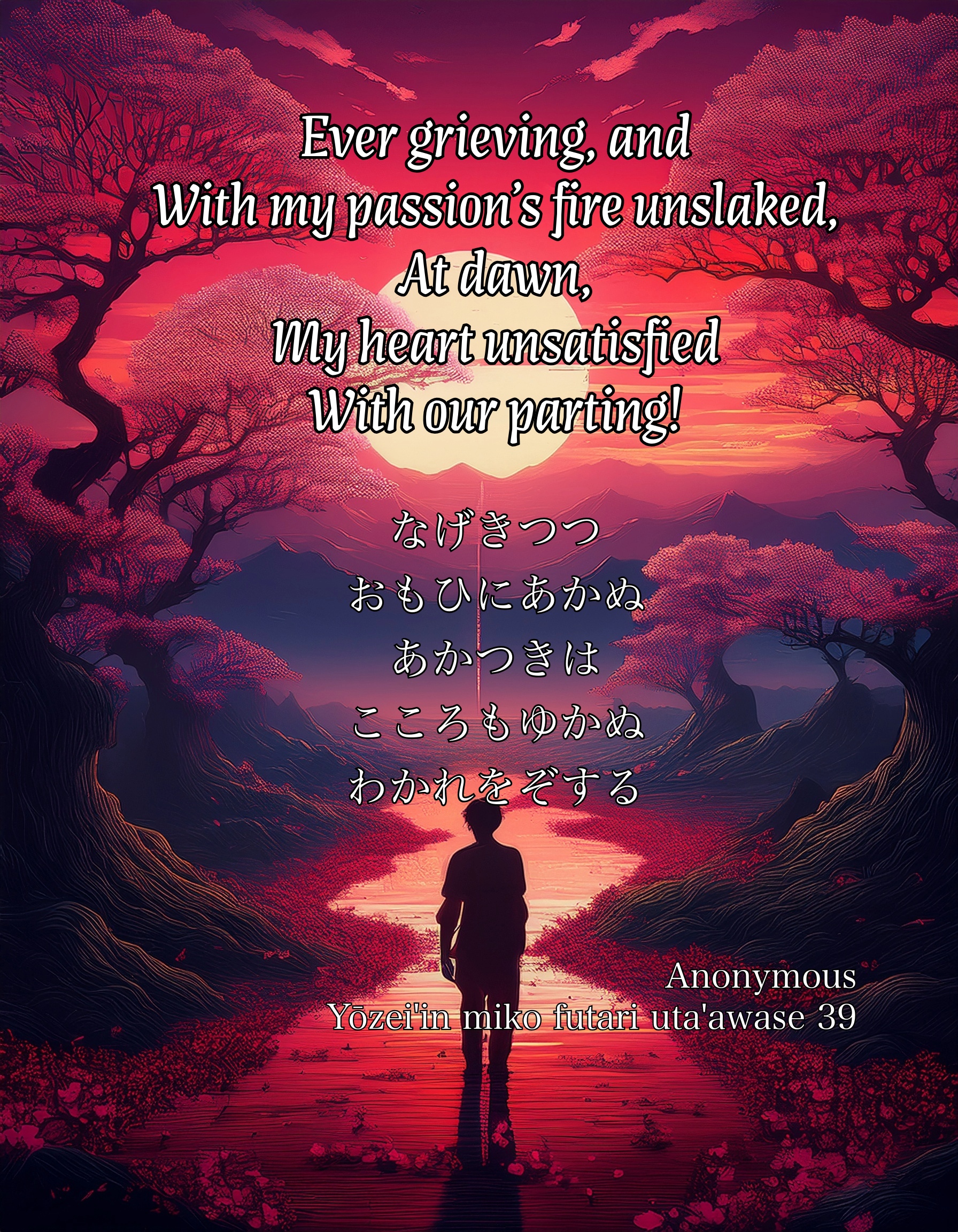
なげきつつおもひにあかぬあかつきはこころもゆかぬわかれをぞする
| nagekitsutsu omoi ni akanu akatsuki wa kokoro mo yukanu wakare o zo suru | Ever grieving, and With my passion’s fire unslaked, At dawn, My heart unsatisfied With our parting! |
39
Left
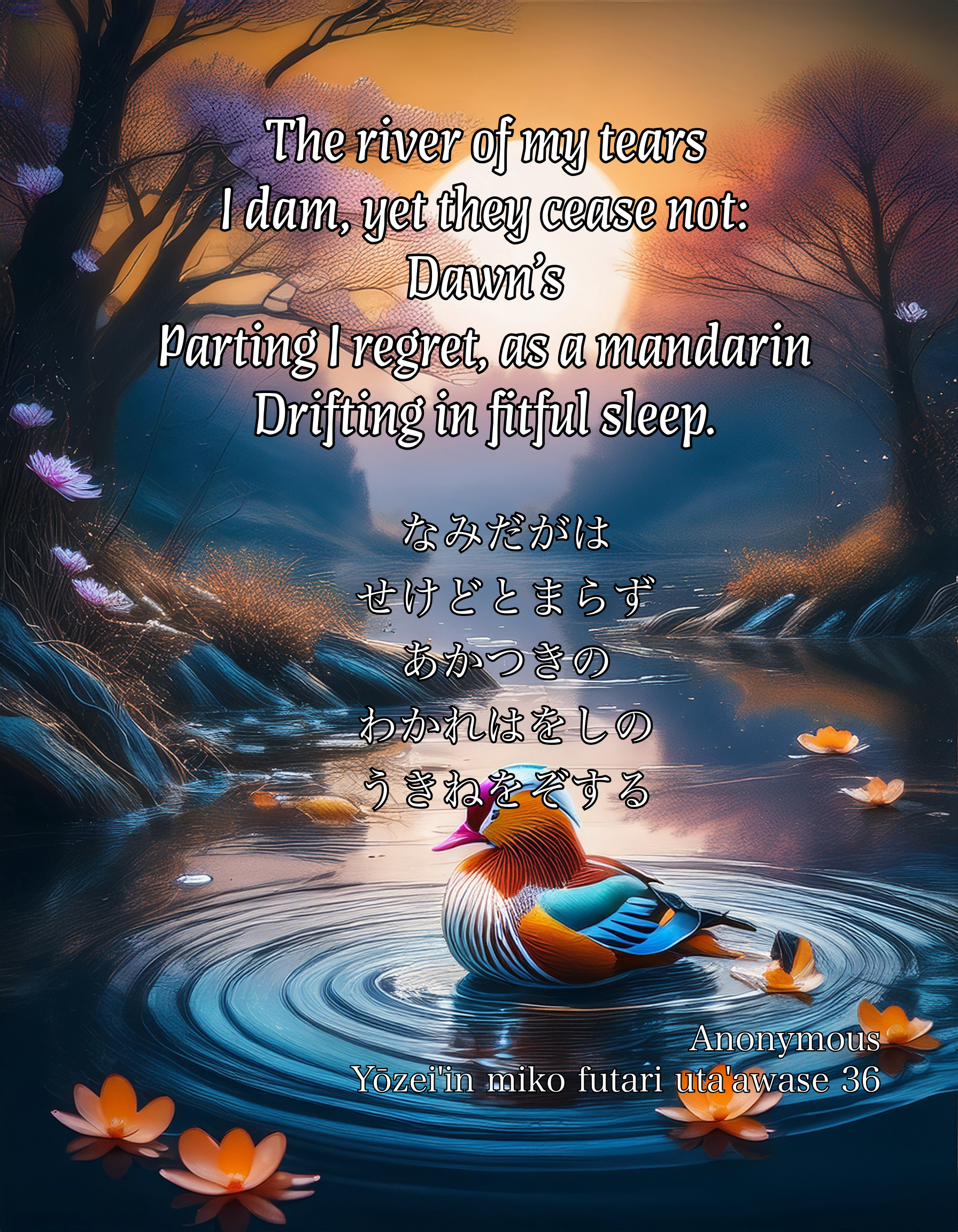
なみだがはせけどとまらずあかつきのわかれはをしのうきねをぞする
| namidagawa sekedo tomarazu akatsuki no wakare wa oshi no ukine o zo suru | The river of my tears I dam, yet they cease not: Dawn’s Parting I regret, as a mandarin Drifting in fitful sleep. |
36
Right
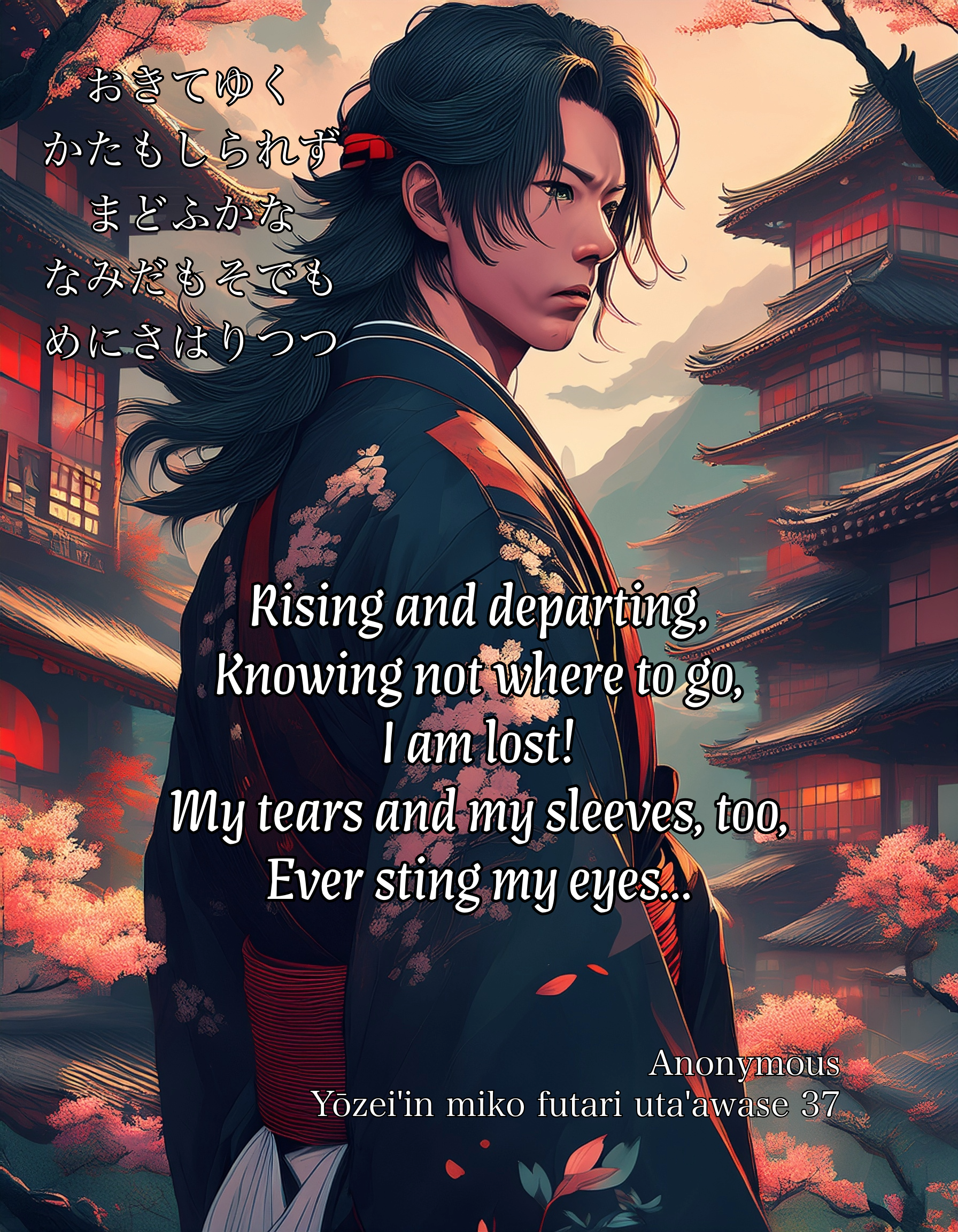
おきてゆくかたもしられずまどふかななみだもそでもめにさはりつつ
| okiteyuku kata mo shirarezu madou kana namida mo sode mo me ni sawaritsutsu | Rising and departing, Knowing not where to go, I am lost! My tears and my sleeves, too, Ever sting my eyes… |
37
Left
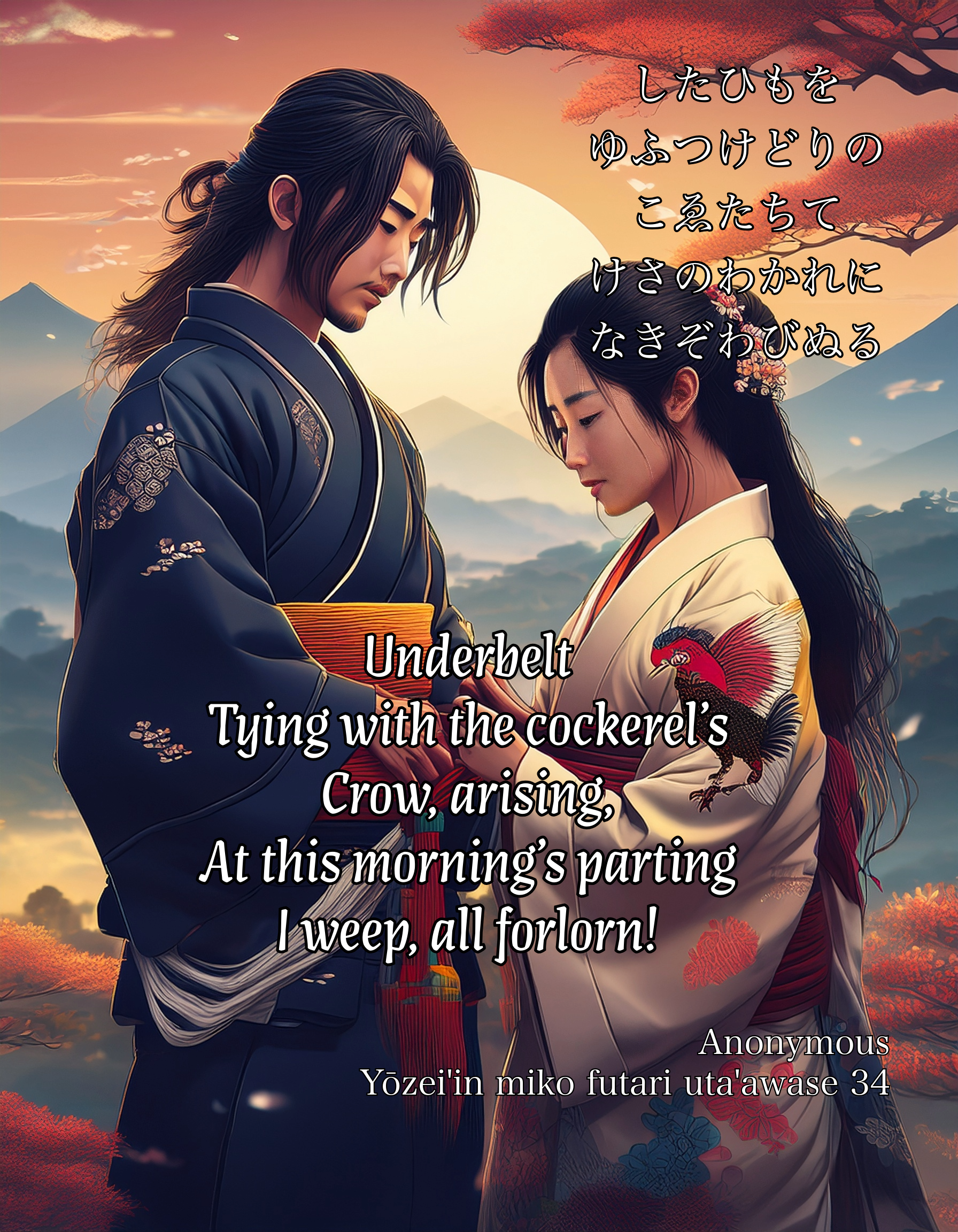
したひもをゆふつけどりのこゑたちてけさのわかれになきぞわびぬる
| shitahimo o yūtsukedori no koe tachite kesa no wakare ni naki zo wabinuru | Underbelt Tying with the cockerel’s Crow, arising, At this morning’s parting I weep, all forlorn! |
34
Right
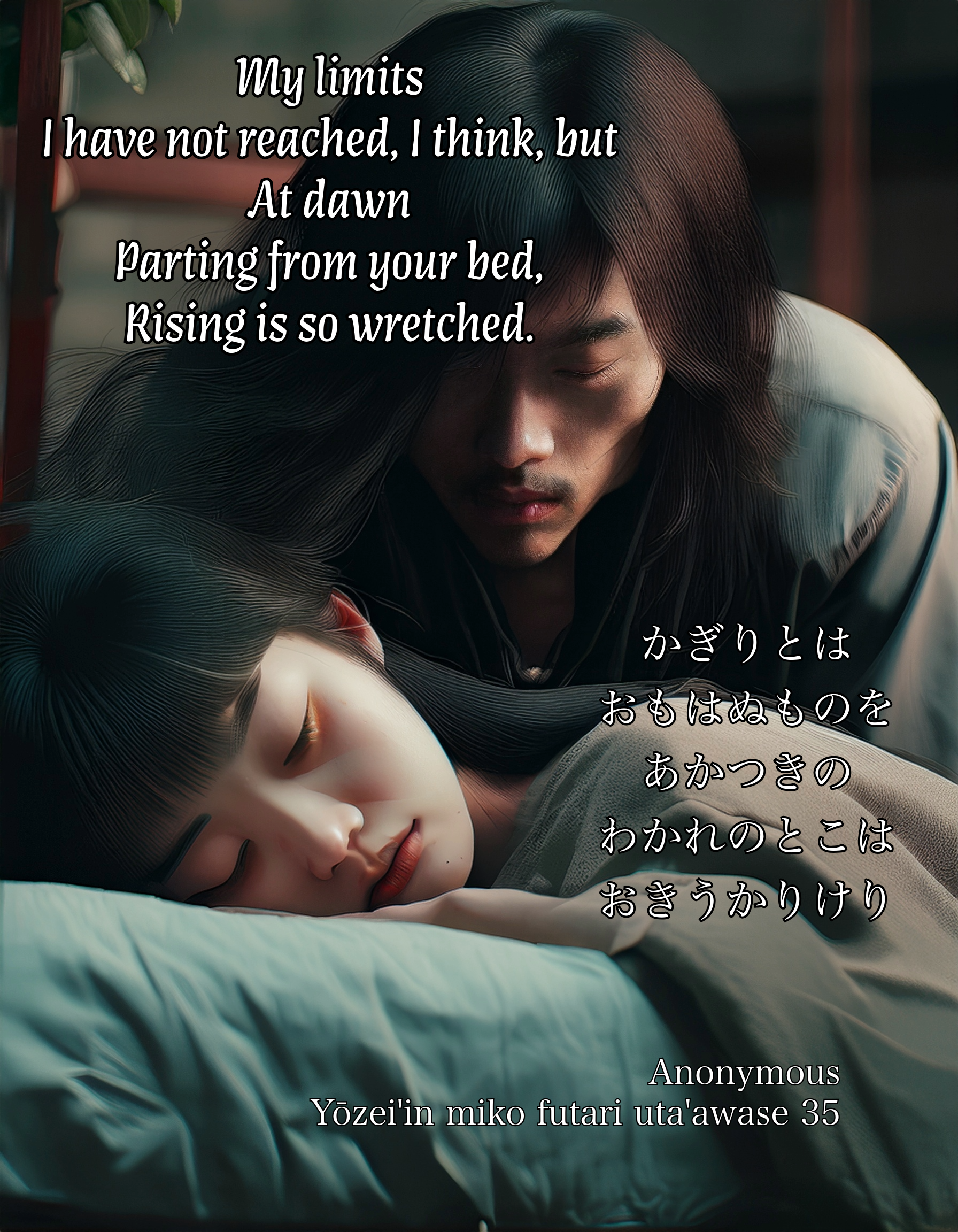
かぎりとはおもはぬものをあかつきのわかれのとこはおきうかりけり
| kagiri to wa omowanu mono o akatsuki no wakare no toko wa oki’ukarikeri | My limits I have not reached, I think, but At dawn Parting from your bed, Rising is so wretched. |
35
Left
をしとおもふいのちにかへてあかつきのわかれのみちはいかでやめてむ
| oshi to omou inochi ni kaete akatsuki no wakare no michi wa ikade yametemu | Filled with regret, This life I would exchange: On dawn’s Parting path How can I stop my steps? |
30
Right
あけぬとてあかずしきみをわかるればこころはゆかぬものにざりける
| akenu tote akazu shi kimi o wakarureba kokoro wa yukanu mono ni zarikeru | When at dawn, Unsatisfied, from you, my love, I part, My heart goes nowhere At all! |
31
Left
はるのよのあかぬわかれのあかつきはちへのにしきをたつにざりける
| haru no yo no akanu wakare no akatsuki wa chie no nishiki o tatsu ni zarikeru | After a spring night, Unsatisfied, parting at The dawn, Sewn a thousandfold, the brocade Through which I go! |
26
Right
あけぬてふこゑもなみだももろともにうちいづるからにそでぞぬれける
| akenu chō koe mo namida mo morotomo ni uchi’izuru kara ni sode zo nurekeru | ‘Tis dawn, say Birdsongs and tears Both, Bursting out, so My sleeves are soaked! |
27
Round Six
Left
雲かかる高志のやまの明暮に妻まどはせるを鹿鳴くなり
| kumo kakaru takashi no yama no akegure ni tsuma madowaseru oshika naku nari | All hung about with cloud On Takashi Mountain In the gloaming Having lost his mate A stag bells out. |
Nakamasa
11
Right
山がつの先あかつきをしりがほに裾野に出でて鹿ぞ鳴くなる
| yamagatsu no mazu akatsuki o shirigao ni susono ni idete shika zo naku naru | A mountain man First of all, that ‘tis dawn Knows plain upon his face, As he sets out upon the slopes As a stag bells out! |
Head
12
The Left poem’s conclusion, ‘Having lost his mate / A stag bells out’ seems no different from that of a poem by Gō no Jijū in poetry match held by the First Princess.[1] As for the poem of the Right’s ‘A mountain man / Awaits the dawn / Knowing plain upon his face’—what on earth might a mountain man look like while waiting for dawn? There is the tale of Hangu Pass in Cathay, where the barrier guard was waiting for dawn and opened the gate after hearing a cock’s crow, but the expression ‘a mountain man awaits the dawn’ has never appeared before in a poem—either one of Cathay or in the words of Yamato, so I feel that both Left and Right lack any superlative qualities.


[1] Stags. をぐら山たちどもみえぬゆふぎりにつままどはせるしかぞなくなる ogurayama / tachidomo mienu / yūgiri ni / tsuma madowaseru / shika zo nakunaru ‘On gloomy Ogura Mountain / Stands unseen / Among the evening mists / Having lost his mate / A belling stag.’ (Yūshi naishinnō-ke uta’awase eishō go-nen 27). This event was held at the residence of Imperial Princess Sukeko (Yūshi) on the 5th day of the Sixth Month, Eishō 5 [26.10.1050]. The poem won its round, and was later included in Goshūishū (IV: 292).
Stags and the Dawn
Round Five
Left
暁になりやしぬらん小倉山なく鹿のねに月かたぶきぬ
| akatsuki ni nari ya shinuran ogurayama naku shika no ne ni tsuki katabukinu | Is the dawning On its way, I wonder? On gloomy Mount Ogura Crying, a stag bell out As the moon sets. |
Mototoshi, Former Assistant Captain in the Palace Guards, Left Division
9
Right
暁や声高砂になく鹿をほのかにやきく沖の舟人
| akatsuki ya koe takasago ni naku shika o honoka ni ya kiku oki no funabito | At the dawning From the heights, the bell, at Takasago Of a stag Is faintly heard, perhaps, By the boatmen on the offing… |
Head
10
The Left’s poem lacks any superlative diction, yet does not appear to have any glaring faults either. As for the Right’s poem, I do question the placement of ‘at’ in ‘at the dawning’ and, in addition, the order seems reversed in ‘From the heights, the bell, at Takasago / Of a stag’—so much so that I find it difficult to grasp the sense. If the poem had been composed to put ‘stag’ before ‘heights of Takasago’, the poem would feel more trustworthy, wouldn’t it.


Partings at Dawn
Left
ひとしれぬわがみとおもへばあかつきのとりとともにやなきてかへらん
| hito shirenu wa ga mi to omoeba akatsuki no tori to tomo ni ya nakite kaeran | No one knew Of my sorry state, I thought, so With the dawn Birds’ chorus should I, Sobbing, make my way home? |
20
Right
ひとしれずあかでわかるるあかつきにうちなきそふるをしのこゑかな
| hito shirezu akade wakaruru akatsuki ni uchinaki souru oshi no koe kana | No one knows How unsatisfied I am to part With the dawn Sobs overlaying The cries of the mandarin ducks! |
21