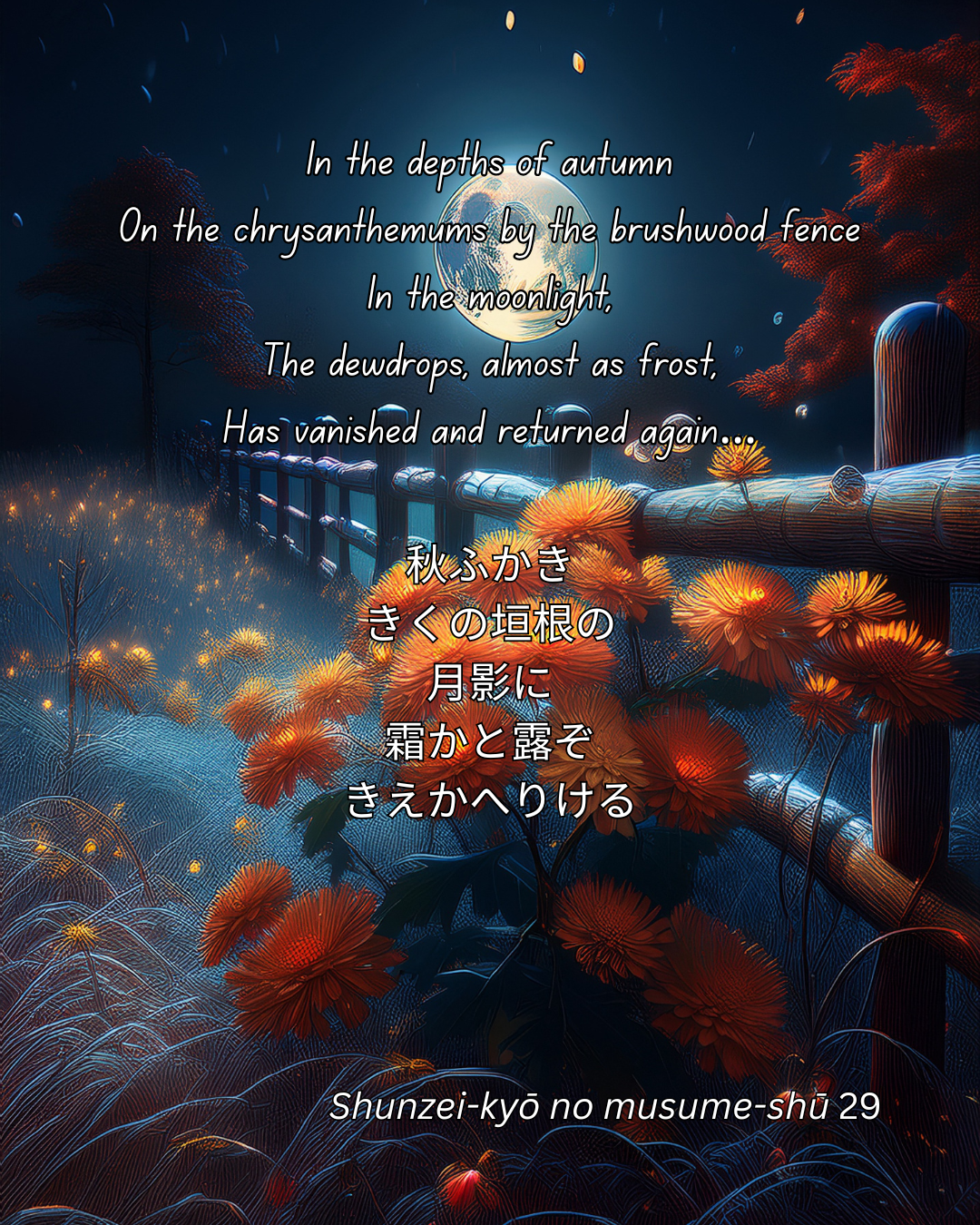
aki fukaki kiku no kakine no tsukikage ni shimo ka to tsuyu zo kiekarikeru
In the depths of autumn On the chrysanthemums by the brushwood fence In the moonlight, The dewdrops, almost as frost, Has vanished and returned again…[i]
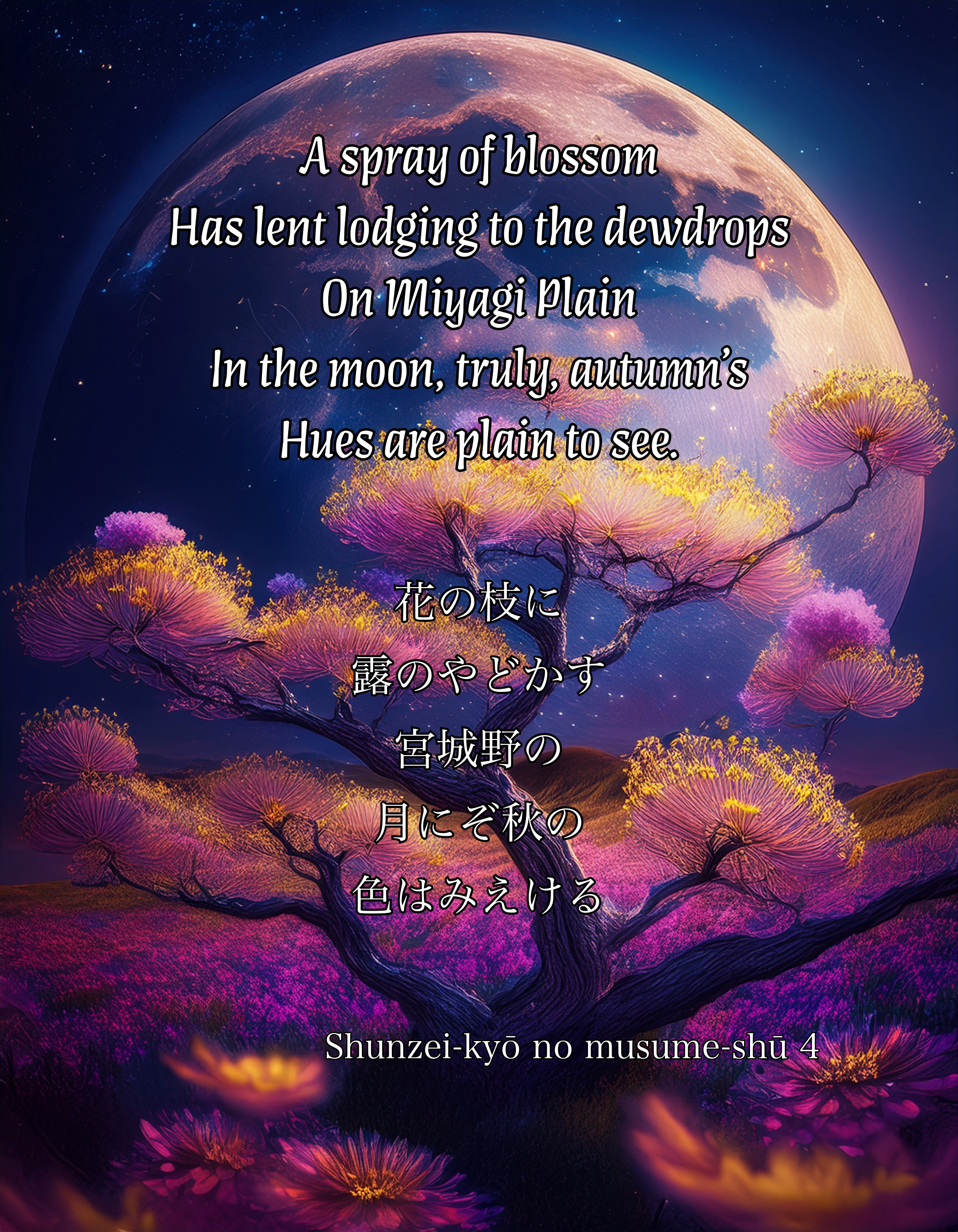
hana no e ni tsuyu no yado kasu miyagino no tsuki ni zo aki no iro wa miekeru
A spray of blossom Has lent lodging to the dewdrops On Miyagi Plain In the moon, truly, autumn’s Hues are plain to see.
[i] This poem was composed for the ‘Poetry Match of Places Famed for the Moon on the 15th Night of the Eighth Month’ (Hachigatsu jūgoya meisho no tsuki uta’awase 八月十五夜名所月歌合) held on night of the 15th day of the Eighth Month, Jōei 1 [1.9.1232] (Ishikawa and Tani 2001, 171), although it was not included in the extant text of the match.
The moon in winter—the late Major Counsellor[i] had me compose it one year, as a poem for Kitano.[ii]
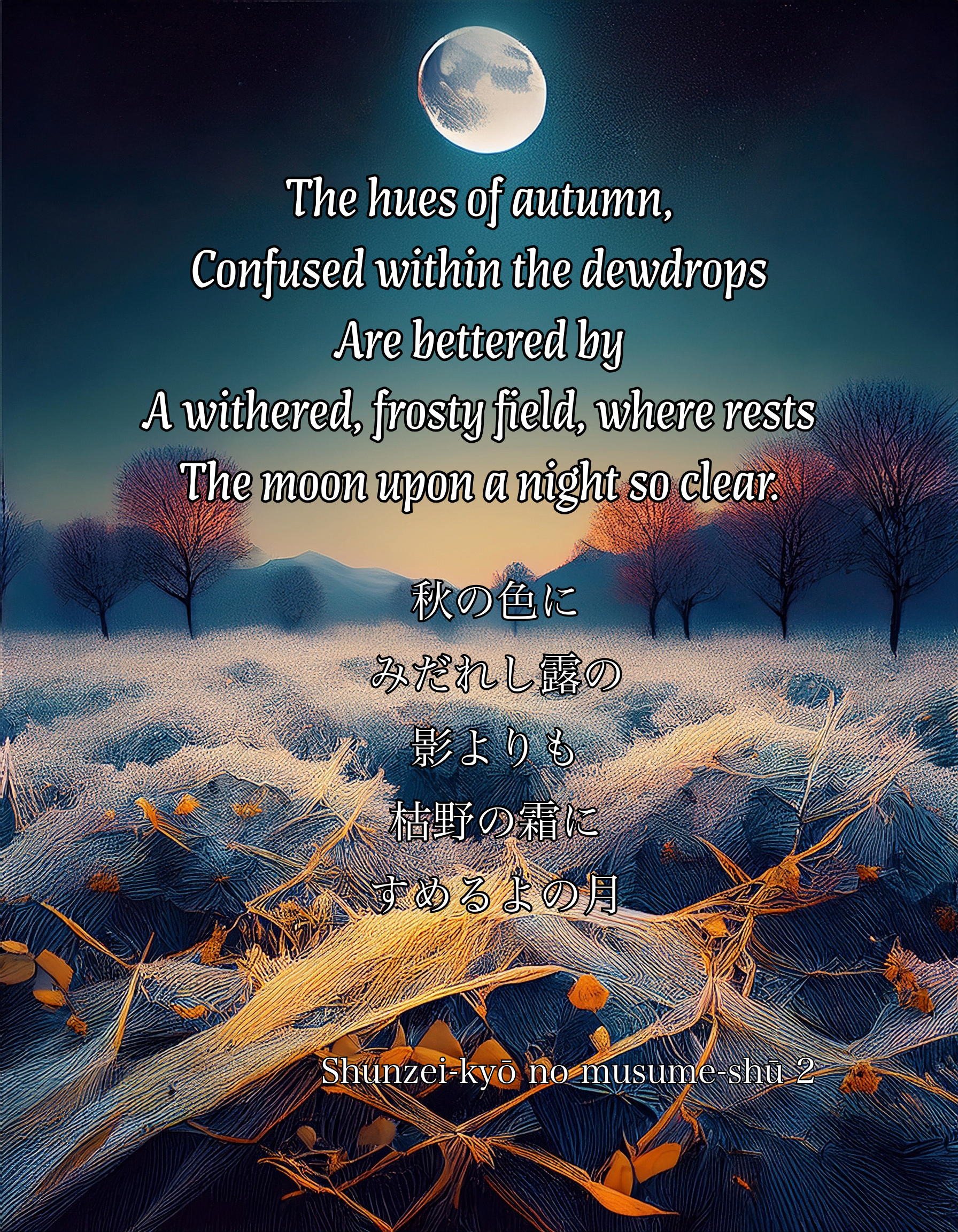
秋の色にみだれし露の影よりも枯野の霜にすめるよの月
aki no iro ni midareshi tsuyu no kage yori mo kareno no shimo ni sumeru yo no tsuki
The hues of autumn, Confused within the dewdrops Are bettered by A withered, frosty field, where rests The moon upon a night so clear.[iii]
[i] Her husband, Minamoto no Michitomo 源通具 (1171-1227).
[ii] Probably meaning she composed this for a poetry match or meet which was due to be held at the Kitano Tenmangū 北野天満宮 shrine in the north of the capital.
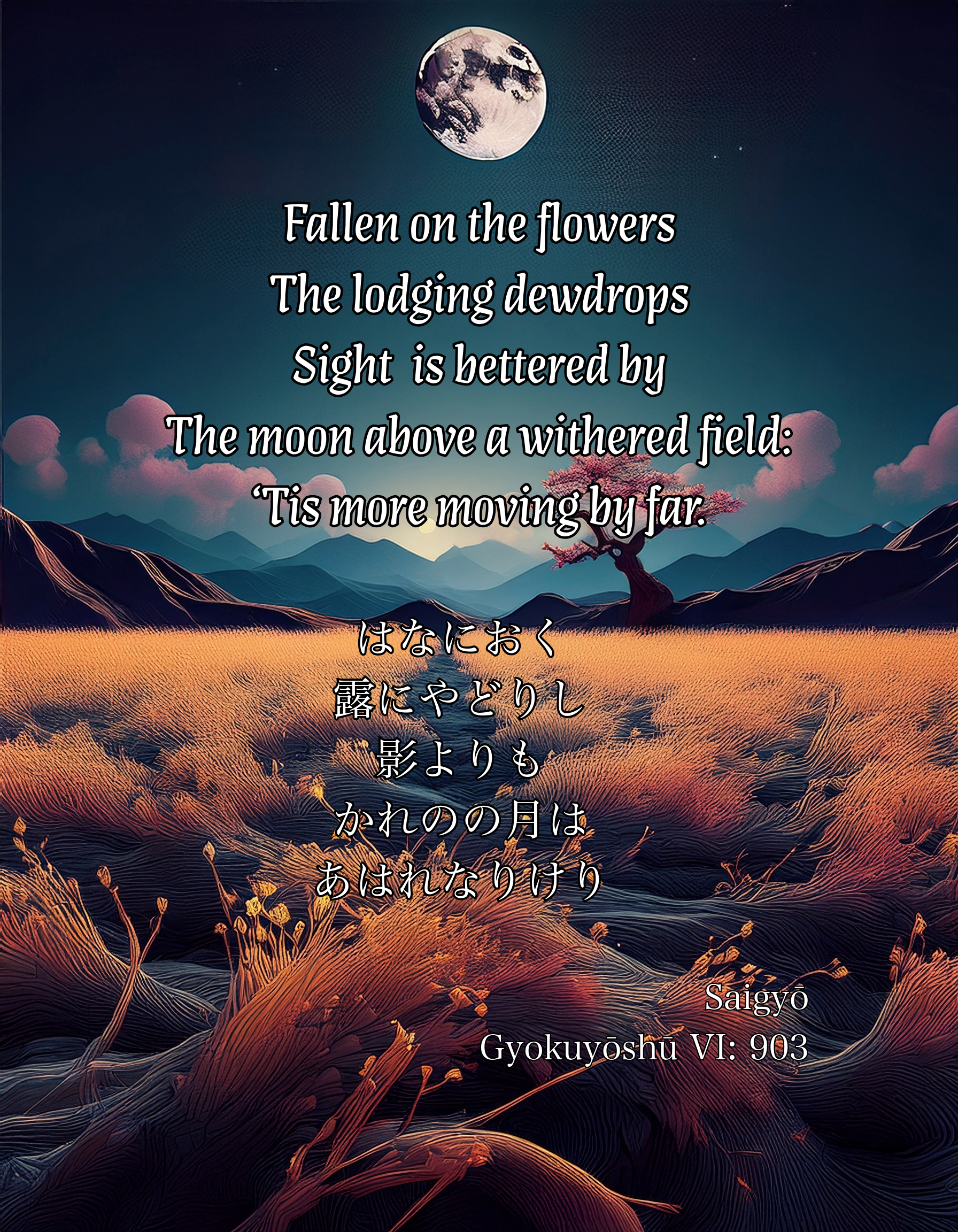
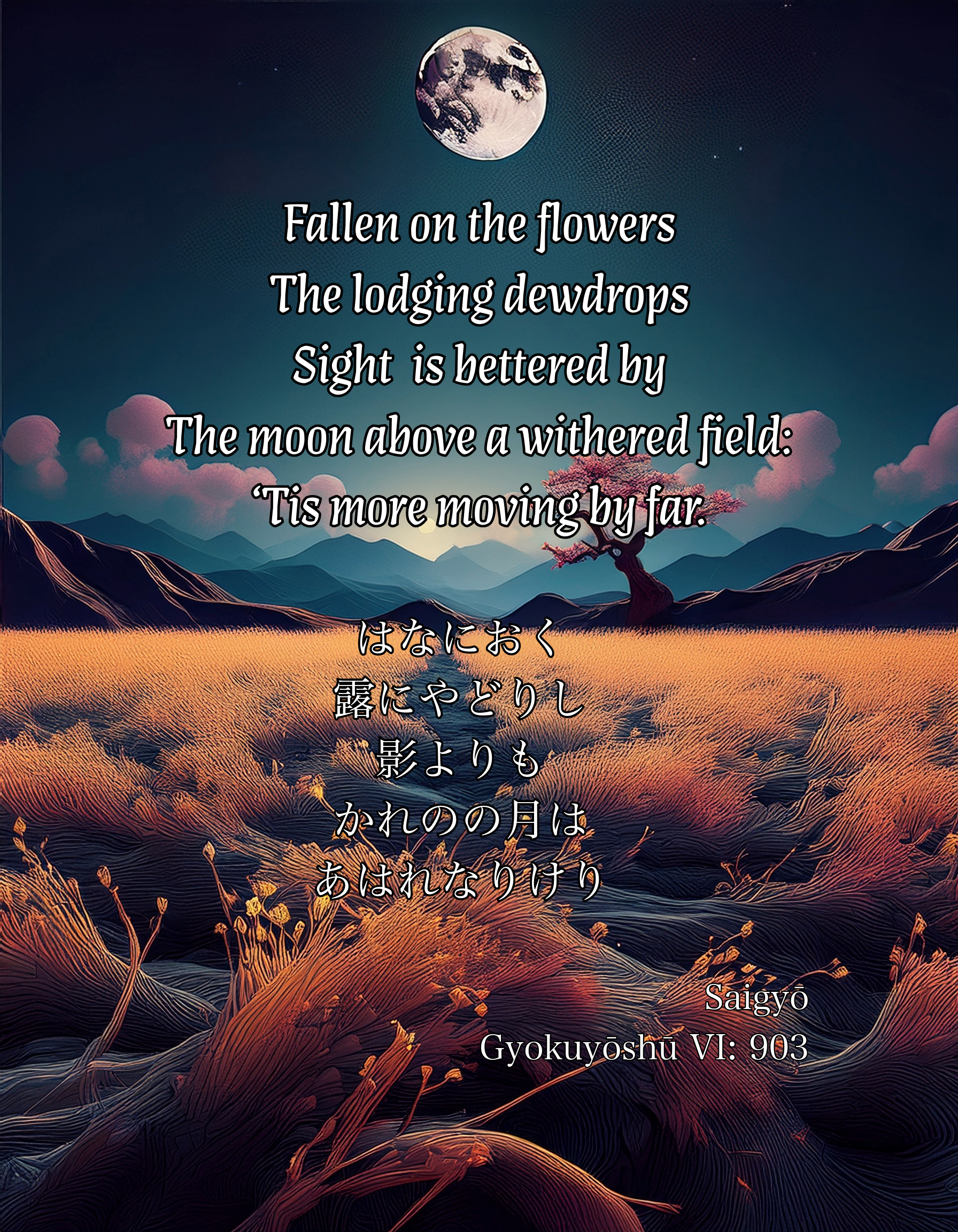
[iii] See: The cold, clear moon above the grasses. はなにおく露にやどりし影よりもかれのの月はあはれなりけり hana ni oku / tsuyu ni yadorishi / kage yori mo / kareno no tsuki wa / aware narikeri ‘Fallen on the flowers / The lodging dewdrops / Sight is bettered by / The moon above a withered field: / ‘Tis more moving by far.’ Saigyō (Gyokuyōshū VI: 903)
From among the poems for the Fifteenth Night[i] (when I was thirty-four[ii]) and had heard that His Late Lordship[iii] was holding an entertainment.[iv]
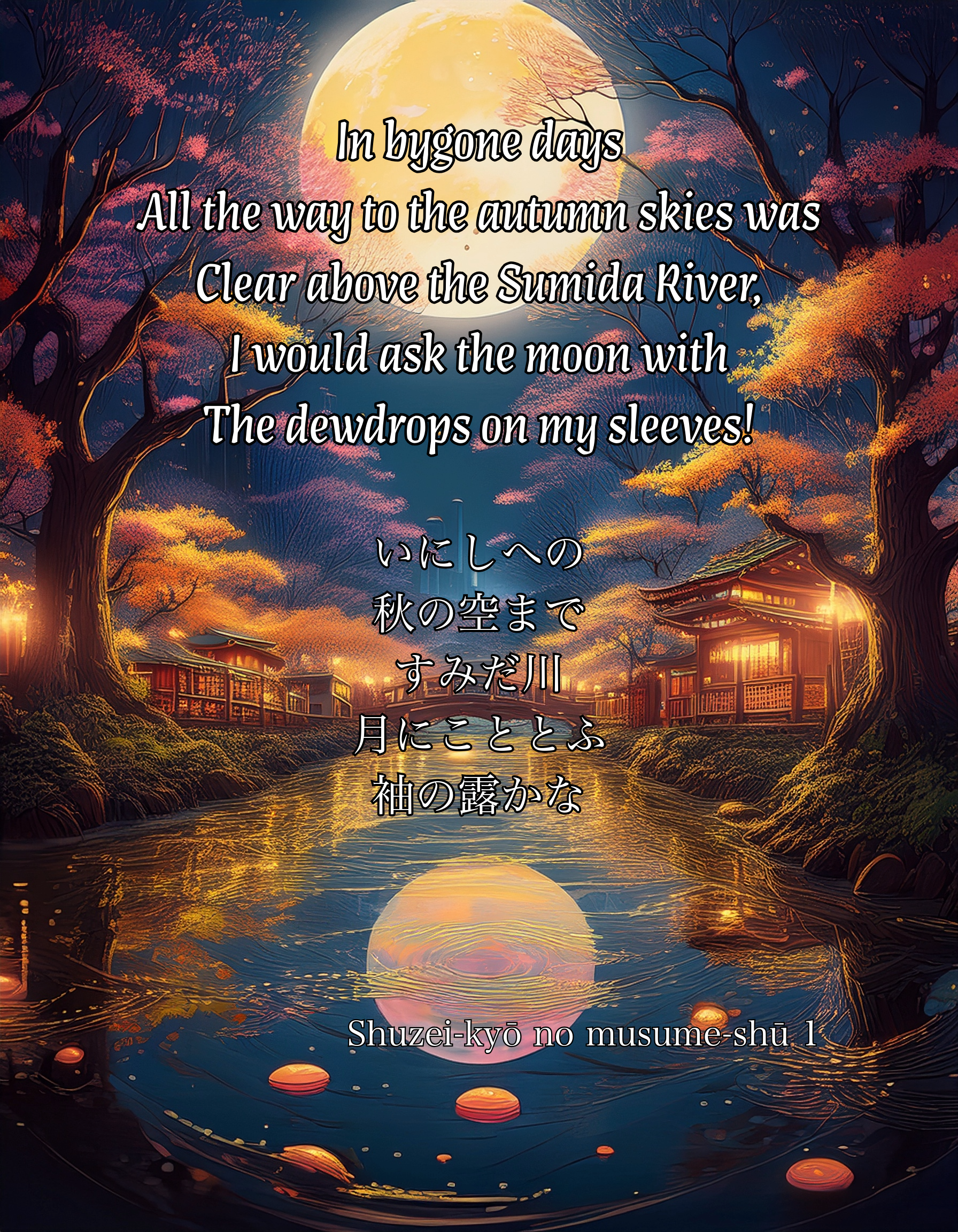
いにしへの秋の空まですみだ川月にこととふ袖の露かな
inishie no aki no sora made sumidagawa tsuki ni koto tou sode no tsuyu kana
In bygone days All the way to the autumn skies was Clear above the Sumida River, I would ask the moon with The dewdrops on my sleeves![v]
[i]Jūgoya 十五夜: typically this referred to the night of the 15th day of the Eighth Month, when the moon was believed to be at its fullest and most beautiful.
[ii] The Japanese text in the original is ambiguous here and this is only one of several interpretations which have been offered for it. The most likely other one is that this is a simple miscopying of an entirely different phrase ‘when I presented three poems’.
[iii] A reference to Fujiwara (Kujō) no Yoshitsune 藤原(九条)良経 (1169-1206).
[v] An allusive variation on: When they arrived at the banks of the Sumida River, between the provinces of Musashi and Shimotsūsa, they thought fondly of the capital and, dismounting for a while on the river bank, they thought sadly about how far they had come. While they were gazing into space, the ferryman said, “Get on the boat quickly! The sun is going down.” So, they boarded and were about to set off, each one thinking miserably about someone he had left in the capital, when they saw a white bird with a red bill and legs splashing about in the river shallows. As it was a bird never seen in the capital, none of them could say what it was, so they asked the ferryman, and he replied that it was a miyakodori (capital bird); hearing this, Narihira composed the following: 名にしおはばいざ事とはむ宮こどりわが思ふ人はありやなしやと na ni shi owaba / iza koto towamu / miyakodori / wa ga omou hito wa / ari ya nashi ya to ‘If your name fits you, / There’s something I would ask, / O, Capital bird: / Is the lady in my thoughts / Still quite safe?’ Ariwara no Narihira (Kokinshū IX: 411)