月影にほのかに見ゆる花すすき風のたよりに結びつるかな
tsukikage ni honoka ni miyuru hanasusuki kaze no tayori ni musubitsuru kana In the moonlight
2[i]
[i] Motozane-shū (61) with the headnote ‘Blossoming silver grass’ (hanasusuki 花薄).
Blossoming silver grass beckoning folk.[i]
Left
はなすすきまねくたもとのあまたあればゆきもやられずあきのののみち
hanasusuki maneku tamoto no amata areba yuki mo yararezu akino no michi Of blossoming silver grass
9
Right (Win)
はなすすきまねくたもとやたゆからんはかるのかぜにかへるひとなみ
hanasususki maneku tamoto ya tayukaran hakaru nokaze ni kaeru hito nami Have the blossoming silver grass
10
[i] 花薄招人
Silver grass.
しらつゆはむすびおけども花すすきまねくたもと はほころびにけり
shiratsyu wa musubi’okedomo hanasusuki maneku tamoto wa hokorobinikeri Silver dewdrops
Blossoming silver grass.
野べならばたびねしてまし花薄まねくたもと にこころとまりて
nobe naraba tabineshitemashi hanasusuki maneku tamoto ni kokoro tomarite If I’m on the plains, then
Fujiwara no Takatō
Composed in the Ninth Month, in the year I was twelve.
はなすすきまねくたもと はあまたあれど秋はとまらぬものにぞありける
hanasusuki maneku tamoto wa amata aredo aki wa tomaranu mono ni zo arikeru Of blossoming silver grass
Original
ひとりぬるよをながづきのはなすすきそよともあきのかぜぞこたふる
hitori nuru yo o nagazuki no hanasusuki soyo to mo aki no kaze zo kotauru Sleeping alone,
45
Left
こたふともたのまざらなむはなすすきふくあきかぜのさだめなければ
kotau tomo tanomazaranamu hanasusuki fuku akikaze no sadame nakereba It may reply, but
46
Right
そよとだにしりてこたふるかぜしあらばなにかながきよおもひわぶらん
soyo to dani shirite kotauru kaze shi araba nanika nagaki yo omoiwaburan If, ‘So it is,’
47
Original
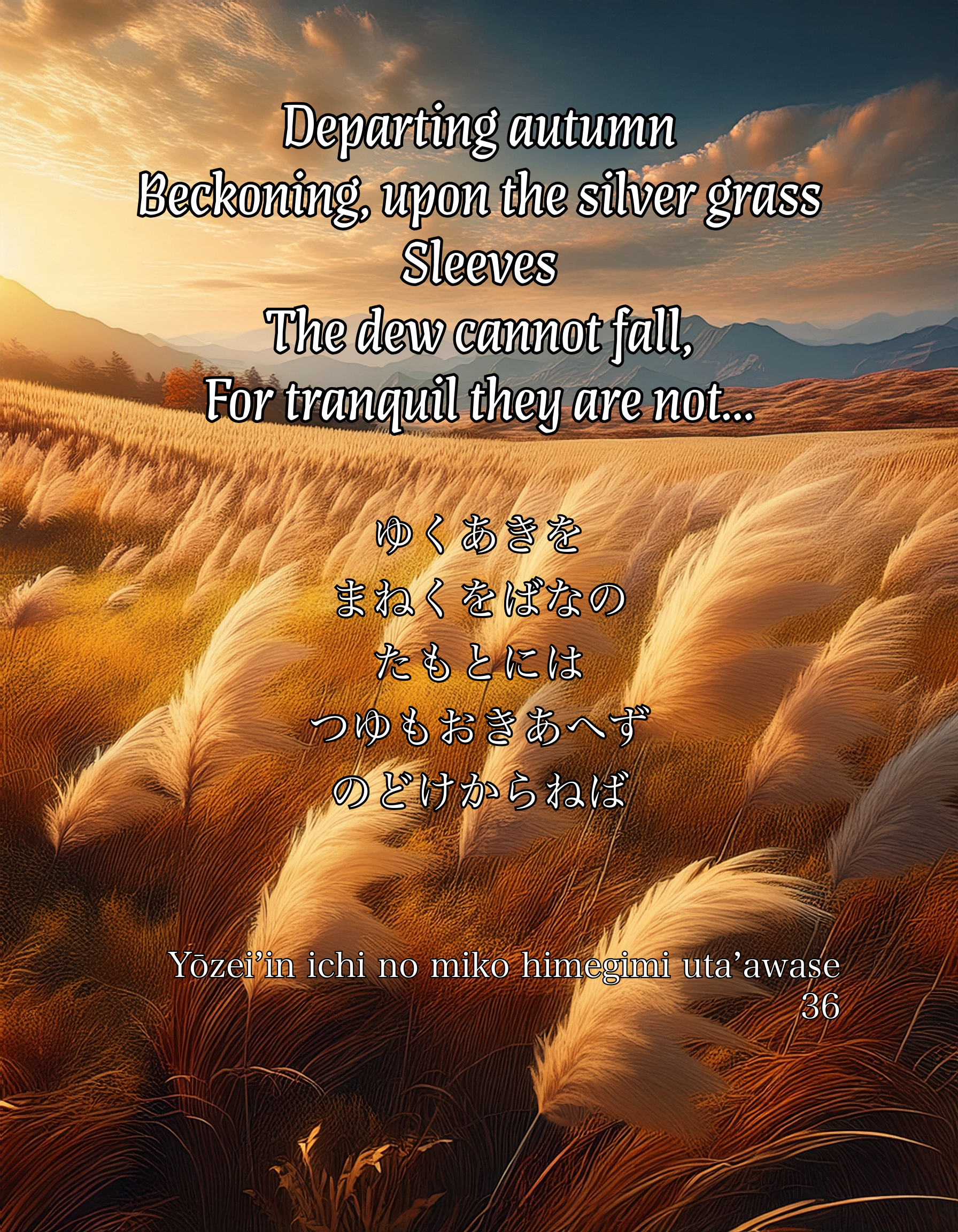
ゆくあきをまねくをばなのたもとにはつゆもおきあへずのどけからねば
yuku aki o maneku obana no tamoto ni wa tsuyu mo oki’aezu nodokekaraneba Departing autumn
36
Left
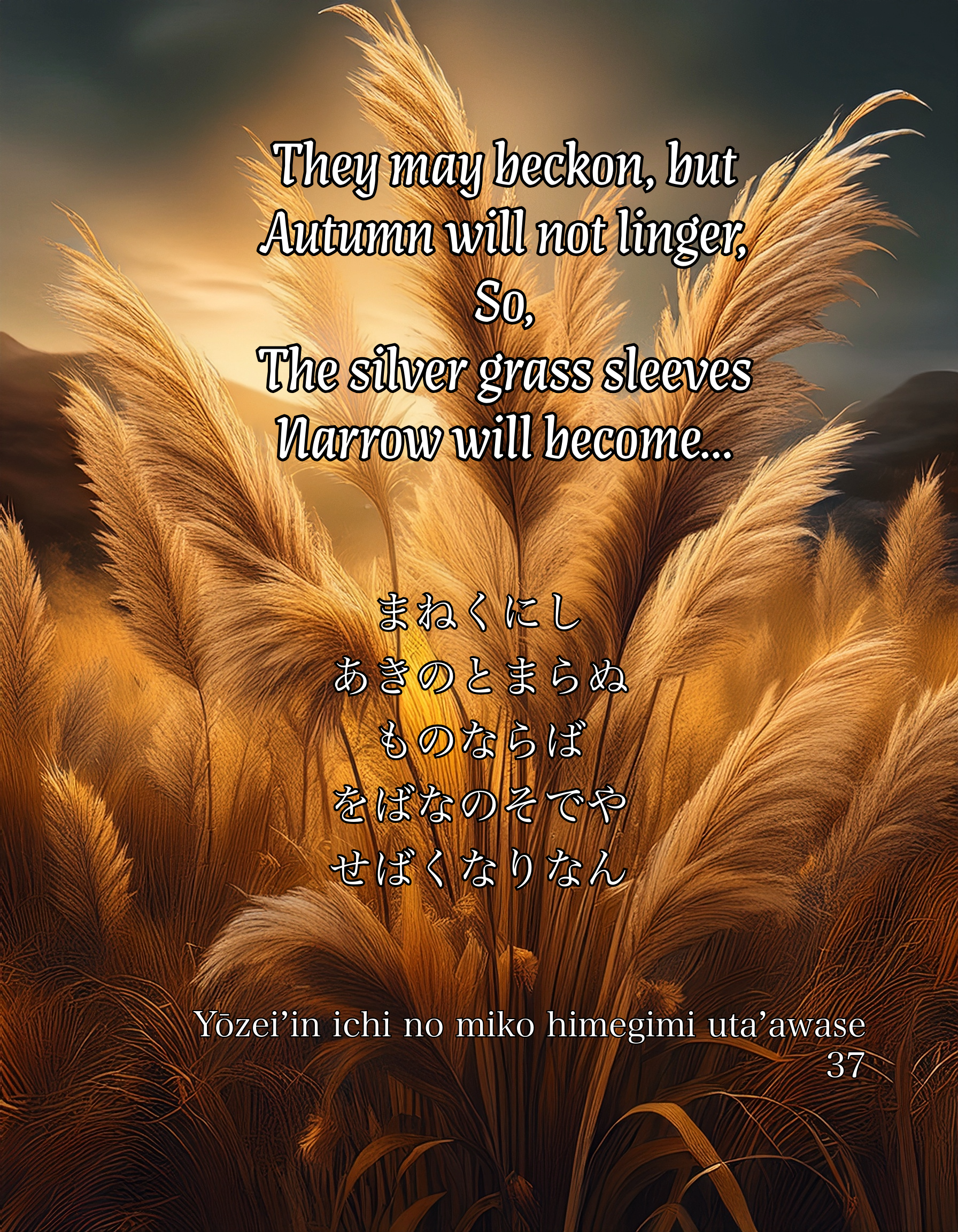
まねくにしあきのとまらぬものならばをばなのそでやせばくなりなん
maneku ni shi aki no tomaranu mono naraba obana no sode ya sebaku narinan They may beckon, but
37
Right
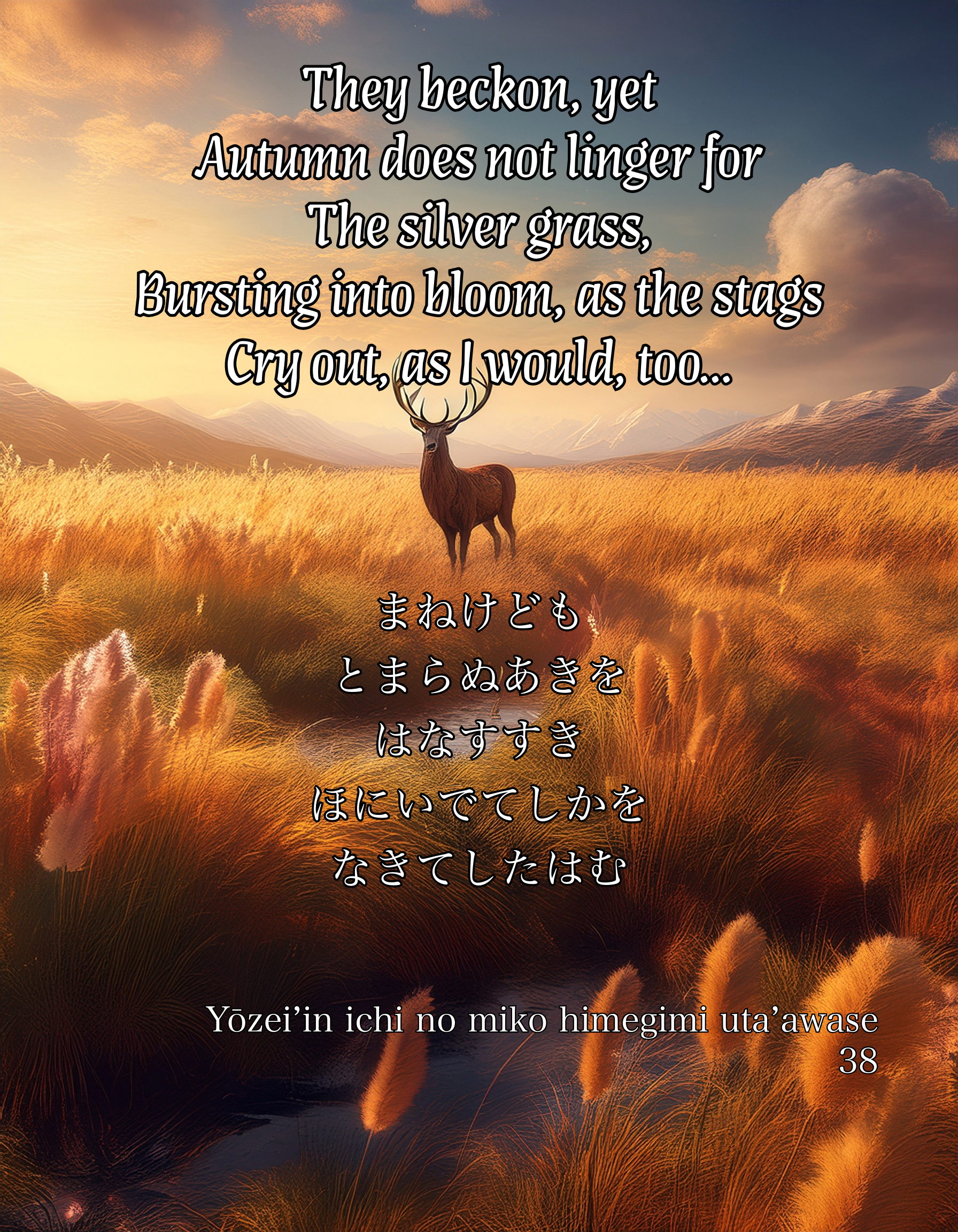
まねけどもとまらぬあきをはなすすきほにいでてしかをなきてしたはむ
manekedomo tomaranu aki o hanasusuki ho ni idete shika o nakite shitawamu They beckon, yet
38
Round Fourteen
Left
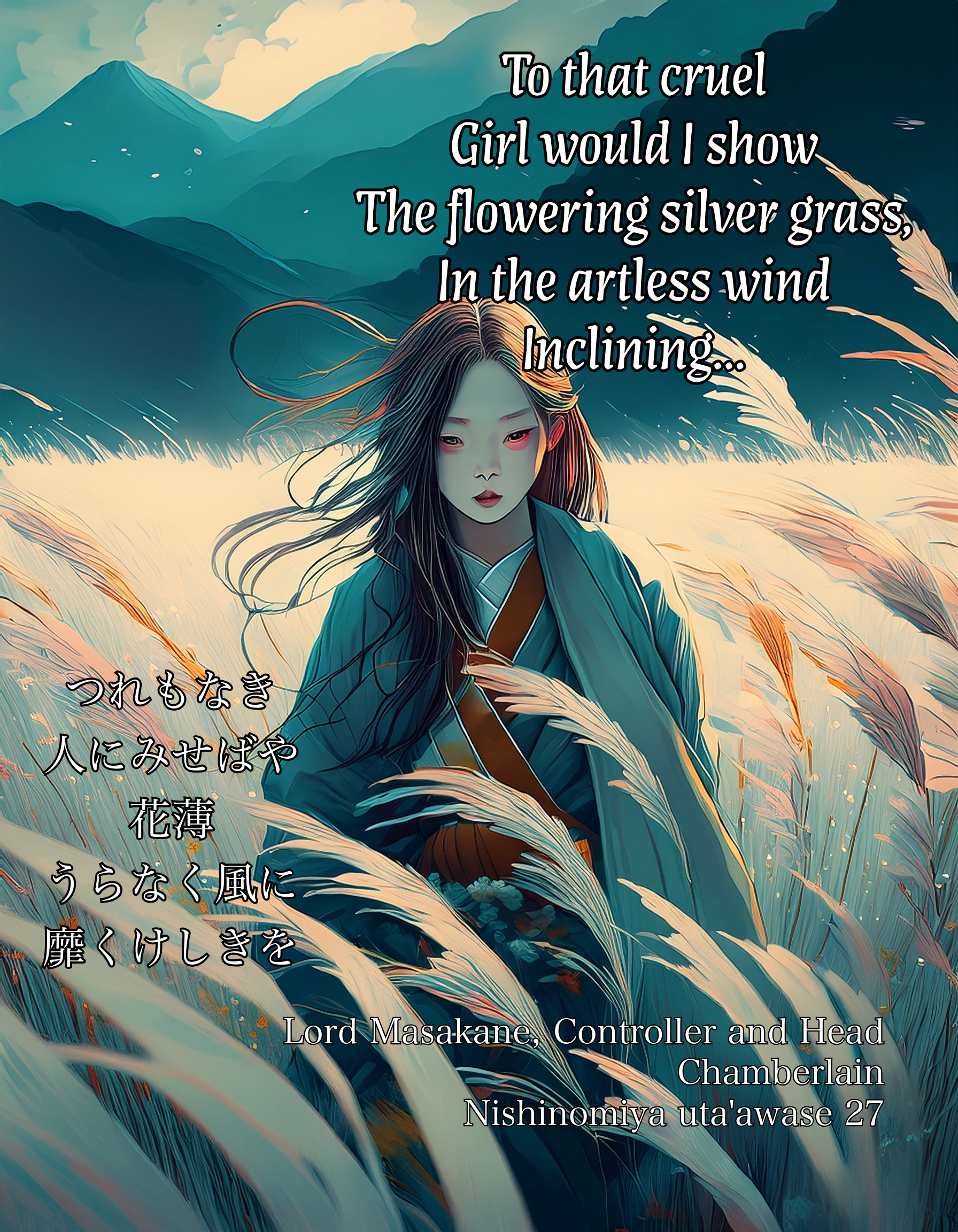
つれもなき人にみせばや花薄うらなく風に靡くけしきを
tsure mo naki hito ni miseba ya hanasusuki uranaku kaze ni nabiku keshiki o To that cruel
Lord Masakane, Controller and Head Chamberlain
Right
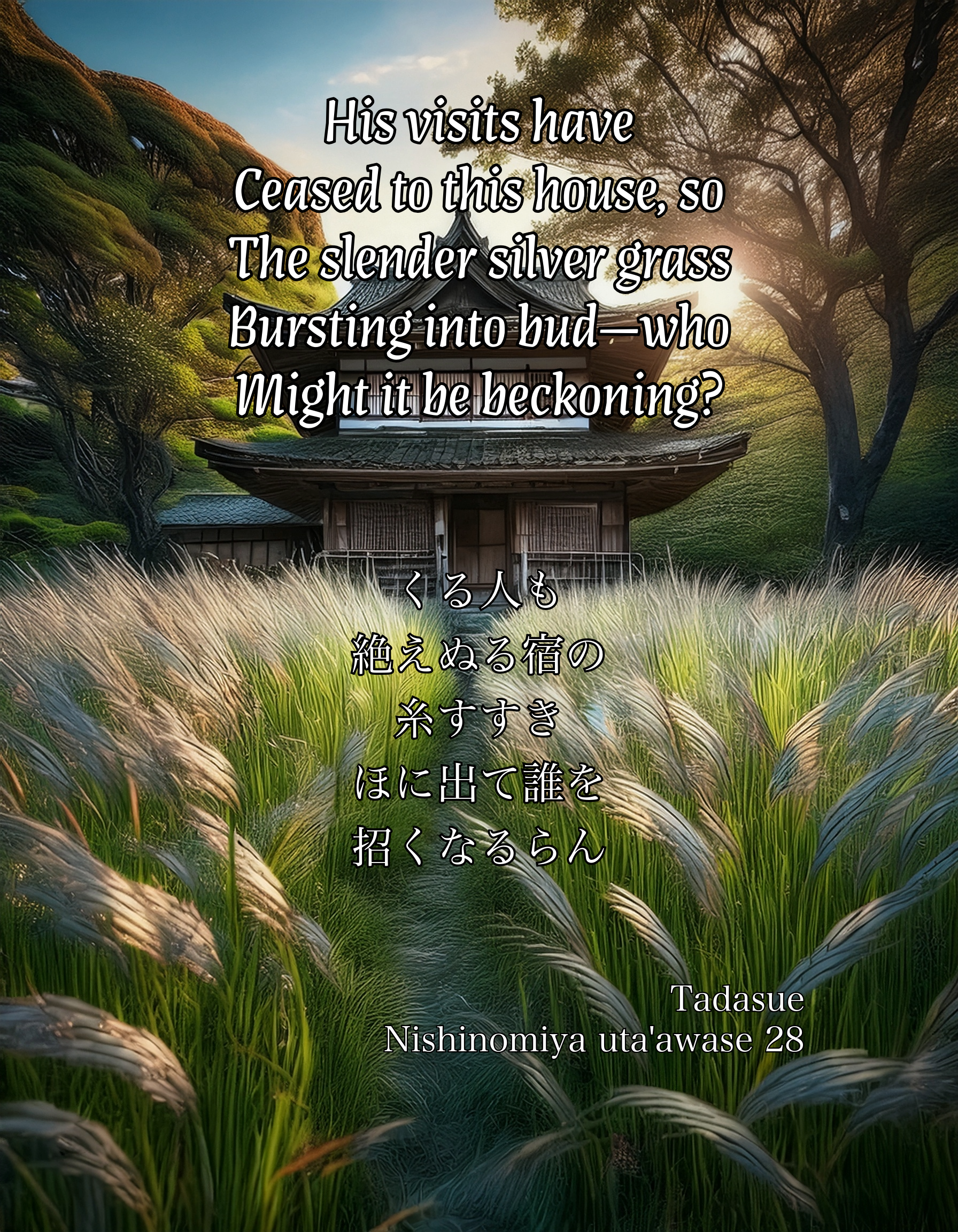
くる人も絶えぬる宿の糸すすきほに出て誰を招くなるらん
kuru hito mo taenuru yado no itosusuki ho ni idete tare o maneku naruran His visits have
Tadasue
The Left’s poem, up to ‘would I show’ is poetic, but I do not feel that the expression ‘In the artless wind / Inclining’ is elegant. For the topic of love, it seems to me that both the beginning and the end of the poem is a slight case of ‘As a bamboo stalk / Has joints, from years gone by old-fashioned phrases’ lingering! The Right’s ‘Ceased to this house, so / The slender silver grass’ lacks anything remarkable about it, and seems excessively overgrown, so it’s impossible to decide on anyone as the winner or loser here.
Silver Grass and the Same
Round Thirteen
Left
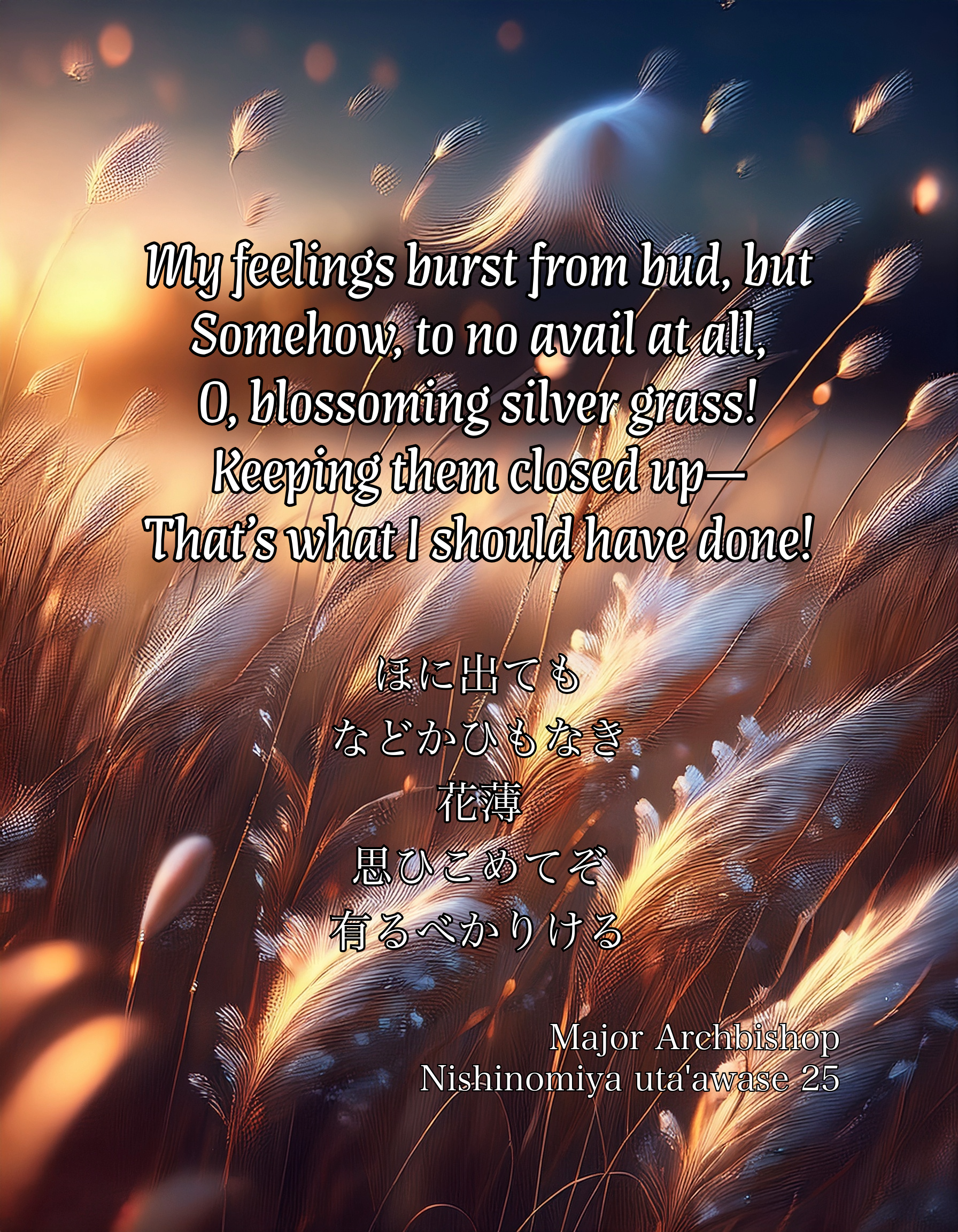
ほに出てもなどかひもなき花薄思ひこめてぞ有るべかりける
ho ni idetemo nadoka kai mo naki hanasusuki omoikomete zo arubekarikeru My feelings burst from bud, but
Major Archbishop
Right
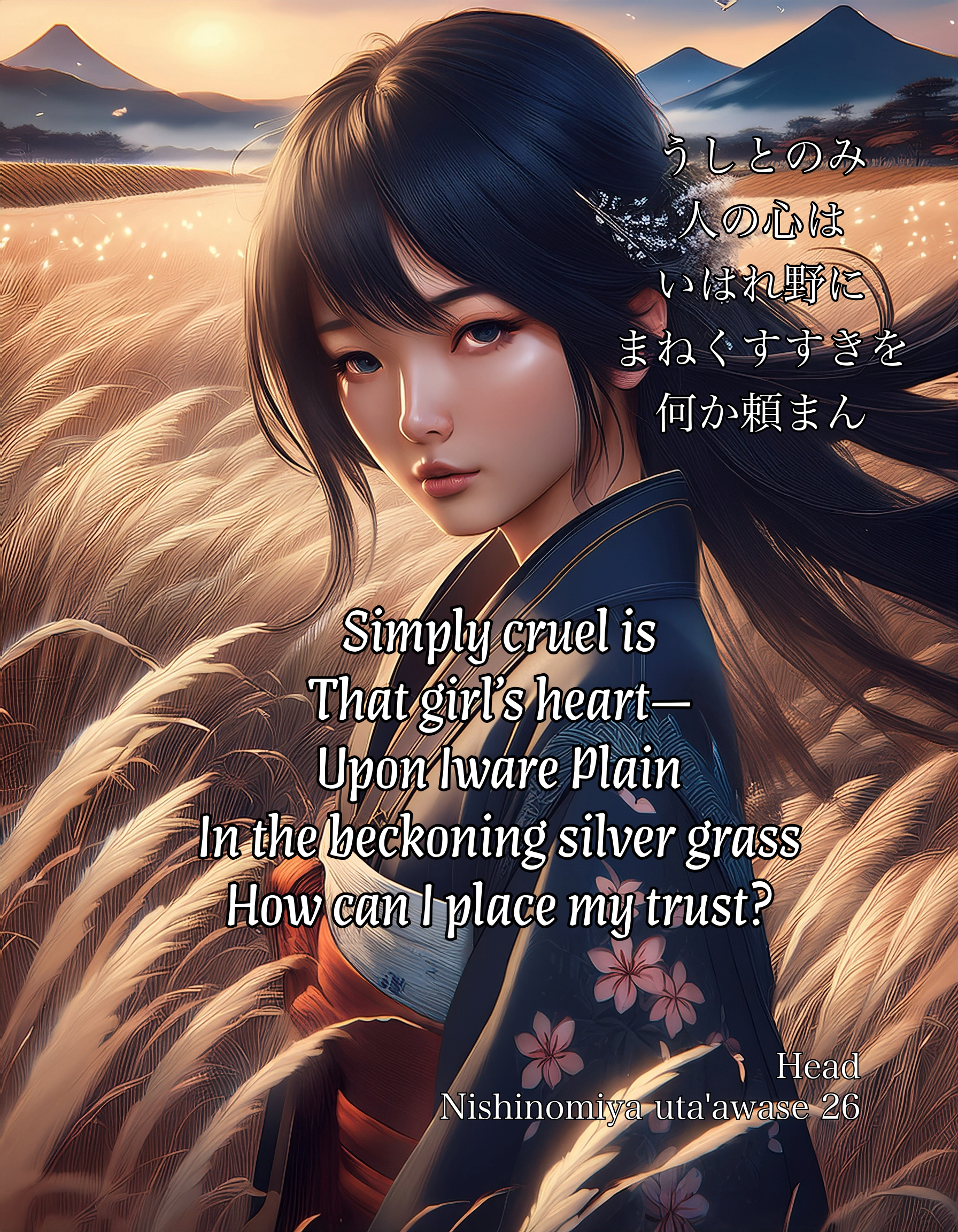
うしとのみ人の心はいはれ野にまねくすすきを何か頼まん
ushi to nomi hito no kokoro wa iwareno ni maneku susuki o nanika tanoman Simply cruel is
Head
Left and Right appear to be of about the same standard.
Love and Silver-grass.
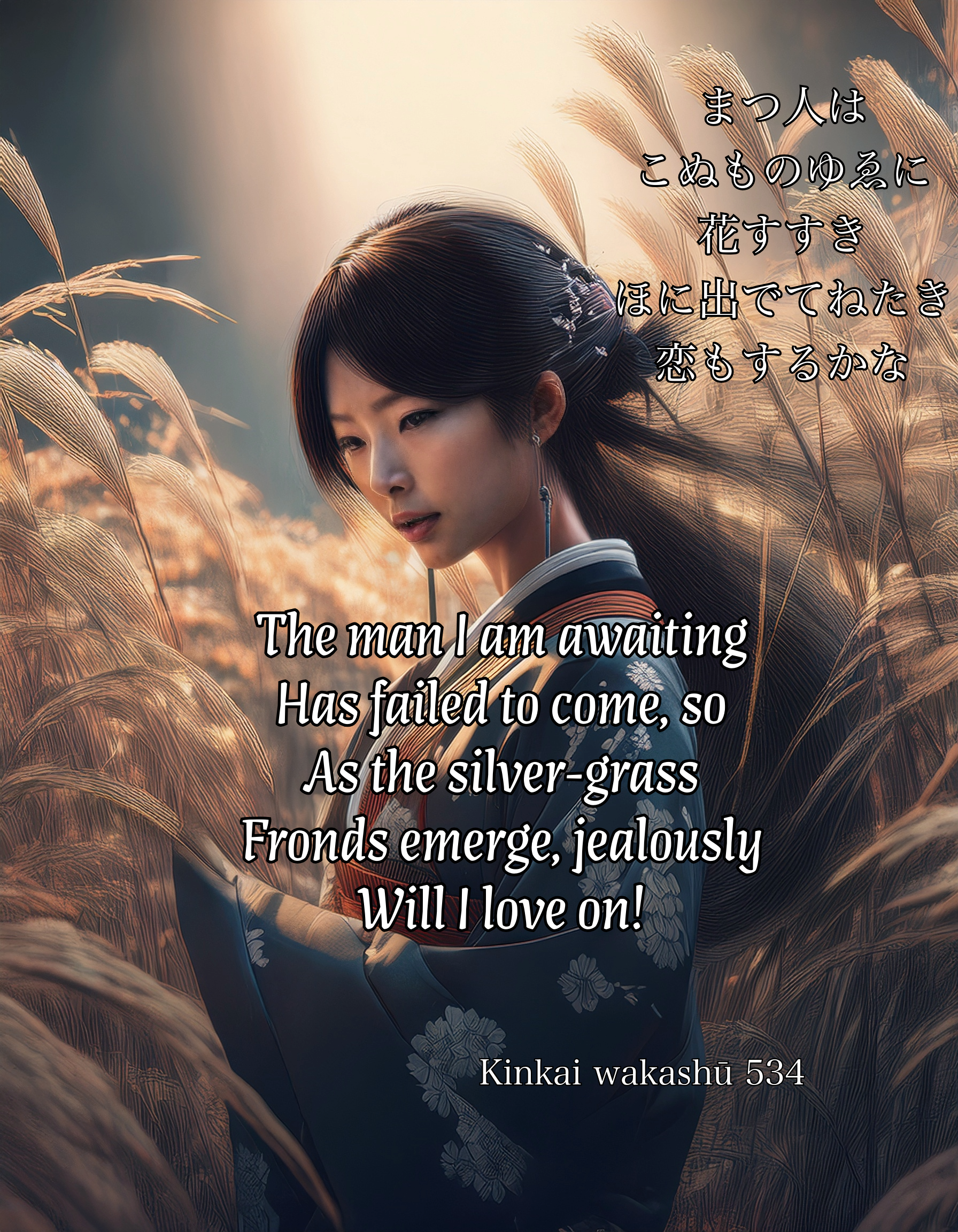
まつ人はこぬものゆゑに花すすきほに出でてねたき恋もするかな
matsu hito wa konu mono yue ni hanasusuki ho ni idete netaki koi mo suru kana The man I am awaiting
534
Posts navigation
'Simply moving and elegant'