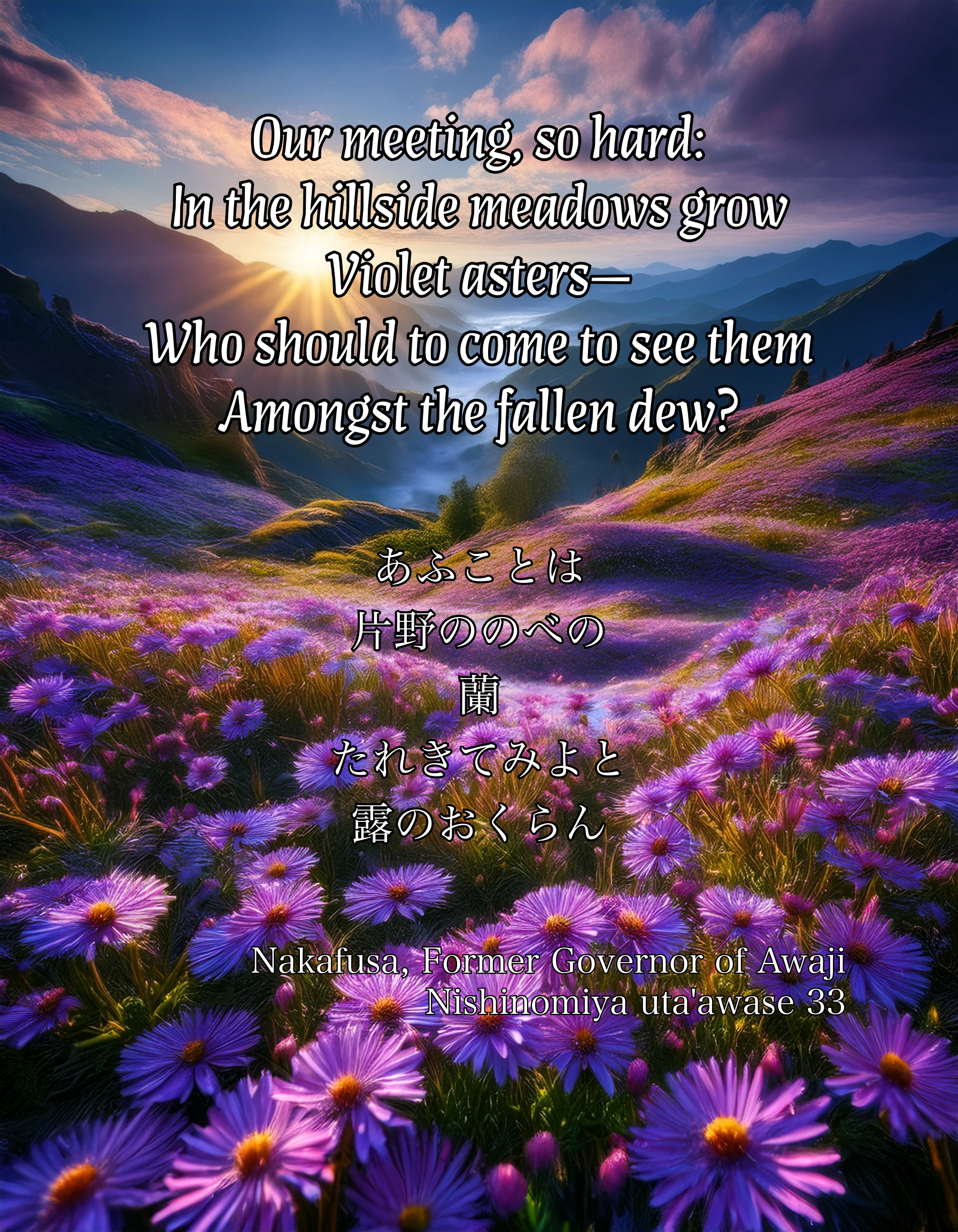
au koto wa katano no nobe no fujibakama tare kitemiyo to tsuyu no okuran
Our meeting, so hard: In the hillside meadows grow Violet asters— Who should to come to see them Amongst the fallen dew?
Nakafusa, Former Governor of Awaji 33
Right
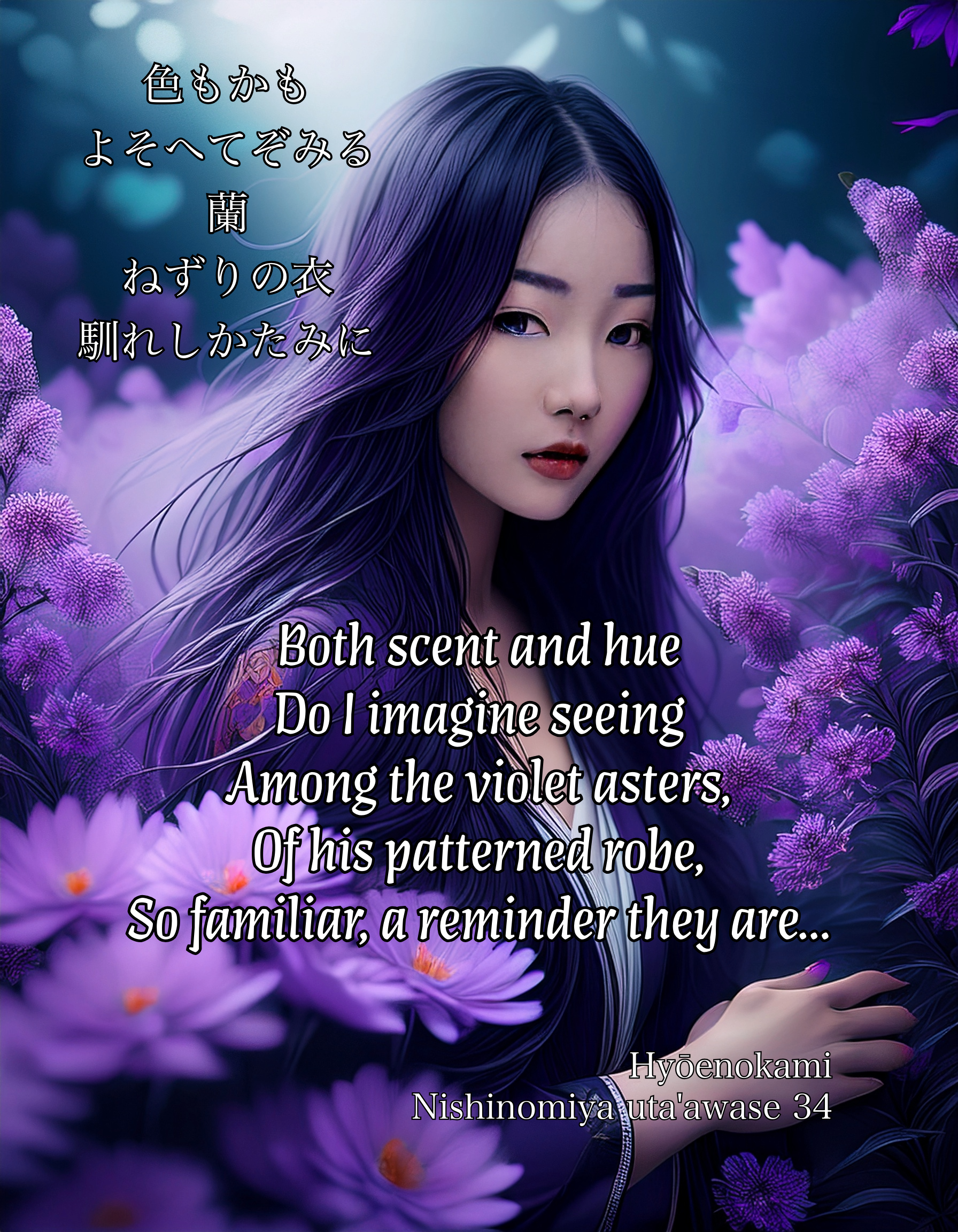
色もかもよそへてぞみる蘭ねずりの衣馴れしかたみに
iro mo ka mo yosoete zo miru fujibakama nezuri no koromo nareshi katami ni
Both scent and hue Do I imagine seeing Among the violet asters, Of his patterned robe, So familiar, a reminder they are…
Hyōenokami 34
These poems, both Left and Right, appear to be of about the same quality, but while I am familiar with robes patterned with purple gromwell, I do wonder what it is that is patterning the robes here. Is the poet composing on asters imagining them to be gromwell? Even if that’s the case, the conception is not particularly apparent, so I have to say that the Left is better.
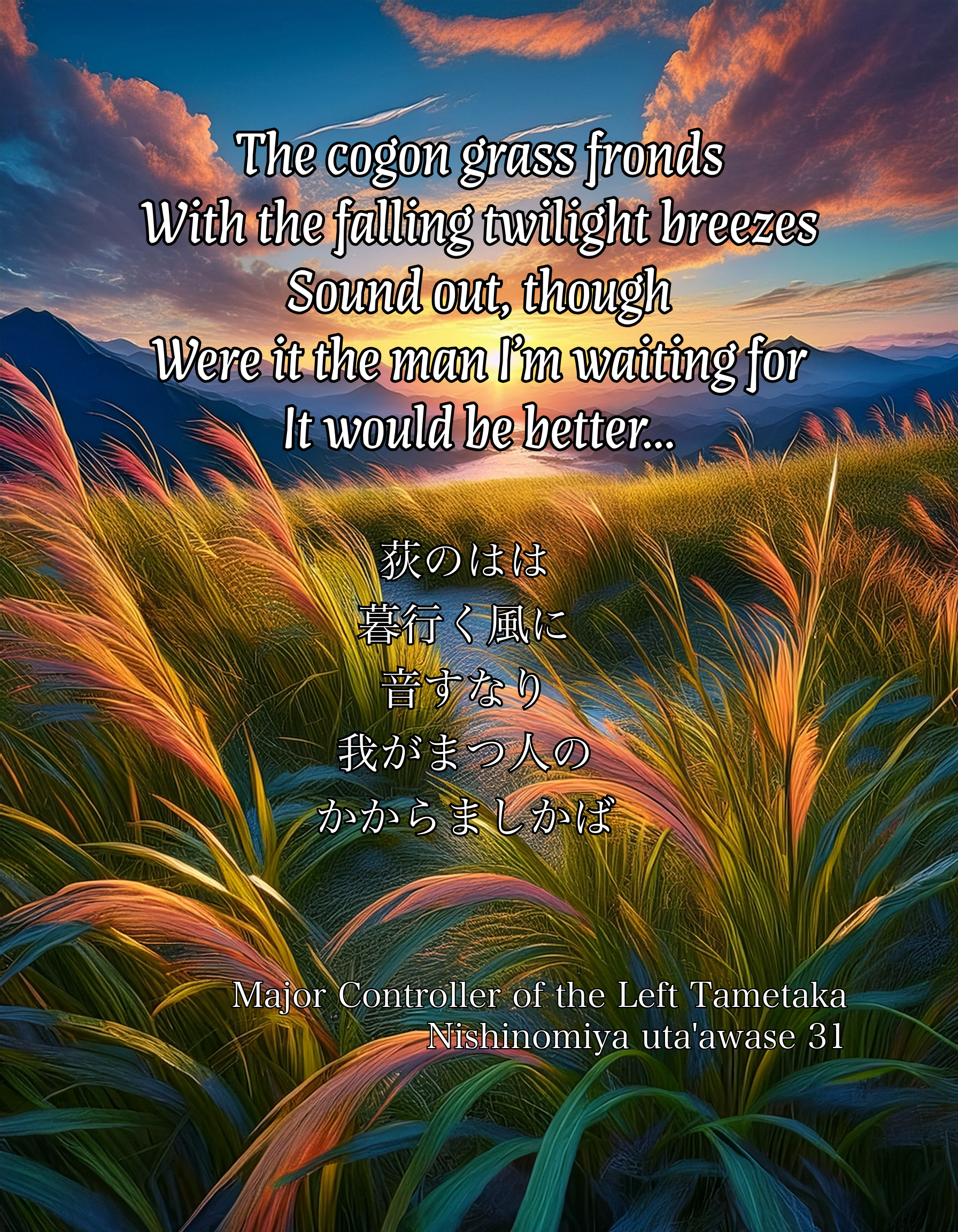
ogi no ha wa kureyuku kaze ni otosu nari wa ga matsu hito no kakaramashikaba
The cogon grass fronds With the falling twilight breezes Sound out, though Were it the man I’m waiting for It would be better…
Major Controller of the Left Tametaka 31
Right
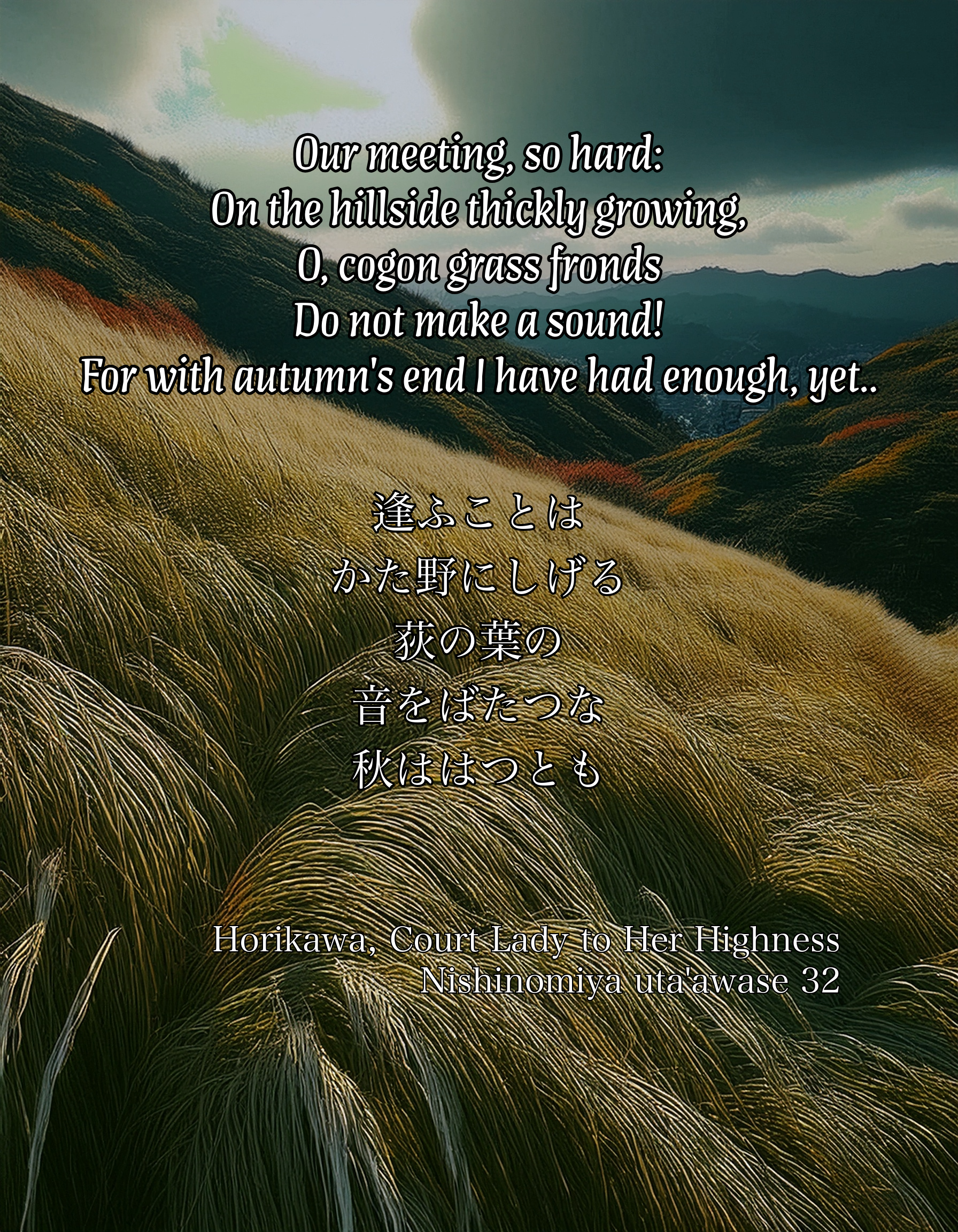
逢ふことはかた野にしげる荻の葉の音をばたつな秋ははつとも
au koto wa katano ni shigeru ogi no ha no oto oba tatsu na aki wa hatsu tomo
Our meeting, so hard: On the hillside thickly growing, O, cogon grass fronds Do not make a sound! For with autumn’s end I have had enough, yet..
Horikawa, Court Lady to Her Highness 32
I feel that the emotions encompassed by the sound of the wind in ‘Were it the man I’m waiting for / It would be better’ sounded more striking than ‘On the hillside thickly growing, / O, cogon grass fronds’.
mizukuki no okabe no makuzu kareshi yori mi o akikaze no fukanu hi wa nashi
Since on Mizukuki Hillside the fair kudzu Has withered, distant has he become, The autumn wind upon my flesh, that he is done with me, Strikes me not on any day at all.
shigure ni wa suga no ogasa mo mizu morite ochi no tabibito nure ya shinuran
In such a shower A little hat of woven sedge, too, Drips with water; A distant traveller Is drenched, no doubt…
Lady Kazusa 9
Right (M – Win)
霜さえて枯行くをのの岡べなるならの朽葉にしぐれ降るなり
shimo saete kareyuku ono no okabe naru nara no kuchiba ni shigure furu nari
Chill the frost upon The sere meadows on The hillside where Upon the withered oak leaves A shower is falling.
Lord Mototoshi 10
Toshiyori states: In the first poem, ‘drips with water’ is vague. In the second poem, ‘hillside where’ lacks smoothness. What are we to make of ‘withered oak leaves’? If leaves have withered away, then they wouldn’t make any sound, would they. Is this even possible?
Mototoshi states: the diction of ‘In such a shower / A little umbrella of woven sedge, too, / Drips with water’ is something which lacks any prior precedent. ‘Dripping with water’ give the impression of a painted pot with a crack in it, so what kind of shower can this be? It would be more normal to refer to having to shelter beneath one’s sleeves. While it is lacking in any superlative features, I feel that the sound of a shower on withered oak leaves is somewhat more commonplace.