Topic unknown.
かきくらし雪はふりつつしかすがにわが家のそのに鶯ぞなく
| kakurasi yuki Fa Furitutu sikasuga ni wa ga ya no sono ni uguFisu zo naku | Raking in the darkness, The snow is ever falling, But even so In the grounds around my home Indeed, the warbler sings! |
Round Eighteen
Left
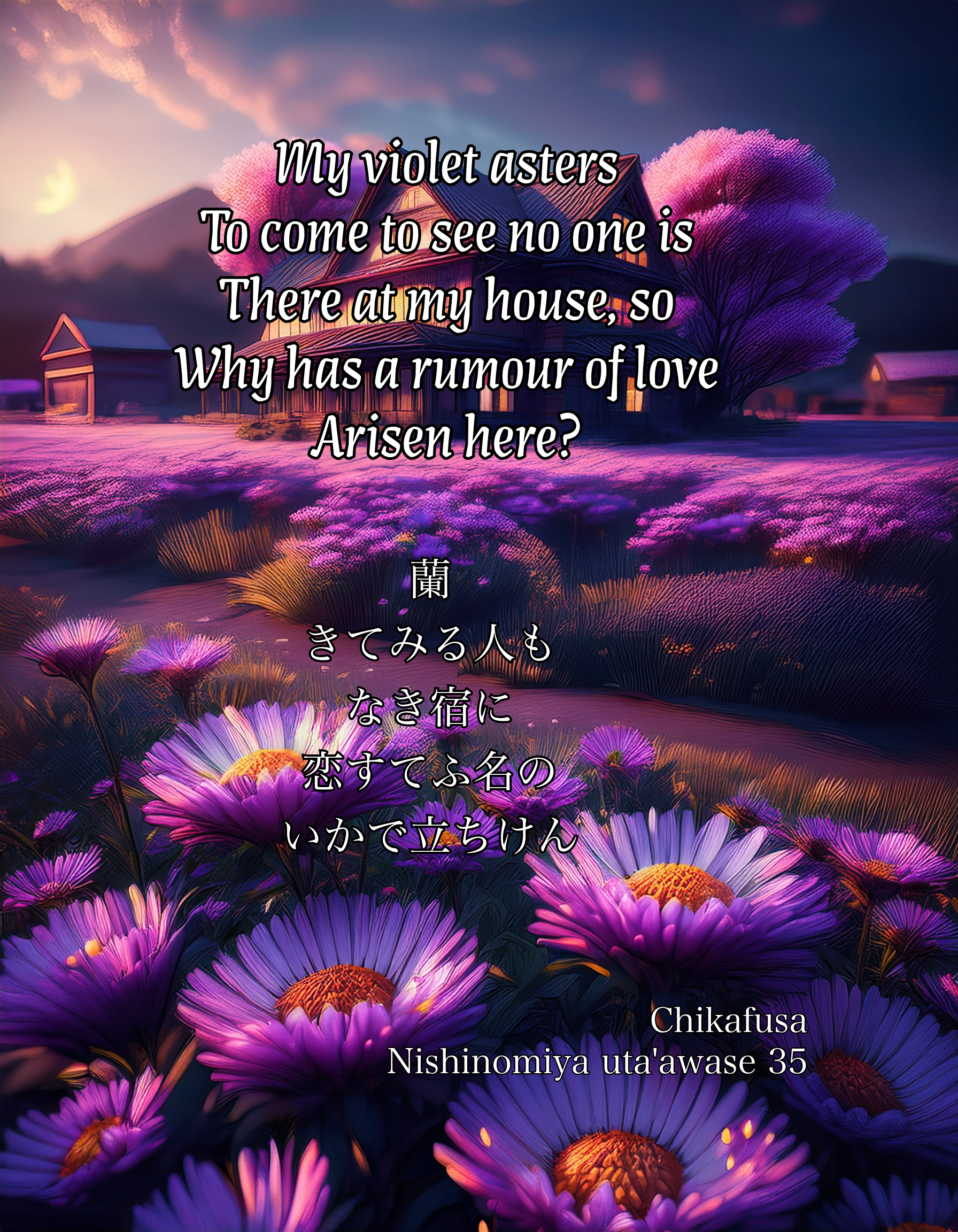
蘭きてみる人もなき宿に恋すてふ名のいかで立ちけん
| fujibakama kitemiru hito mo naki yado ni koisu chō na no ikade tachiken | My violet asters To come to see no one is There at my house, so Why has a rumour of love Arisen here? |
Chikafusa
35
Right
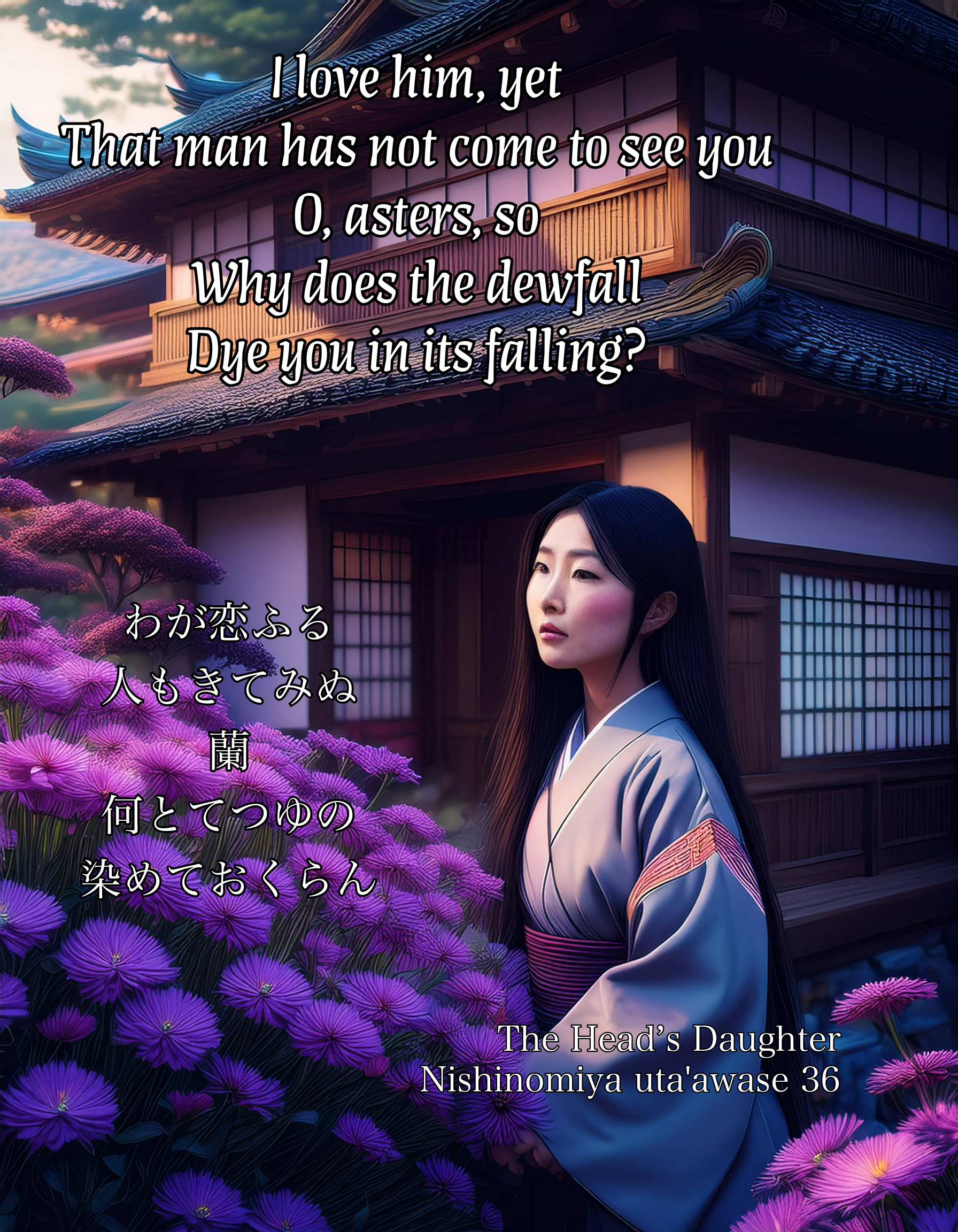
わが恋ふる人もきてみぬ蘭何とてつゆの染めておくらん
| wa ga kouru hito mo kiteminu fujibakama nani tote tsuyu no somete’okuran | I love him, yet That man has not come to see you O, asters, so Why does the dewfall Dye you in its falling? |
The Head’s Daughter
36
The Left’s overall impression is not bad, but I am curious about why a rumour of love should darken the door of a house, if it’s one where ‘no one comes to see’. Then, the Right uses ‘Why does the dewfall / Dye you in its falling?’—this seems like an excessive use of diction and the sequencing doesn’t sound smooth, so these seem of about the same standard.
Round Fourteen
Left
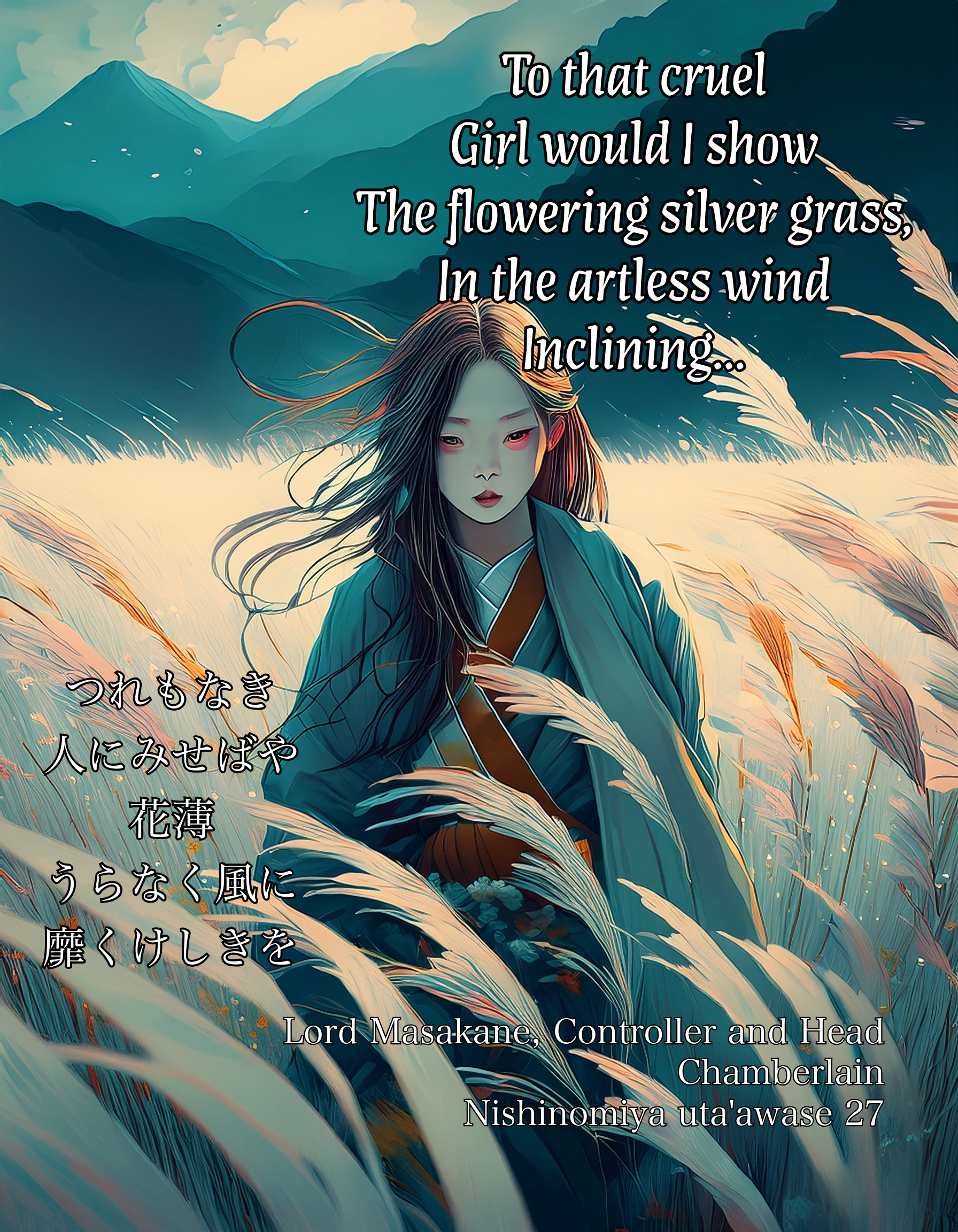
つれもなき人にみせばや花薄うらなく風に靡くけしきを
| tsure mo naki hito ni miseba ya hanasusuki uranaku kaze ni nabiku keshiki o | To that cruel Girl would I show The flowering silver grass, In the artless wind Inclining… |
Lord Masakane, Controller and Head Chamberlain
27
Right
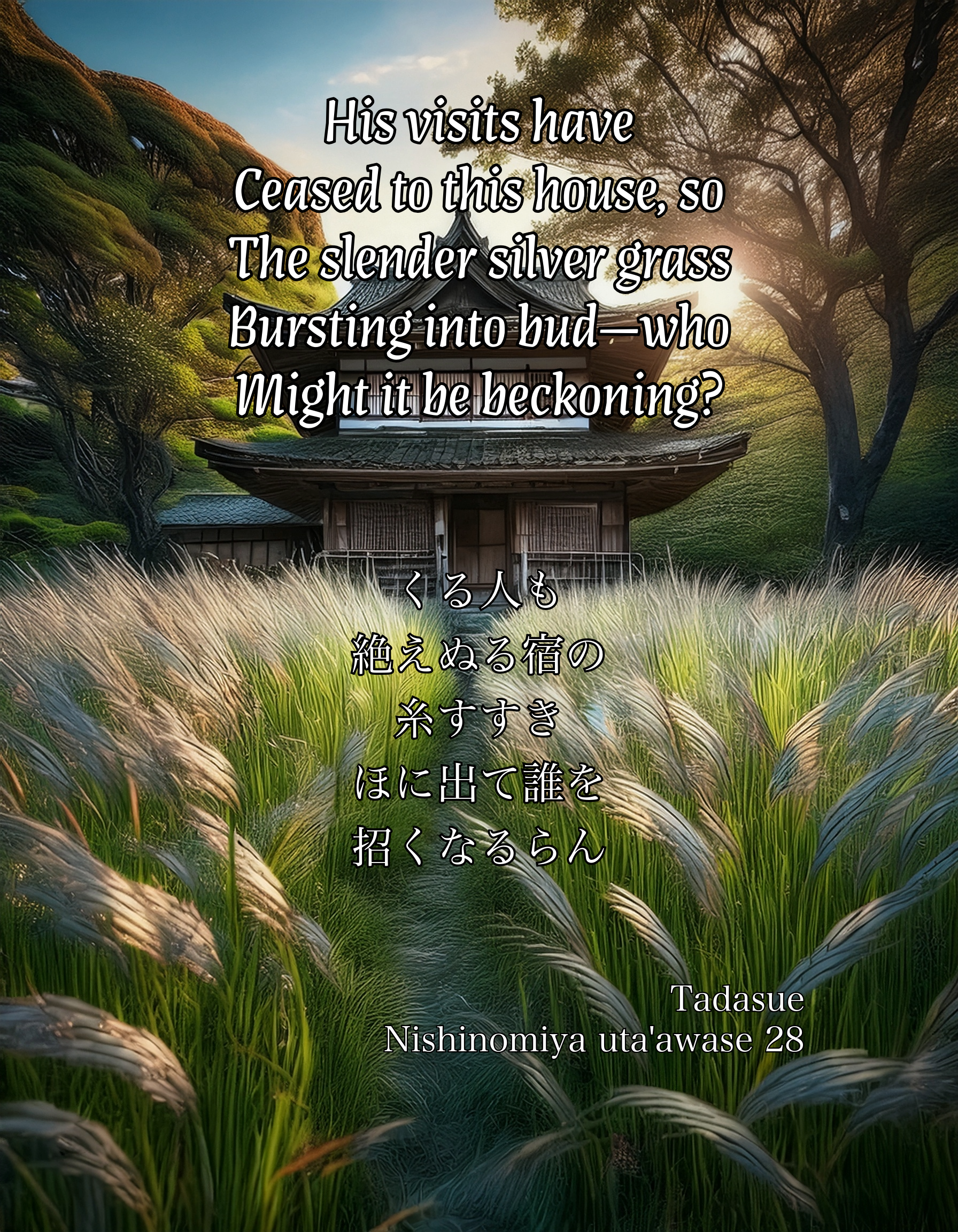
くる人も絶えぬる宿の糸すすきほに出て誰を招くなるらん
| kuru hito mo taenuru yado no itosusuki ho ni idete tare o maneku naruran | His visits have Ceased to this house, so The slender silver grass Bursting into bud—who Might it be beckoning? |
Tadasue
28
The Left’s poem, up to ‘would I show’ is poetic, but I do not feel that the expression ‘In the artless wind / Inclining’ is elegant. For the topic of love, it seems to me that both the beginning and the end of the poem is a slight case of ‘As a bamboo stalk / Has joints, from years gone by old-fashioned phrases’ lingering! The Right’s ‘Ceased to this house, so / The slender silver grass’ lacks anything remarkable about it, and seems excessively overgrown, so it’s impossible to decide on anyone as the winner or loser here.
Round Four
Left
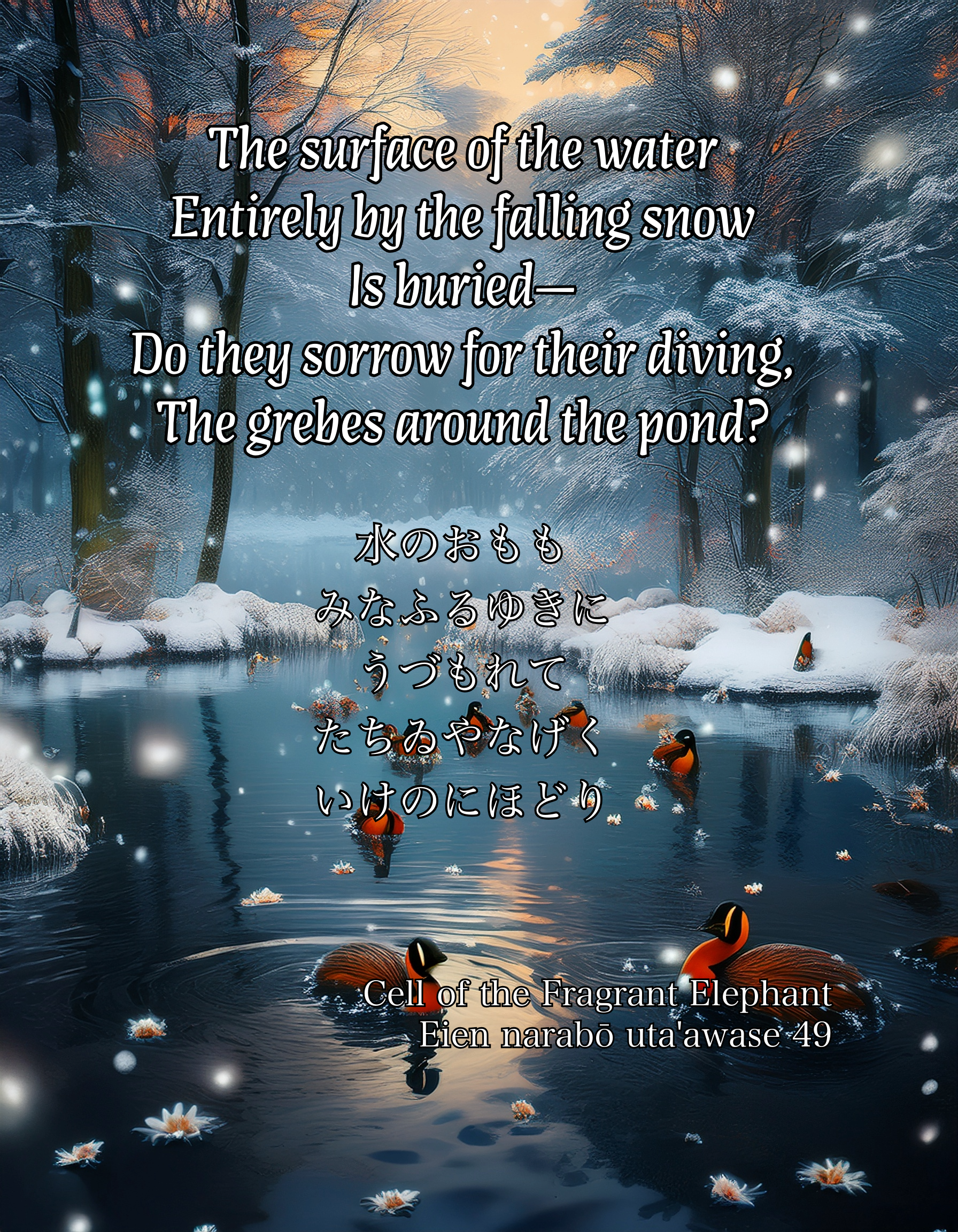
水のおももみなふるゆきにうづもれてたちゐやなげくいけのにほどり
| mizu no omo mo mina furu yuki ni uzumorete tachi’i ya nageku ike no niodori | The surface of the water Entirely by the falling snow Is buried— Do they sorrow for their diving, The grebes around the pond? |
Cell of the Fragrant Elephant
49
Right (Win)
みよしのに雪ふりぬれば我がやどのならのかれ葉はいとどさびしも
| miyoshino ni yuki furinureba wa ga yado no nara no kareba wa itodo sabishi mo | In fair Yoshino Snow has fallen, so At my house The withered oak leaves are All the more alone… |
Cell of the Everlasting Truth
50
The poem of the Left’s ‘surface of the water entirely buried by snow’ is something that I have never heard before. ‘Grieving grebes’, too, are something I have yet to encounter. Really, what sort of poem is this? As for the poem of the Right, while ‘all the more alone’ and what precedes it fails to sound elegant, at the current time I feel it’s a little bit superior.
It’s extremely difficult to conceive of the surface of a body of what which hasn’t yet frozen being buried in snow. If snow fell extremely heavily, then, surely, the water would overflow, then freeze, and then get buried, wouldn’t it? I might be going a little too far here, though. As for the Right’s poem, is ‘my house’ in Yoshino? Or is it on an estate elsewhere? If it’s on an estate, is the poet looking at the falling snow and imagining Yoshino? It’s vague. Then again, as the poem doesn’t say explicitly that the oaks are buried by the snow, is it only imagining this? How might something be which has not been seen for sure? The oaks here, too, would be like that, as snow is something which doesn’t distinguish where it falls…