sode no ue ni narurugao naru hikari kana tsuki koso tabi no kokoro shirikere
Upon my sleeves Seeming to run with tears Does the light! Even the moon the journey’s Mood does know![i]
27
[i] An allusive variation on: Topic unknown. あひにあひて物思ふころのわが袖にやどる月さへぬるるかほなる ai ni aite/ mono’omou koro no / wa ga sode ni / yadoru tsuki sae / nururu kao naru ‘So many times have we met; / In gloomy thought / Upon my sleeves / Where rests the moon / Even her face wet with tears.’ Ise (Kokinshū XV: 756)
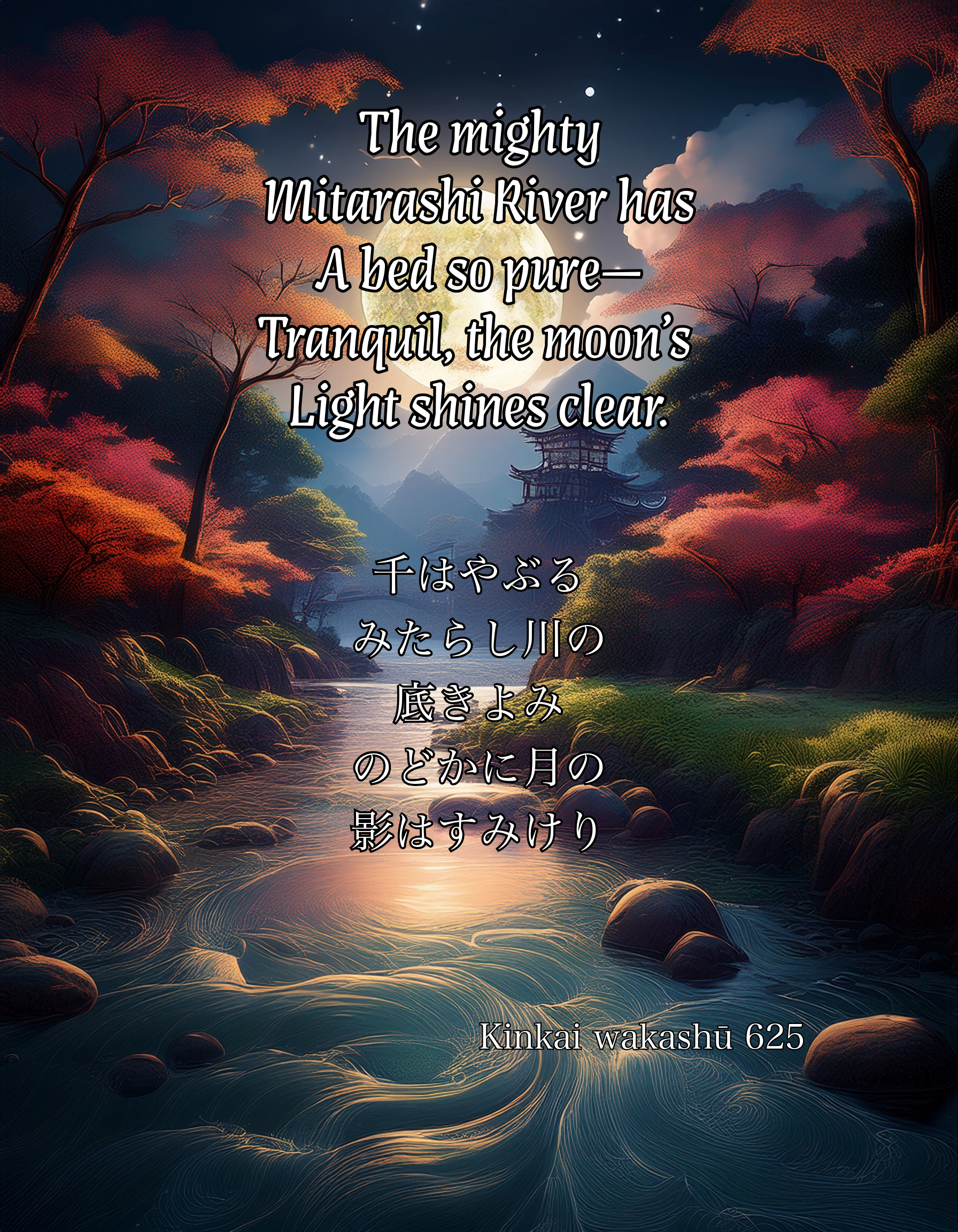
chihayaburu mitarashigawa no soko kiyomi nodoka ni tsuki no kage wa sumikeri
The mighty Mitarashi River has A bed so pure— Tranquil, the moon’s Light shines clear.[ii]
625
[i] Even though it is not specified in the headnote, the poem makes it clear that Sanetomo is referring to a specific river, the Mitarashi here.
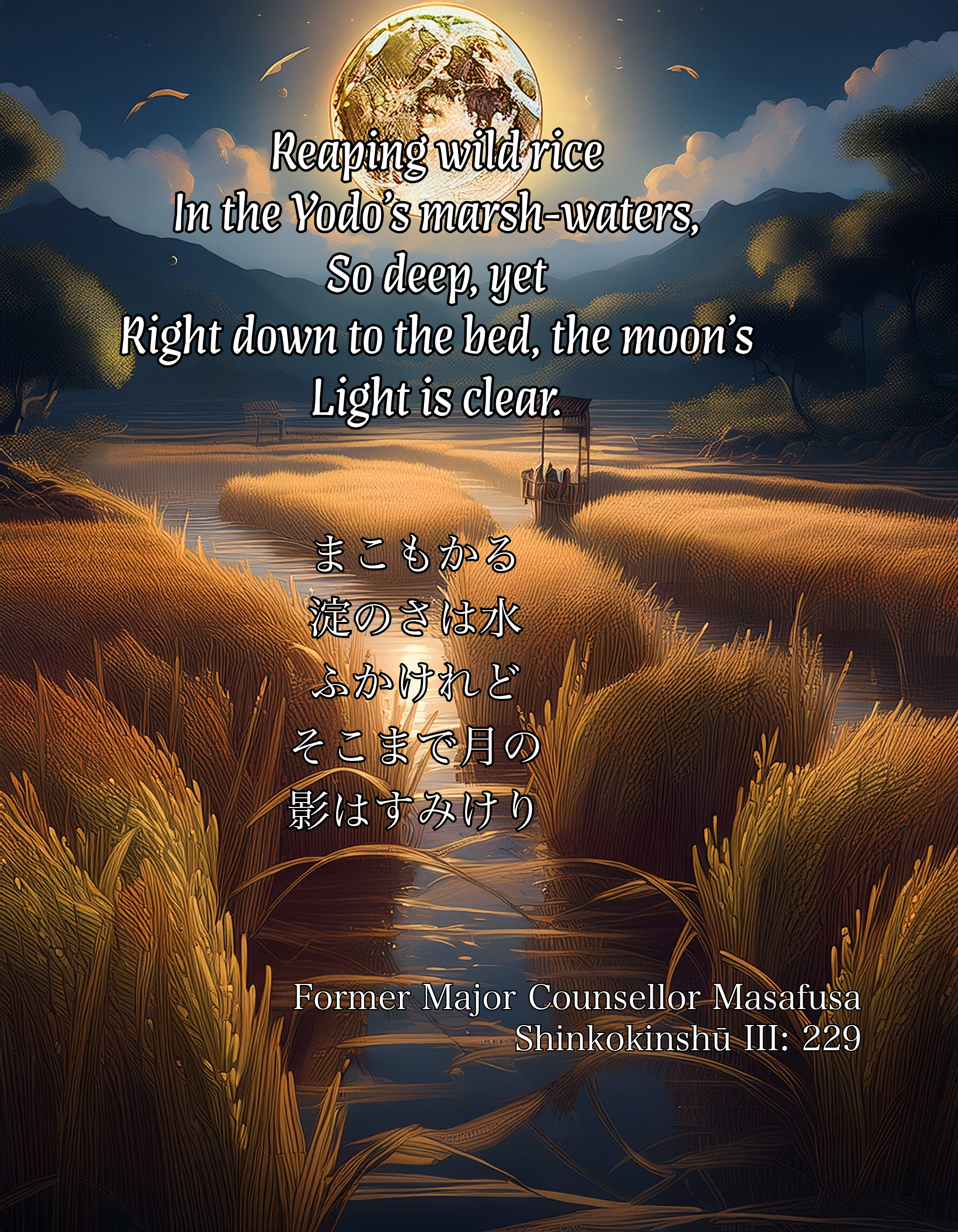
[ii] This poem shows influence from Shinkokinshū XIX: 1889, and also: Topic unknown. まこもかる淀のさは水ふかけれどそこまで月の影はすみけり makomo karu / yodo no sawamizu / fukakeredo / soko made tsuki no / kage wa sumikeri ‘Reaping wild rice / In the Yodo’s marsh-waters, / So deep, yet / Right down to the bed, the moon’s / Light is clear.’ Former Major Counsellor Masafusa (Shinkokinshū III: 229)
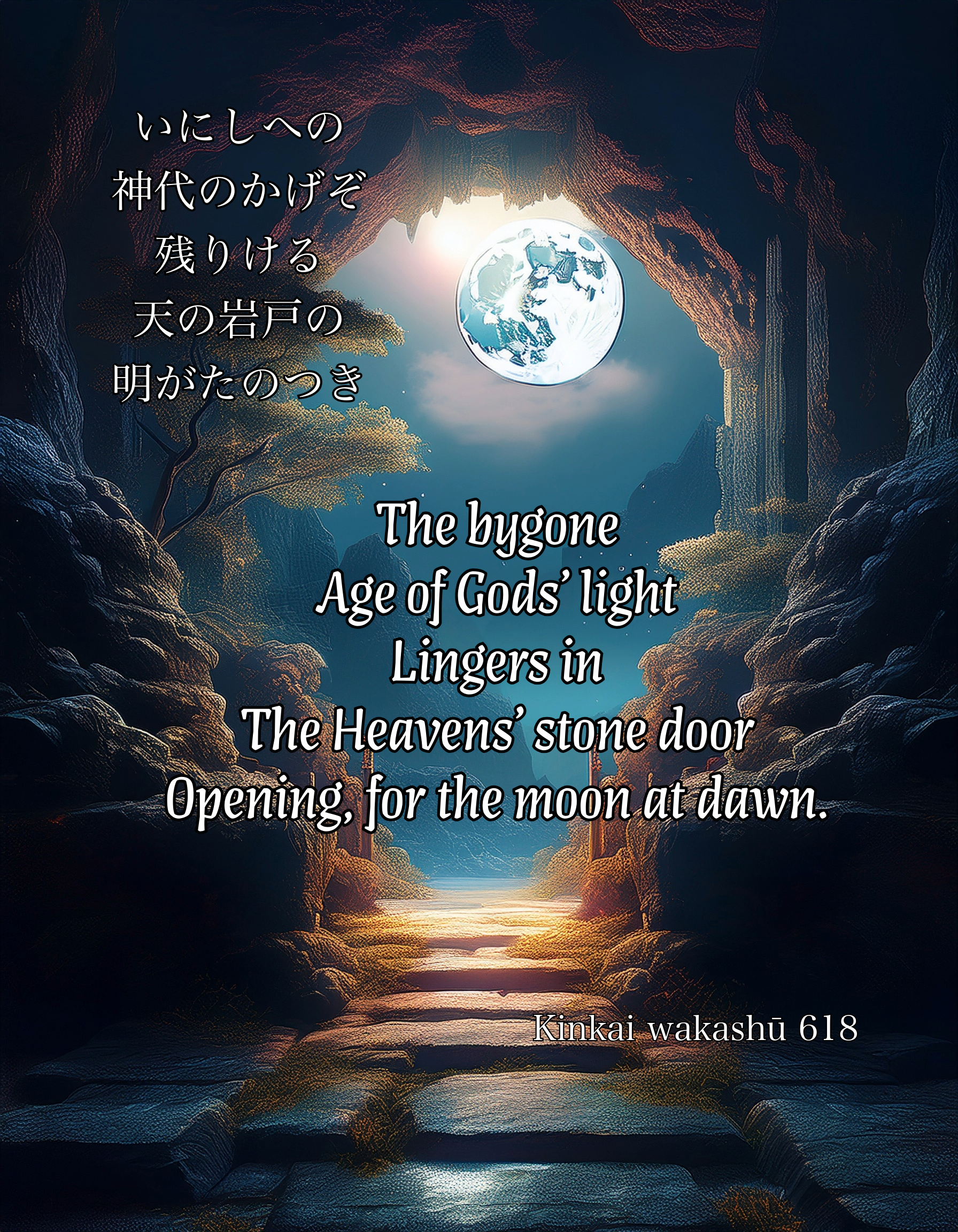
inishie no kamiyo no kage zo nokorikeru ama no iwato no akegata no tsuki
The bygone Age of Gods’ light Lingers in The Heavens’ stone door Opening, for the moon at dawn.[i]
618
[i] See: On the conception of the moon at dawn, for the Kasuga Poetry Match. 天の戸をおしあけがたの雲間より神よの月の影ぞ残れる ama no to o / oshi akegata no / kumoma yori / kamiyo no tsuki no / kage zo nokoreru ‘Upon the gates of Heaven / Pushing brightening / Through the cloud-gaps / From the Age of Gods, the moon’s / Light lingers.’ The Regent and Chancellor (Shinkokinshū XVI: 1547)
A poem composed during the year when the Ise Shrine was renewed.[i]
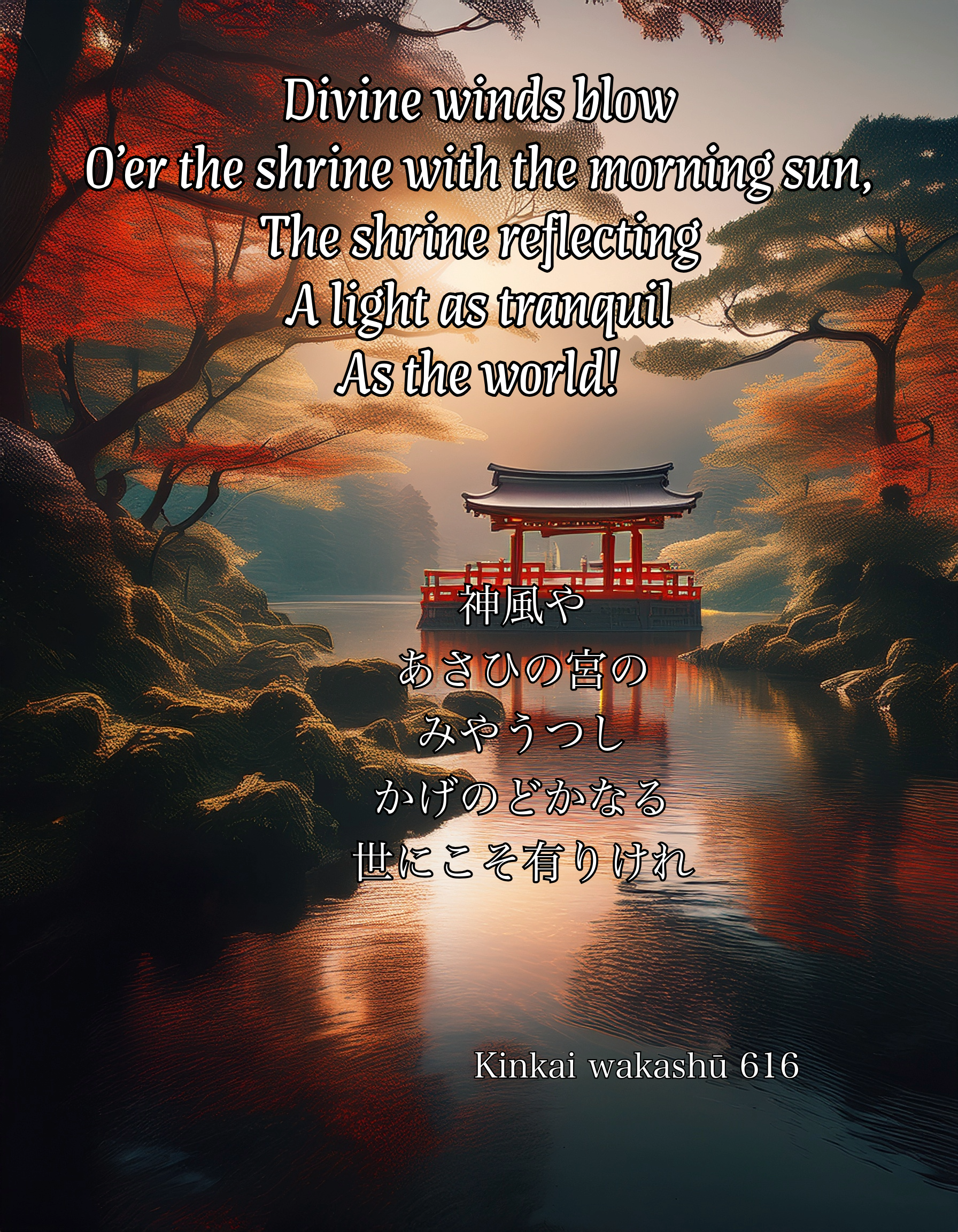
神風やあさひの宮のみやうつしかげのどかなる世にこそ有りけれ
kamikaze ya asahi no miya no miya utsushi kage nodokanaru yo ni koso arikere
Divine winds blow O’er the shrine with the morning sun, The shrine reflecting A light as tranquil As the world![ii]
616
[i] The Grand Shrine at Ise was demolished and rebuilt approximately every twenty years. The occasion Sanetomo is referring to here took place in the Ninth Month, Jōgen 3 [1209] (Higuchi 2016, 188).
[ii] See: In reply. 神風やいすずかは浪かずしらずすむべきみよに又かへりこん kamikaze ya / isuzukawanami / kazu shirazu / sumubeki miyo ni / mata kaerikon ‘Divine winds blow / Waves upon the Isuzu River / In numbers unknown, / So bright this age that / Ever will I return.’ Supernumerary Master of the Crown Prince’s Household Kintsugu (Shinkokinshū XIX: 1874)
Former Emperor Yōzei, on the 15th day of the Ninth Month, when it fell upon the day of Elder Brother-Metal Monkey, held a poetry match of the Left and Right with his eldest son’s daughters, the First Princess and the Second Princess, as the leaders of the two teams, composing poems in response to prior poems on the conception of the end of autumn.
Original
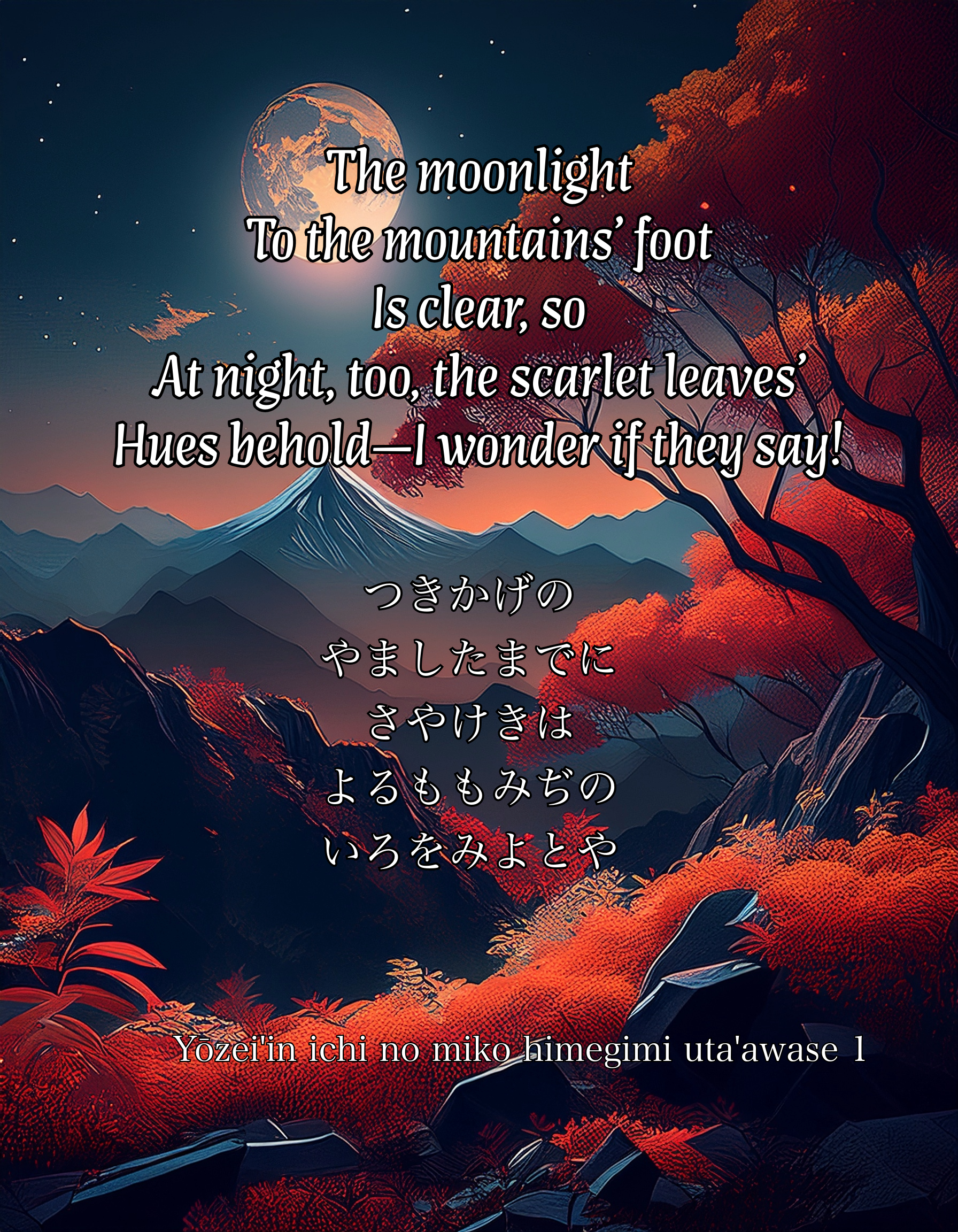
つきかげのやましたまでにさやけきはよるももみぢのいろをみよとや
tsukikage no yamashita made ni sayakeki wa yoru mo momiji no iro o miyo to ya
The moonlight To the mountains’ foot Is clear, so At night, too, the scarlet leaves’ Hues behold—I wonder if they say!
1
Left
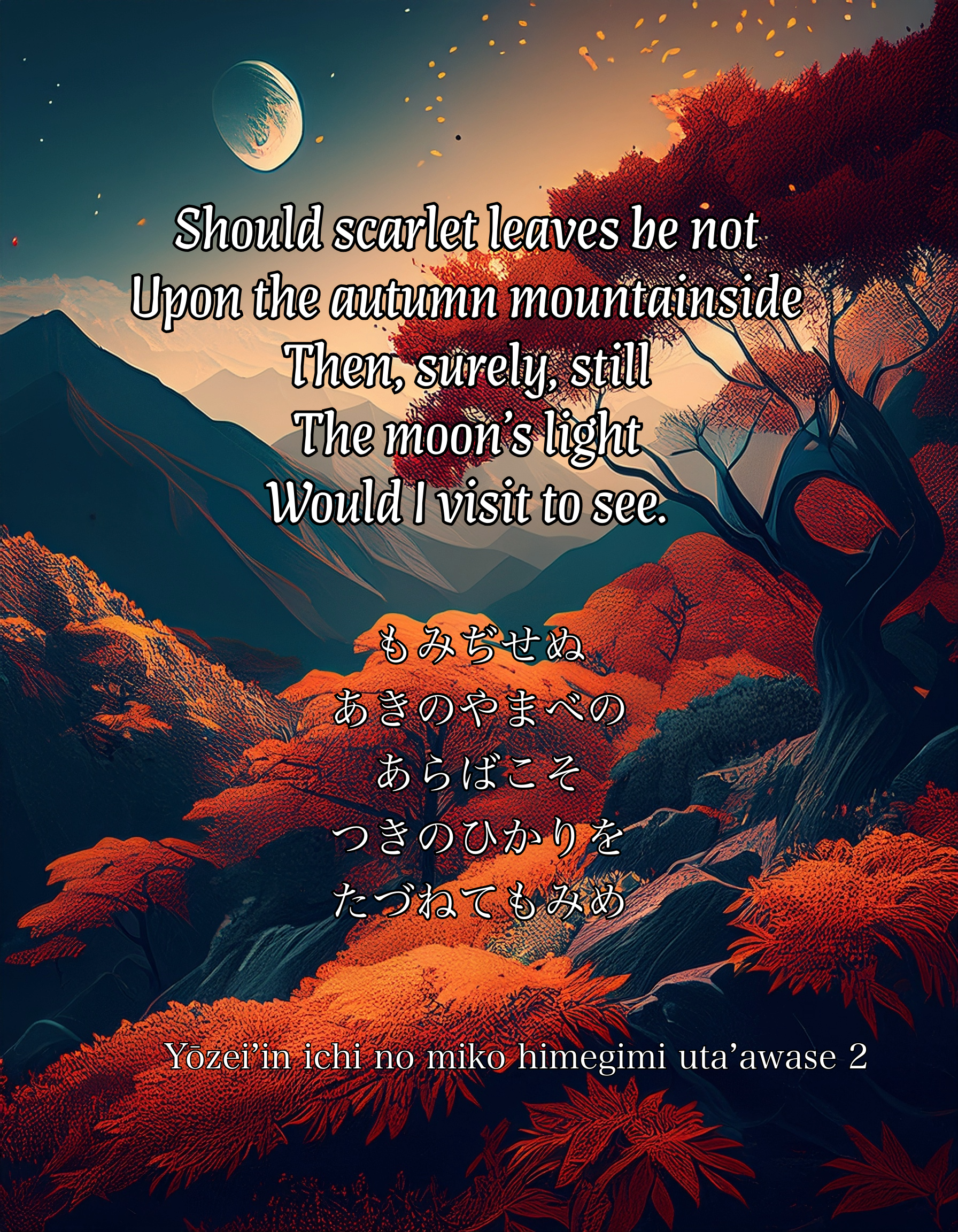
もみぢせぬあきのやまべのあらばこそつきのひかりをたづねてもみめ
momiji senu aki no yamabe no araba koso tsuki no hikari o tazunete mo miyu
Should scarlet leaves be not Upon the autumn mountainside Then, surely, still The moon’s light Would I visit to see.
makuzu hau yamaji mo harete aki no yo wa koyuru tabibito yasuki tsuki kana
Kudzu vines crawl Along the mountain paths, so clear On an autumn night for A traveller a’crossing Lit by a clement moon!
Cell of the Fragrant Elephant 35
Right
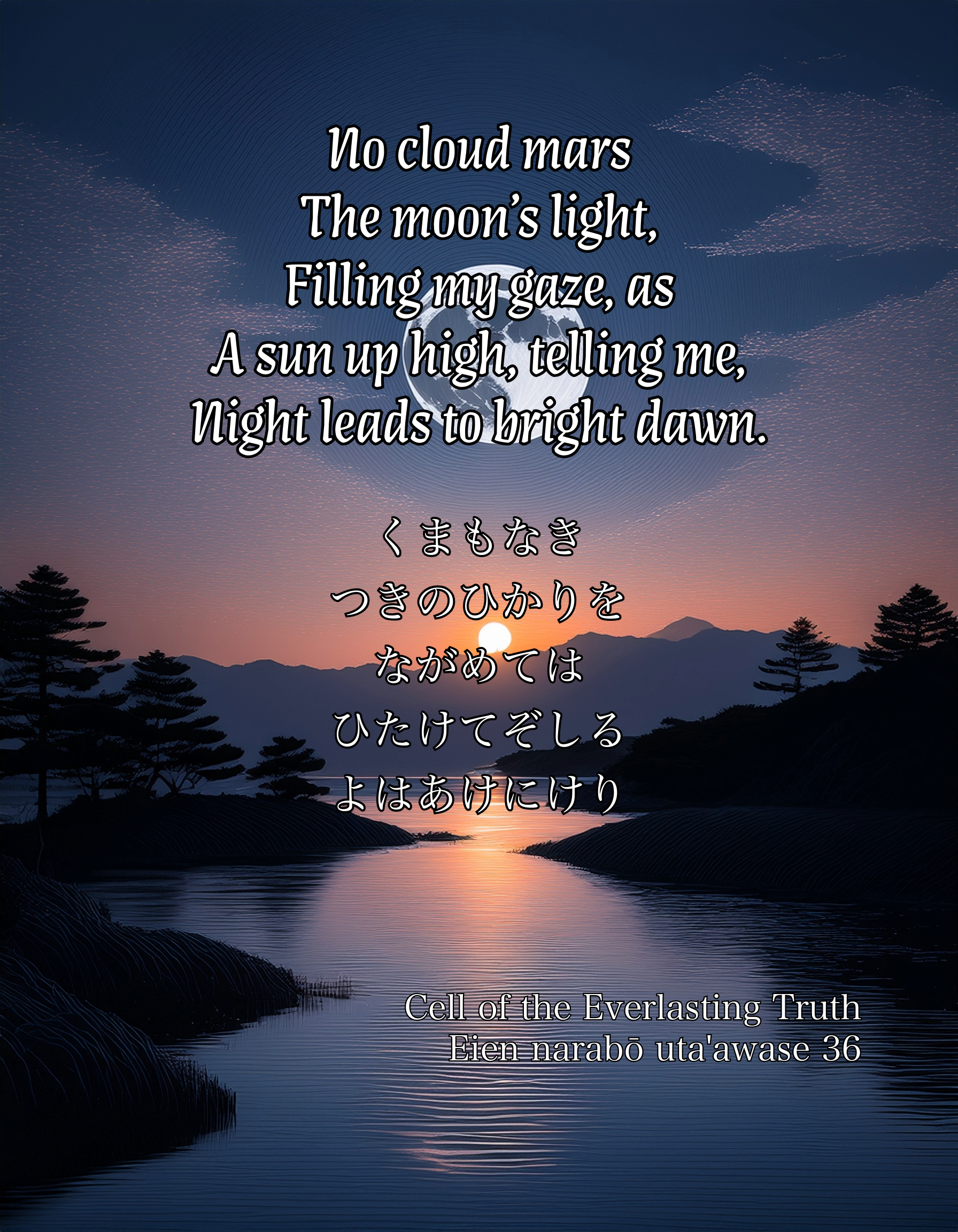
くまもなきつきのひかりをながめてはひたけてぞしるよはあけにけり
kuma mo naki tsuki no hikari o nagamete wa hi takete zo shiru yo wa akenikeri
No cloud mars The moon’s light, Filling my gaze, as A sun up high, telling me, Night leads to bright dawn.
Cell of the Everlasting Truth 36
The poem of the Left has nothing to present in all of its syllables. The poem of the Right resembles a composition by someone drunk out of his mind. As a result, it’s impossible to decide between them.
In the poem of the Left, does ‘clement moonlight’ mean that the moon’s light enables one to traverse a mountain path, which normally one would be unable to make one’s way along because one would expect it to be dark? The diction here is insufficient. As it says in the preface to the Ancient and Modern Collection of Narihira’s poems, ‘excessive conception but lacking in diction, like withered flowers lacking colours, but with a lingering fragrance’. This is a poem in that style, isn’t it. As for the poem of the Right, this, too, has ‘night leads to bright dawn’—the diction here is stilted and the conception lacks elegance. I have to say these poems are of about the same standard.