Topic unknown.
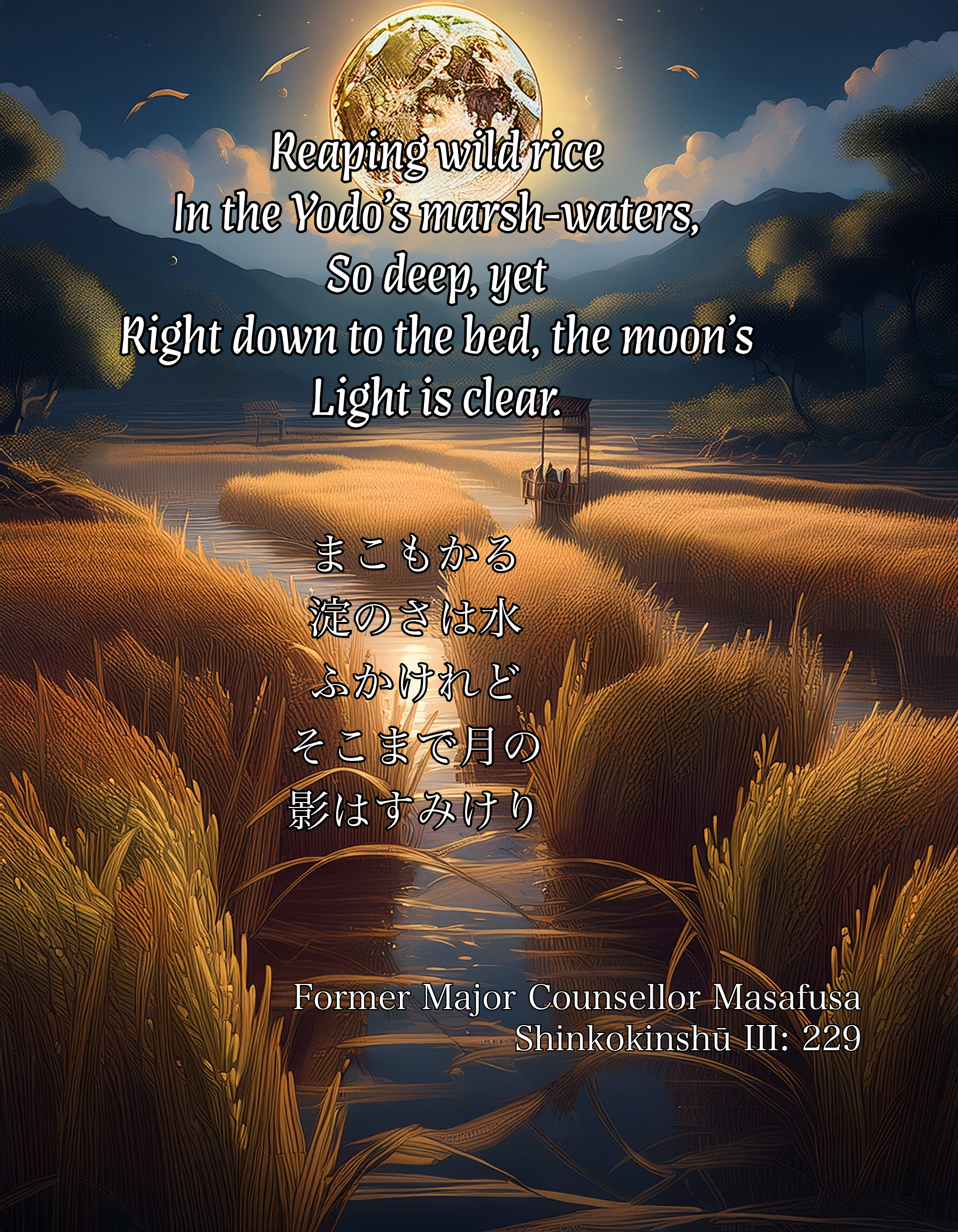
まこもかる淀のさは水ふかけれどそこまで月の影はすみけり
makomo karu
yodo no sawamizu
fukakeredo
soko made tsuki no
kage wa sumikeri | Reaping wild rice
In the Yodo’s marsh-waters,
So deep, yet
Right down to the bed, the moon’s
Light is clear. |
Former Major Counsellor Masafusa

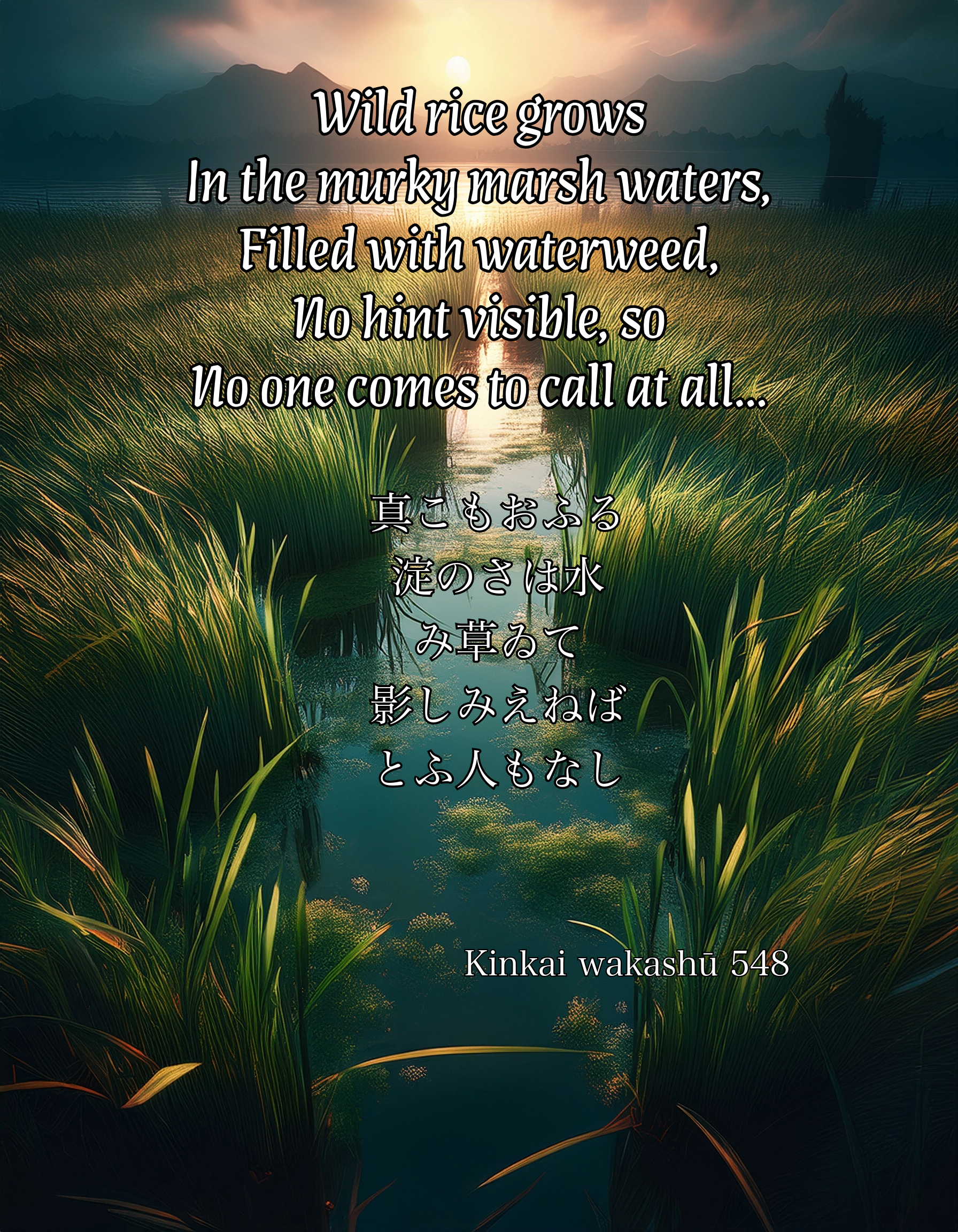
真こもおふる淀のさは水み草ゐて影しみえねばとふ人もなし
makomo ouru
yodo no sawamizu
mikusa ite
kage shi mieneba
tou hito mo nashi | Wild rice grows
In the murky marsh waters,
Filled with waterweed,
No hint visible, so
No one comes to call at all… |
548
Love by the waters’ edge.
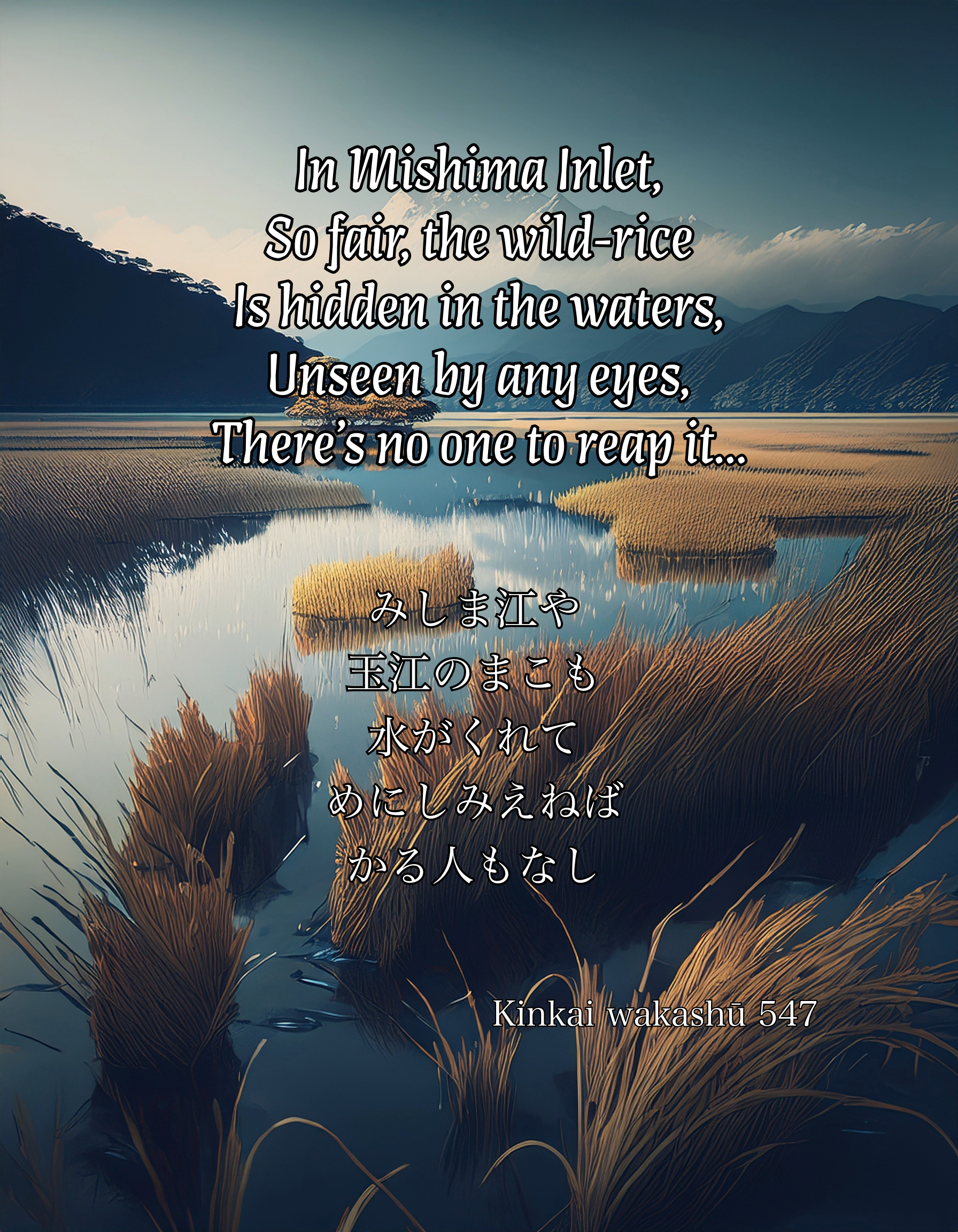
みしま江や玉江のまこも水がくれてめにしみえねばかる人もなし
mishimae ya
tamae no makomo
mizugakurete
me ni shi mieneba
karu hito mo nashi | In Mishima Inlet,
So fair, the wild rice
Is hidden in the waters,
Unseen by any eyes,
There’s no one to reap it… |
547
三島江の入江の真菰雨降ればいとど萎れて刈る人もなし
misimae no
irie no makomo
ame Fureba
itodo siworete
karu Fito mo nasi |
Upon Mishima Bay’s
Wild rice in the inlets,
Rain does fall, and
It is cast down all the more
With no one to reap it… |
Minamoto no Tsunenobu
源経信
いかにして真菰を刈らむ五月雨に高瀬の淀も水まさりけり
ika ni shite
makomo o karamu
samidare ni
takase no yodo mo
mizu masarikeri |
What am I to do?
I would reap rushes
In the rain
Where the Yodo meets Takase,
But the waters have risen high… |
Minamoto no Morotoki
源師時
刈り残す水の真菰に隱ろへてかげもち顔に鳴く蛙かな
karinokosu
mizu no makomo ni
kakuroete
kagemochigao ni
naku kawazu kana |
Unreaped remnants
Of wild rice in the water
Conceal
The contentedly
Croaking frogs! |
Saigyō
This poem is also Sankashū 1018.
Composed on Spring Steeds.
眞菰草つのぐみわたる澤邊にはつながぬ駒もはなれざりけり
makomogusa
tuno gumiwataru
saFabe ni Fa
tunaganu koma mo
Fanarezarikeri |
With wild rice
Thrusting horns out
From the marshside
My untethered steed
Will not stray far… |
The Monk Shun’e
'Simply moving and elegant'