sayo fukete nezamezariseba hototogisu hitozute ni koso kikubekarikere
When brief night broke, and I failed to awaken to The cuckoo, Via a message, indeed, Was I able to hear it!
Tadami 27
Right
人ならばまててふべきをほととぎすふたこゑとだにきかですぎぬる
hito naraba mate chōbeki o hototogisu futa koe to dani kikade suginuru
Were you a man, ‘Wait!’ is what I’d tell you, O, cuckoo! For without even a second call For me to hear have you passed by.
Motozane 28
The Left’s poem, where the poet seems to awaken without a thought of hearing the cuckoo, is certainly somewhat odd. Nevertheless, the poem overall is charming. As for the Right’s poem, well, what is the poet trying to say by asking the cuckoo to wait when he will hear its first call, if it were a man? Is the conception, perhaps, for the cuckoo to wait a while? There’s not enough diction for the conception here, I feel. Both of these are about the same standard, so I make this a tie.
For a painting on a folding screen of a woman with a torn robe passing by a spot on the plains with three aged pines.
おのづから我をたづぬる人もあらば野中の松よみきとかたるな
onozukara ware o tazunuru hito mo araba nonaka no matsu yo miki to kataru na
If, from time to time, Enquiring after me A man should come, O, pines upon the plains, Say not that you’ve seen me![i]
694
[i] See: Topic unknown. それをだに思ふ事とてわがやどを見きとないひそ人のきかくに sore o dani / omou koto tote / wa ga yado o / miki to na ii so / hito no kikaku ni ‘Simply on those times / Do my thoughts dwell, so / That my house / You’ve seen, say not! / Lest others hear of it…’ Anonymous (Kokinshū XV: 811)
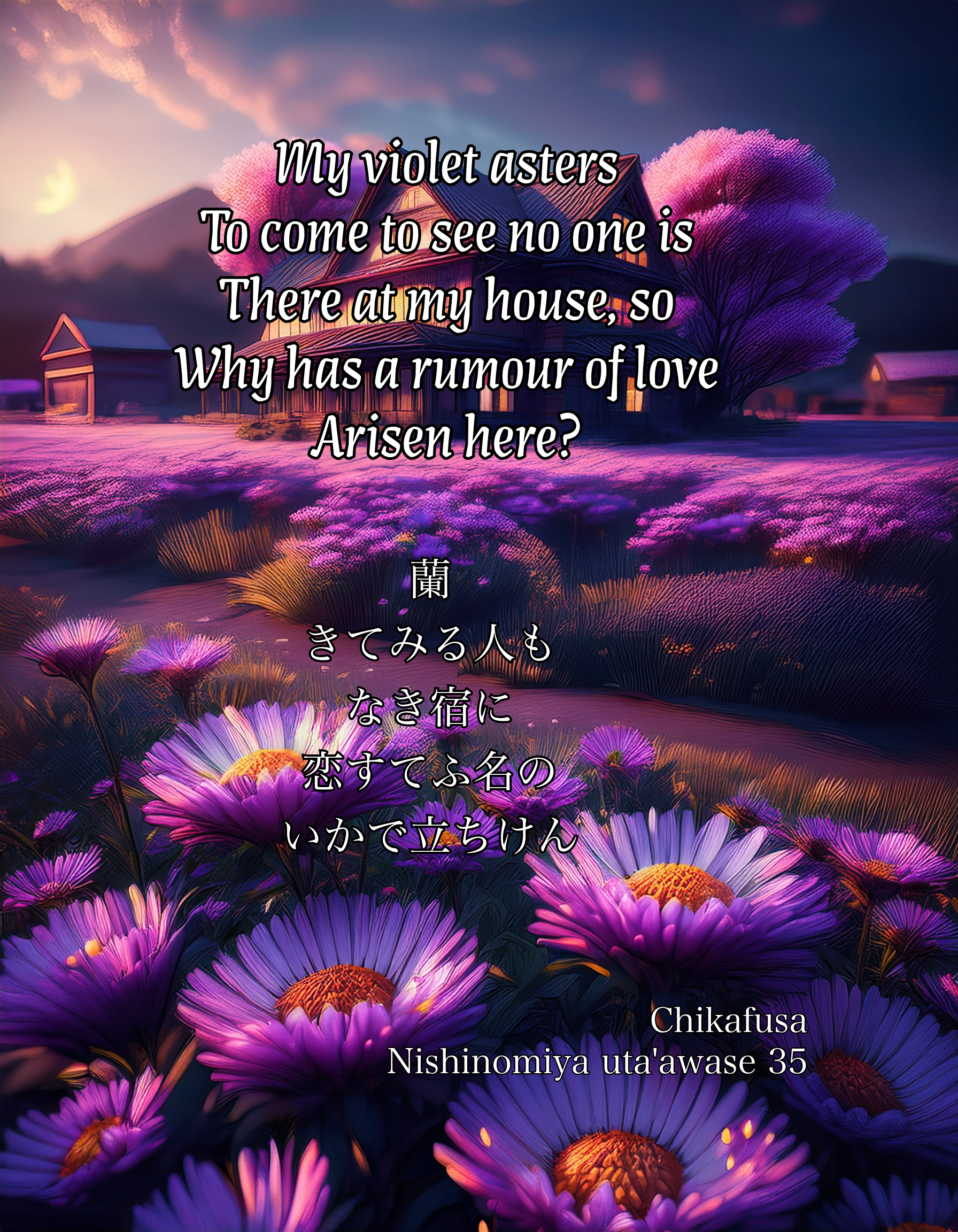
fujibakama kitemiru hito mo naki yado ni koisu chō na no ikade tachiken
My violet asters To come to see no one is There at my house, so Why has a rumour of love Arisen here?
Chikafusa 35
Right
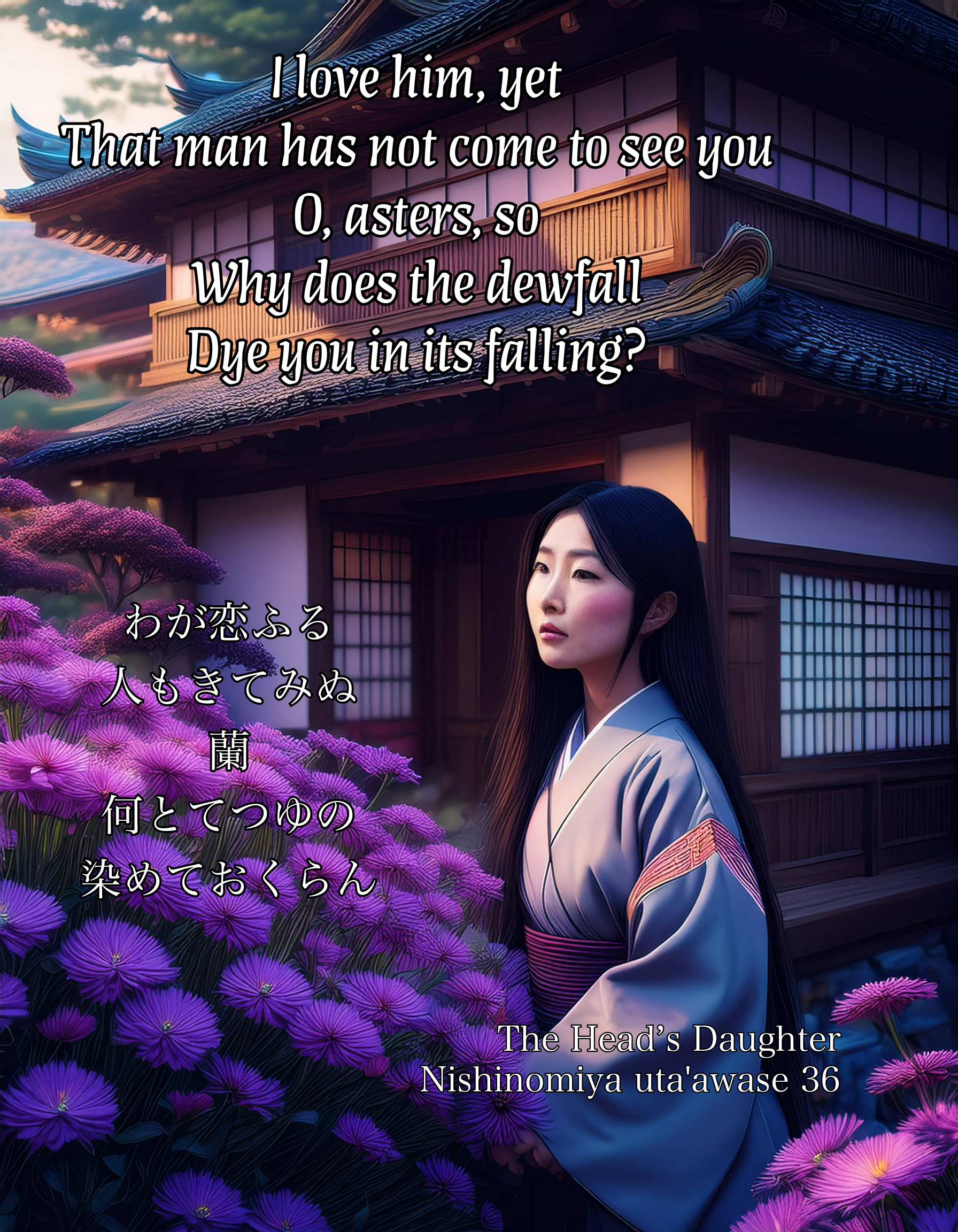
わが恋ふる人もきてみぬ蘭何とてつゆの染めておくらん
wa ga kouru hito mo kiteminu fujibakama nani tote tsuyu no somete’okuran
I love him, yet That man has not come to see you O, asters, so Why does the dewfall Dye you in its falling?
The Head’s Daughter 36
The Left’s overall impression is not bad, but I am curious about why a rumour of love should darken the door of a house, if it’s one where ‘no one comes to see’. Then, the Right uses ‘Why does the dewfall / Dye you in its falling?’—this seems like an excessive use of diction and the sequencing doesn’t sound smooth, so these seem of about the same standard.
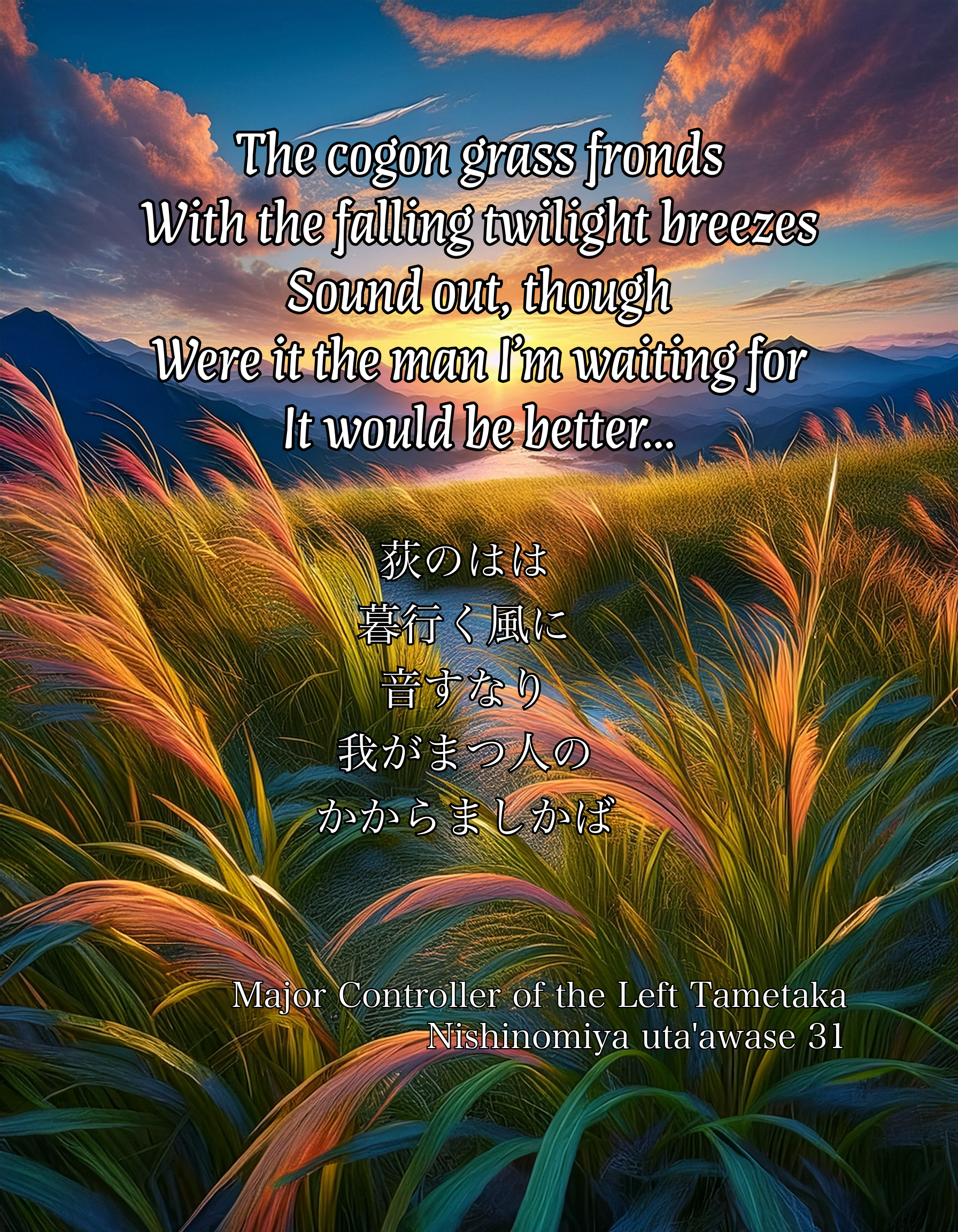
ogi no ha wa kureyuku kaze ni otosu nari wa ga matsu hito no kakaramashikaba
The cogon grass fronds With the falling twilight breezes Sound out, though Were it the man I’m waiting for It would be better…
Major Controller of the Left Tametaka 31
Right
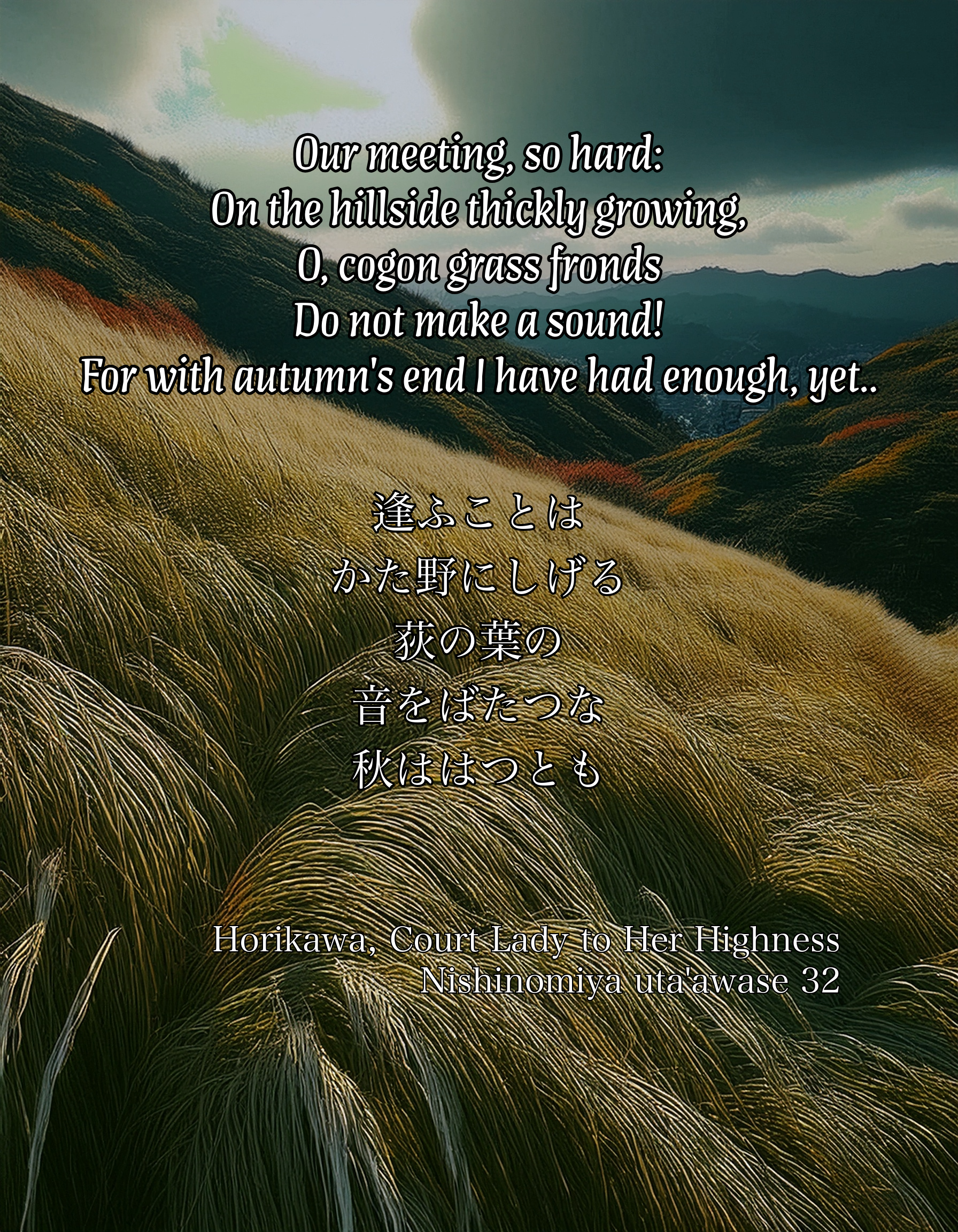
逢ふことはかた野にしげる荻の葉の音をばたつな秋ははつとも
au koto wa katano ni shigeru ogi no ha no oto oba tatsu na aki wa hatsu tomo
Our meeting, so hard: On the hillside thickly growing, O, cogon grass fronds Do not make a sound! For with autumn’s end I have had enough, yet..
Horikawa, Court Lady to Her Highness 32
I feel that the emotions encompassed by the sound of the wind in ‘Were it the man I’m waiting for / It would be better’ sounded more striking than ‘On the hillside thickly growing, / O, cogon grass fronds’.
tanabata ni aranu wa ga mi no nazo mo kaku toshi ni marenaru hito o matsuran
The Weaver Maid My sorry self is not, but[1] Why is it that, Rarely, but once a year, That man’s visit I seem to await?
538
[1] An allusive variation on: Topic unknown. 篝火にあらぬわが身のなぞもかく涙の河にうきてもゆらむ kagaribi ni / aranu wa ga mi no / nazo mo kaku / namida no kawa ni / ukite moyuramu ‘A fisher’s torch / I’m not, so why does my sorry self / Yet / Upon a river of tears, / Burning, seem to drift along?’ Anonymous (KKS XI: 529)