New Year Archery
雲のうへや春のはじめの梓弓ゐまちの月にいづるもろ人
| kumo no ue ya haru no hajime no azusayumi imachi no tsuki ni izuru morobito | Above the clouds, At the start of spring, With catalpa bows Beneath the eighteenth night’s moon Emerge the crowds! |
みる程ぞしばしなぐさむ歎きつつねぬ夜の空の有明の月
| miru hodo zo shibashi nagusamu nagekitsutsu nenu yo no sora no ariake no tsuki | While gazing on it Briefly am I consoled: Ever grieving After a sleepless night in the sky Hangs the dawntime moon.[i] |
15
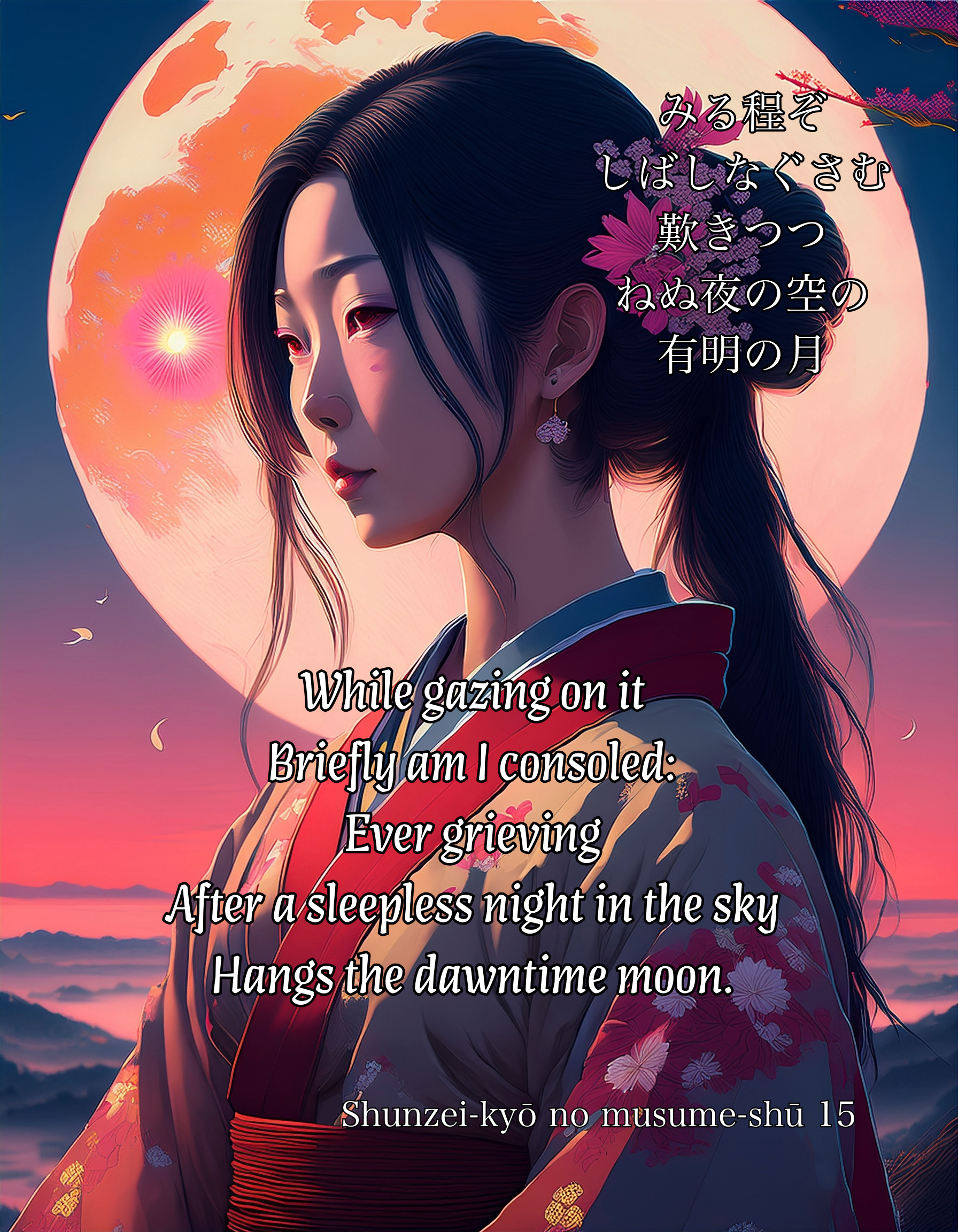
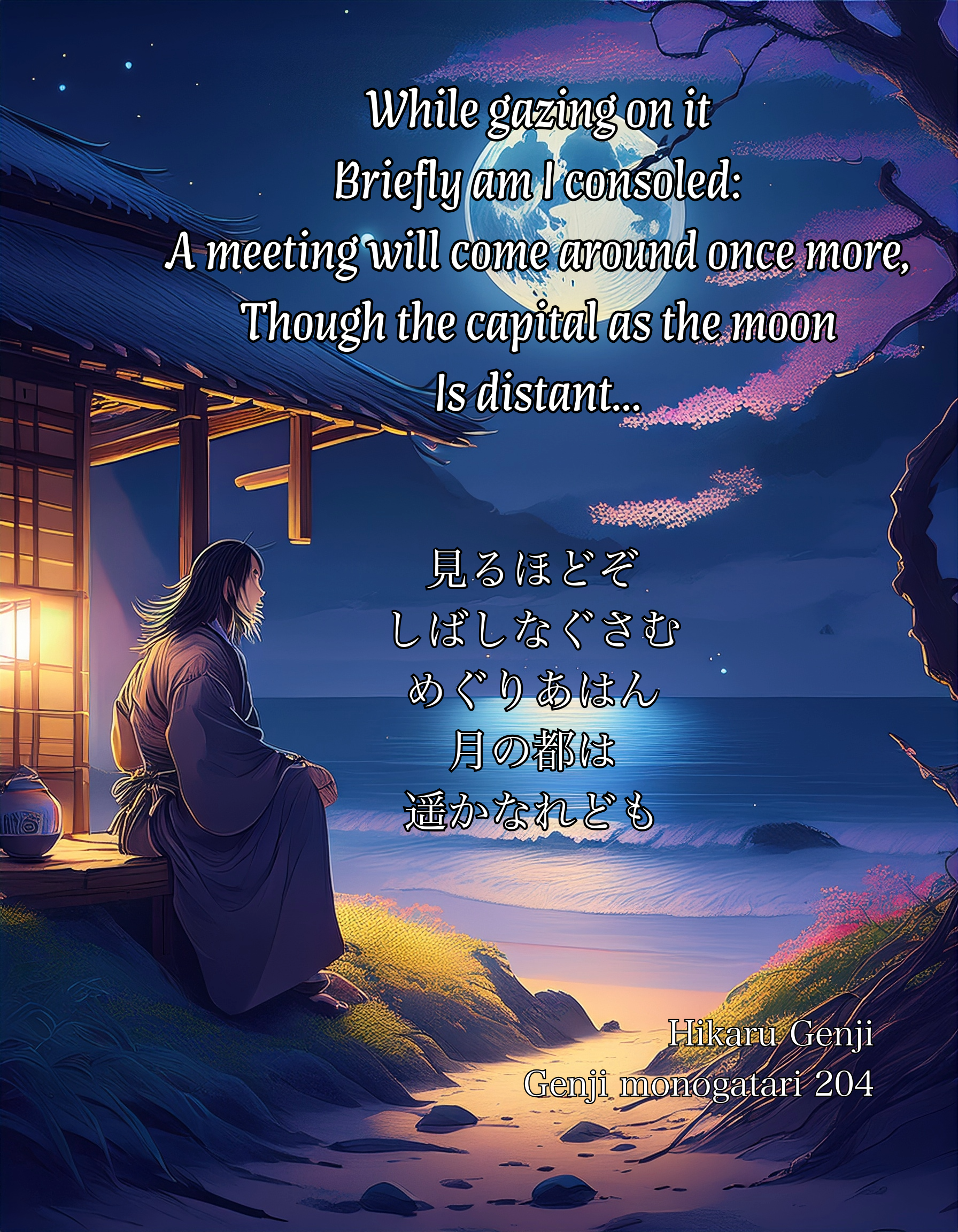
[i] An allusive variation on: 見るほどぞしばしなぐさむめぐりあはん月の都は遥かなれども miru hodo zo / shibashi nagusamu / meguri awan / tsuki no miyako wa / harukanaredomo ‘While gazing on it / Briefly am I consoled: / A meeting will come around once more, / Though the capital as the moon / Is distant…’ Hikaru Genji (Genji monogatari 204)
Winter
松しまやをじまが磯による浪の月の氷にちどり鳴くなり
| matsushima ya ojima ga iso ni yoru nami no tsuki no kōri ni chidori nakunari | In Matsushima Upon Ojima’s rocky shore Break waves, while from The moon’s ice The plovers are a’calling.[i] |
12
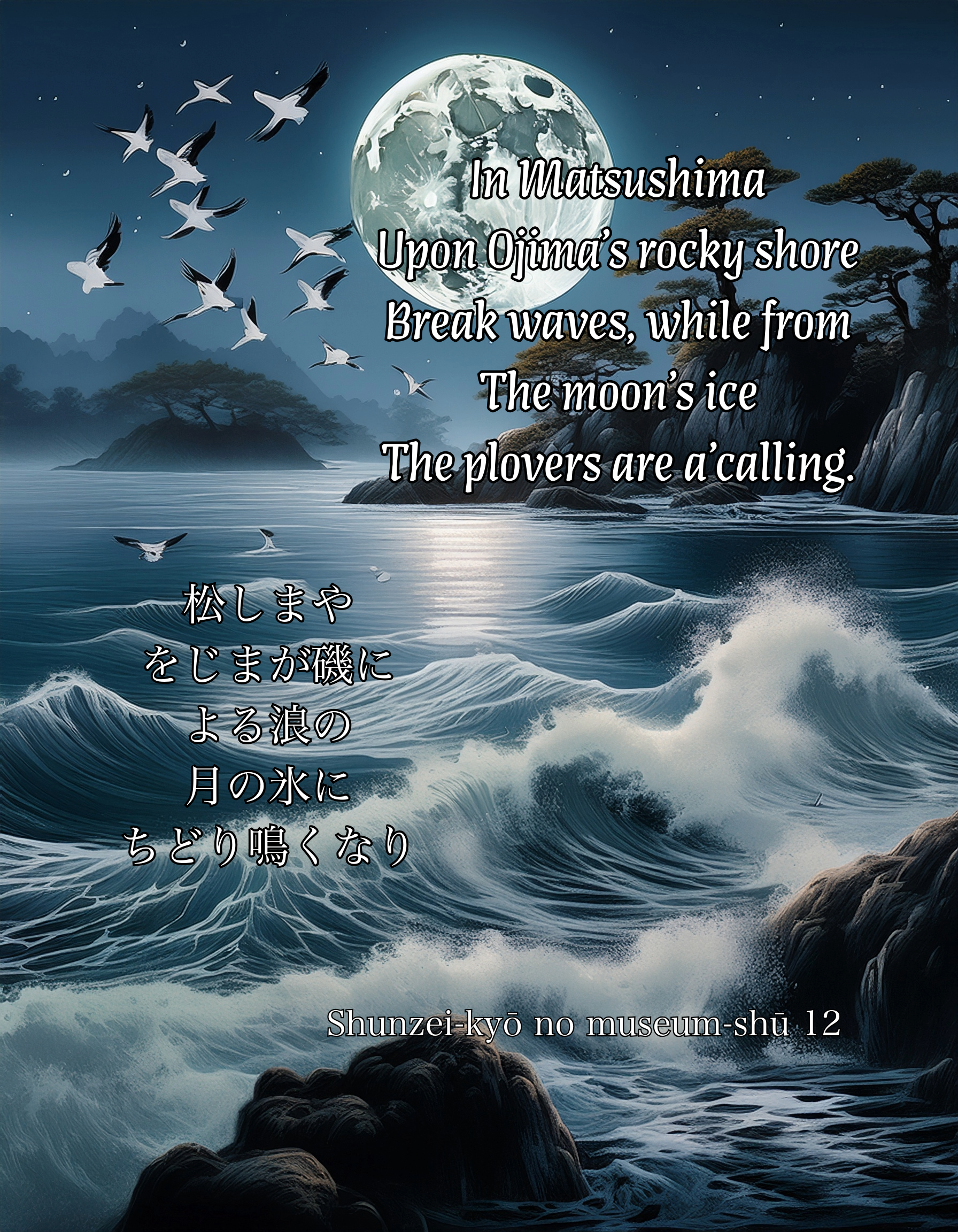
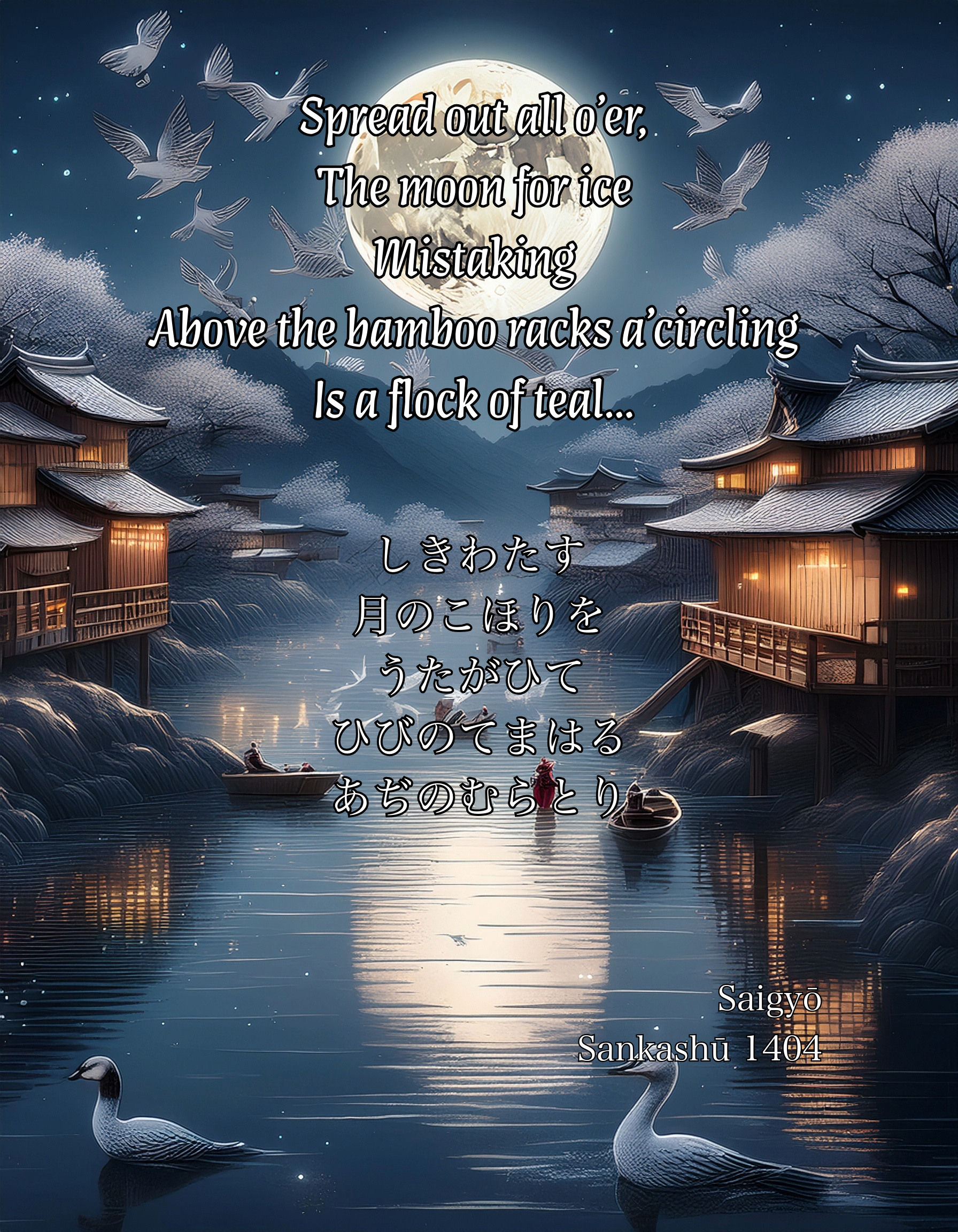
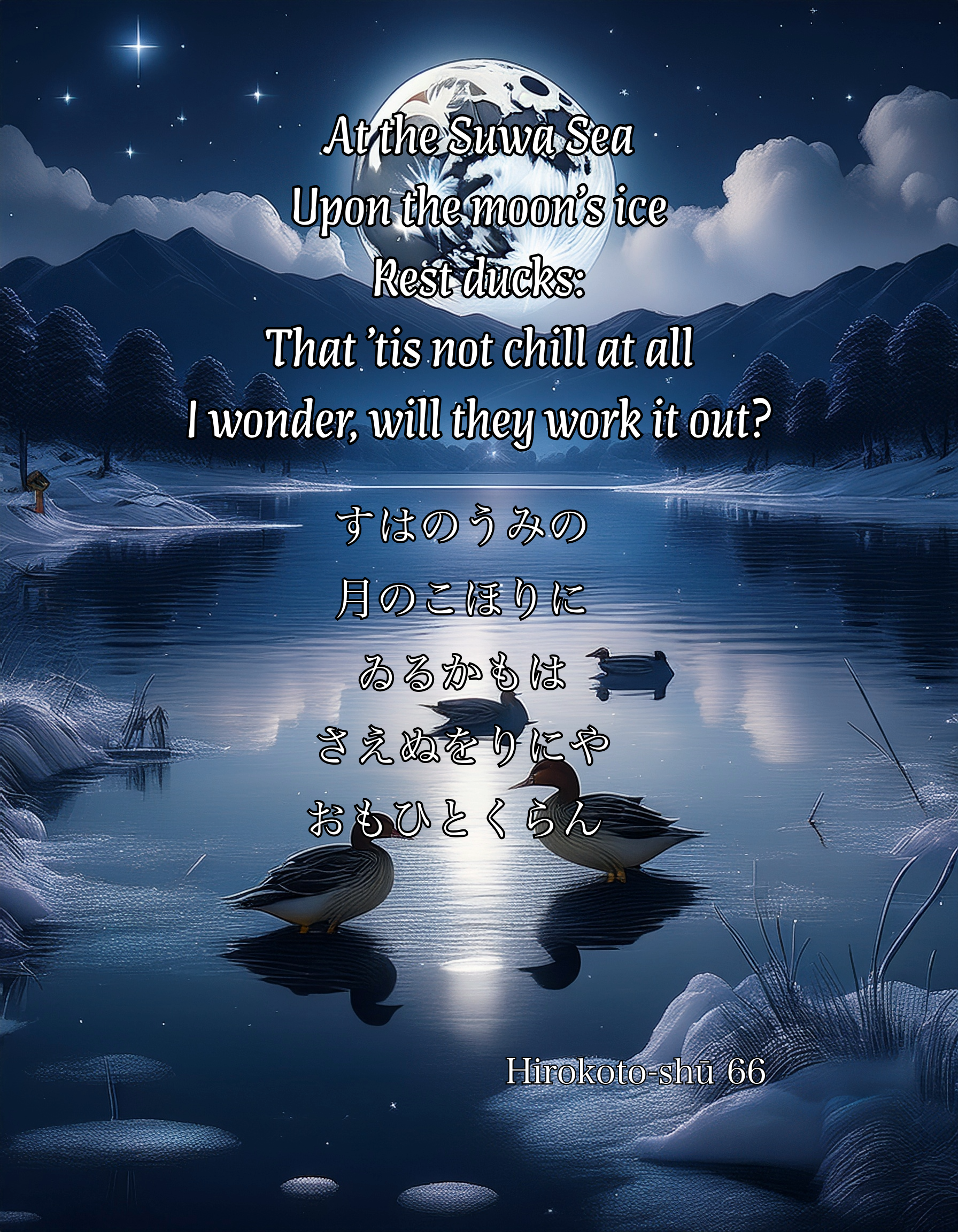
[i] See: I went to the province of Sanuki and arrived at harbour called Minotsu. The moon was bright and bamboo racks for growing seaweed filled the bay. Gazing across, into the distance, I saw seabirds arriving and soaring above them. しきわたす月のこほりをうたがひてひびのてまはるあぢのむらとり shikiwatasu / tsuki no kōri o / utagaite / hibi no te mawaru / aji no muradori ‘Spread out all o’er, / The moon for ice / Mistaking / Above the bamboo racks a’circling / Is a flock of teal…’ Saigyō (Sankashū 1404); and: Waterbirds beneath the moon (poetry match) すはのうみの月のこほりにゐるかもはさえぬをりにやおもひとくらん suwa no umi no / tsuki no kōri ni / iru kamo wa / saenu ori ni ya / omoitokuran ‘At the Suwa Sea / Upon the moon’s ice / Rest ducks: / That ’tis not chill at all / I wonder, will they work it out?’ (Hirokoto-shū 66)
月みばとたのめし秋のよもすがらまた恨めしく打つ衣かな
| tsuki miba to tanomeshi aki no yomosugara mata urameshiku utsu koromo kana | ‘When we see the moon…’ We promised, but in autumn, All night long, Still, despairingly Am I fulling clothes![i] |
11
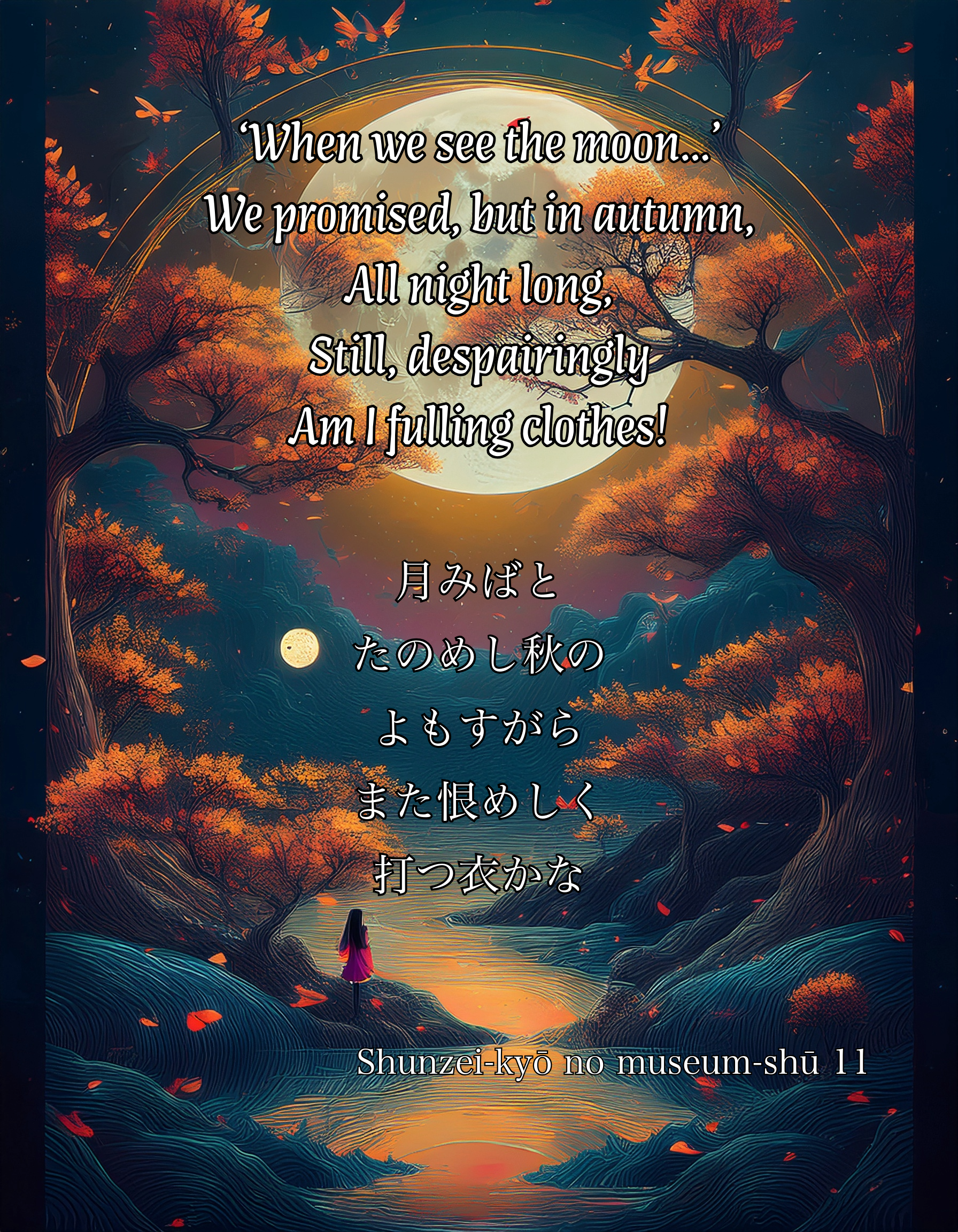
[i] See: Topic unknown. 月見ばと契をきてしふるさとの人もやこよひ袖ぬらすらん tsuki miba to / chigiri okiteshi / furusato no / hito mo ya koyoi / sode nurasuran ‘“When we see the moon…” / We made our vow; / Left at home / Does she, too, on this night / Have soaking sleeves, I wonder?’ Dharma Master Saigyō (Shinkokinshū X: 938); and: 月見ばとたのめかおきし人はこであさぢが露にまつむしぞなく tsuki miba to / tanome’okishi / hito wa kode / asaji ga tsuyu ni / matsumushi zo naku ‘“When we see the moon…” / Did he promise, before, but / That man has failed to come, and / From the dewy cogon grass / The pine crickets cry!’ Lord Ietaka (Sengohyakuban uta’awase 1428)
Autumn
むぐらはふやどとはわかず秋は来て心づくしの月ぞもりくる
| mugura hau yado to wa wakazu aki wa kite kokorozukushi no tsuki zo morikuru | From a mugwort tangled House I am no different: Autumn has come and, Heart draining, The moon comes dripping through.[i] |
8
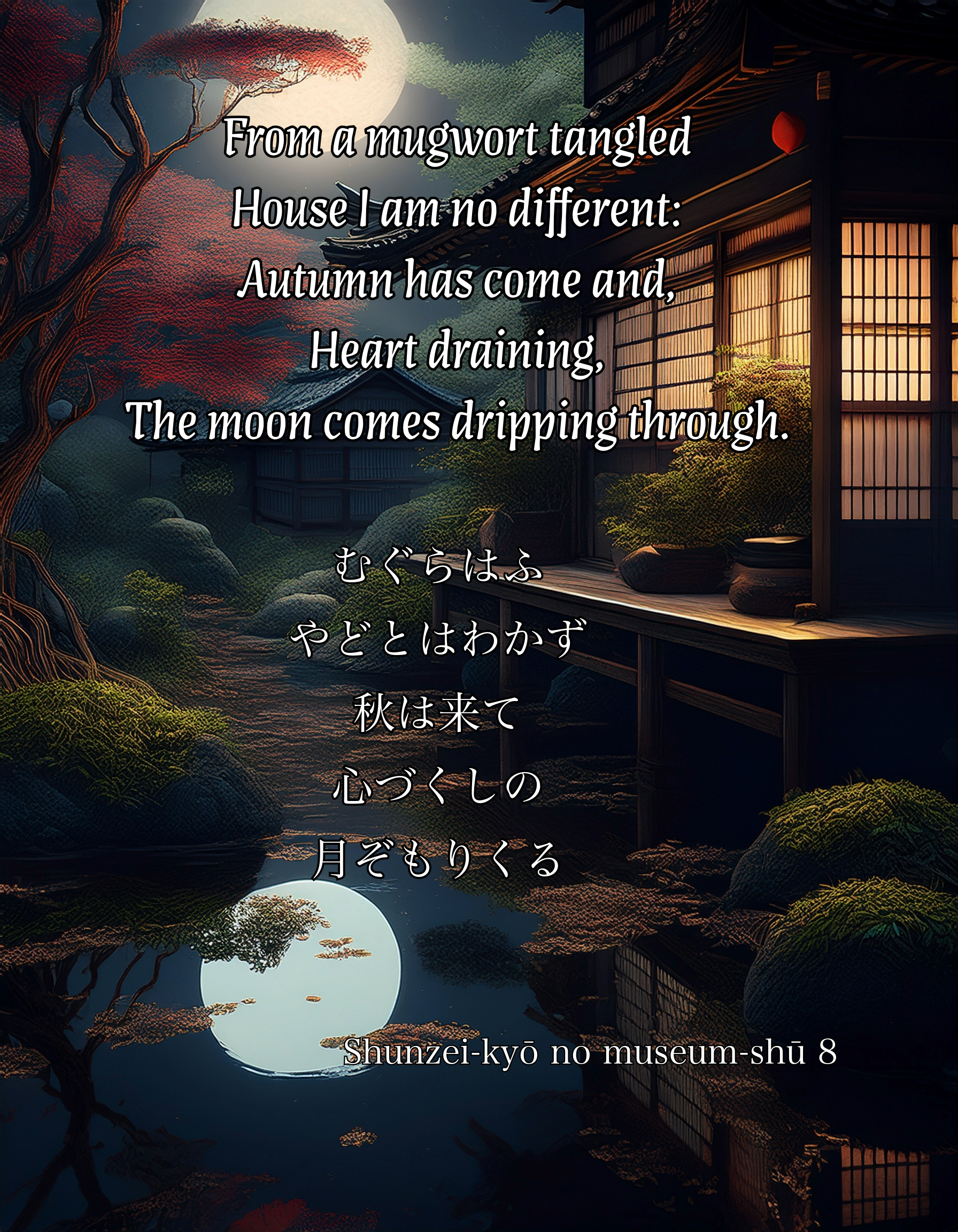
[i] An allusive variation on: Topic unknown. このまよりもりくる月の影見れば心づくしの秋はきにけり ko no ma yori / morikuru tsuki no / kage mireba / kokorozukushi no / aki wa kinikeri ‘Between the trees / Drips moon / Light, seeing it I know / Heart draining / Autumn, has come at last.’ Anonymous (Kokinshū IV: 184)
I went to the province of Sanuki and arrived at harbour called Minotsu. The moon was bright and bamboo racks for growing seaweed filled the bay. Gazing across, into the distance, I saw seabirds arriving and soaring above them.
しきわたす月のこほりをうたがひてひびのてまはるあぢのむらとり
| shikiwatasu tsuki no kōri o utagaite hibi no te mawaru aji no muradori | Spread out all o’er, The moon for ice Mistaking Above the bamboo racks a’circling Is a flock of teal… |