Willows by the waterside.
みなそこにふかきみどりの色みえて風になみよるかはやなぎかな
| minasoko ni fukaki midori no iro miete kaze ni nami yoru kawayanagi kana | In the waters’ depths Deep green, Their hue appears, then Shifting with the wind-blown waves, Willows by the river! |
55
Lakes
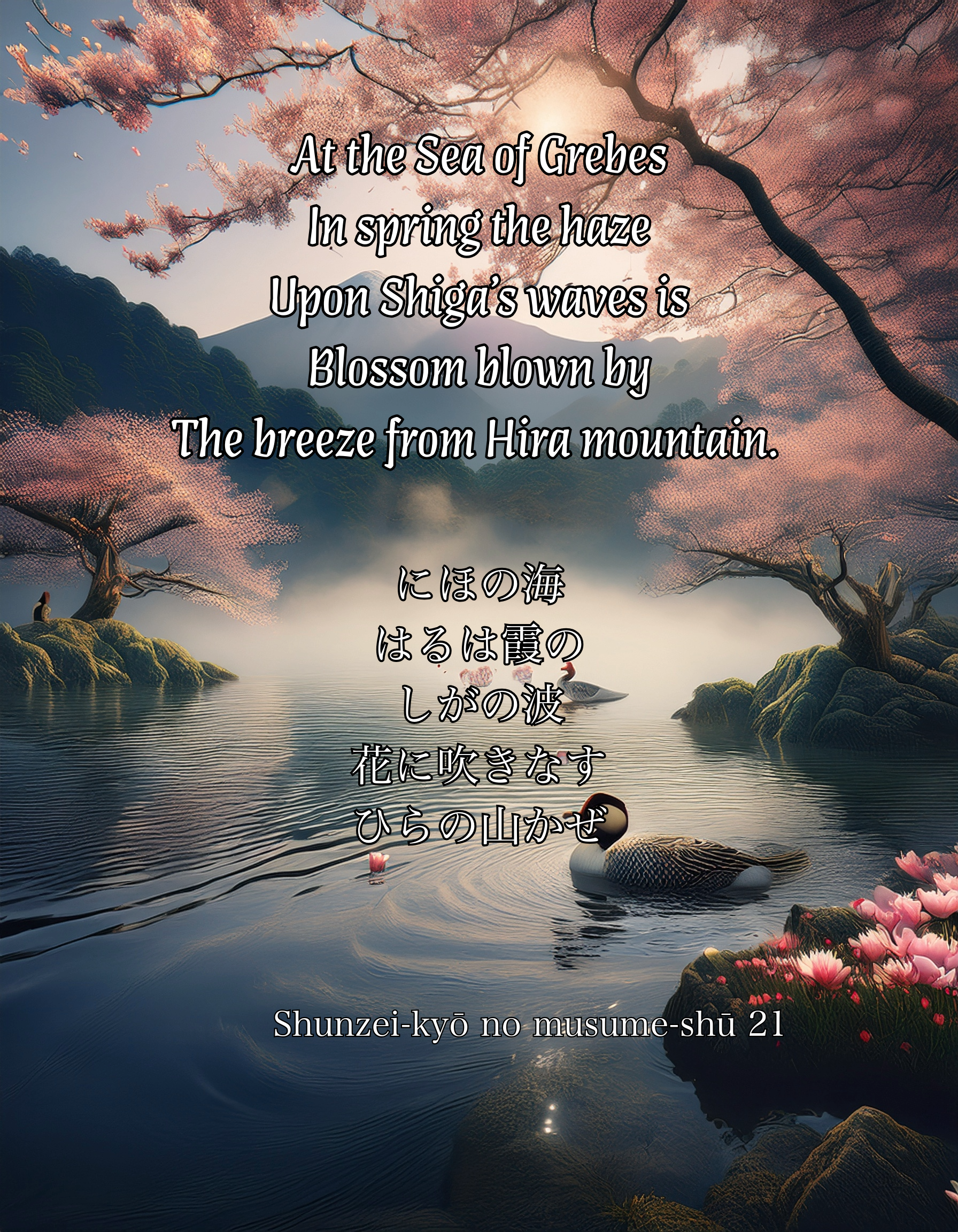
にほの海はるは霞のしがの波花に吹きなすひらの山かぜ
| nio no umi haru wa kasumi no shiga no nami hana ni fukinasu hira no yamakaze | At the Sea of Grebes In spring the haze Upon Shiga’s waves is Blossom blown by The breeze from Hira mountain. [i] |
21
[i] See: Composed as a poem on blossom. さくらさくひらの山かぜ吹くままに花になりゆくしがのうら浪 sakura saku / hira no yamakaze / fuku mama ni / hana ni nariyuku / shiga no uranami ‘Cherries flower on / Hira Mountain while / Breezes blow / All turned to blossom are / The waves on Shiga’s shore.’Yoshitsune, Middle Captain of the Inner Palace Guards, Left Division (Senzaishū II: 89)
On the same conception, while I was at a place called Futami in Ise.
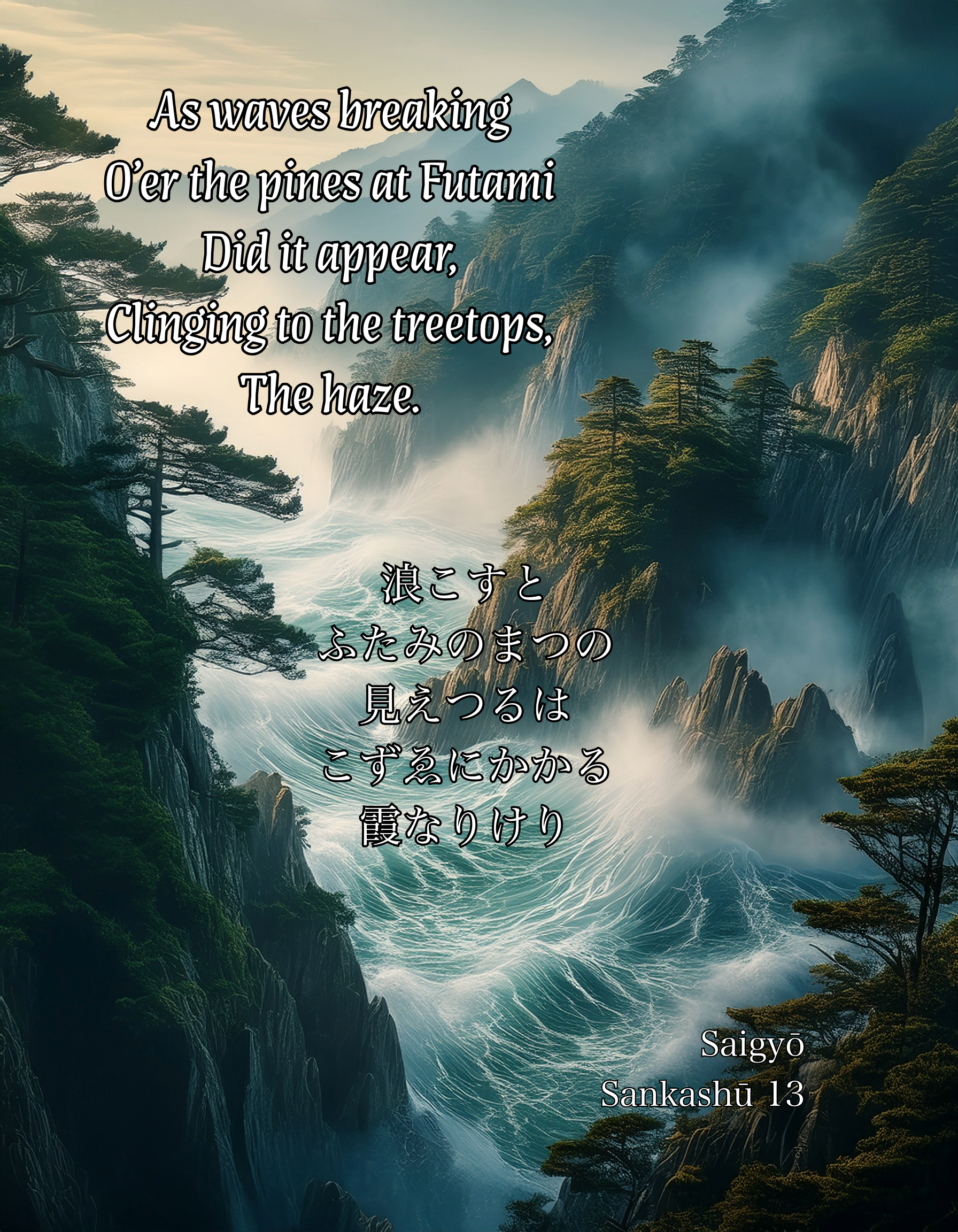
浪こすとふたみのまつの見えつるはこずゑにかかる霞なりけり
| nami kosu to futami no matsu no mietsuru wa kozue ni kakaru kasumi narikeri | As waves breaking O’er the pines at Futami Did it appear, Clinging to the treetops, The haze.[i] |
13
[i] See: 君をおきてあだし心を我がもたば末の松山波もこえなん kimi o okite / adashi kokoro o / wa ga motaba / sue no matsu yama / nami mo koenan ‘To abandon you / An inconstant heart / Would I have, but sooner / Over Sue-no-Matsuyama / Would waves break!’ (Kokinshū XX: 1093)
Round Two Hundred and Sixty-One
Left
あまつそら雲のはたてにみだれつつめもあやなりやあそぶいとゆふ
| ama tsu sora kumo no hatate ni midaretsutsu me mo aya nari ya asobu itoyū | In the heavenly skies The clouds’ edge is All a tangle; Have my eyes been deceived by The sporting heat haze? |
His Excellency, Sueyoshi
520
Right
とがむべき人なきゐでのやまぶきをこころやすくやなみのをるらむ
| togamubeki hito naki ide no yamabuki o kokoro yasuku ya nami no oruramu | Is it that to scold them Not a soul there is in Ide, that The kerria, Without a care, By the waves are plucked? |
Tango
521
The conception of the Left’s ‘clouds’ edge is all a tangle; have my eyes been deceived’ is nothing less than an exemplary verse. The Right’s ‘in Ide that the kerria, without a care, by the waves are plucked’ also sounds charming, this round is another tie, isn’t it.
Winter
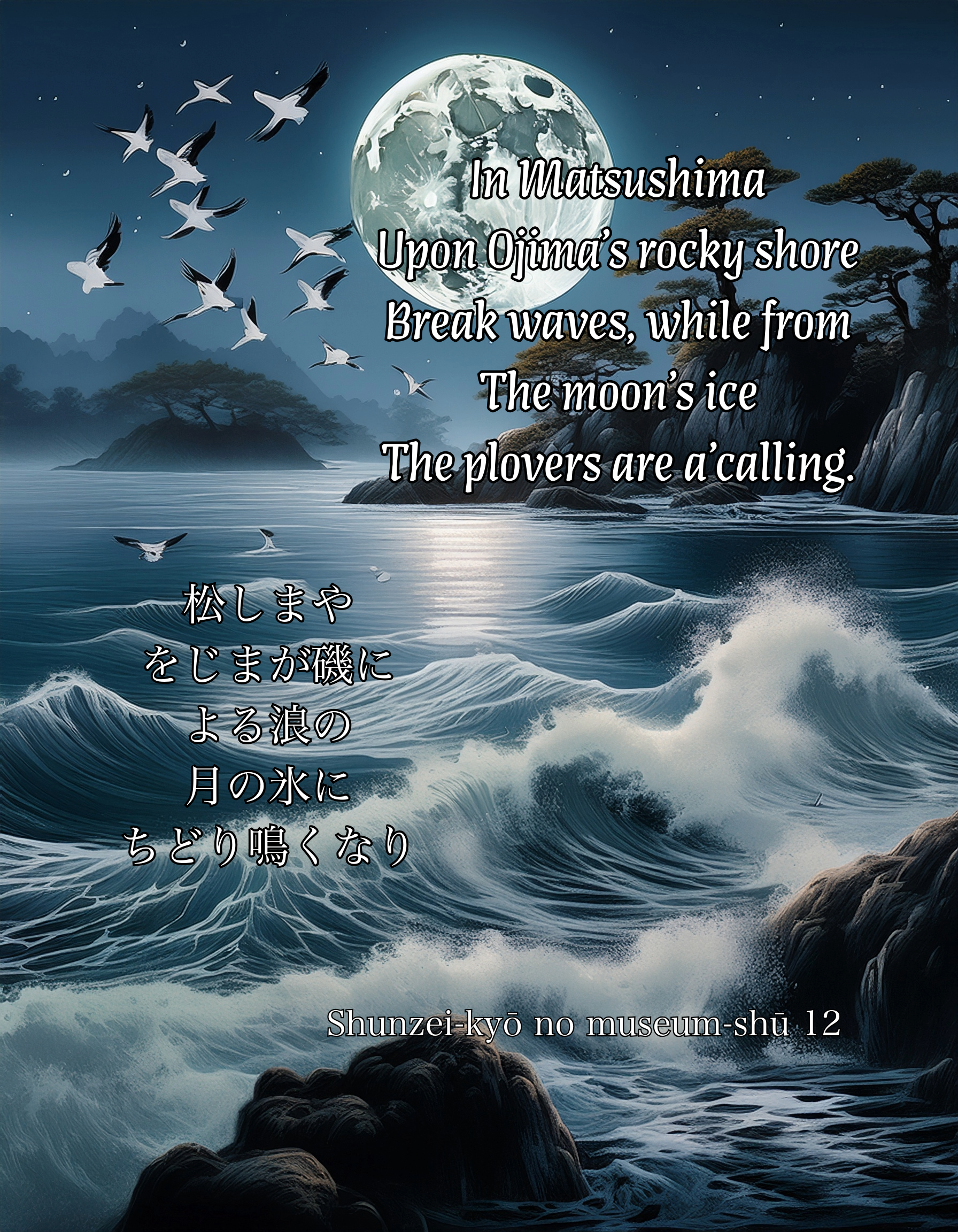
松しまやをじまが磯による浪の月の氷にちどり鳴くなり
| matsushima ya ojima ga iso ni yoru nami no tsuki no kōri ni chidori nakunari | In Matsushima Upon Ojima’s rocky shore Break waves, while from The moon’s ice The plovers are a’calling.[i] |
12
[i] See: I went to the province of Sanuki and arrived at harbour called Minotsu. The moon was bright and bamboo racks for growing seaweed filled the bay. Gazing across, into the distance, I saw seabirds arriving and soaring above them. しきわたす月のこほりをうたがひてひびのてまはるあぢのむらとり shikiwatasu / tsuki no kōri o / utagaite / hibi no te mawaru / aji no muradori ‘Spread out all o’er, / The moon for ice / Mistaking / Above the bamboo racks a’circling / Is a flock of teal…’ Saigyō (Sankashū 1404); and: Waterbirds beneath the moon (poetry match) すはのうみの月のこほりにゐるかもはさえぬをりにやおもひとくらん suwa no umi no / tsuki no kōri ni / iru kamo wa / saenu ori ni ya / omoitokuran ‘At the Suwa Sea / Upon the moon’s ice / Rest ducks: / That ’tis not chill at all / I wonder, will they work it out?’ (Hirokoto-shū 66)