Tag Archives: oto

Mandaishū I: 198

Topic unknown.

おとにきくよしののさくら見にゆかむつげよやまもりはなのさかりは

oto ni kiku
yoshino no sakura
mi ni yukamu
tsugeyo yamamori
hana no sakari wa
By repute I’ve heard of
Yoshino’s cherries, so
Them I’ll go and see!
Tell me, Mountain warden,
Of the blossoms’ profusion!

Hitomaro[1]


[1] This poem is also Hitomaro-shū 260 and Shokusenzaishū I: 71.

Kinkai wakashū 695

Composed on seeing an aged pine on the rocky shore while on the road to a place called Misaki.[i]

いその松いくひささにか成りぬらんいたく木高き風のおとかな

iso no matsu
ikuhisasa ni ka
narinuran
itaku kodakaki
kaze no oto kana
The pine tree on the rocky shore
Has for how many eternities
Endured?
The tree, so very high, as is
The sound of the wind!

695


[i] Misaki 三崎 lies on the Miura Peninsula 三浦半島 on the far eastern side of Sagami Bay. Sanetomo is known to have visited Misaki in the Third Month, Kenryaku 2 [April 1212] and this poem was probably composed then.

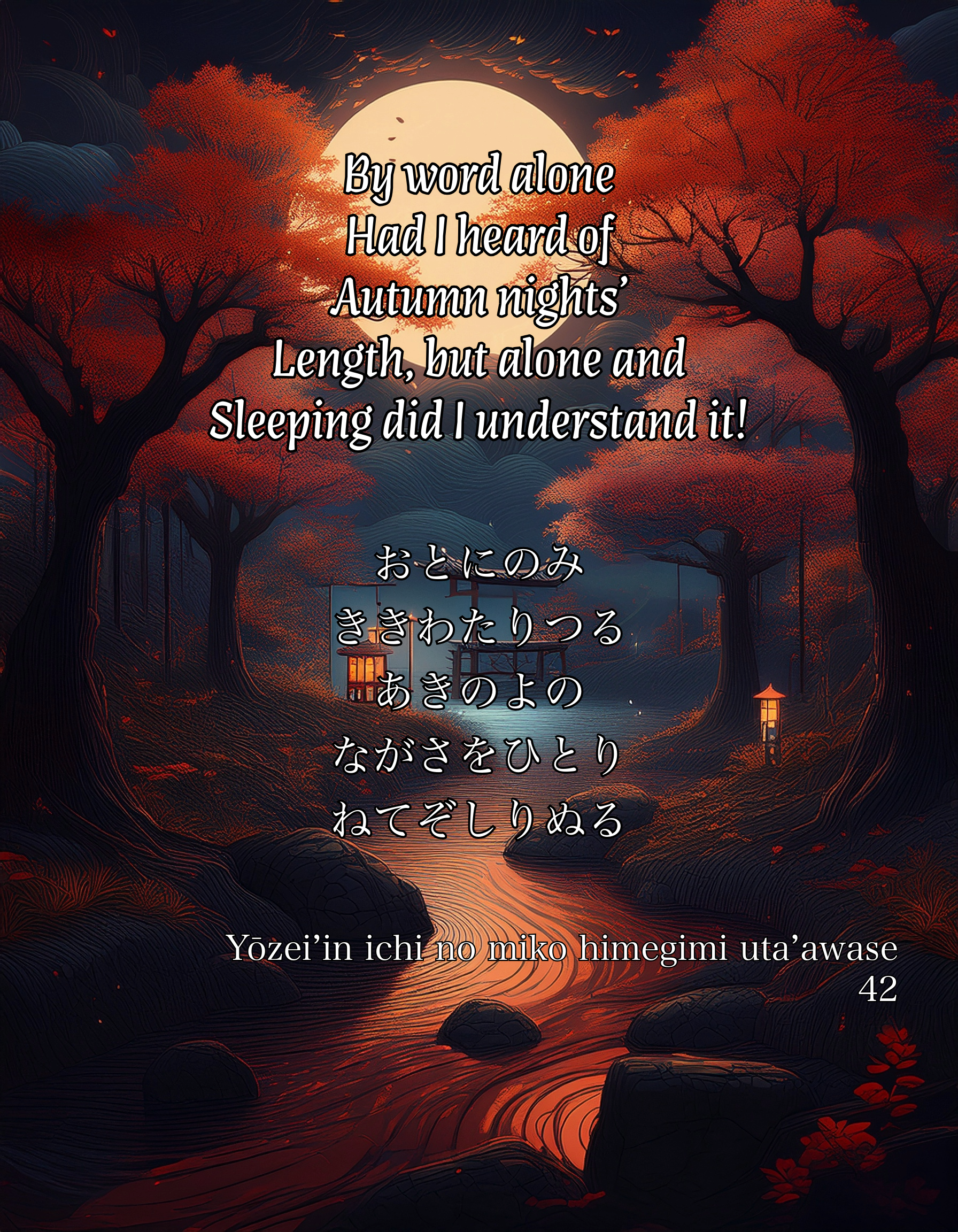
Yōzei’in ichi no miko himegimi uta’awase 15

Original

おとにのみききわたりつるあきのよのながさをひとりねてぞしりぬる

oto ni nomi
kikiwataritsuru
aki no yo no
nagasa o hitori
nete zo shirinuru
By word alone
Had I heard of
Autumn nights’
Length, but alone and
Sleeping did I understand it!

42

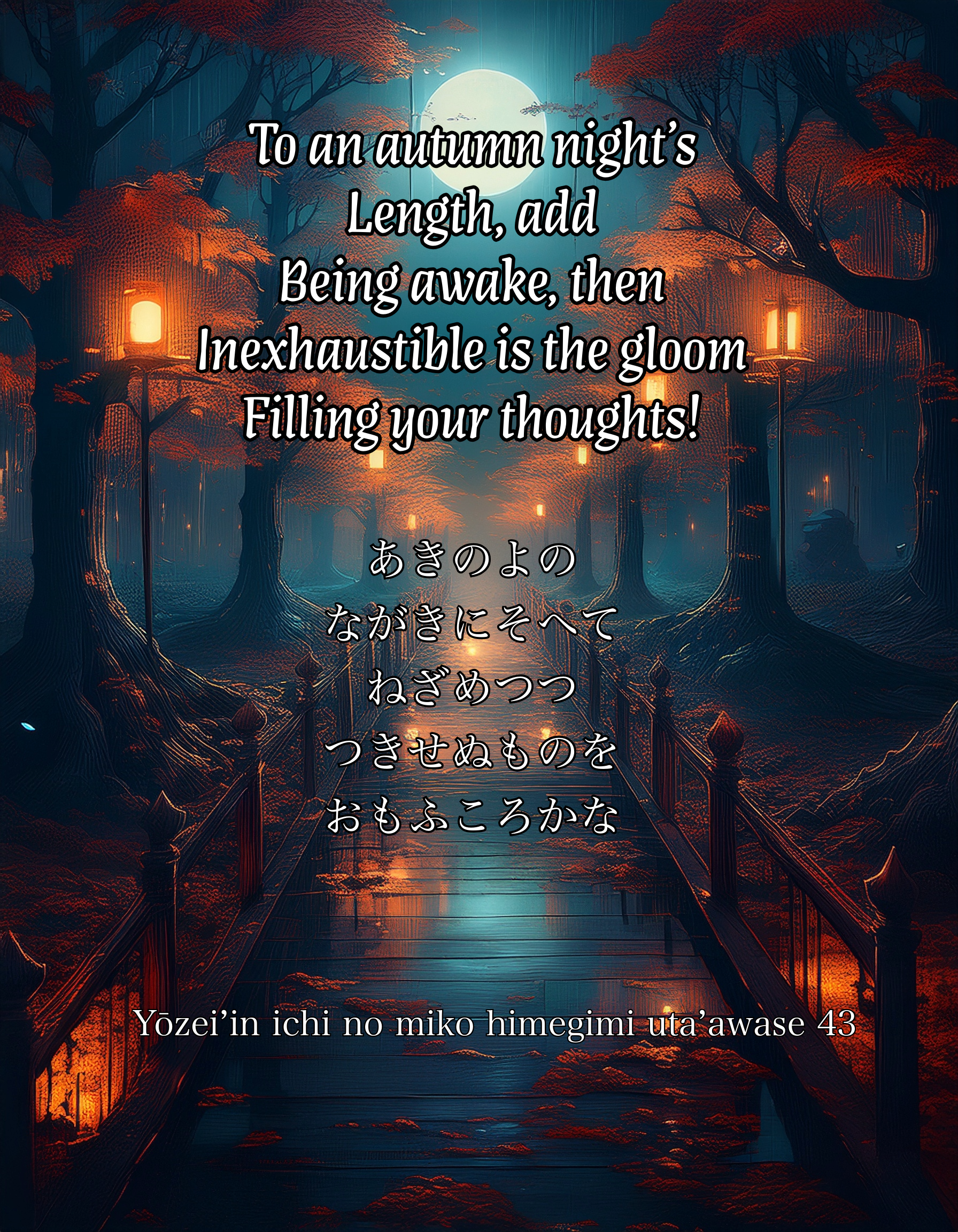
Left (Win)

あきのよのながきにそへてねざめつつつきせぬものをおもふころかな

aki no yo no
nagaki ni soete
nezametsutsu
tsukisenu mono o
omou koro kana
To an autumn night’s
Length, add
Being awake, then
Inexhaustible is the gloom
Filling your thoughts!

43

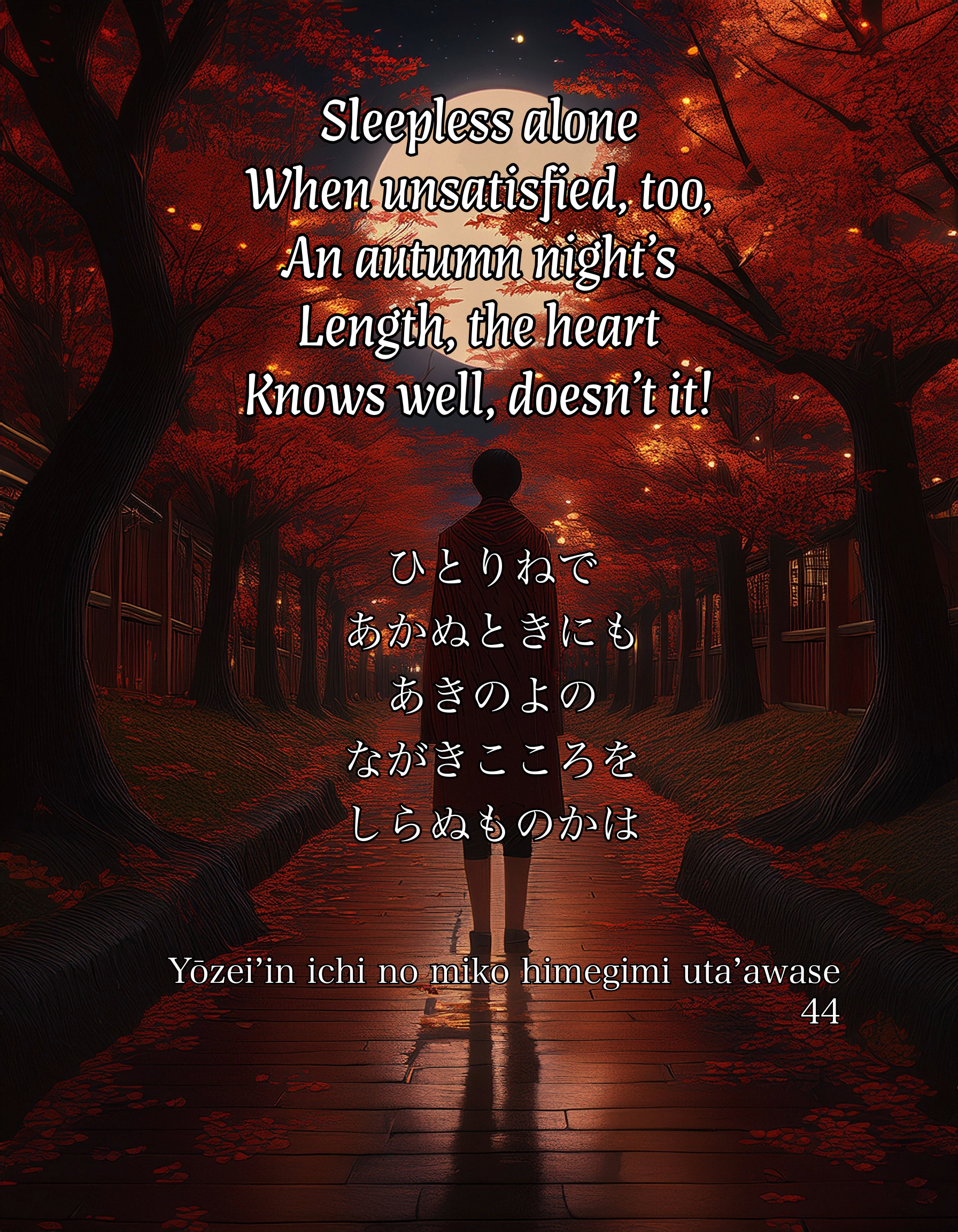
Right

ひとりねであかぬときにもあきのよのながきこころをしらぬものかは

hitori nede
akanu toki ni mo
aki no yo no
nagaki kokoro o
shiranu mono ka wa
Sleepless alone
When unsatisfied, too,
An autumn night’s
Length, the heart
Knows well, doesn’t it!

44

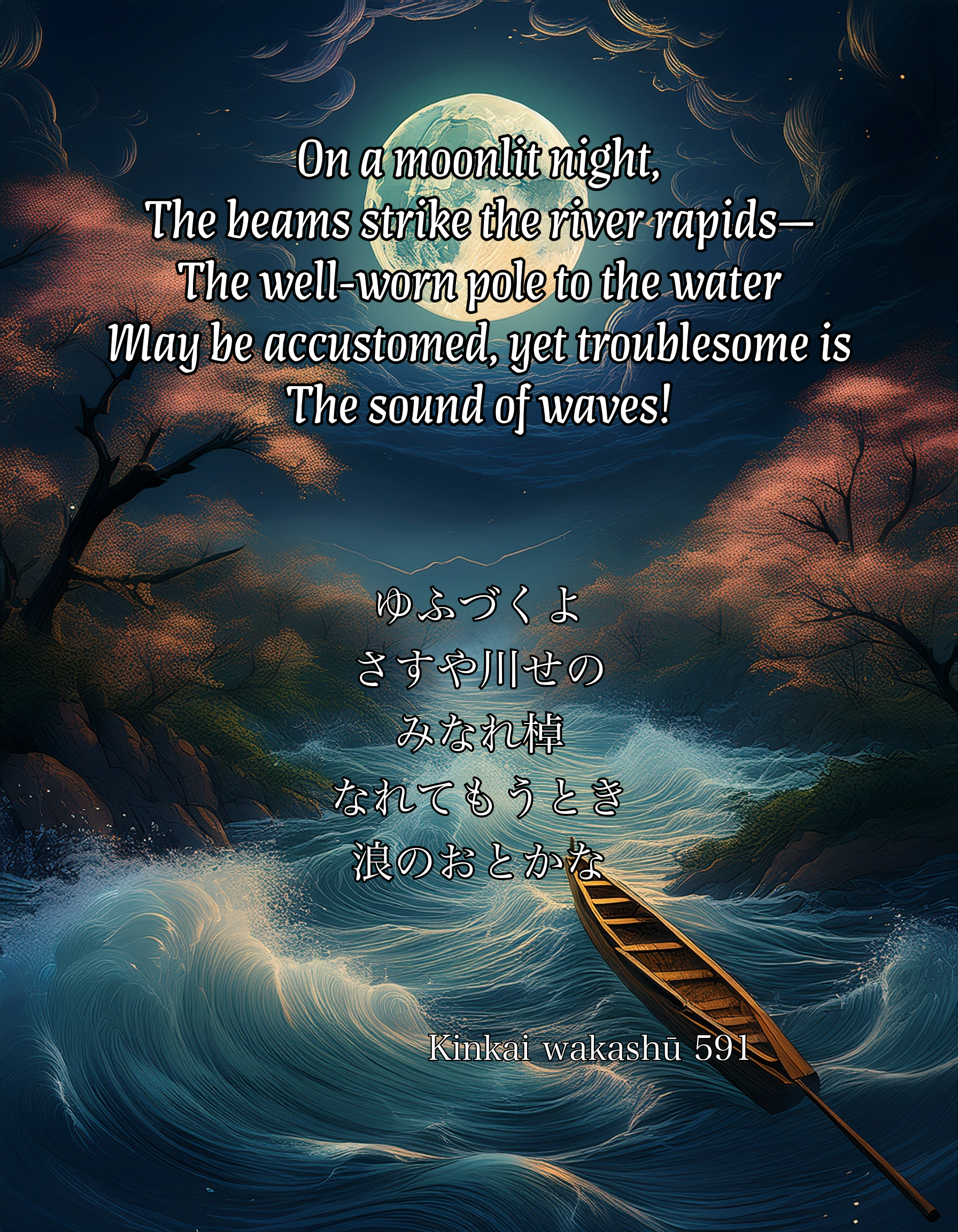
Kinkai wakashū 591

There is a river called the Sagami River. I composed this to say I would board a boat and cross it after the moon had risen.[i]

ゆふづくよさすや川せのみなれ棹なれてもうとき浪のおとかな

yūzukuyo
sasu ya kawase no
minarezao
narete mo utoki
nami no oto kana
On a moonlit night,
The beams strike the river rapids—
The well-worn pole to the water
May be accustomed, yet troublesome is
The sound of waves![ii]

591


[i] This river would have been familiar to Sanetomo, as it flows into the sea some twenty kilometres to the west of Kamakura, where the shogunate was headquartered. Based on the poem, the boat would have been a ferry, punted, rather than sailed across it.

[ii] See: Topic unknown. ゆふづく夜さすやをかべの松のはのいつともわかぬこひもするかな yūzukuyo / sasu ya okabe no / matsu no ha no / itsu to mo wakanu / koi mo suru kana ‘On a moonlit night / The beams strike the hillside / Through the pine needles / All year round, / As constant is my longing.’ Anonymous (Kokinshū XI: 490)

Nishinomiya uta’awase 16

Round Sixteen

Left

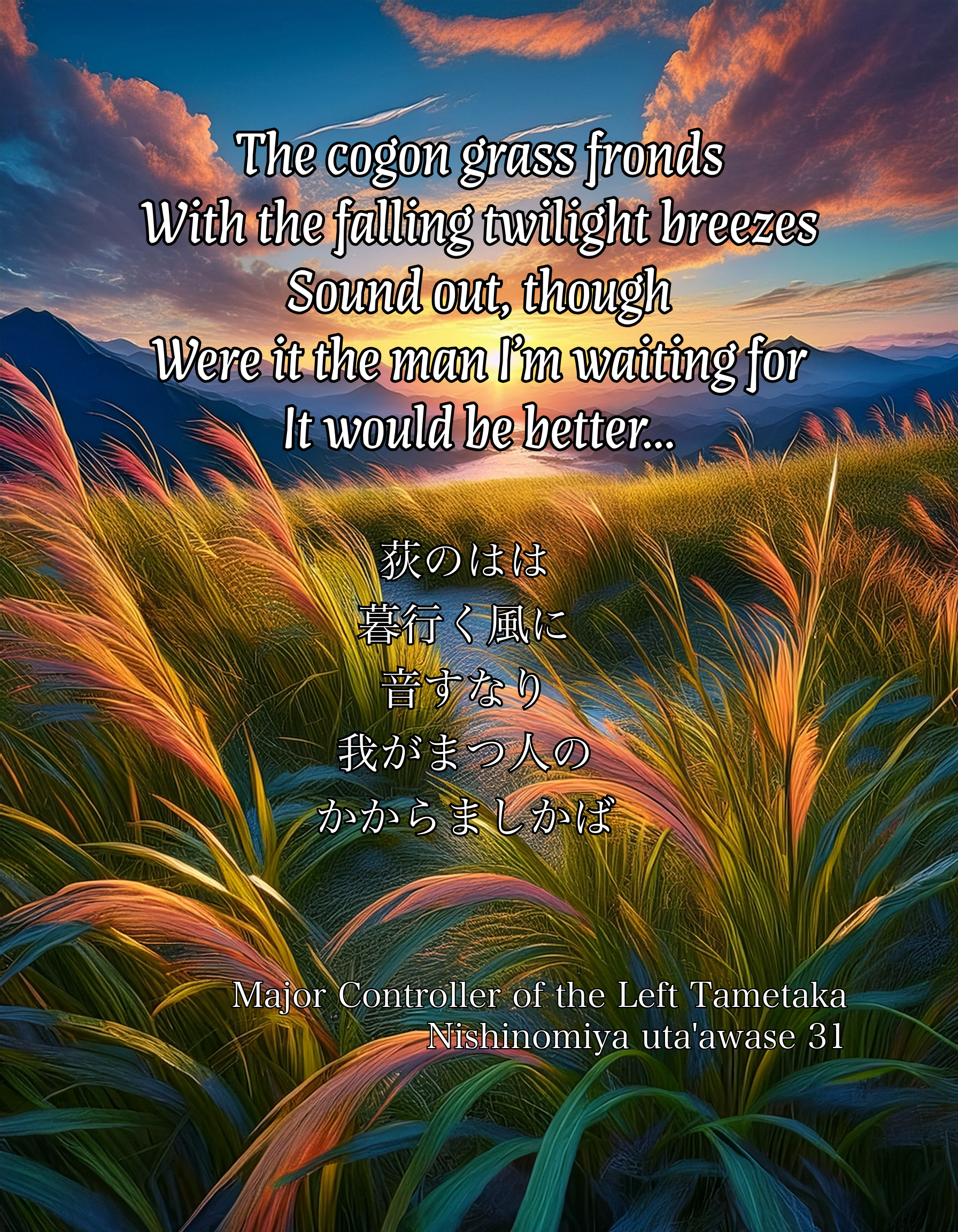
荻のはは暮行く風に音すなり我がまつ人のかからましかば

ogi no ha wa
kureyuku kaze ni
otosu nari
wa ga matsu hito no
kakaramashikaba
The cogon grass fronds
With the falling twilight breezes
Sound out, though
Were it the man I’m waiting for
It would be better…

Major Controller of the Left Tametaka
31

Right

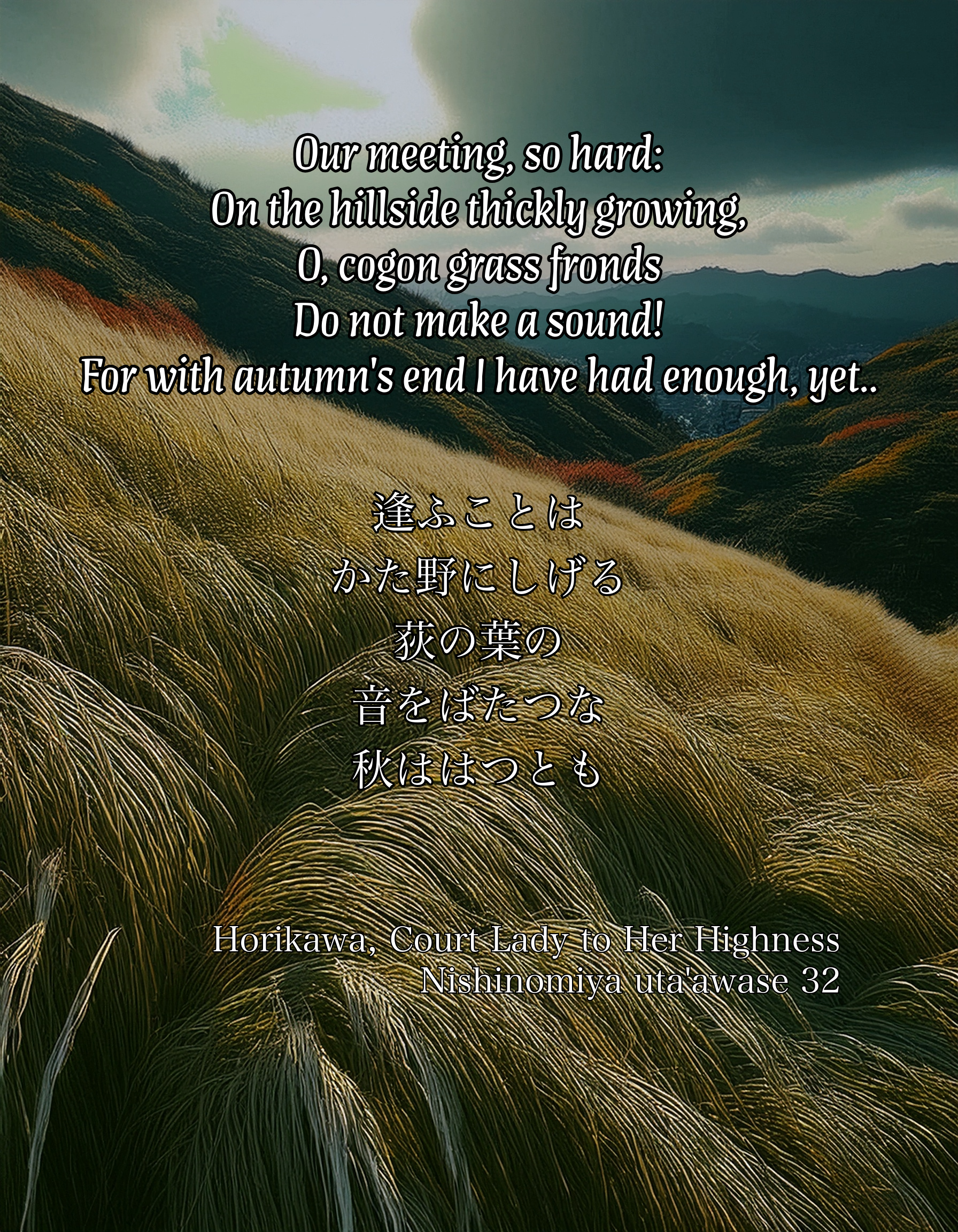
逢ふことはかた野にしげる荻の葉の音をばたつな秋ははつとも

au koto wa
katano ni shigeru
ogi no ha no
oto oba tatsu na
aki wa hatsu tomo
Our meeting, so hard:
On the hillside thickly growing,
O, cogon grass fronds
Do not make a sound!
For with autumn’s end I have had enough, yet..

Horikawa, Court Lady to Her Highness
32

I feel that the emotions encompassed by the sound of the wind in ‘Were it the man I’m waiting for / It would be better’ sounded more striking than ‘On the hillside thickly growing, / O, cogon grass fronds’.

Nishinomiya uta’awase 15

Cogon grass and the Same

Round Fifteen

Left

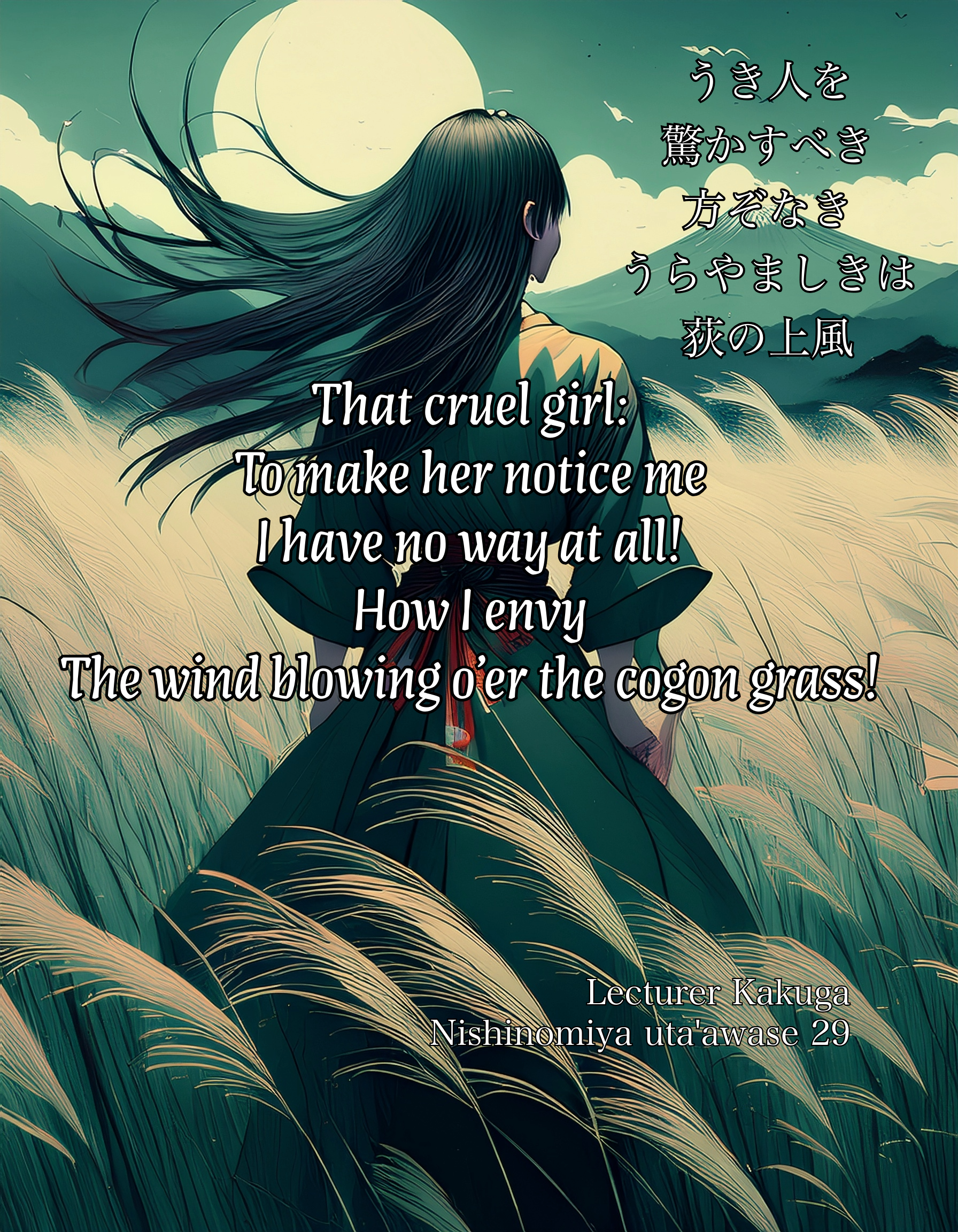
うき人を驚かすべき方ぞなきうらやましきは荻の上風

ukibito o
odorokasubeki
kata zo naki
urayamashiki wa
ogi no uwakaze
That cruel girl:
To make her notice me
I have no way at all!
How I envy
The wind blowing o’er the cogon grass!

Lecturer Kakuga
29

Right

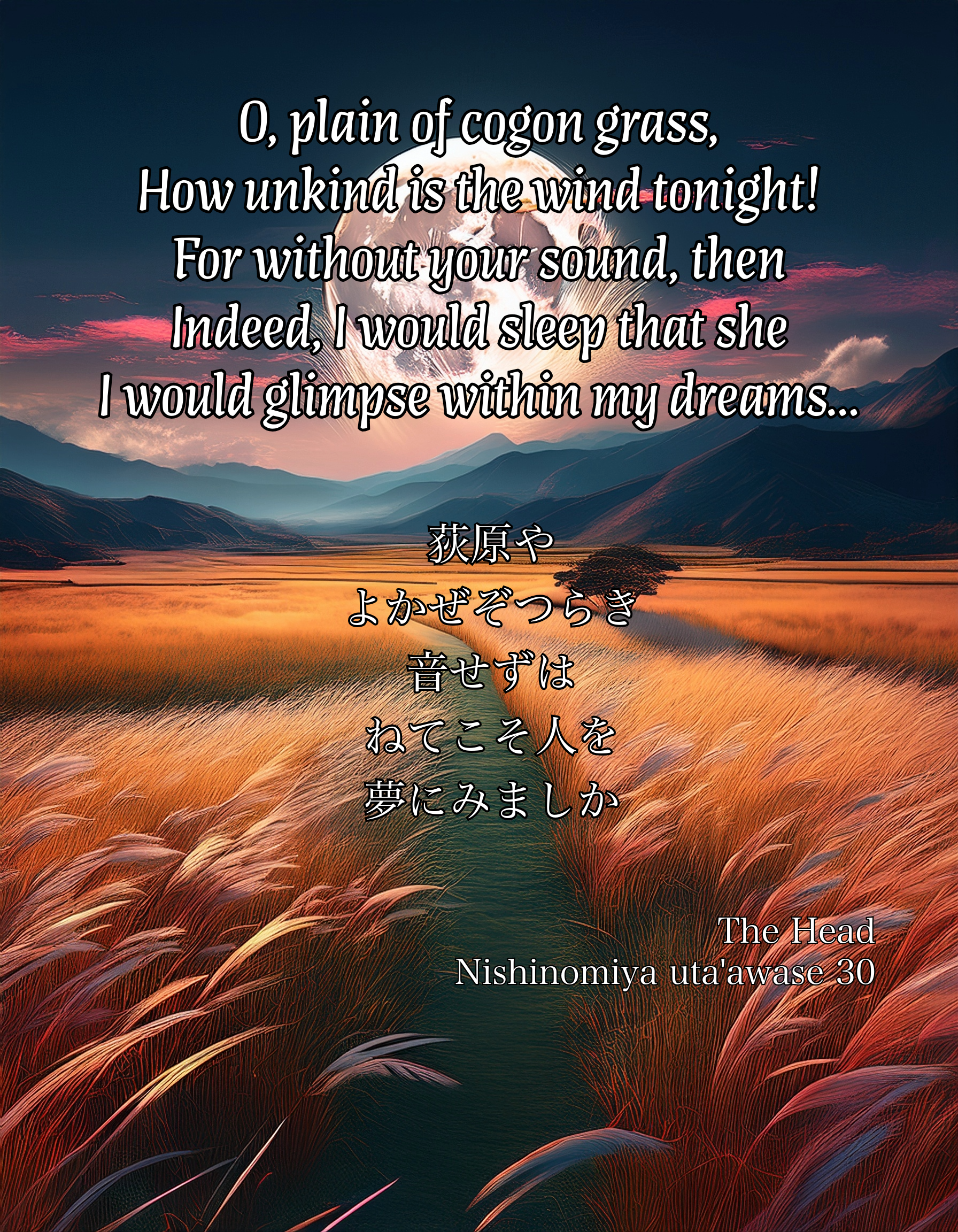
荻原やよかぜぞつらき音せずはねてこそ人を夢にみましか

ogiwara ya
yokaze zo tsuraki
oto sezu wa
nete koso hito o
yume ni mimashika
O, plain of cogon grass,
How unkind is the wind tonight!
For without your sound, then
Indeed, I would sleep that she
I would glimpse within my dreams…

The Head
30

The conception of love sounds superior at present in envying the ‘wind blowing o’er the cogon grass’ than it does in the ‘unkind is the wind tonight’.

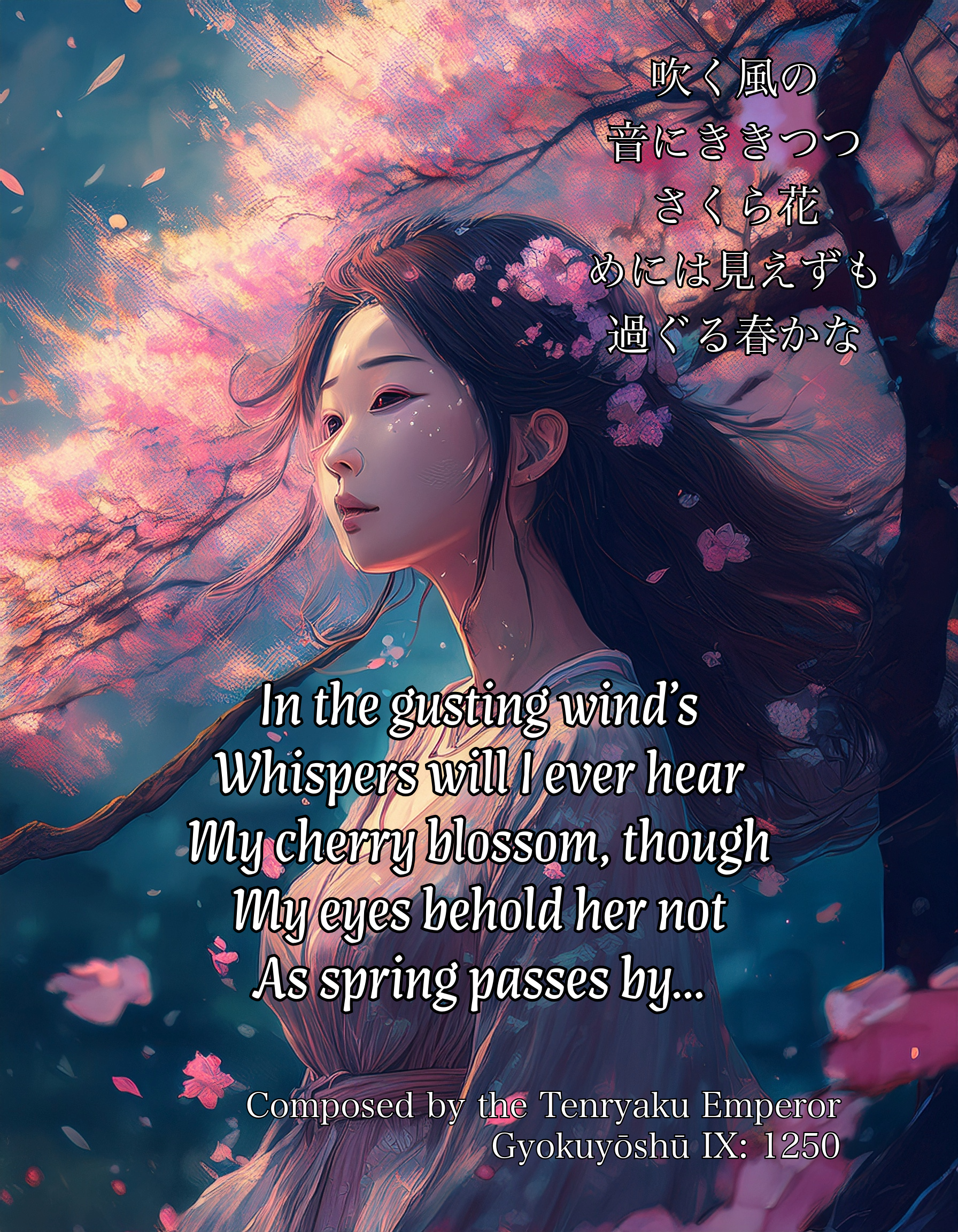
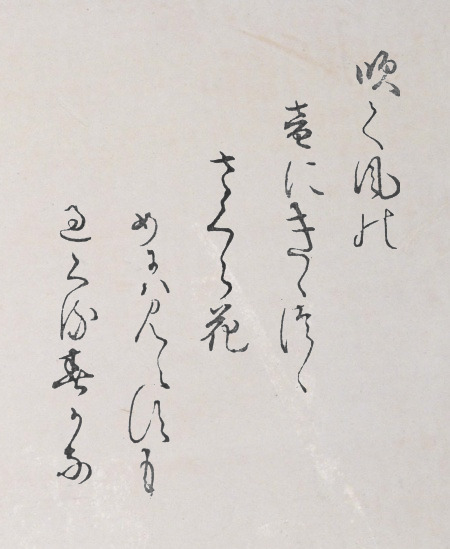
GYS IX: 1250

When the Ise Virgin Junior Consort had yet to leave, he attached this to some cherry blossom and sent it to her.

吹く風の音にききつつさくら花めには見えずも過ぐる春かな

fuku kaze no
oto ni kikitsutsu
sakurabana
me ni wa miezu mo
suguru haru kana
In the gusting wind’s
Whispers will I ever hear
My cherry blossom, though
My eyes behold her not
As spring passes by…

Composed by the Tenryaku Emperor