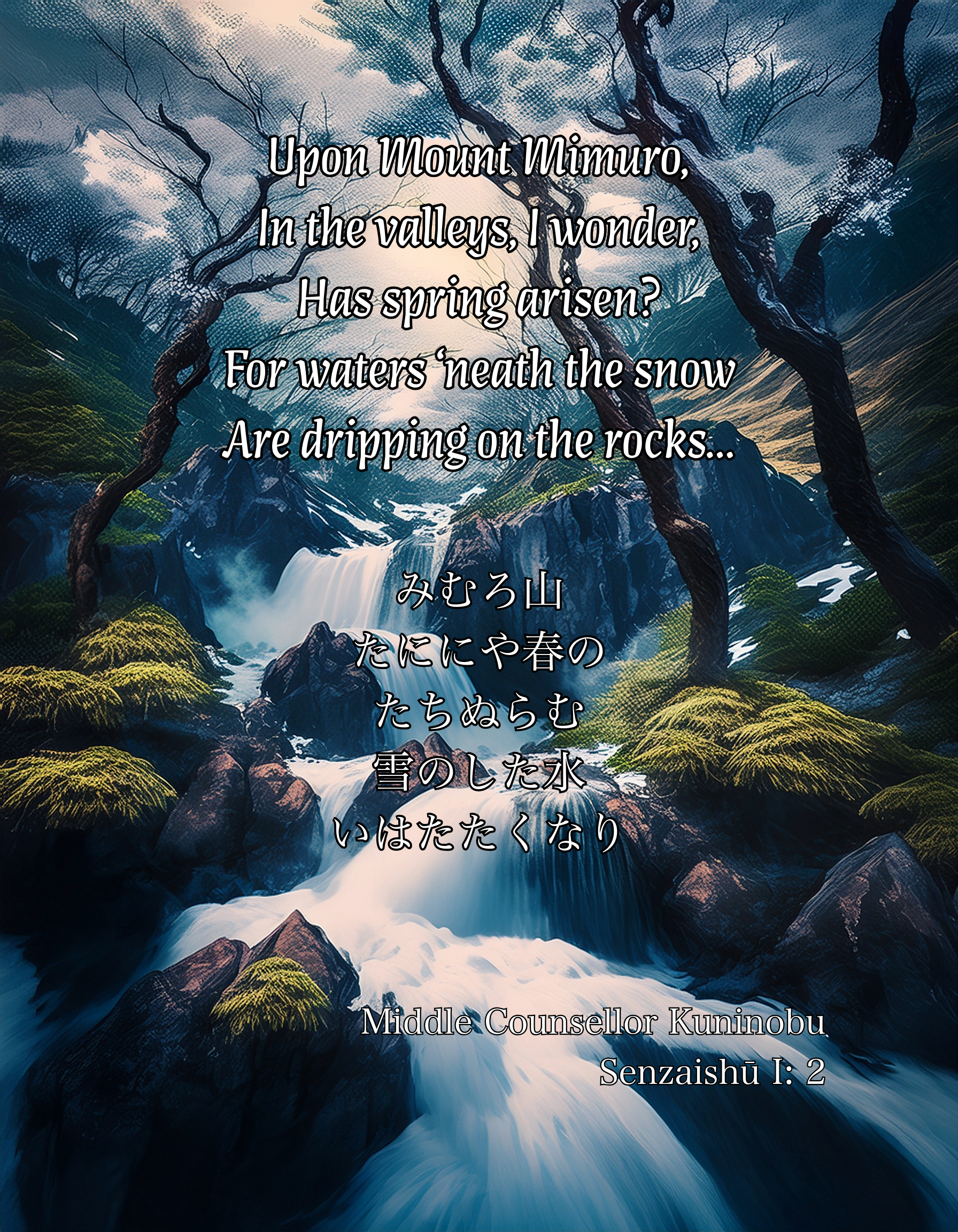
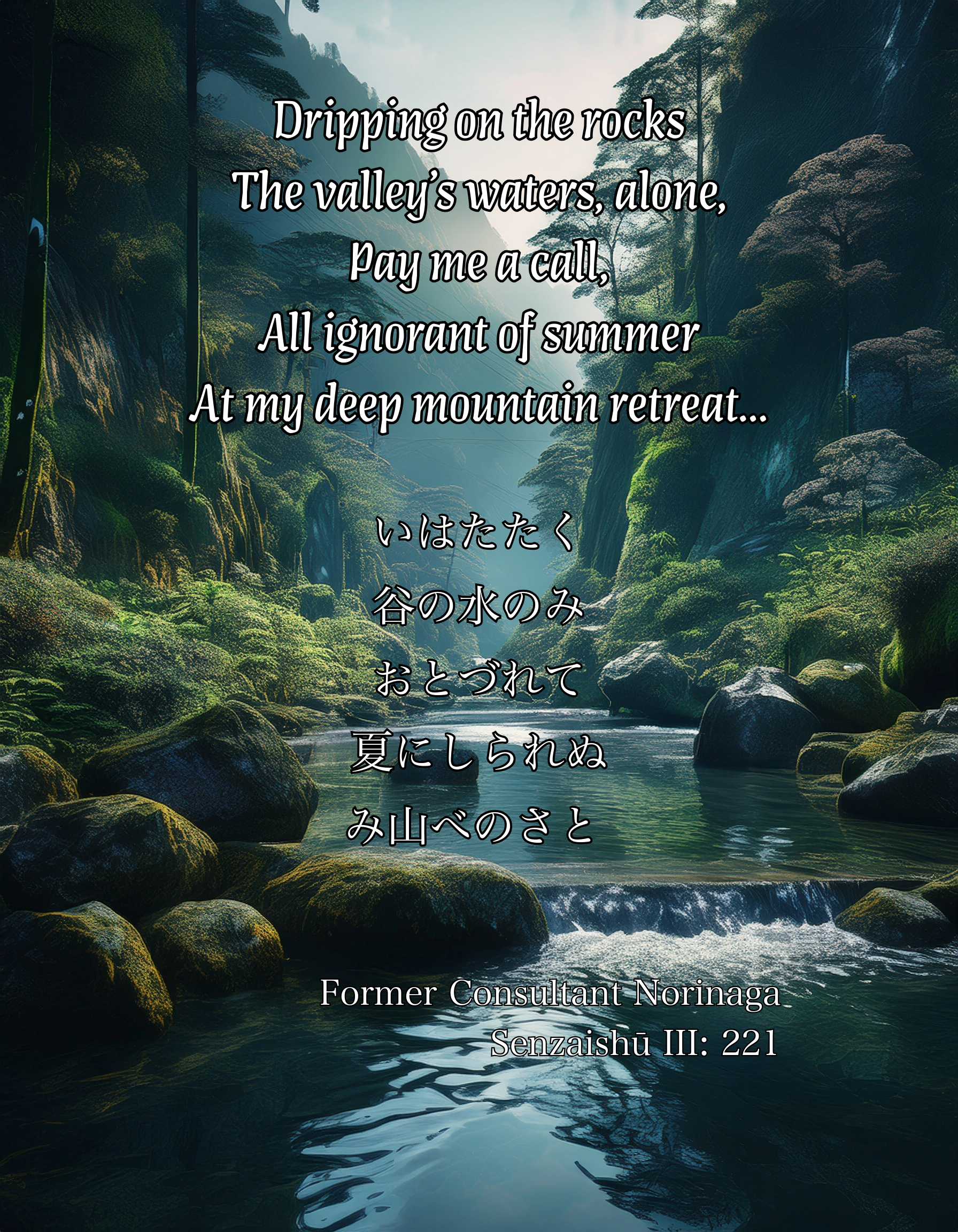
年ふとも音にはたてじ音羽川した行く水のしたのおもひを
| toshi fu tomo oto ni wa tateji otowagawa shita yuku mizu no shita no omoi o | The years may pass, yet I’ll make not a sound, as The Otowa River’s Waters flow beneath, so Secret will be my passion’s fire… |
467


Round Sixteen
Left (Win)
よにすめど人しれぬみやしをりするみやまがくれのたにのしたみづ
| yo ni sumedo hito shirenu mi ya shiorisuru miyamagakure no tani no shitamizu | Dwelling within this world, yet No one knows that ‘tis as if I Were marking a trail Hidden deep within the mountains To waters flowing on the valley floor… |
Hiromori
131
Right
あしからむなにはのことはかねてよりちかくてまもれすみよしのかみ
| ashikaramu naniwa no koto wa kanete yori chikakute mamore sumiyoshi no kami | Reaping reeds, should ill fortune come From Naniwa, in all things Just in case Ward me closely O, God of Sumiyoshi! |
Dharma Master Chikyō
132
The poem of the Right here, while it does draw on ‘reaping reeds at Naniwa’, in its phrasing sounds prosaic. As the Left’s ‘waters flowing on the valley floor’ seems to flow smoothly off the tongue, it wins.


Left (Tie)
月さゆるつもりのうらのみづがきはふりしくゆきにいろもかはらず
| tsuki sayuru tsumori no ura no mizukaki wa furishiku yuki ni iro wa kawarazu | The moon, so chill, shines Upon the Bay of Tsumori, Where the honored sacred grounds, Spread with fallen snow Remain unchanged in hue. |
Taifu, in service to the Former Ise Virgin[i]
33
Right
あらしふくまつのこずゑにきりはれてかみもこころやすみのえの月
| arashi fuku matsu no kozue ni kiri harete kami mo kokoro ya suminoe no tsuki | The storm wind blows Across the treetops of the pines, Clearing the mists away— I wonder, is the Deity’s heart at Suminoe beneath the moon? |
Lord Fujiwara no Sadanaga
Junior Assistant Minister of Central Affairs
Exalted Fifth Rank, Lower Grade[ii]
34
The Left’s poem appears to be about chill fallen snow spread upon Tsumori Bay, so in saying that the waters bounding the sacred grounds cannot conceal the hue, it appears to be saying that the moon’s light is white, but I wonder if the diction is a bit insufficient to convey this? It seems to me that it simply says that although snow has fallen on the waters bounding the sacred grounds, their hue has not changed—doesn’t it? As for the Right’s poem, I can say that its conception and configuration are pleasant, but it begins with ‘the storm wind blows’ and one cannot say ‘storm wind’ along with ‘beach pines’. One can understand this based on the poem ‘Yes, the mountain wind / Is aptly named “Storm”‘. Still, the poem’s configuration does appear pleasant. Again, I make this a tie.


[i] Zen-saigū no Taifu 前斎宮大輔
[ii] Jūgoige-gyō nakatsukasa no shō Fujiwara ason Sadanaga 従五位下行中務少輔藤原朝臣定長
Round Ten
Left
をぐらやま下ゆく水のさざれ石も数かくれなくてらす月かげ
| ogurayama shita yuku mizu no sazare’ishi mo kazu kakurenaku terasu tsukikage | Beneath gloomy Mount Ogura Flow waters full Of pebbles, Unable to conceal their numbers In the shining moonlight. |
Lord Kiyosuke
67
Right (Win)
あまの川とわたる月の影すみてにごれるよともみえぬ空かな
| ama no kawa towataru tsuki no kage sumite nigoreru yo tomo mienu sora kana | Across the River of Heaven’s Mouth passes the moon’s Clear light— Even this cloudy world Does not appear so beneath this sky! |
Shinkaku
68
There’s nothing to mention about the Left, and the same is the case for the Right, but for some reason should it win?