On the same conception, while I was at a place called Futami in Ise.
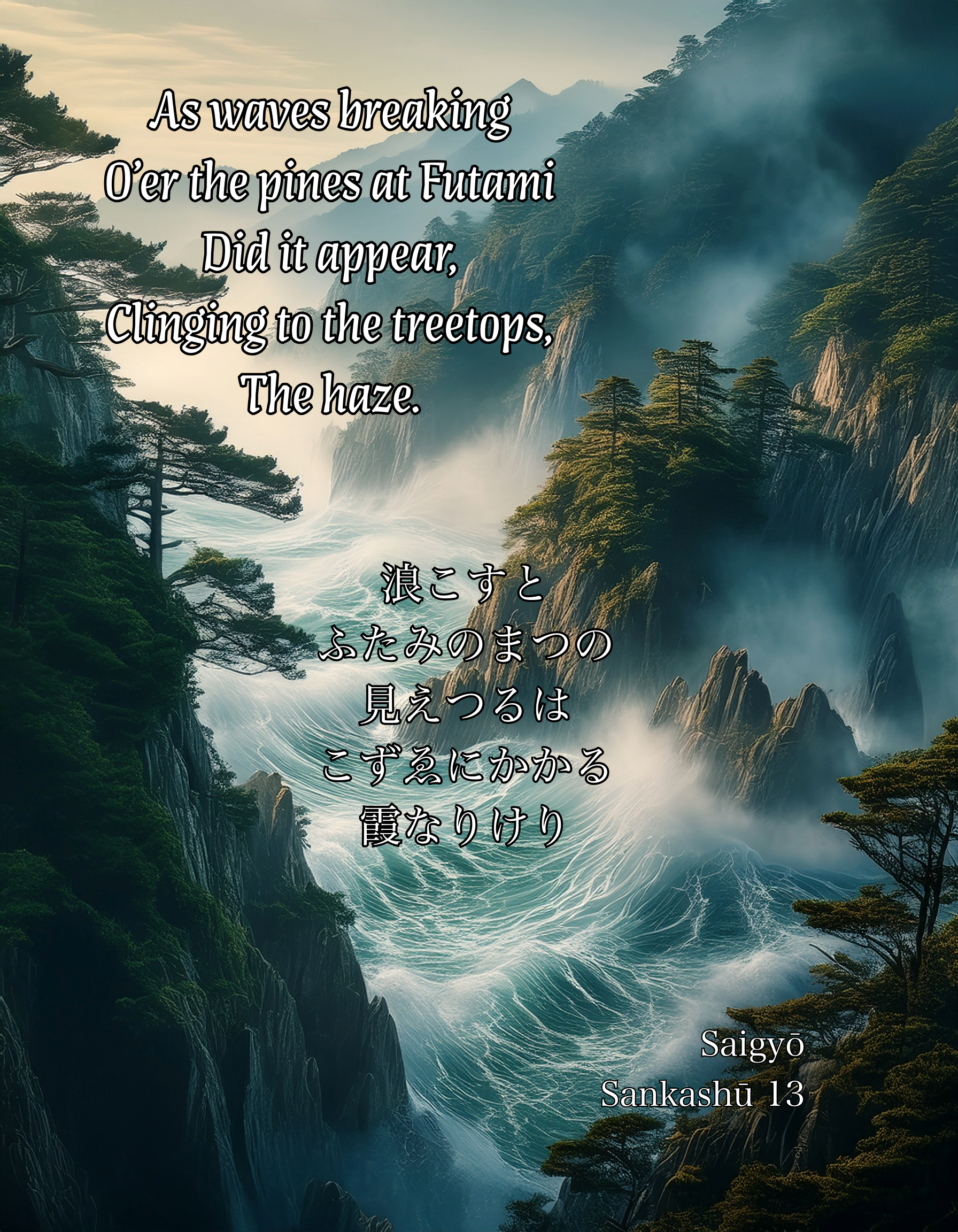
浪こすとふたみのまつの見えつるはこずゑにかかる霞なりけり
nami kosu to futami no matsu no mietsuru wa kozue ni kakaru kasumi narikeri
As waves breaking O’er the pines at Futami Did it appear, Clinging to the treetops, The haze.[i]
13
[i] See: 君をおきてあだし心を我がもたば末の松山波もこえなん kimi o okite / adashi kokoro o / wa ga motaba / sue no matsu yama / nami mo koenan ‘To abandon you / An inconstant heart / Would I have, but sooner / Over Sue-no-Matsuyama / Would waves break!’ (Kokinshū XX: 1093)
ama tsu sora kumo no hatate ni midaretsutsu me mo aya nari ya asobu itoyū
In the heavenly skies The clouds’ edge is All a tangle; Have my eyes been deceived by The sporting heat haze?
His Excellency, Sueyoshi 520
Right
とがむべき人なきゐでのやまぶきをこころやすくやなみのをるらむ
togamubeki hito naki ide no yamabuki o kokoro yasuku ya nami no oruramu
Is it that to scold them Not a soul there is in Ide, that The kerria, Without a care, By the waves are plucked?
Tango 521
The conception of the Left’s ‘clouds’ edge is all a tangle; have my eyes been deceived’ is nothing less than an exemplary verse. The Right’s ‘in Ide that the kerria, without a care, by the waves are plucked’ also sounds charming, this round is another tie, isn’t it.
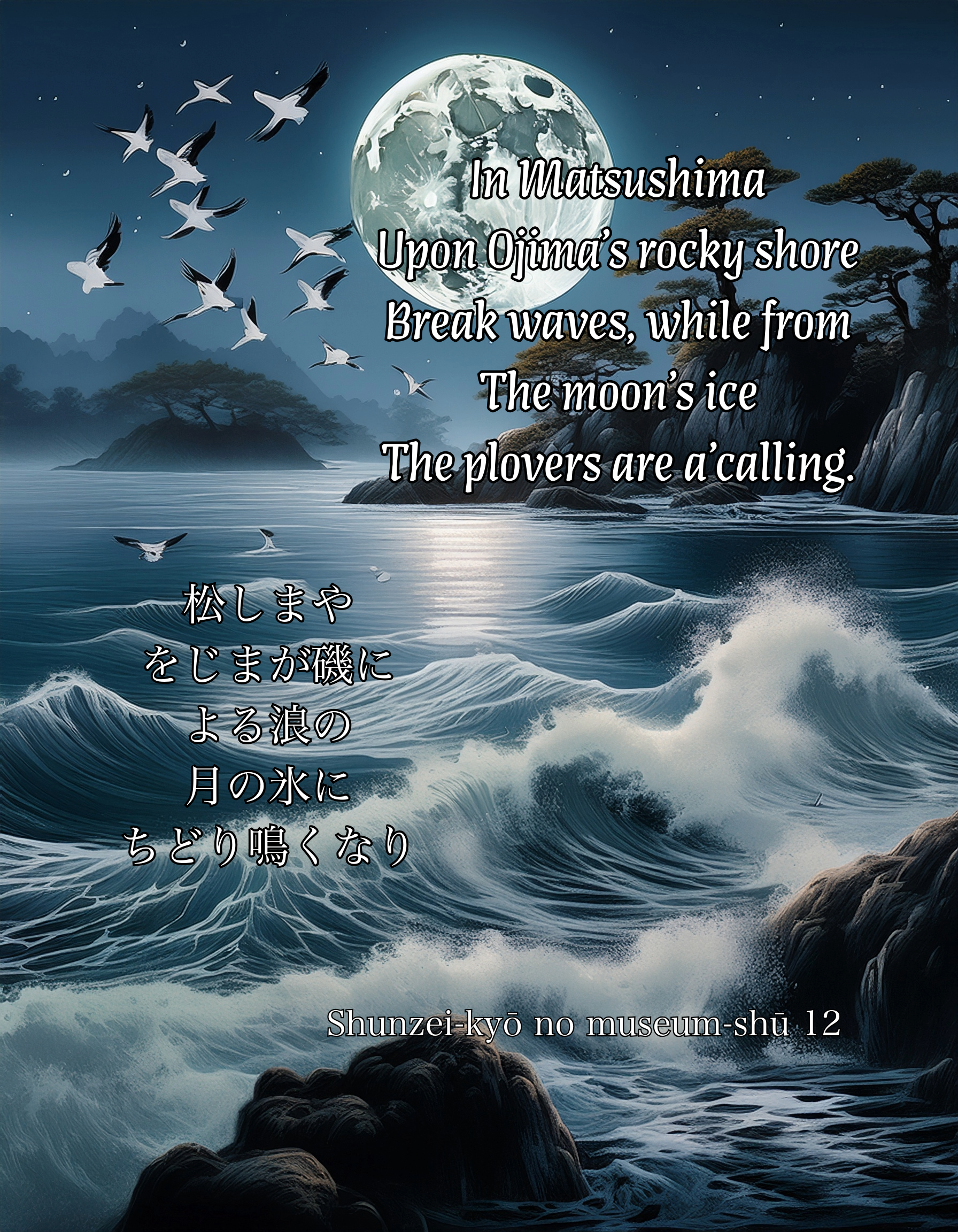
matsushima ya ojima ga iso ni yoru nami no tsuki no kōri ni chidori nakunari
In Matsushima Upon Ojima’s rocky shore Break waves, while from The moon’s ice The plovers are a’calling.[i]
12
[i] See: I went to the province of Sanuki and arrived at harbour called Minotsu. The moon was bright and bamboo racks for growing seaweed filled the bay. Gazing across, into the distance, I saw seabirds arriving and soaring above them. しきわたす月のこほりをうたがひてひびのてまはるあぢのむらとり shikiwatasu / tsuki no kōri o / utagaite / hibi no te mawaru / aji no muradori ‘Spread out all o’er, / The moon for ice / Mistaking / Above the bamboo racks a’circling / Is a flock of teal…’ Saigyō (Sankashū 1404); and: Waterbirds beneath the moon (poetry match) すはのうみの月のこほりにゐるかもはさえぬをりにやおもひとくらん suwa no umi no / tsuki no kōri ni / iru kamo wa / saenu ori ni ya / omoitokuran ‘At the Suwa Sea / Upon the moon’s ice / Rest ducks: / That ’tis not chill at all / I wonder, will they work it out?’ (Hirokoto-shū 66)
Poems from a pinks match held by the ladies and gentlemen in service to the Lady of the Bedchamber who was the daughter of the Captain of the Outer Palace Guards, Left Division, on the 29th day of the Fifth Month, Tenryaku 10.[i] Lady Nakatsukasa was on the Left; Kanemori was on the Right.
Left
なでしこのはなのかげみるかはなみはいづれのかたにこころよすらん
nadeshiko no hana no kage miru kawanami wa izure no kata ni kokoro yosuran
A pink’s Blooming shape a’seeing, The waves upon the river Whither will Take her heart, I wonder?
[iii] Some texts of this match have an alternate wording for this poem: ももしきにしめゆひしよりなでしこのはなとしみればこく見ゆるかな momoshiki ni / shimeyuishi yori / nadeshiko no / hana to shi mireba / koku miyuru kana ‘When, within the hundredfold palace / So carefully raised / A pink / In bloom I see, / How deep its hue appears!’
asaborake ato naki nami ni naku chidori ana kotogotoshi aware itsu made
At the break of dawn, No wake upon the waves where Cry the plovers— O, such a tumult, How long will such sorrow last?[i]
708
[i] See: A poem by Novice Manzei. 世間乎 何物尓将譬 旦開 榜去師船之 跡無如 yo no naka o / nani ni tatoemu / asabiraki / kogi inishi fune no / ato naki ga goto ‘This mundane world, / To what might I compare? / At dawn’s breaking, / A boat rowed out but / Has left no wake at all—that’s it.’ (Man’yōshū III: 351)