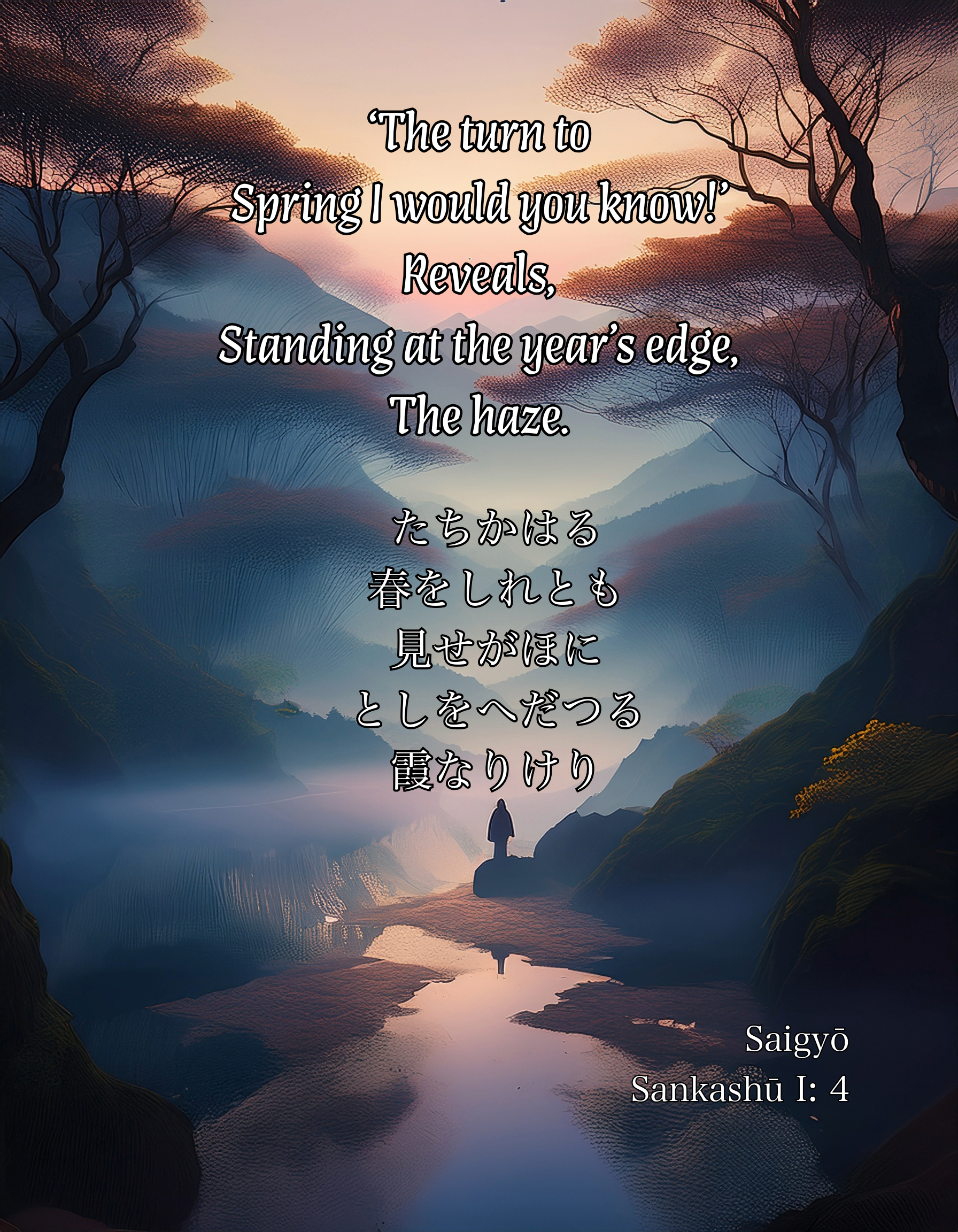
tachikawaru haru o shire tomo misegao ni toshi o hedatsuru kasumi narikeri
‘The turn to Spring I would you know!’ Reveals, Standing at the year’s edge, The haze.
21
Right (Win)
岩まとぢし氷もいまはとけ初めて苔の下水道もとむなり
iwama tojishi kōri mo ima wa tokehajimete koke no shitamizu michi motomu nari
Cracks between the crags sealed By ice, now Beginning to melt, and The water ‘neath the moss Seeks to find its way.
22
The poem of the Left appears to have suitable configuration and diction, but even though the expression ‘reveals’ is something which one and all, and even I, compose with, I still feel that it is a word which is better avoided in a poetry match. Victory should be awarded according to a poem’s style. The poem of the Right has charming conception and diction. I should say it wins.
kasugano wa toshi no uchi ni wa yuki tsumite haru wa wakana no ouru narikeri
Kasuga Plain Within the year past Garnered snow, where In springtime fresh herbs Grow up.[i]
19
[i] See: Composed for a painting on a folding screen, showing the picking of fresh herbs on a plain where the snow had fallen. かすが野の雪のむらぎえかきわけて誰がためつめるわかななるらん kasugano no / yuki no muragie / kakiwakete / ta ga tame tsumeru / wakana naruran ‘Across Kasuga Plain, / Spotted with snowmelt, / They push their way; / For who might he be garnering / Those fresh herbs?’ Minamoto no Toshiyori (Sanboku kikashū I: 28)
kyō made mo kozue wa fuyu no iro nagara kozo ni wa kawaru yuki no shitagusa
Until today The treetops winter’s Hues did hold, but With the change to the year before Grasses grow up ‘neath the snow.
Lord Yasusue 173
Right
くれはどりあやにながめのなりゆくかみどりの空にあそぶいとゆふ
kurehadori aya ni nagame no nariyuku ka midori no sora ni asobu itoyū
A chequered Pattern–when I gaze out how strange It becomes: In the verdant skies Sports heat haze…
The Minister of the Centre 174
Although it sounds a bit difficult to grasp the sense of the Left’s ‘grasses ‘neath the snow with the change to the year before’, there’s nothing wrong with composing about grasses growing beneath fallen snow, so the configuration is pleasant. The Right’s poem, too, has no faults to mention, so this round, too, should tie.
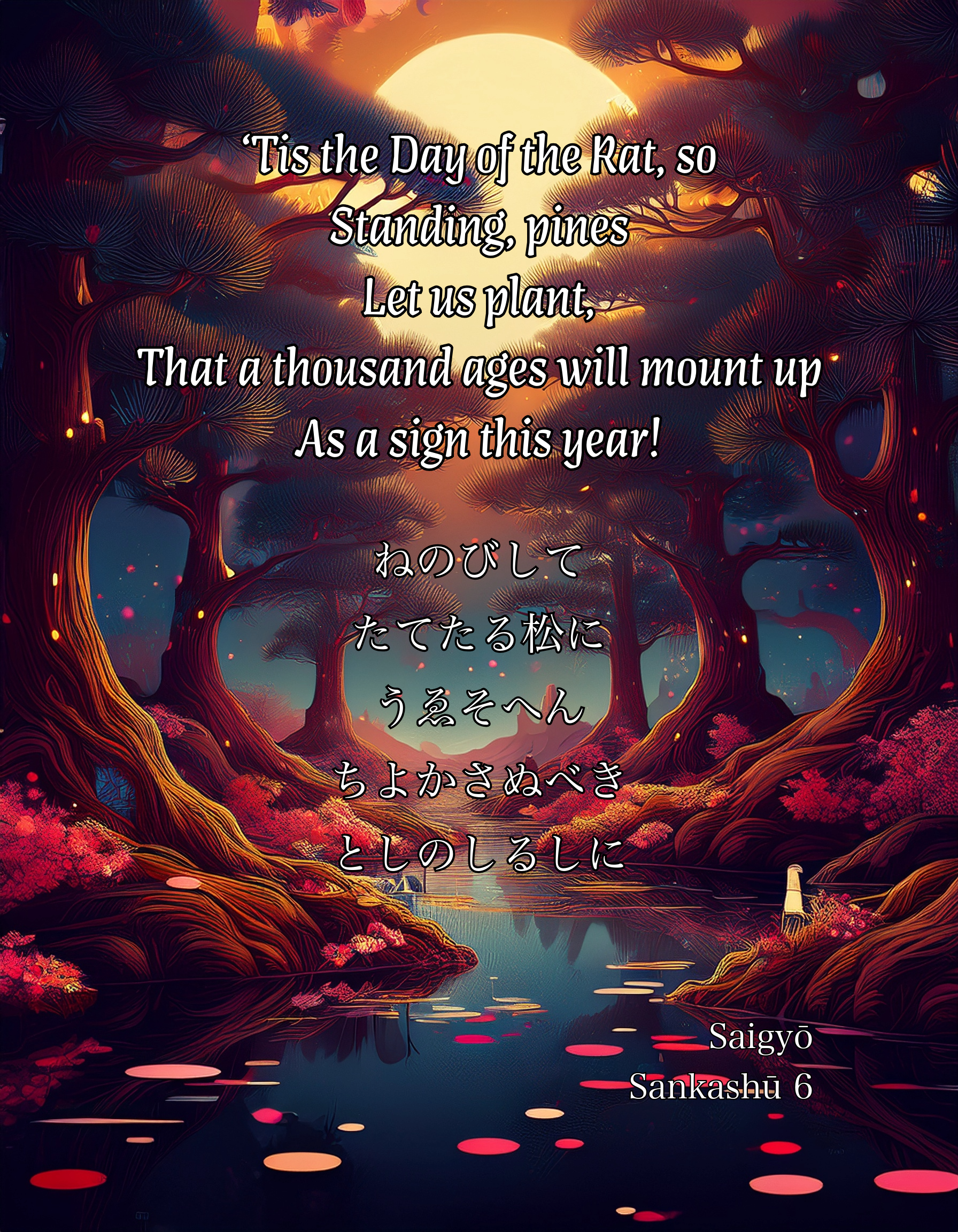
When the New Year’s Day was the Day of the Rat.[i]
ねのびしてたてたる松にうゑそへんちよかさぬべきとしのしるしに
ne no bi shite tatetaru matsu ni uesoen chiyo kasanubeki toshi no shirushi ni
‘Tis the Day of the Rat, so Standing, pines Let us plant, That a thousand ages will mount up As a sign this year![ii]
[i] On the first Day of the Rat of the year, aristocrats would go out and gather a range of medicinal plants to brew a tonic to ward off ill health in the coming year. Among these were pine seedlings, which were displayed as symbols of longevity.
[ii] See: For the Day of the Rat celebrations at the palace in Eihō 4 [1084]. ねのびする野べのこまつをうつしうゑて年のをながく君ぞ引くべき ne no bi suru / nobe no komatsu o / utsushi’uete / toshi no o nagaku / kimi zo hikubeki ‘For the Day of the Rat / Pine seedlings from the plains / We transplant, that / The long thread of their years / Will draw our Lord with them!’ Supernumerary Middle Counsellor Michitoshi (Shinkokinshū VII: 729)
haru no no no wakana wa kimi ga tame ni koso ōku no toshi o tsumamu to wa omoe
In the springtime meadows Fresh herbs, for my Lord’s Sake, indeed, In many a year Will I pick, I feel!
12
The Right’s poem was inferior, but tied as it contained an element of Felicitation.
[i] This poem is included in Shoku gosenshū (I: 34), attributed to Kanemori, with the headnote ‘A poem from the Poetry Match held by the Reikeiden Junior Consort’.