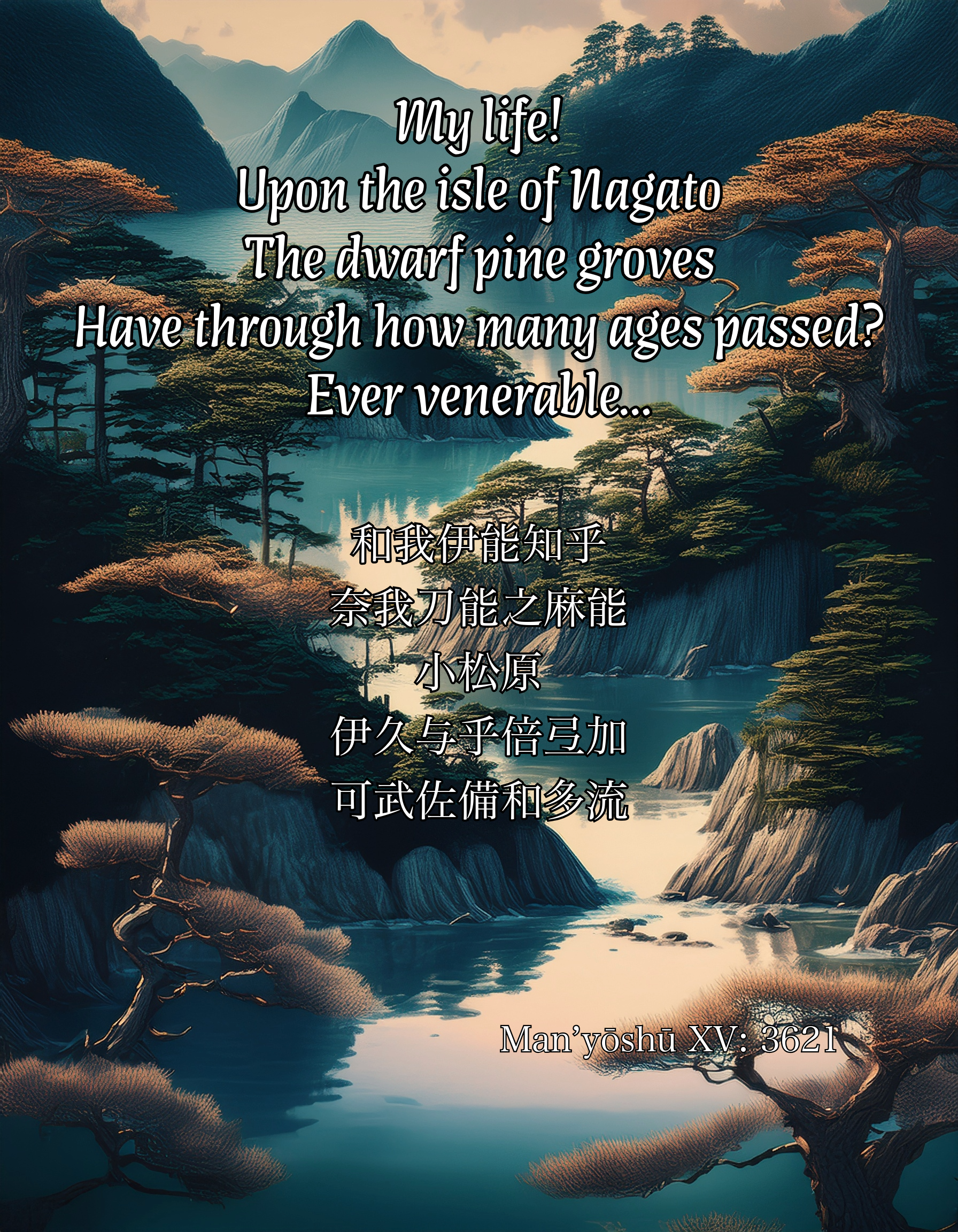
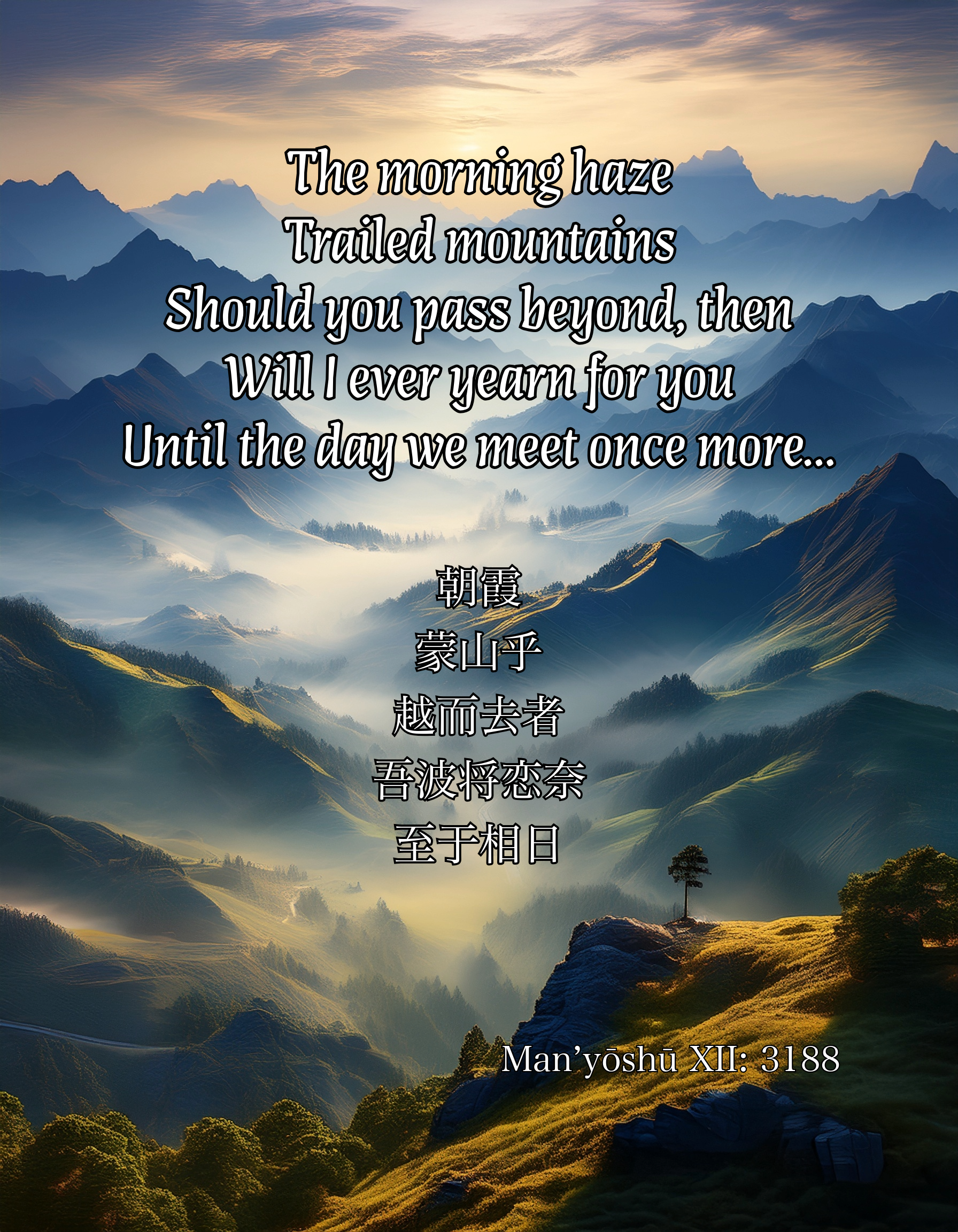
[One of] Two poems composed during a banquet held at the residence of Fujii no muraji Hironari, when sundry princes and gentlemen of the Poetry and Dance Office gathered there in winter, on the 12th day of the Twelfth Month.
In recent times, dances from bygone days have been increasing in popularity, even as those times gradually come to an end. It is only natural that people should sing the songs of yesteryear, pouring out all of the feelings that they had then. Thus, inspired by this atmosphere, two verses of old song were offered up. If there be among those of us who have occasionally gathered together, men of spirit, well-versed in style, let them compete to express their feelings, and match the forms of those refrains of old!
我屋戸之 梅咲有跡 告遣者 来云似有 散去十方吉
わがやどの うめさきたりと つげやらば こといふににたり ちりぬともよし
wa ga yado no ume sakitari to tugeyaraba ko to ipu ni nitari tirinu to mo yosi
Should, ‘At my house The plum has bloomed!’ I announce, then ‘Tis the same as, ‘Come!’ for It will all be scattered soon…
I’ve recorded a short video on the topic of my recent article on attitudes to material of Sinitic origin in waka composition and criticism! Take a look if you don’t feel like reading through the whole text!
On 11 March 2026, I was fortunate enough to be visited by a colleague, Dr Yasuhiro Mitarai or Miyagi University of Education. Dr Mitarai is a fellow scholar of waka and a trained poetry reciter in the style of the Reizei Family – the descendants of the famous poet, Fujiwara no Teika.
Dr Mitarai gave a most interesting talk entitled ‘Poetic Pligrimages and Tōhoku: Fifteen Years after the Great East Japan Earthquake’ in which he discussed how premodern waka poets would pay visits to famous poetic locations (utamakura) to experience them directly, how in the early modern period the domain of Sendai created a catalogue of utamakura within its boundaries as a way of establishing its regional identity. He then followed this with an account of how the poetic meaning of the utamakura, natorigawa (‘River Natori’) has been reinterpreted in the aftermath of the Great East Japan Earthquake, from one carrying connotations of secret love, to one referring to the tragic deaths of the disaster’s many victims.
We followed this with a short waka poetry recital (hikōkai), entitled ‘A Taste of Waka’, with the poems formally chanted by Dr Mitarai, and translations and commentary provided by myself.
We were not able to record the event on the day, but I have put together a video of Dr Mitarai’s recitation and my comments, to make the event more widely available.
Here’s a video I’ve done to explain developments in the world of waka after the compilatin of the eighth imperial anthology, Shinkokinshū, when it became riven by factional disputes between the descendants of Fujiwara no Teika.
I recently gave an online lecture as part of Cardiff University’s Japanese Studies lecture series, entitled Seasons of the Soul: Waka Poetry and the Shaping of Japanese Culture.
Cherry blossoms in spring, scarlet maple leaves in autumn, the singing of cicadas in summer and gentle snowfall in winter: all these images have been used and reused countless times in Japanese media ranging from tourist information videos to the latest anime production, to say nothing of how these and similar seasonal symbols appear on menus, in shops and ticket offices throughout Japan to mark the progress of the year. To a great extent, these images define and describe modern Japan, and yet all ultimately derive from the conventional images developed for use in waka poetry in the 8th through 12th centuries by the aristocrats in the early capitals of Nara and Heian-kyō (Kyoto).
This lecture traced the development of waka from its earliest beginnings through its use as an elegant and refined form of social communication between members of the nobility that, nevertheless, could be utilised for nakedly political purposes, and its final maturity as a literary form which was to dominate Japanese high culture, and stimulate low culture, long after the society which produced it had ceased to exist. It will discuss how poetry was produced, critiqued and preserved for later generations in a range of anthologies and other texts, and how, even today, the cultural cachet of waka continues to be leveraged by localities throughout Japan through the establishment and promotion of botanical gardens dedicated to display the plants mentioned in Japan’s earliest waka anthology, Man’yōshū.
In this video, I discuss a few of Man’yōshū‘s major named poets: Kakinomoto no Hitomaro, Yamabe no Akahito, Yamabe no Okura, Ōtomo no Yakamochi and Lady Ōtomo of Sakanoue.
In this video, I discuss the influences which shaped the poems of Man’yōshū – the political and cultural environment which gave rise to them, and how they have traditionally been classified and understood.