On the conception of compassion.
物いはぬよものけだ物すらだにもあはれなるかなや親の子を思ふ
| mono iwanu yomo no kedamono sura dani mo aware naru kana ya oya no ko o omou | Even wordless Beasts, wherever They may be, Feel the love Of a parent for a child! |
718
Snow at a shrine.
年つもるこしの白山しらずともかしらの雪をあはれとはみよ
| toshi tsumoru koshi no shirayama shirazu tomo kashira no yuki o aware to wa miyo | How years has it drifted upon The mountains white at Shirayama in Koshi I know not, but The snow above my brow, O, behold with pity![i] |
636

[i] See: Composed at Hiroshi Marōdo Shrine, recalling a visit to Shirayama, when he was Governnor of Kaga. としふともこしの白山わすれずはかしらのゆきをあはれともみよ toshi futomo / koshi no shirayama / wasurezu wa / kashira no yuki o / aware tomo miyo ‘The years have passed, yet / The mountains white at Shirayama in Koshi / Never will I forget! So, / The snow above my brow, / O, behold with pity!’ Master of the Left Capital Office Akisuke (Shinkokinshū XIX: 1912)
Composed at Hiroshi Marōdo Shrine, recalling a visit to Shirayama, when he was Governnor of Kaga.
としふともこしの白山わすれずはかしらのゆきをあはれともみよ
| toshi futomo koshi no shirayama wasurezu wa kashira no yuki o aware tomo miyo | The years have passed, yet The mountains white at Shirayama in Koshi Never will I forget! So, The snow above my brow, O, behold with pity! |
Master of the Left Capital Office Akisuke

When His Excellency, Kintsugu, in response to an imperial command, made a pilgrimage to the Grand Shrine, on the occasion of his return, this was sent to him from among the court ladies attending the Ise Virgin.
うれしさもあはれもいかにこたへまし古郷人に問はれましかば
| ureshisa mo aware mo ika ni kotaemashi furusatobito ni towaremashikaba | Of my joy, and Sadness, too, how I would tell My old friend from home Should he ask of them… |
Anonymous
Original
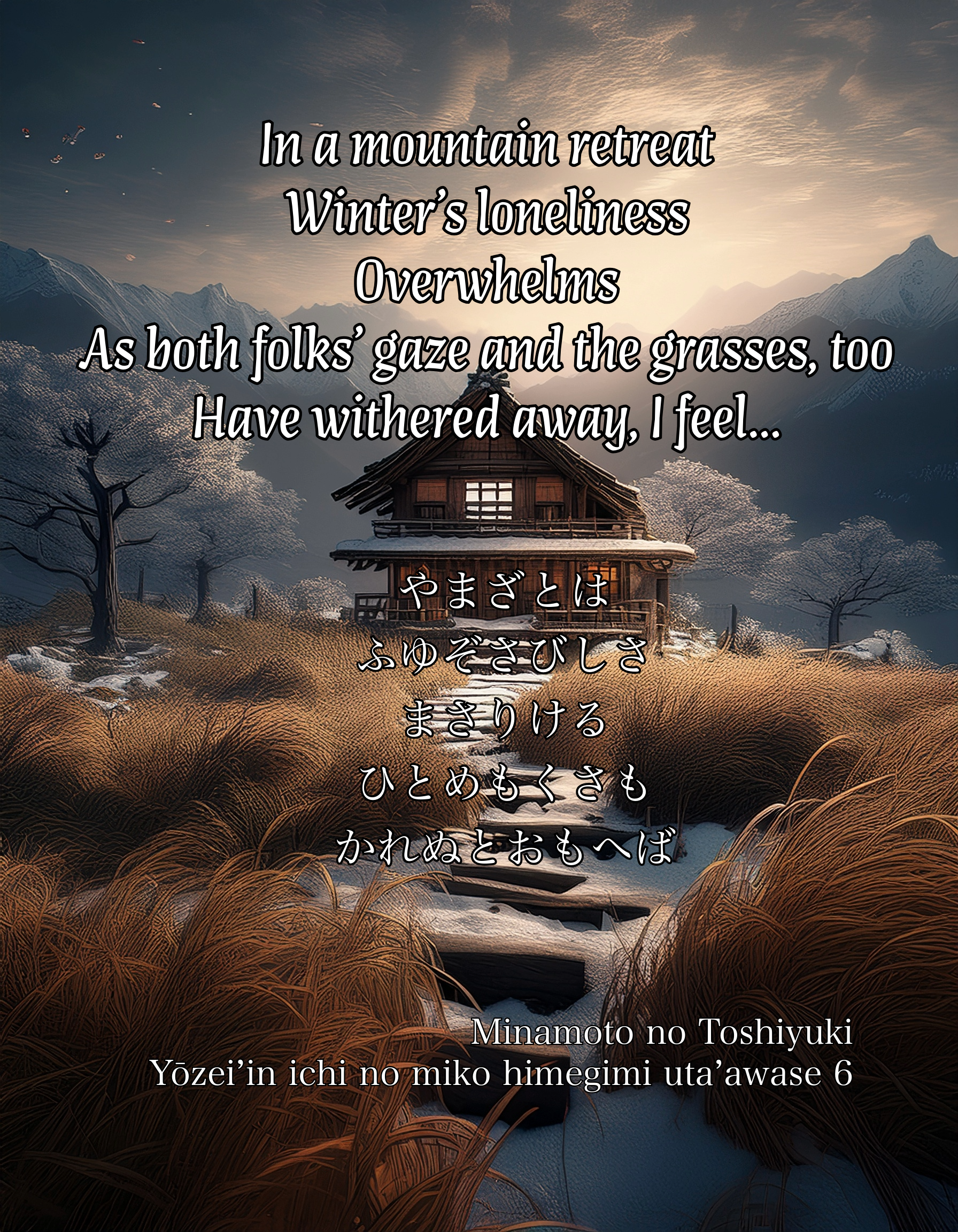
やまざとはふゆぞさびしさまさりけるひとめもくさもかれぬとおもへば
| yamazato wa fuyu zo sabishisa masarikeru hitome mo kusa mo karenu to omoeba | In a mountain retreat Winter’s loneliness Overwhelms As both folks’ gaze and the grasses, too Have withered away, I feel… |
Minamoto no Toshiyuki
6
Left (Tie)
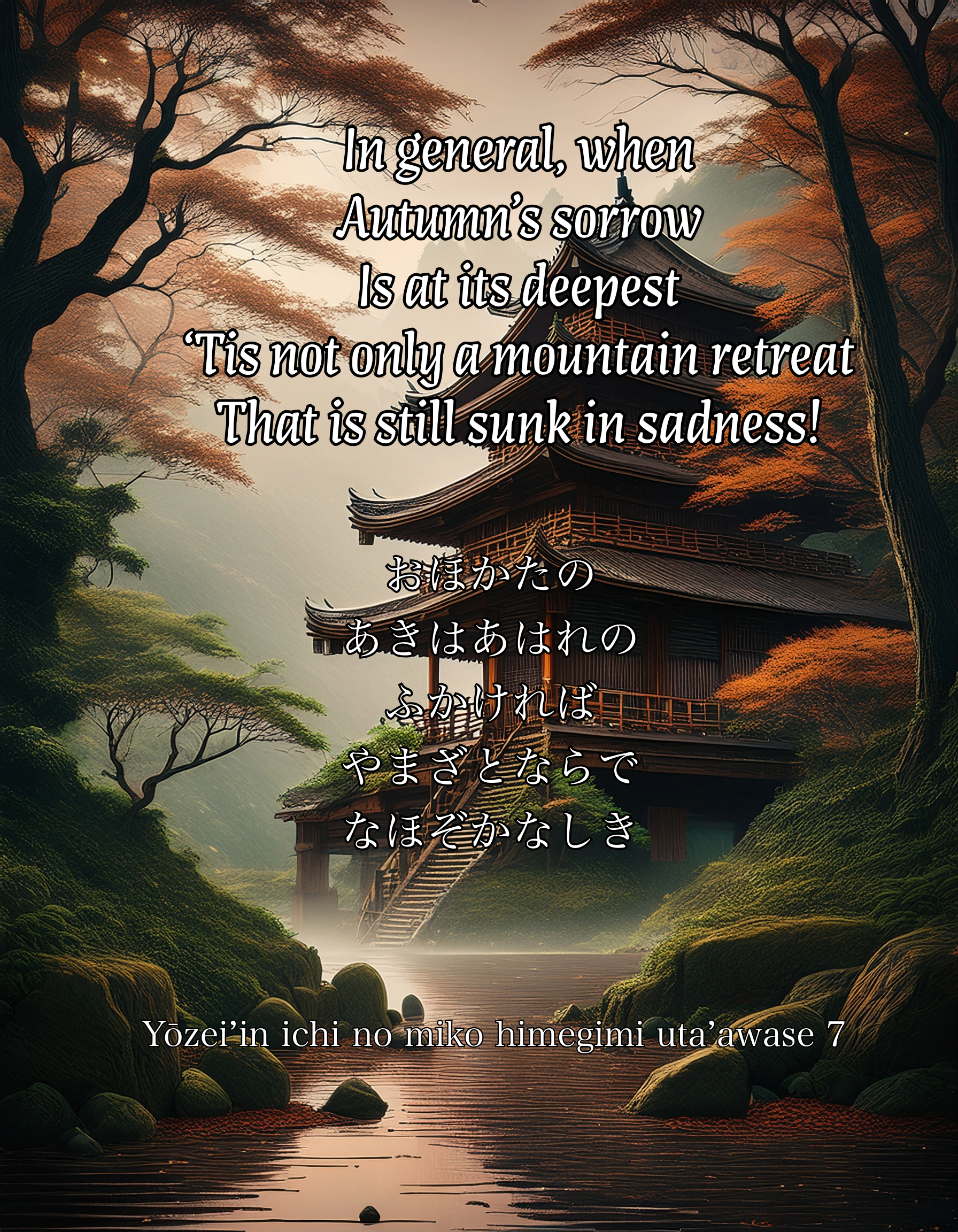
おほかたのあきはあはれのふかければやまざとならでなほぞかなしき
| ōkata no aki wa aware no fukakereba yamazato narade nao zo kanashiki | In general, when Autumn’s sorrow Is at its deepest ‘Tis not only a mountain retreat That is still sunk in sadness! |
7
Right
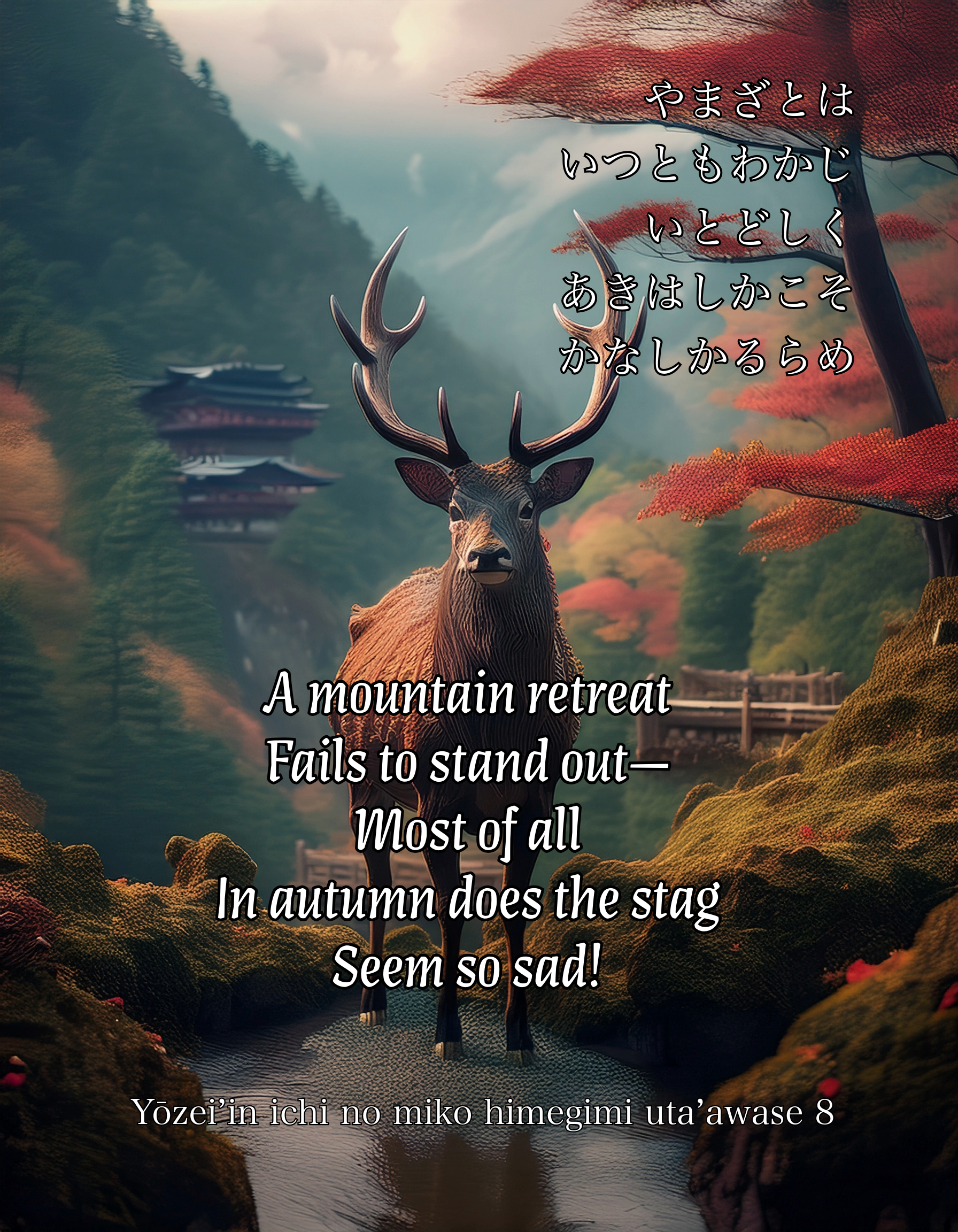
やまざとはいつともわかじいとどしくあきはしかこそかなしかるらめ
| yamazato wa itsu to mo wakaji itodoshiku aki wa shika koso kanashikarurame | A mountain retreat Fails to stand out— Most of all In autumn does the stag Seem so sad! |
8
Round Ten
Left (Win)
かぞふればやとせへにけりあはれわがしづみしことはきのふとおもふに
| kasoureba yatose henikeri aware wa ga shizumishi koto wa kinō to omou ni | When I count them up, Many years have passed, but Sadness Overcomes me for the events Of yesterday, I feel… |
Lord Sanesada
119
Right
いたづらにふりぬるみをもすみよしのまつはさりともあはれしるらむ
| itazura ni furinuru mi o mo sumiyoshi no matsu wa sari tomo aware shiruramu | How quickly Age has come upon my flesh, too— Sumiyoshi’s Pines must that Sadness know too well… |
Lord Toshinari
120
The poem of the Left: these are not matters which could be understood by just anyone, yet even a superficial glance at it reveals that its conception and configuration display and exceptional sadness. How true it is that off all the myriad things in our lives it is the events of yesterday and today that we recall, and this is how we pass through the years and months, so how difficult, indeed, it is to supress the configuration of ‘When I count them up, / Many years have passed’! As for the Right’s poem, well, the conception of the initial section is pedestrian at best, although the latter section does seem to have some conception to it in places and shows some signs of thought. It is the poor composition of the judge, who is into his dotage. Once more, therefore, I have not rendered judgement, however, I feel that the deity would determine in favour of the Left.


Round Nine
Left
いとふともなきものゆゑによのなかのあはれをさすがうちなげきつつ
| itou tomo naki mono yue ni yo no naka no aware o sasu ga uchinagekitsutsu | With despite I regard it not, yet This mundane world Has such sadness, that Ever am I grief-stricken… |
Lord Sanefusa
117
Right (Win)
いたづらにとしもつもりのうらにおふるまつぞわがみのたぐひなりける
| itazura ni toshi mo tsumori no ura ni ouru matsu zo wa ga mi no tagui narikeru | How quickly The years have piled up; on Tsumori Shore grow Pines – my sorry self, indeed, Do they resemble! |
Lord Yorimasa
118
The poem of the Left has a configuration which directly expresses a single emotion. Its conception sounds in keeping with this. The poem of the Right begins with ‘The years have piled up; on Tsumori / Shore grow’ and continues with ‘Pines – my sorry self, indeed’ which appears very pleasant. Thus, the Right wins.


Round Three
Left (Tie)
あはれとやかみもおもはむすみのえのふかくたのみをかくるみなれば
| aware to ya kami mo omowamu suminoe no fukaku tanomi o kakuru mi nareba | ‘How sad,’ does The God, too, think? For at Suminoe Deep in devotions Am I entangled… |
Lord Tsunemori
105
Right
たのみつるこのひとむらの人ごとにちとせをゆづれすみよしのまつ
| tanomitsuru kono hitomura no hito goto ni chitose o yuzure sumiyoshi no matsu | Devoted are This group of folk, so To each and every one Grant a thousand years, O, pines of Sumiyoshi! |
Lord Yorisuke
106
The poem of the Left, saying ‘deep in devotions’ and suchlike, is pleasant, I have to say. Does the poem of the Right’s ‘this group of folk’ refer to the current poets or to the speaker’s own household? Well, whichever it is, the conception of devotion does not appear to be slight, but again I say this is a tie.


