Topic unknown.
夢かとも思ふべけれどねやはせしなにぞ心にわすれがたきは
yume ka tomo Had we, then in my dreams
Anonymous
夢よりぞ恋しき人を見そめつる今はあはする人もあらなん
yume yori zo Within my dreams
Composed and sent to a certain person’s residence to say how transient this mundane world is.
世中にかしこきこともはかなきも思ひしとけば夢にぞ有りける
yo no naka ni kashikoki koto mo hakanaki mo omoishi tokeba yume ni zo arikeru In this mundane world
715
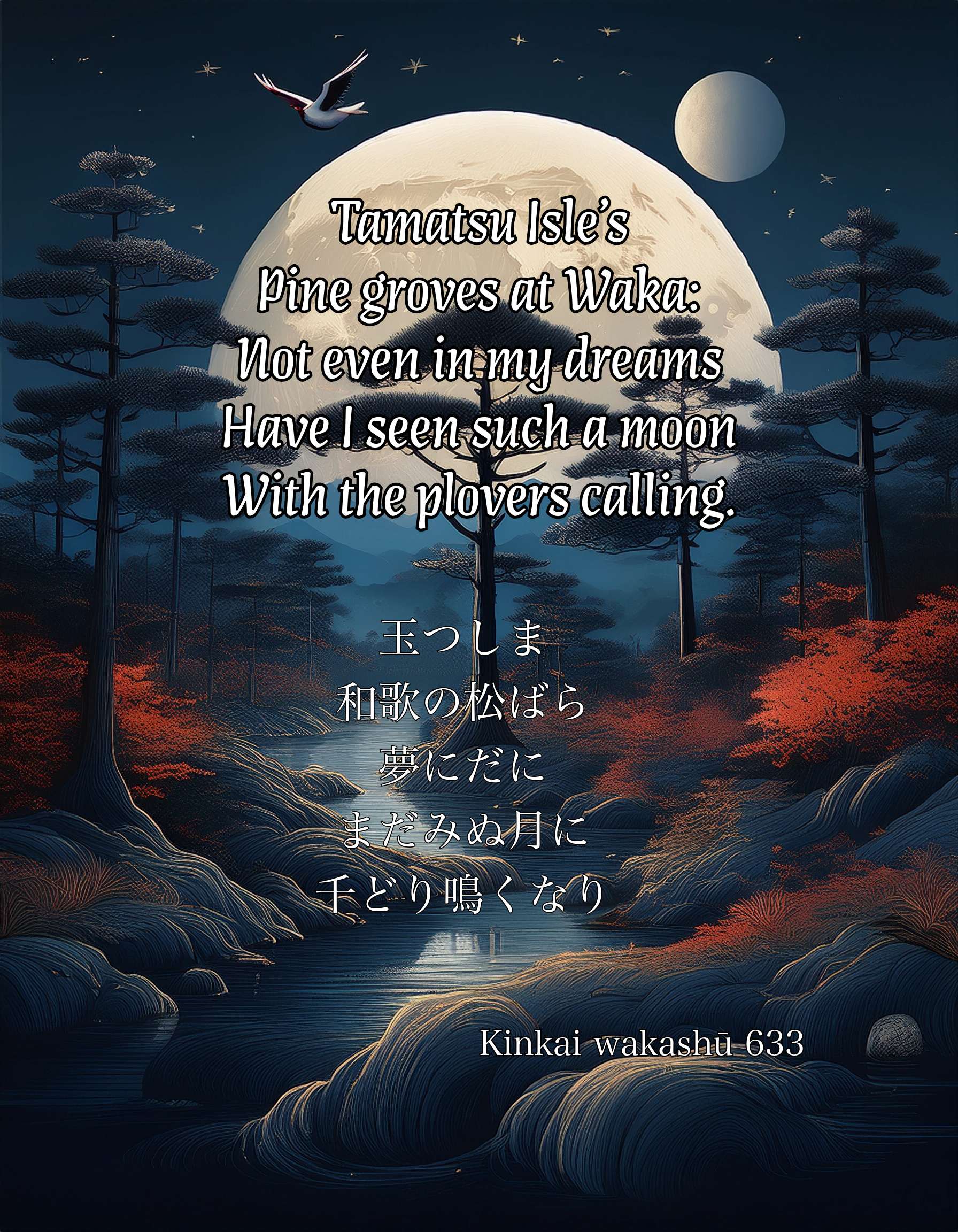
Plovers before the moon.
玉つしま和歌の松ばら夢にだにまだみぬ月に千どり鳴くなり
tamatsushima waka no matsubara yume ni dani minu tsuki ni chidori naku nari Tamatsu Isle’s
633
都べに夢にもゆかむ便あらばうつの山風ふきもつたへよ
miyakobe ni yume ni mo yukamu tayori araba utsu no yamakaze fuki mo tsuteyo If towards the capital, [i]
599
[i] See: While at Utsu Mountain in Suruga, he thought of someone he had been meeting and sent this to the capital. するがなるうつの山邊のうつゝにも夢にも人にあはぬなりけり suruga naru / utsu no yamabe no / utsutsu ni mo / yume ni mo hito ni / awanu narikeri ‘In Suruga / At the Utsu mountains / In truth and / In my dreams she / Is nowhere to be seen…’ Ariwara no Narihira (Shinkokinshū X: 904
Cogon grass and the Same
Round Fifteen
Left
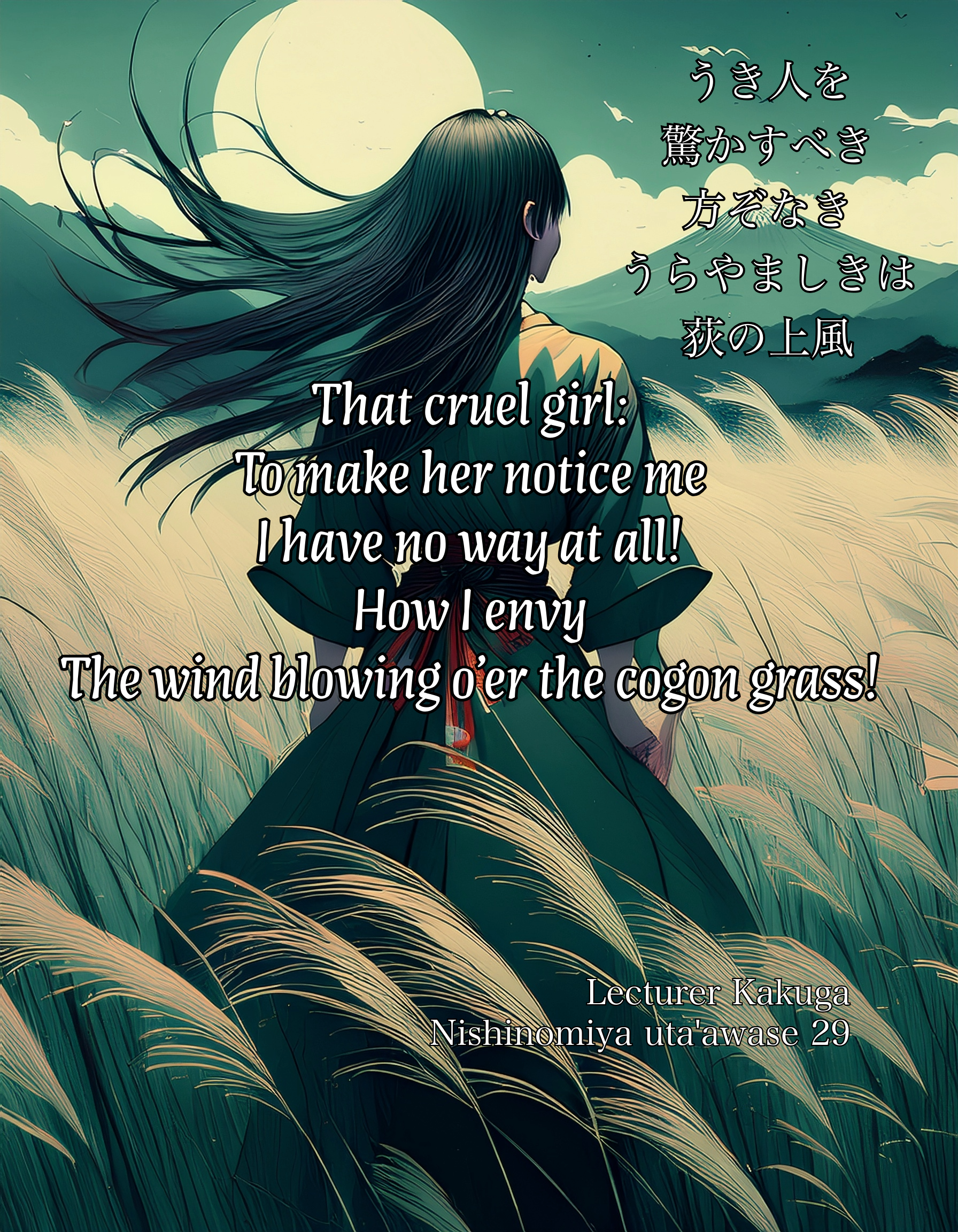
うき人を驚かすべき方ぞなきうらやましきは荻の上風
ukibito o odorokasubeki kata zo naki urayamashiki wa ogi no uwakaze That cruel girl:
Lecturer Kakuga
Right
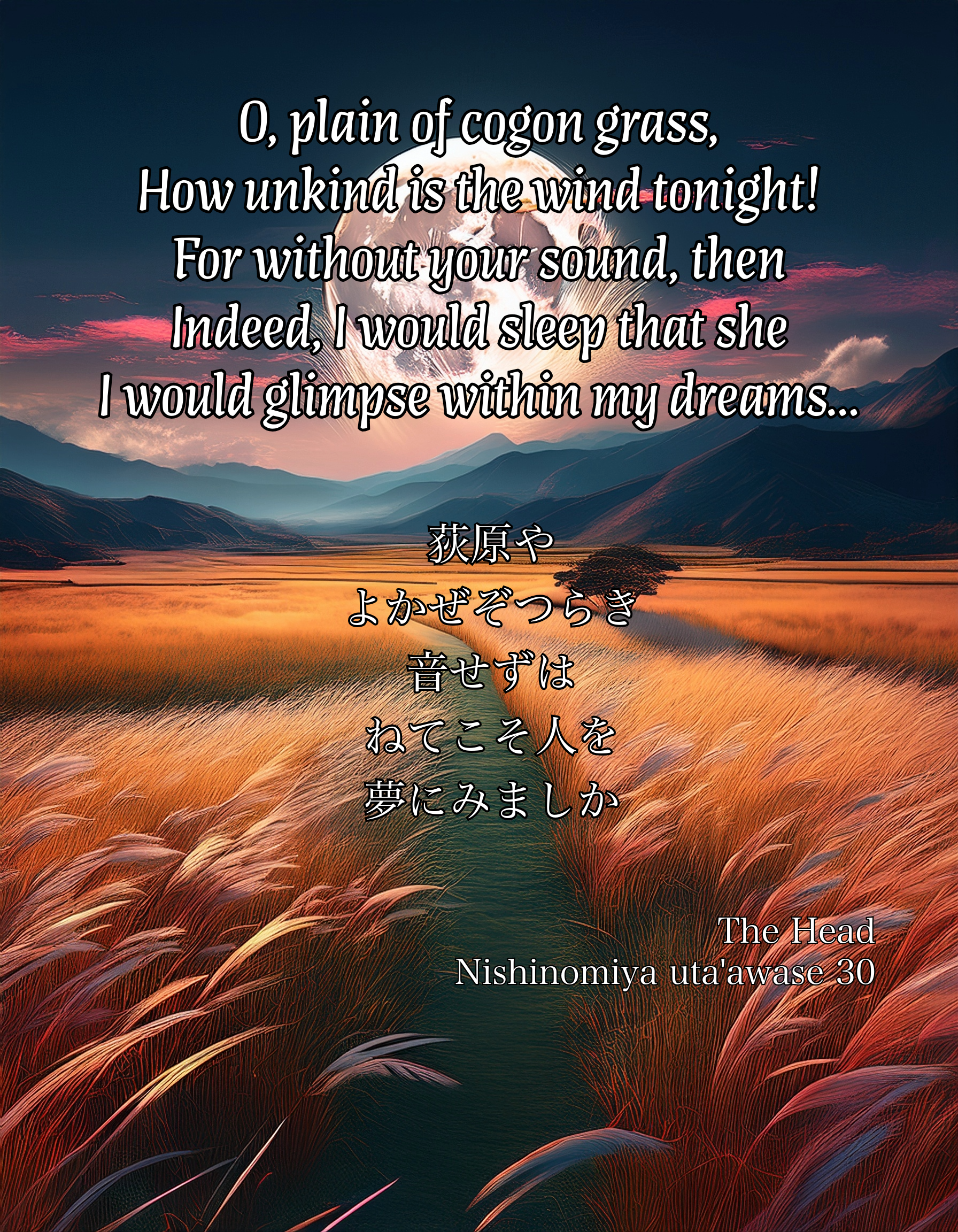
荻原やよかぜぞつらき音せずはねてこそ人を夢にみましか
ogiwara ya yokaze zo tsuraki oto sezu wa nete koso hito o yume ni mimashika O, plain of cogon grass,
The Head
The conception of love sounds superior at present in envying the ‘wind blowing o’er the cogon grass’ than it does in the ‘unkind is the wind tonight’.
Left
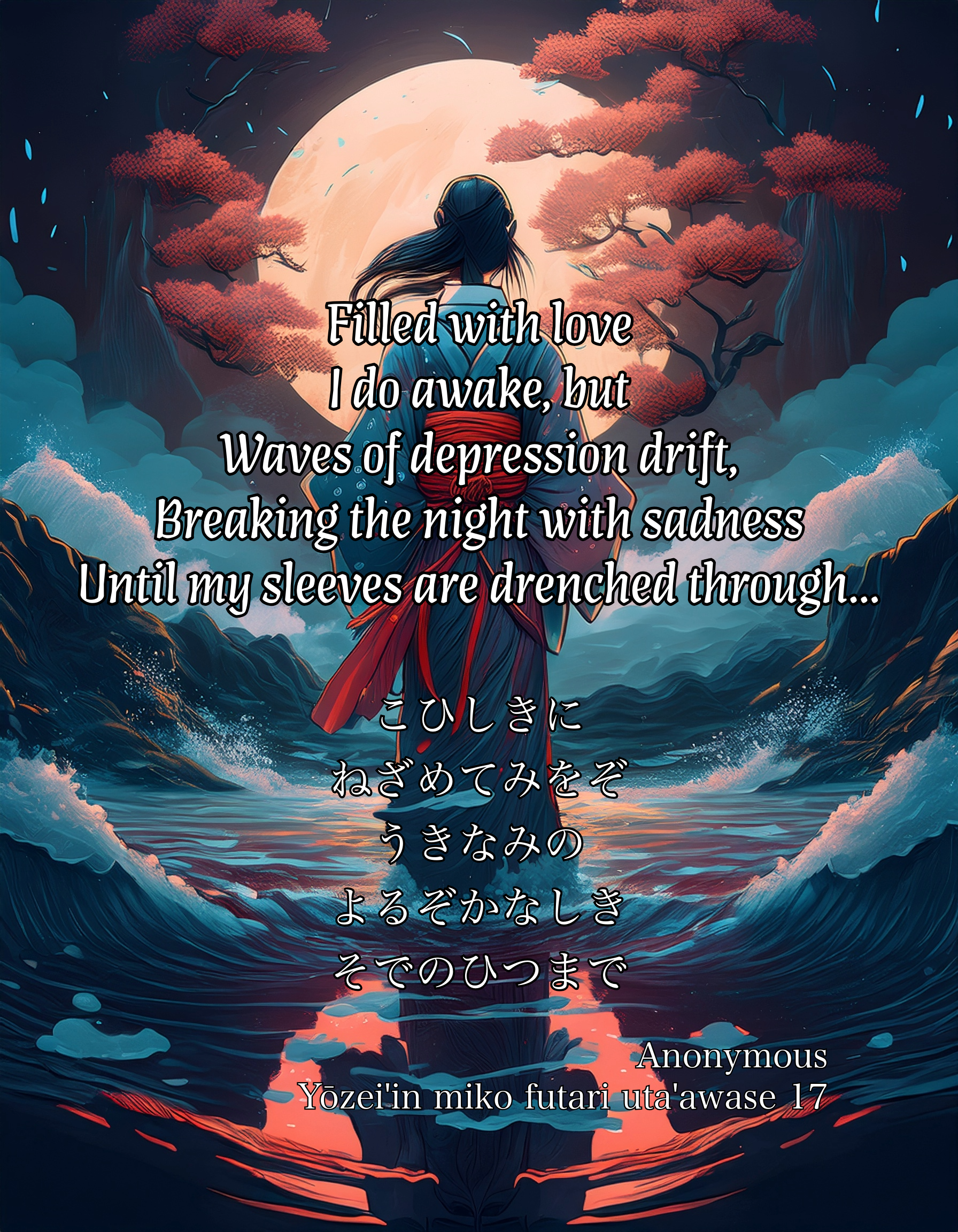
こひしきにねざめてみをぞうきなみのよるぞかなしきそでのひつまで
koishiki ni nezamete mi o zo ukinami no yoru zo kanashiki sode no hitsu made Filled with love
17
Right
うつつにもゆめにもみえずなりぬればさむるよなよなねをのみぞなく
utsutsu ni mo yume ni mo miezu narinureba samuru yonayona ne o nomi zo naku In both reality, and
18
Left
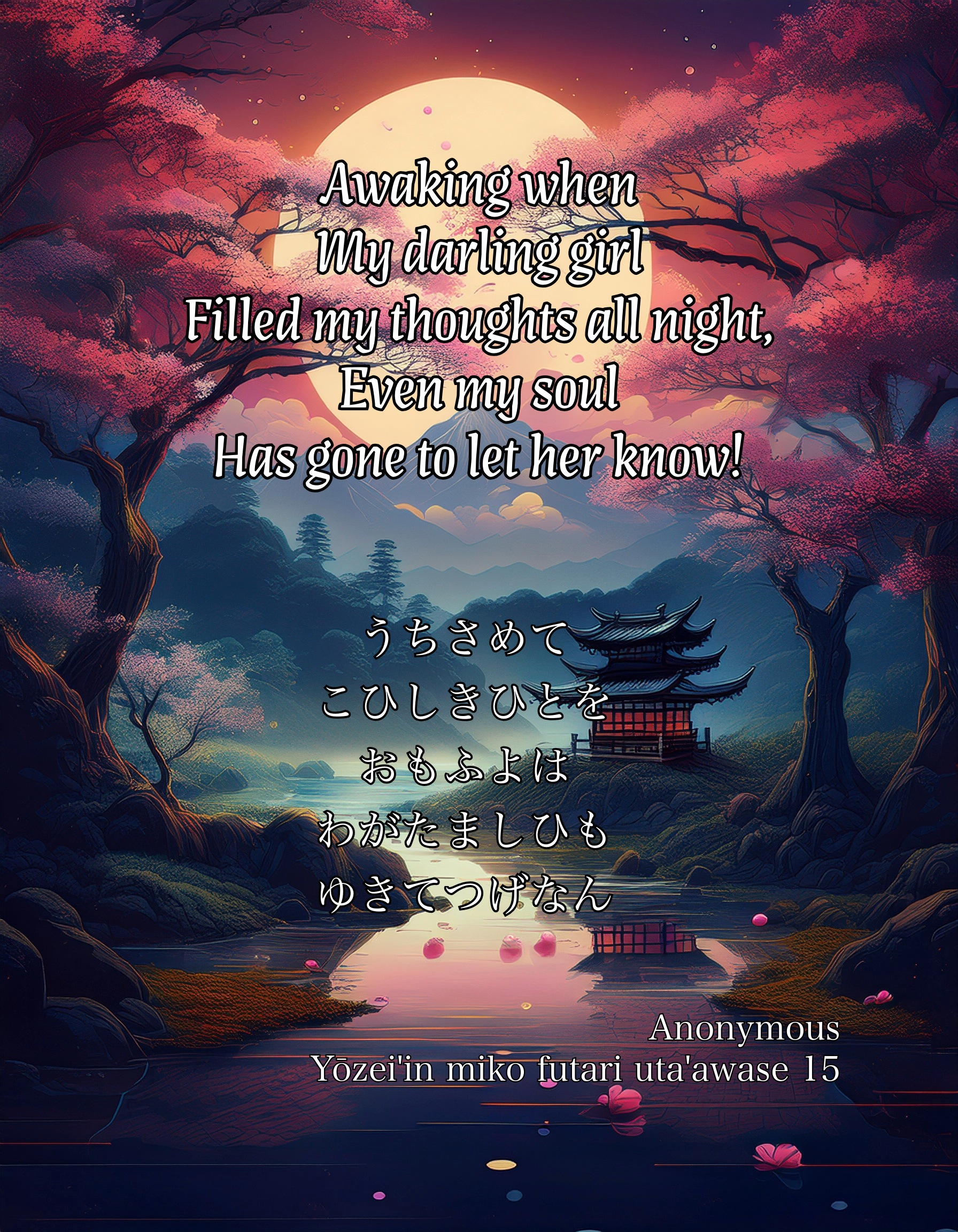
うちさめてこひしきひとをおもふよはわがたましひもゆきてつげなん
uchisamete koishiki hito o omou yo wa wa ga tamashii mo yukite tsugenan Awaking when
15
Right
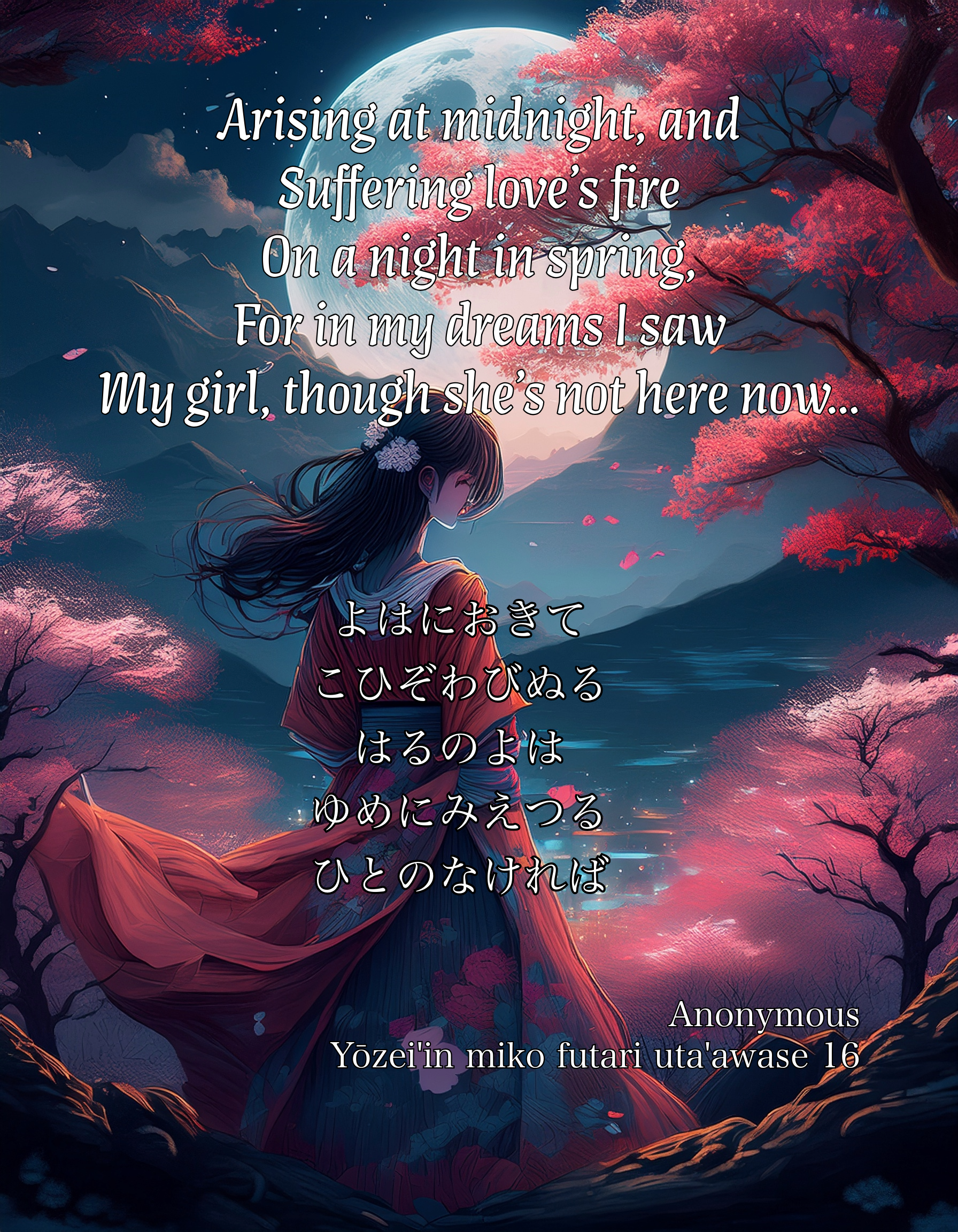
よはにおきてこひぞわびぬるはるのよはゆめにみえつるひとのなければ
yowa ni okite koi zo wabinuru haru no yo wa yume ni mietsuru hito no nakereba Arising at midnight, and
16
Left
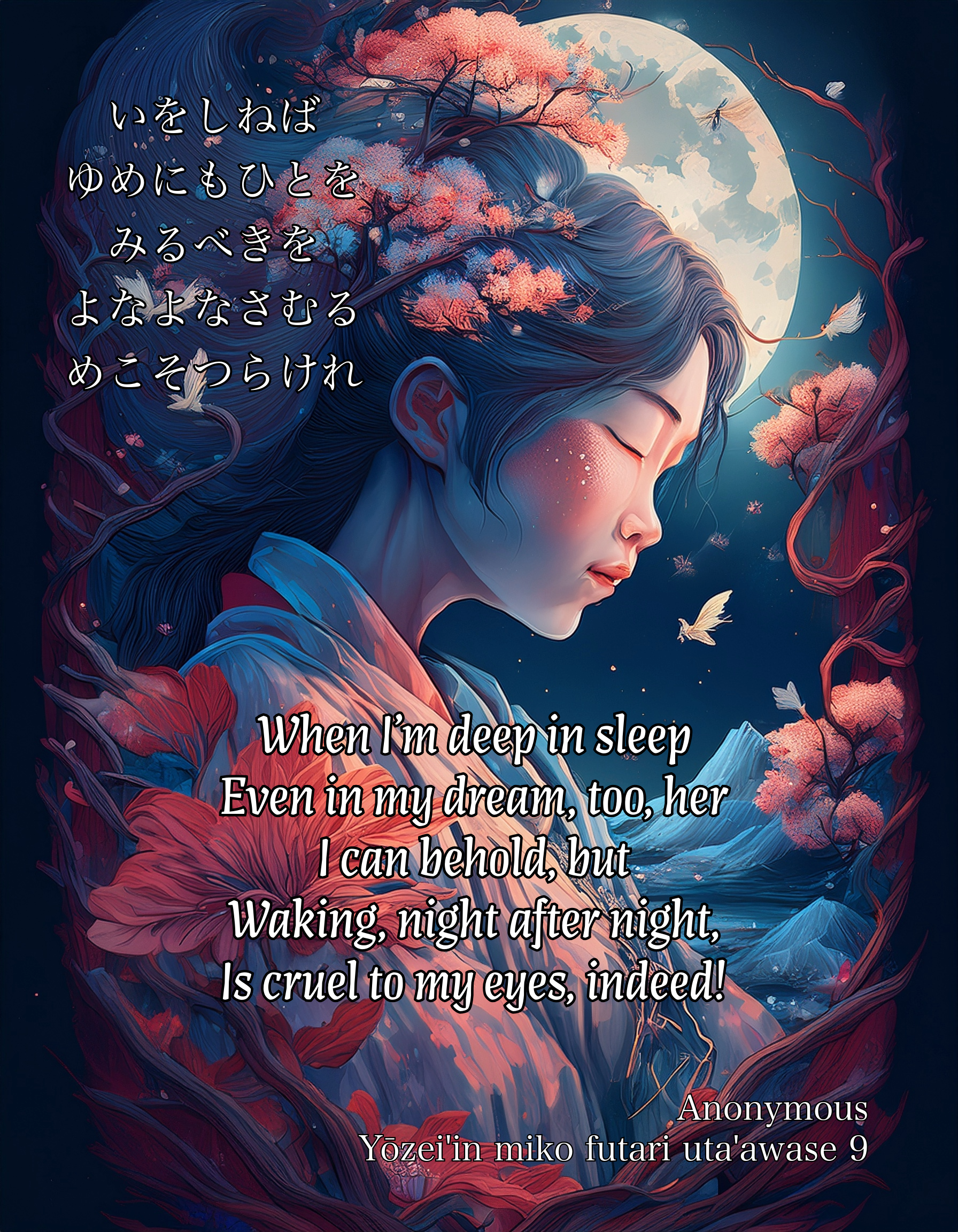
いをしねばゆめにもひとをみるべきをよなよなさむるめこそつらけれ
i o shi neba yume ni mo hito o mirubeki o yonayona samuru me koso tsurakere When I’m deep in sleep
9
Right
こひわびてこころまどへるねざめにはおもかげをだにあふとたのまむ
koiwabite kokoro madoeru nezame ni wa omokage o dani au to tanomamu Desolate with love,
10
Left
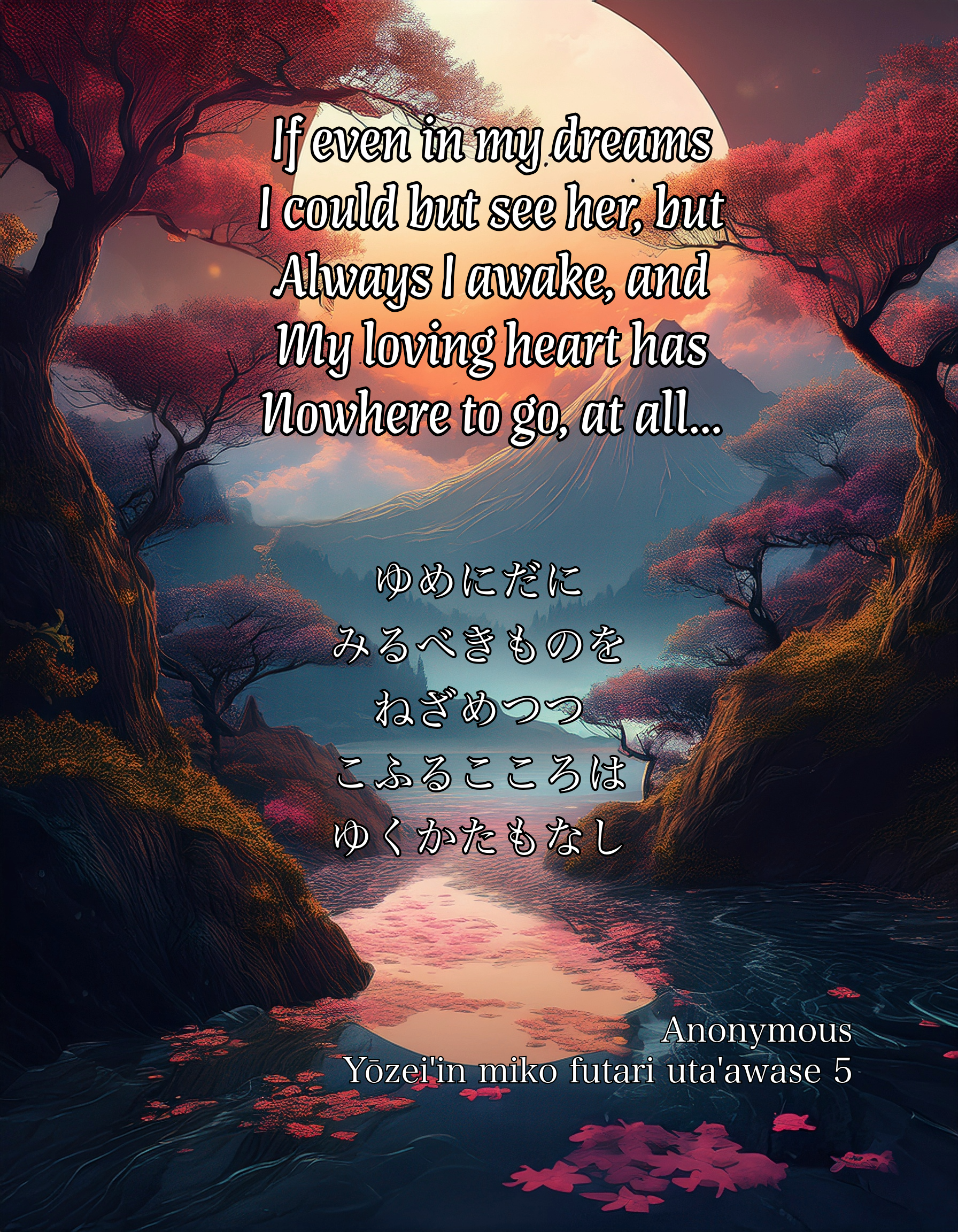
ゆめにだにみるべきものをねざめつつこふるこころはゆくかたもなし
yume ni dani mirubeki mono o nezametsutsu kouru kokoro wa yuku kata mo nashi If even in my dreams
5
Right
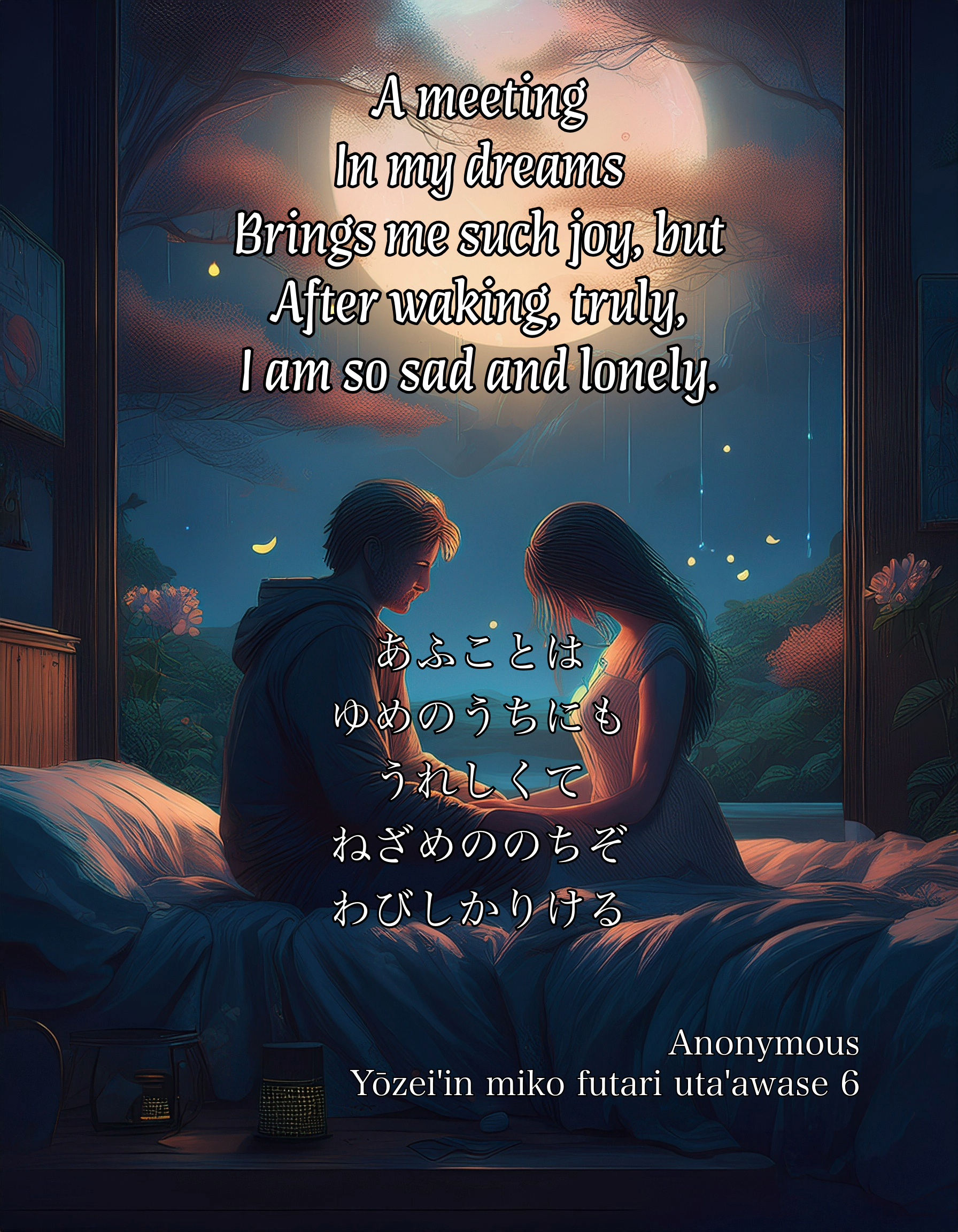
あふことはゆめのうちにもうれしくてねざめののちぞわびしかりける
au koto wa yume no uchi ni mo ureshikute nezame no nochi zo wabishikarikeru A meeting
6
Posts navigation
'Simply moving and elegant'