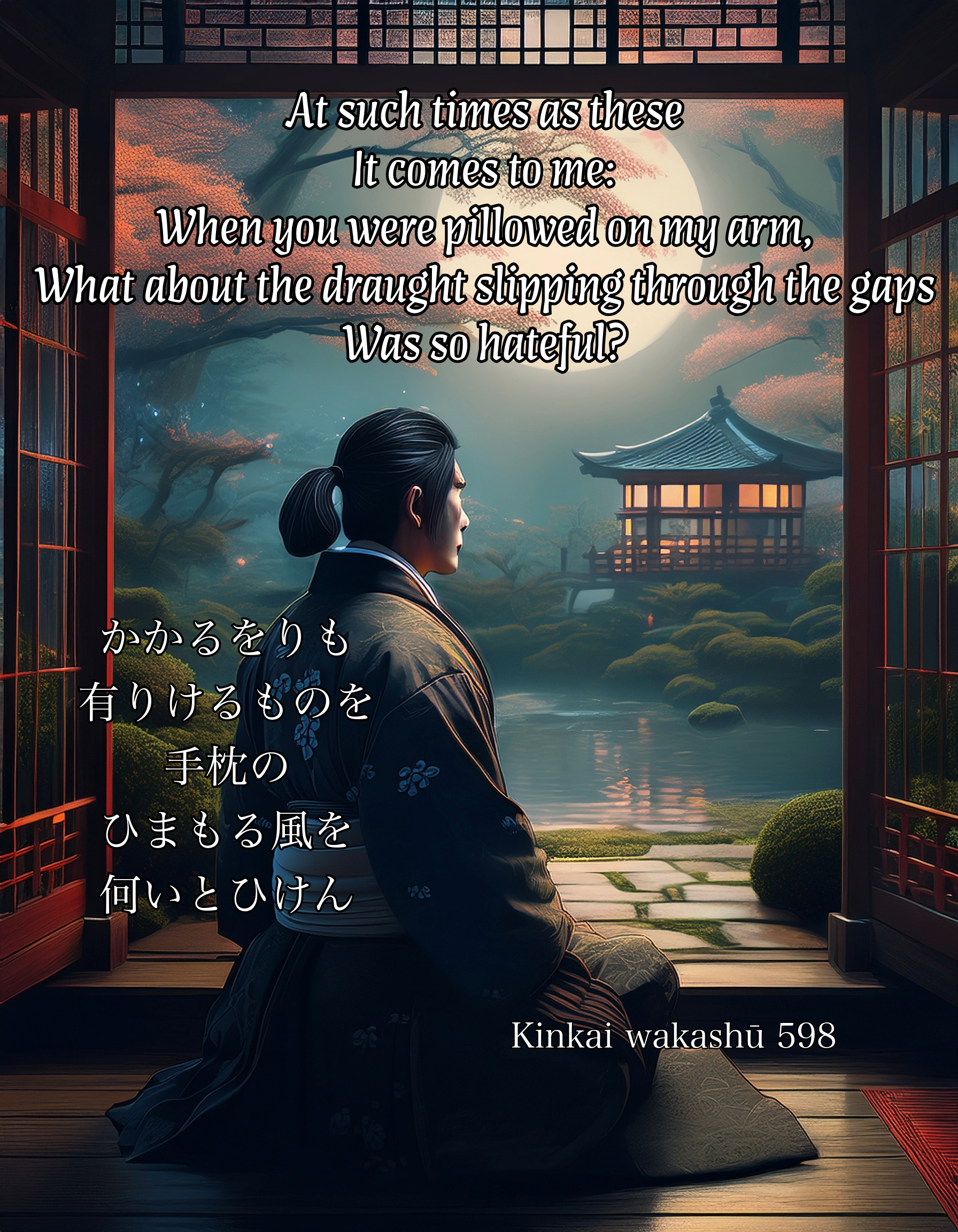
kakaru ori mo arikeru mono o tamakura no hima moru kaze o nani itoiken
At such times as these It comes to me: When you were pillowed on my arm, What about the draught slipping through the gaps Was so hateful?[i]
598
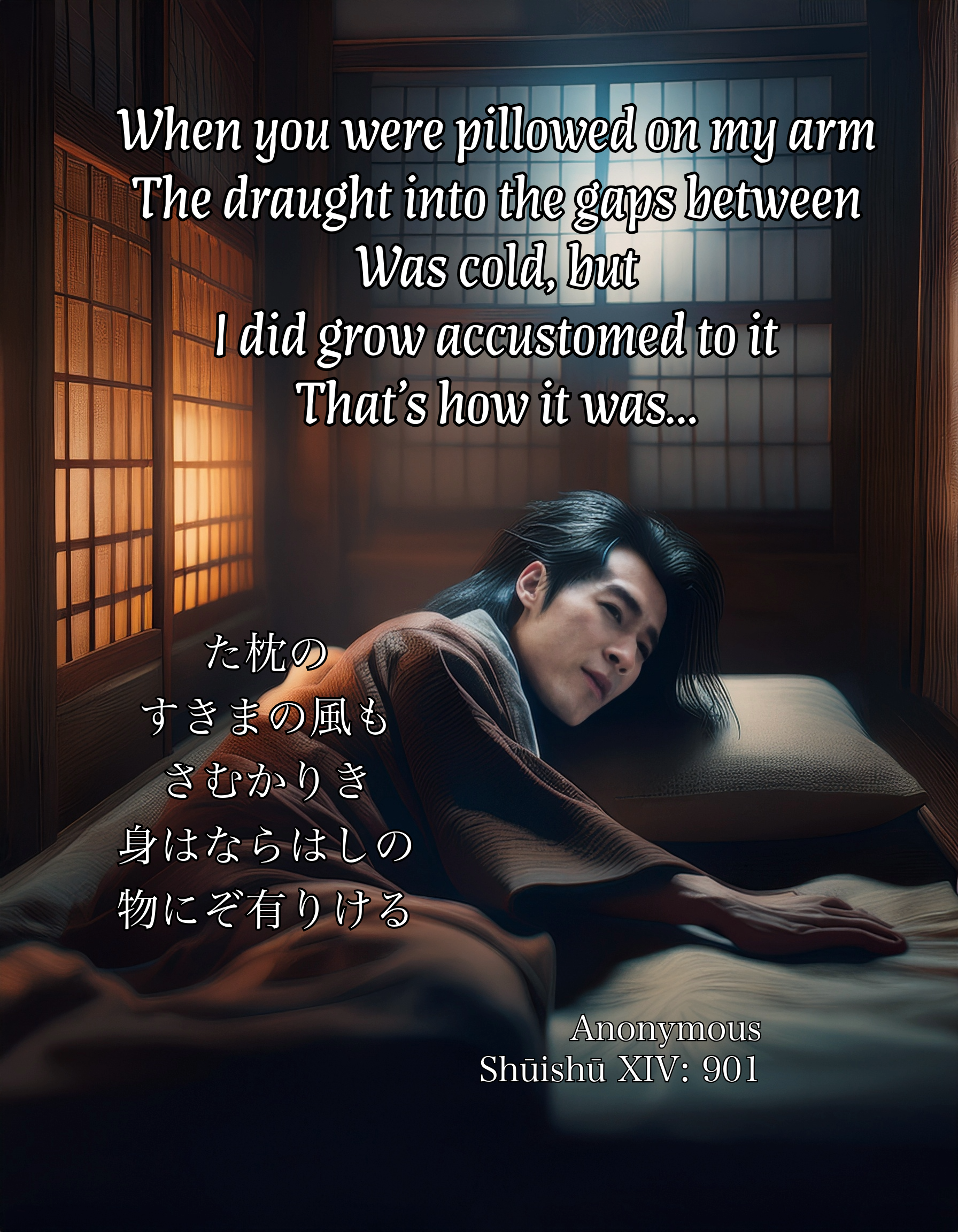
[i] See: Topic unknown. た枕のすきまの風もさむかりき身はならはしの物にぞ有りける tamakura no / sukima no kaze mo / samukariki / mi wa narawashi no / mono ni zo arikeru ‘When you were pillowed on my arm / The draught into the gaps between / Was cold, but / I did grow accustomed to it— / That’s how it was…’ Anonymous (Shūishū XIV: 901)
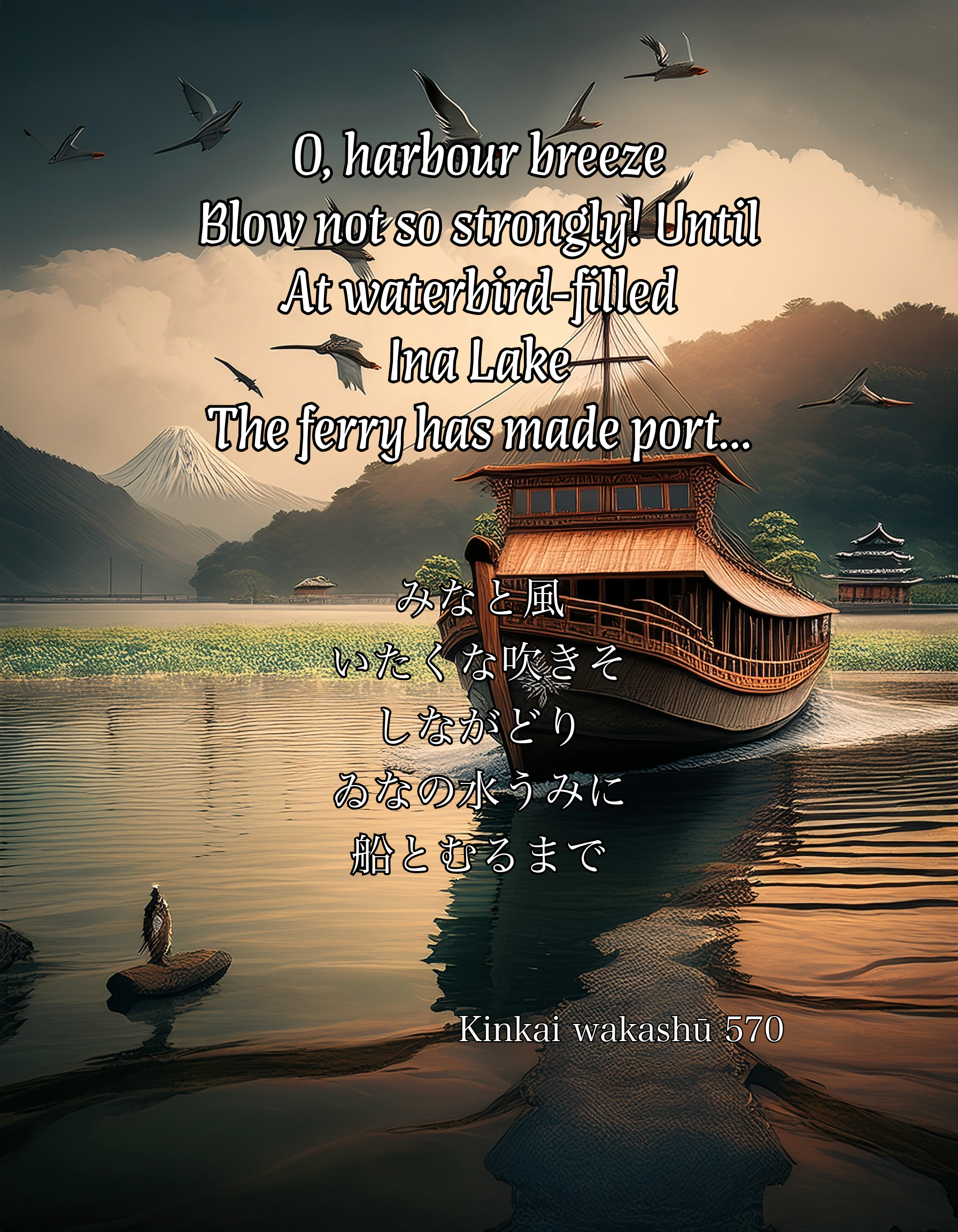
minato kaze itaku na fuki so shinagatori ina no mizu’umi ni fune tomuru made
O, harbour breeze Blow not so strongly! Until At waterbird-filled Ina Lake The ferry has made port…[i]
570
[i] See: 大海尓 荒莫吹 四長鳥 居名之湖尓 舟泊左右手 ōki umi ni/ arashi na fuki so / shinagatori / ina no minato ni / fune hatsuru made ‘Across the sea so wide, / Blow not so, o storm wind! Until / At waterbird-filled / Ina port / My boat has come to rest…’ (Man’yōshū VII: 1189)
The scent of orange blossom incense on the breeze[i]
Left
ふくかぜに花たちばなぞにほふなるむかしのそでにあやまたれつつ
fuku kaze ni hanatachibana zo niou naru mukashi no sode ni ayamataretsutsu
With the gusting breeze Orange blossom’s Fragrance comes— For those sleeves of bygone days Do I ever mistake it…
13
Right
つねよりもことにもあるかなけふをまつはなたちばなのかぜのにほひは
tsune yori mo koto ni mo aru kana kyō o matsu hanatachibana no kaze no nioi wa
More than ever So special it is! For today have I awaited, Orange blossom’s Scented breeze…
14
In general, orange blossom is scented during early summer showers or has its fragrance carried on the evening breeze, so I wonder about the folk of bygone days: there’s nothing to compare it with, making the Left’s poem as hackneyed as one on Isonokami, yet there’s nothing special about it, like a weed growing under the eaves. The Right’s poem has ‘for today have I awaited’, which I think requires a reference to sweet-flags. My overall impression of both poems is that their conceptions are unclear.
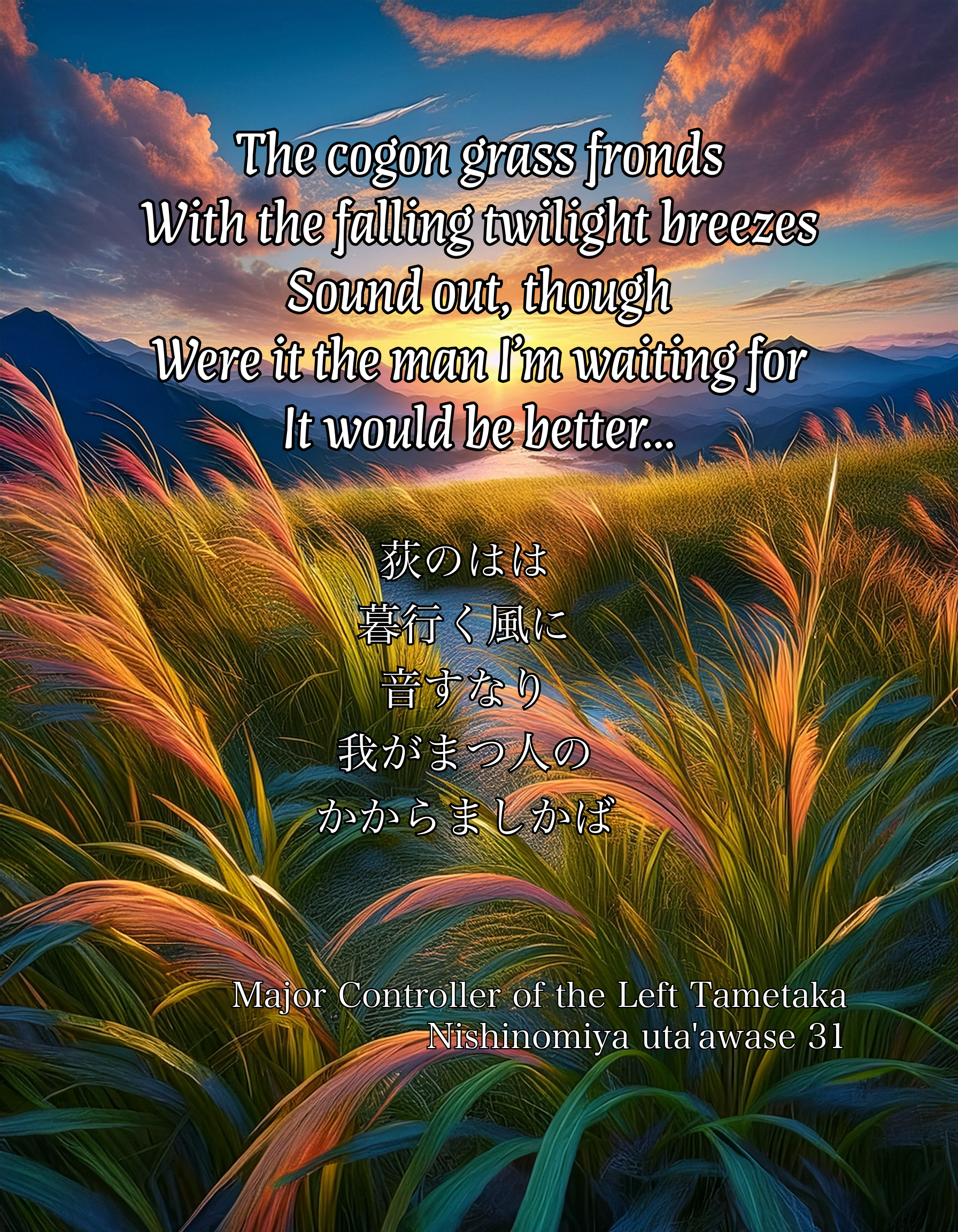
ogi no ha wa kureyuku kaze ni otosu nari wa ga matsu hito no kakaramashikaba
The cogon grass fronds With the falling twilight breezes Sound out, though Were it the man I’m waiting for It would be better…
Major Controller of the Left Tametaka 31
Right
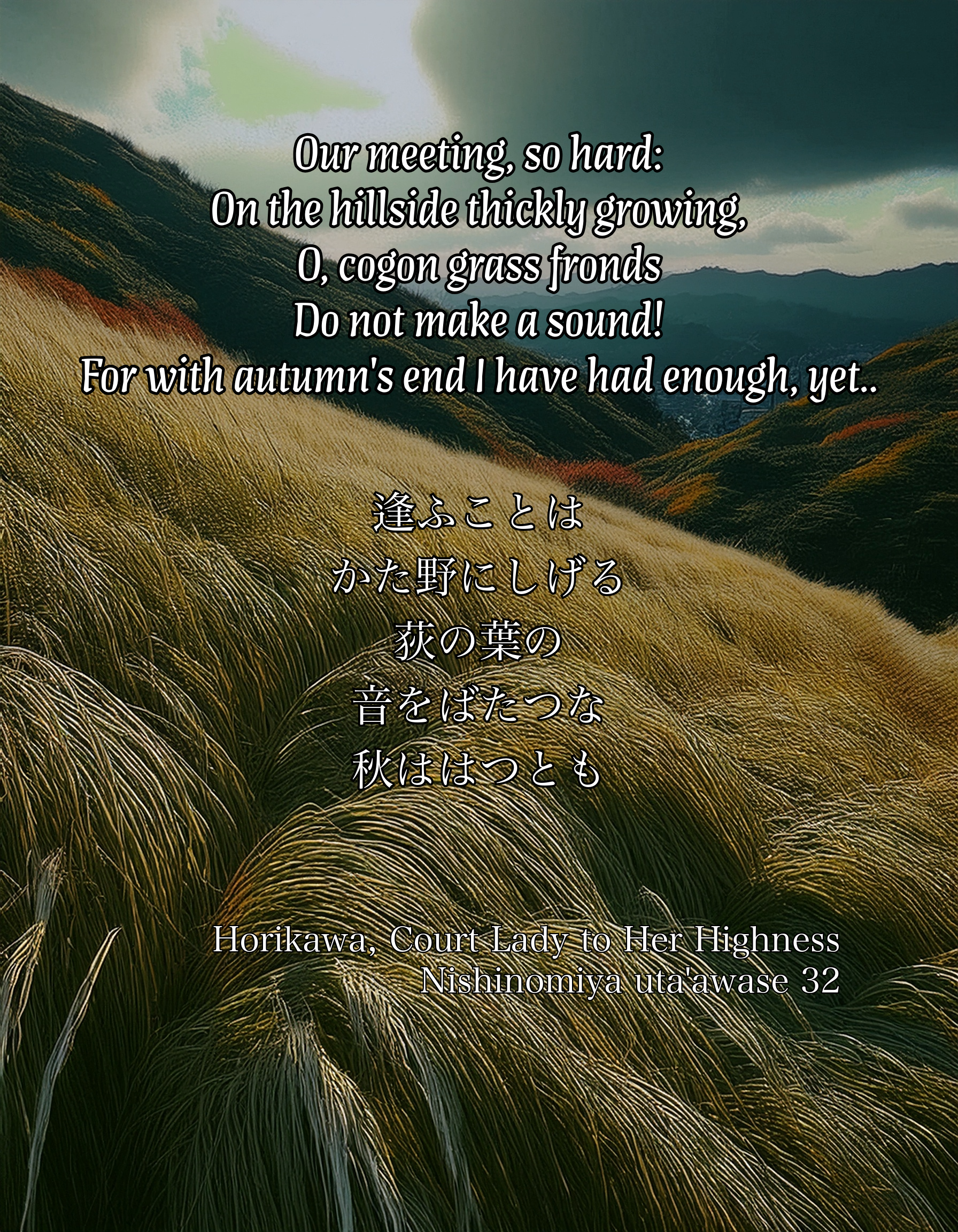
逢ふことはかた野にしげる荻の葉の音をばたつな秋ははつとも
au koto wa katano ni shigeru ogi no ha no oto oba tatsu na aki wa hatsu tomo
Our meeting, so hard: On the hillside thickly growing, O, cogon grass fronds Do not make a sound! For with autumn’s end I have had enough, yet..
Horikawa, Court Lady to Her Highness 32
I feel that the emotions encompassed by the sound of the wind in ‘Were it the man I’m waiting for / It would be better’ sounded more striking than ‘On the hillside thickly growing, / O, cogon grass fronds’.
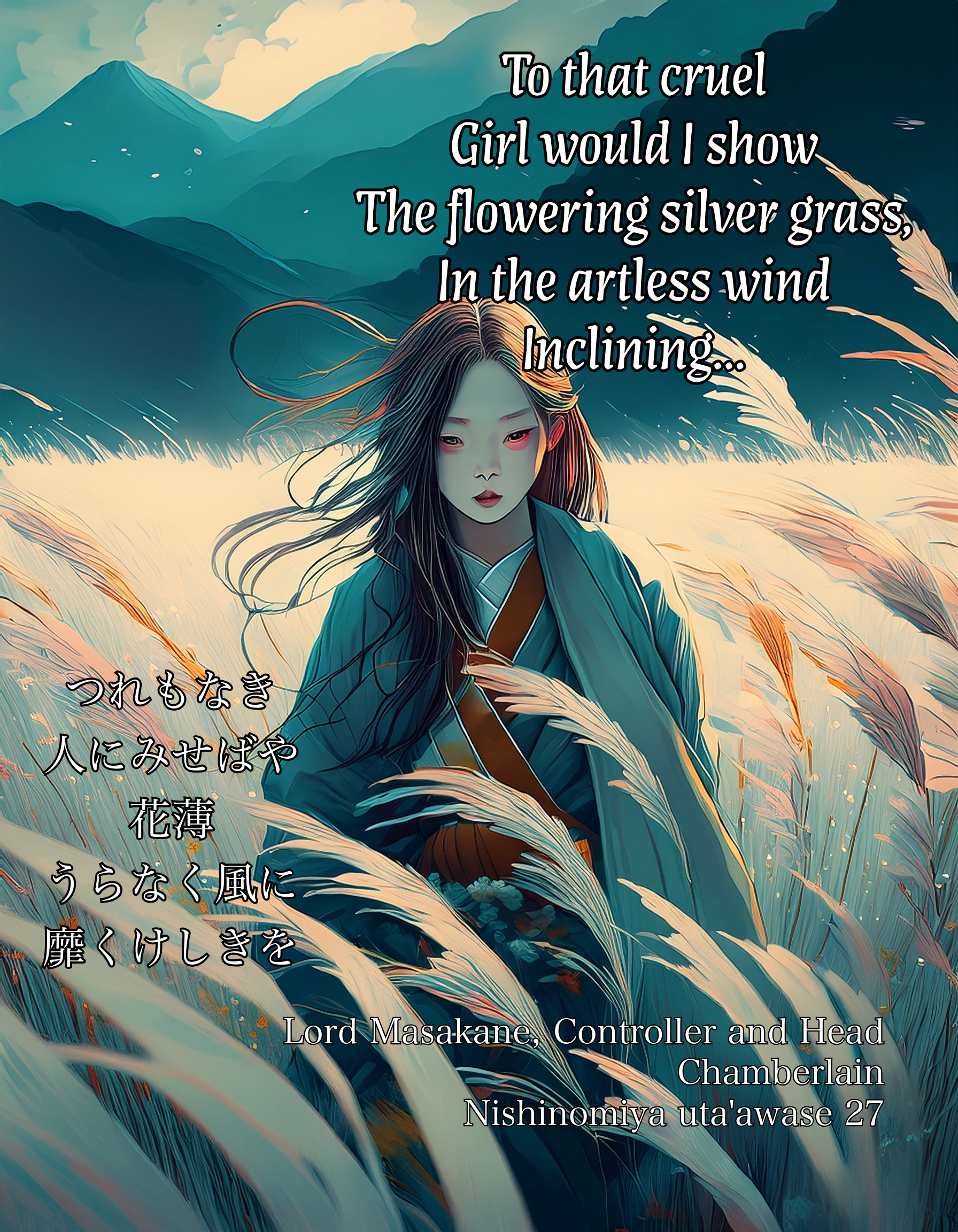
tsure mo naki hito ni miseba ya hanasusuki uranaku kaze ni nabiku keshiki o
To that cruel Girl would I show The flowering silver grass, In the artless wind Inclining…
Lord Masakane, Controller and Head Chamberlain 27
Right
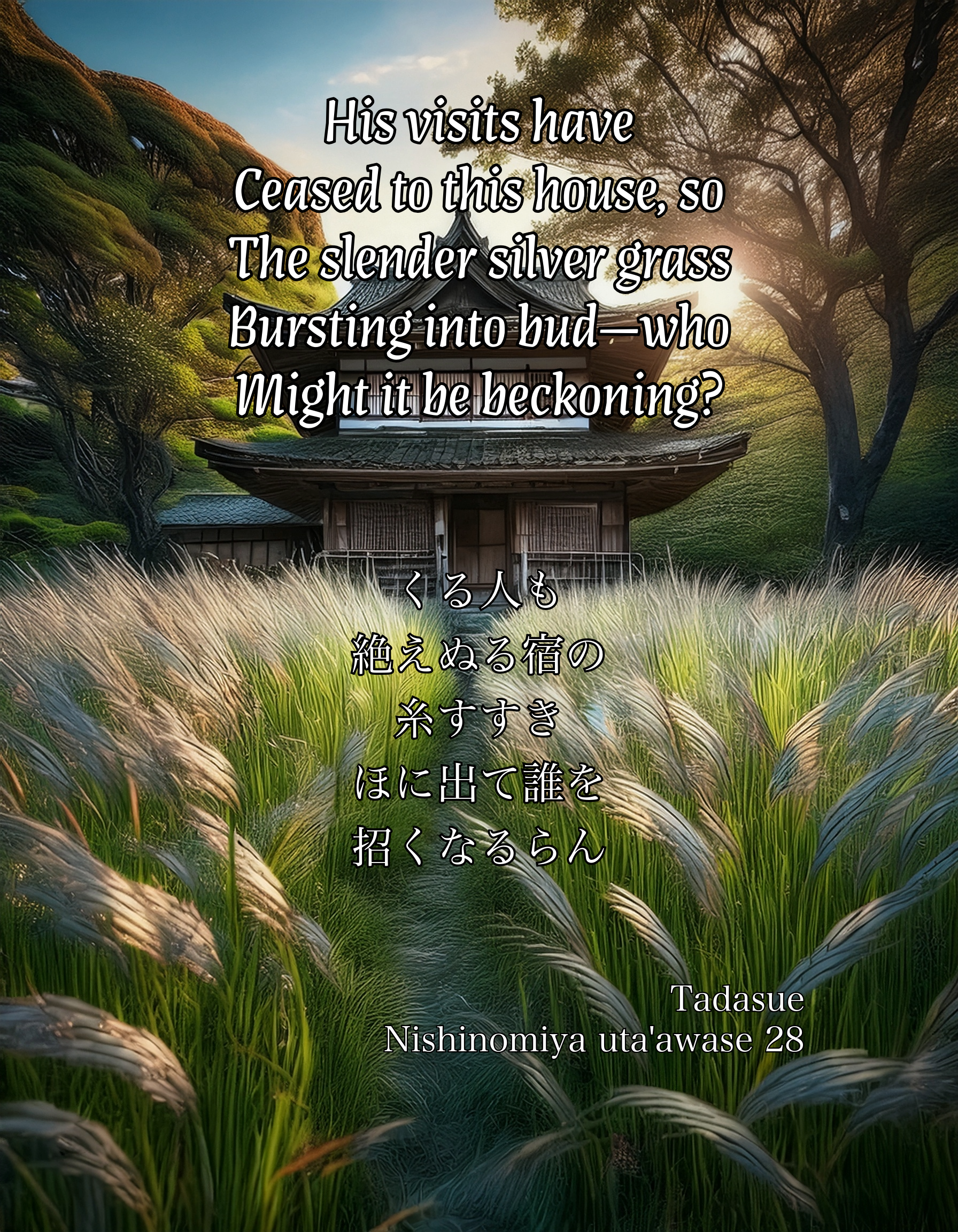
くる人も絶えぬる宿の糸すすきほに出て誰を招くなるらん
kuru hito mo taenuru yado no itosusuki ho ni idete tare o maneku naruran
His visits have Ceased to this house, so The slender silver grass Bursting into bud—who Might it be beckoning?
Tadasue 28
The Left’s poem, up to ‘would I show’ is poetic, but I do not feel that the expression ‘In the artless wind / Inclining’ is elegant. For the topic of love, it seems to me that both the beginning and the end of the poem is a slight case of ‘As a bamboo stalk / Has joints, from years gone by old-fashioned phrases’ lingering! The Right’s ‘Ceased to this house, so / The slender silver grass’ lacks anything remarkable about it, and seems excessively overgrown, so it’s impossible to decide on anyone as the winner or loser here.