かりがねはかへるみちにやまよふらんこしのなかやま霞へだてて
| kari ga ne wa kaeru michi ni ya mayouran koshi no naka yama kasumi hedatete | Might the goose cries mean That on their homeward path They have gone astray? In Koshi-no-Nakayama’s Interfering haze… |
47

Round Eleven
Left
立ちかはる春をしれともみせがほに年をへだつる霞なりけり
| tachikawaru haru o shire tomo misegao ni toshi o hedatsuru kasumi narikeri | ‘The turn to Spring I would you know!’ Reveals, Standing at the year’s edge, The haze. |
21
Right (Win)
岩まとぢし氷もいまはとけ初めて苔の下水道もとむなり
| iwama tojishi kōri mo ima wa tokehajimete koke no shitamizu michi motomu nari | Cracks between the crags sealed By ice, now Beginning to melt, and The water ‘neath the moss Seeks to find its way. |
22
The poem of the Left appears to have suitable configuration and diction, but even though the expression ‘reveals’ is something which one and all, and even I, compose with, I still feel that it is a word which is better avoided in a poetry match. Victory should be awarded according to a poem’s style. The poem of the Right has charming conception and diction. I should say it wins.

Blossoming silver grass beckoning folk.[i]
Left
はなすすきまねくたもとのあまたあればゆきもやられずあきのののみち
| hanasusuki maneku tamoto no amata areba yuki mo yararezu akino no michi | Of blossoming silver grass Beckoning sleeves Are there many, so I can go no further on The path across the autumn plains. |
9
Right (Win)
はなすすきまねくたもとやたゆからんはかるのかぜにかへるひとなみ
| hanasususki maneku tamoto ya tayukaran hakaru nokaze ni kaeru hito nami | Have the blossoming silver grass Sleeves their beckoning Ceased, perhaps? For with The deceitful breeze across the plains Returns not a single soul… |
10


[i] 花薄招人
Composed on ‘lingering snow’, in a hundred poem sequence he presented for the reign of former emperor Horikawa.
道たゆといとひしものを山ざとにきゆるはをしき去年の雪かな
| miti tayu to ito Fisi mono wo yamazato ni kiyuru wa osiki kozo no yuki kana | That the way was blocked Was terrible, indeed, but At this mountain retreat As it vanishes, regret I feel For last year’s snow! |
Former Middle Counsellor Masafusa
Original
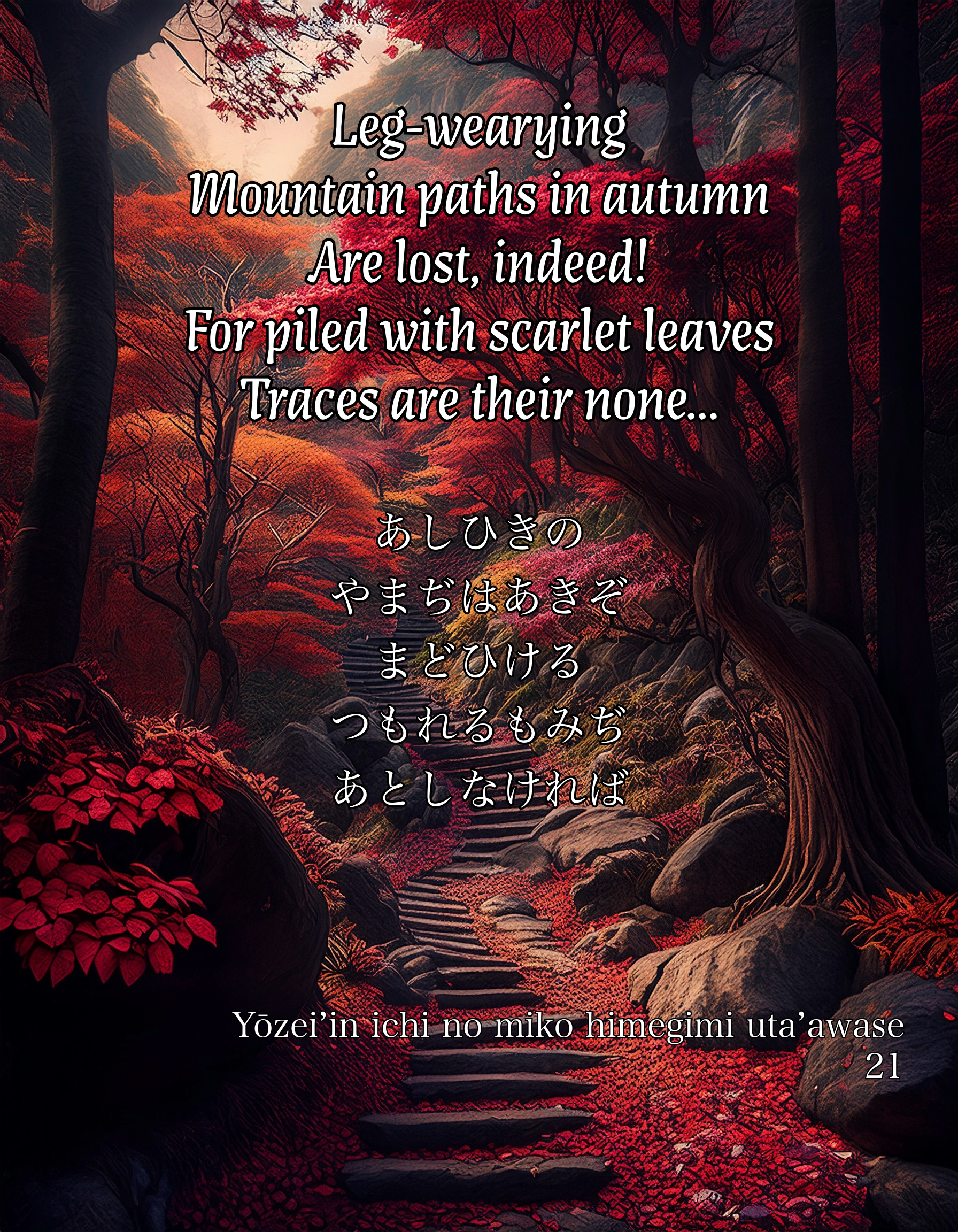
あしひきのやまぢはあきぞまどひけるつもれるもみぢあとしなければ
| ashihiki no yamaji wa aki zo madoikeru tsumoreru momiji ato shinakereba | Leg-wearying Mountain paths in autumn Are lost, indeed! For piled with scarlet leaves Traces are their none… |
21
Left (Win)
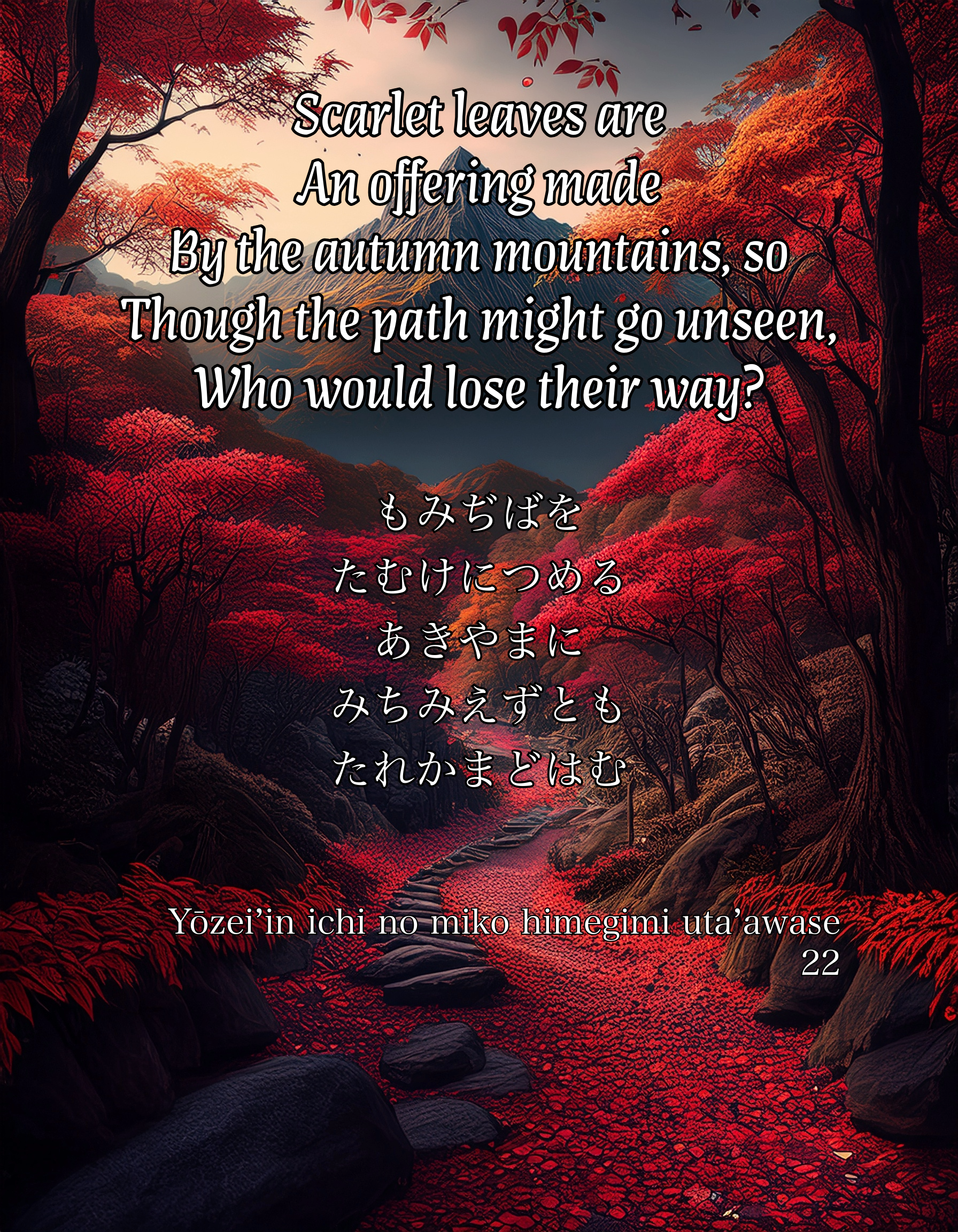
もみぢばをたむけにつめるあきやまにみちみえずともたれかまどはむ
| momijiba o tamuke ni tsumeru akiyama ni michi miezu tomo tareka madowamu | Scarlet leaves are An offering made By the autumn mountains, so Though the path might go unseen, Who would lose their way? |
22
Right
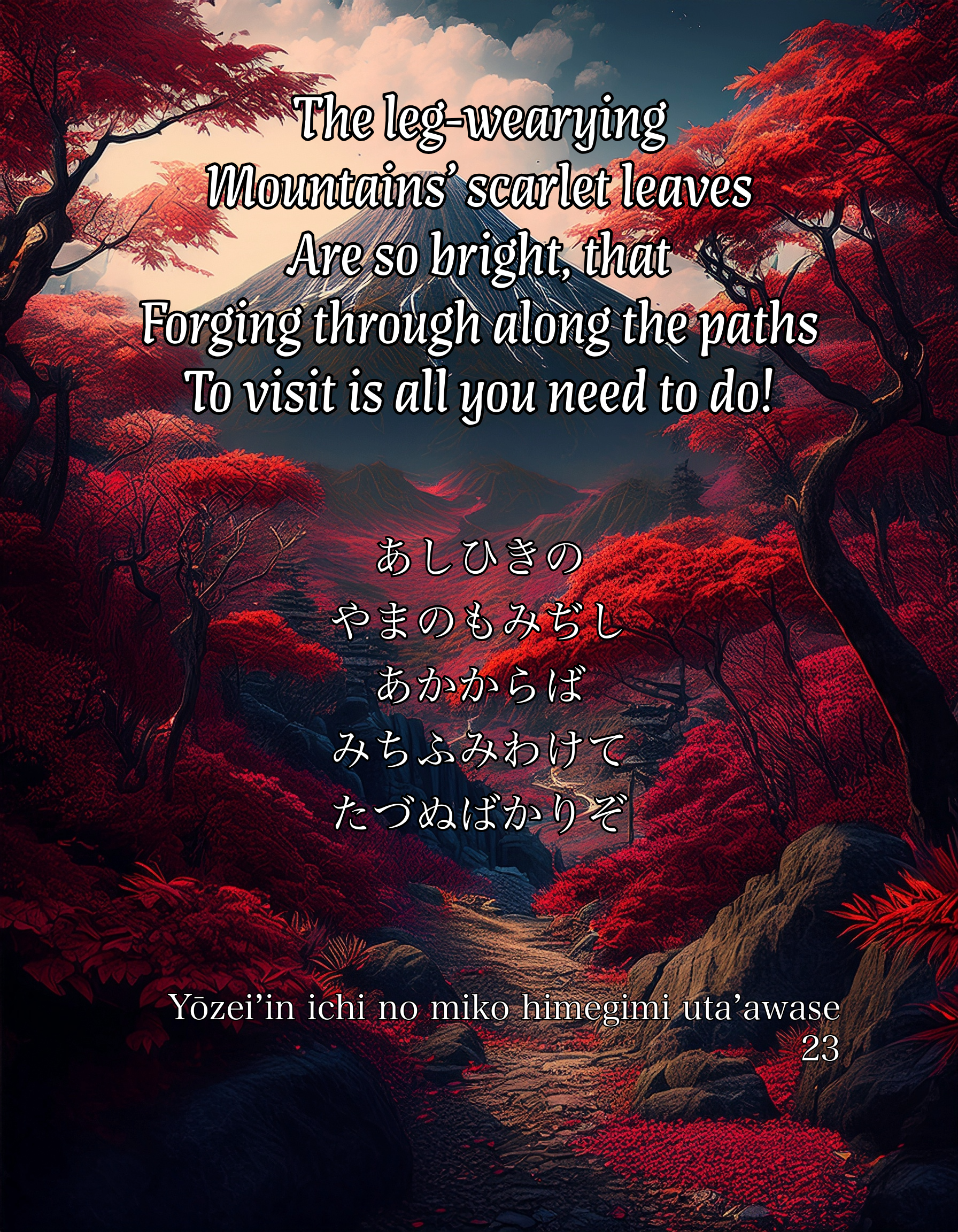
あしひきのやまのもみぢしあかからばみちふみわけてたづぬばかりぞ
| ashihiki no yama no momiji shi akakaraba michi fumiwakete tazunu bakari zo | The leg-wearying Mountains’ scarlet leaves Are so bright, that Forging through along the paths To visit is all you need to do! |
23
On the conception of travel
玉ぼこの道はとほくもあらなくに旅としおもへばわびしかりけり
| tamaboko no michi wa tōku mo aranaku ni tabi to shi omoeba wabishikarikeri | The jewelled-spear straight Road distant Is not, but even so, When I think of travelling How desolate I am! [i] |
564

[i] See: Sent to his Junior Consort when she was away from the palace. たまぼこのみちははるかにあらねどもうたてくもゐにまどふころかな tamaboko no/ michi wa haruka ni / aranedomo / utate kumoi ni / madou koro kana ‘Down a jewelled-spear straight / Road’s distance / You are not, yet / Somehow, among the clouds, extremely / Lost am I, these days!’ Former Emperor Suzaku (Shinkokinshū XIV: 1248)
Hidden in the grass on the path o’er the plains[i]
Left
なつくればのべのくさばもしげりあひていづれかみちとみえぞわかれぬ
| natsu kureba nobe no kusaba mo shigeriaite izure ka michi to mie zo wakarenu | When the summer comes, The blades of grass upon the plains Grow lushly together, so Which is the path to take I cannot tell by looking! |
9
Right
をちこちのみちみえぬまでなつののはくさばしげくもなりにけるかな
| ochikochi no michi mienu made natsuno no wa kusaba shigeku mo narinikeru kana | Until both distant and nearby Paths I cannot see Across the summer plains Have the blades of grass so lushly Grown, indeed! |
10
Do they not know the features of the summer plains conveyed by ‘Hidden in the grass on the path o’er the plains’? While both Left and Right use ‘blades of grass’, this puts one in mind of fresh grass sprouting in spring showers; and then of the two of them, the Right uses ‘distant and nearby’, which is nothing more than an archaic expression from the Age of Gods used for leg-wearying mountain paths, while at least the Left does not have a tangled argument.
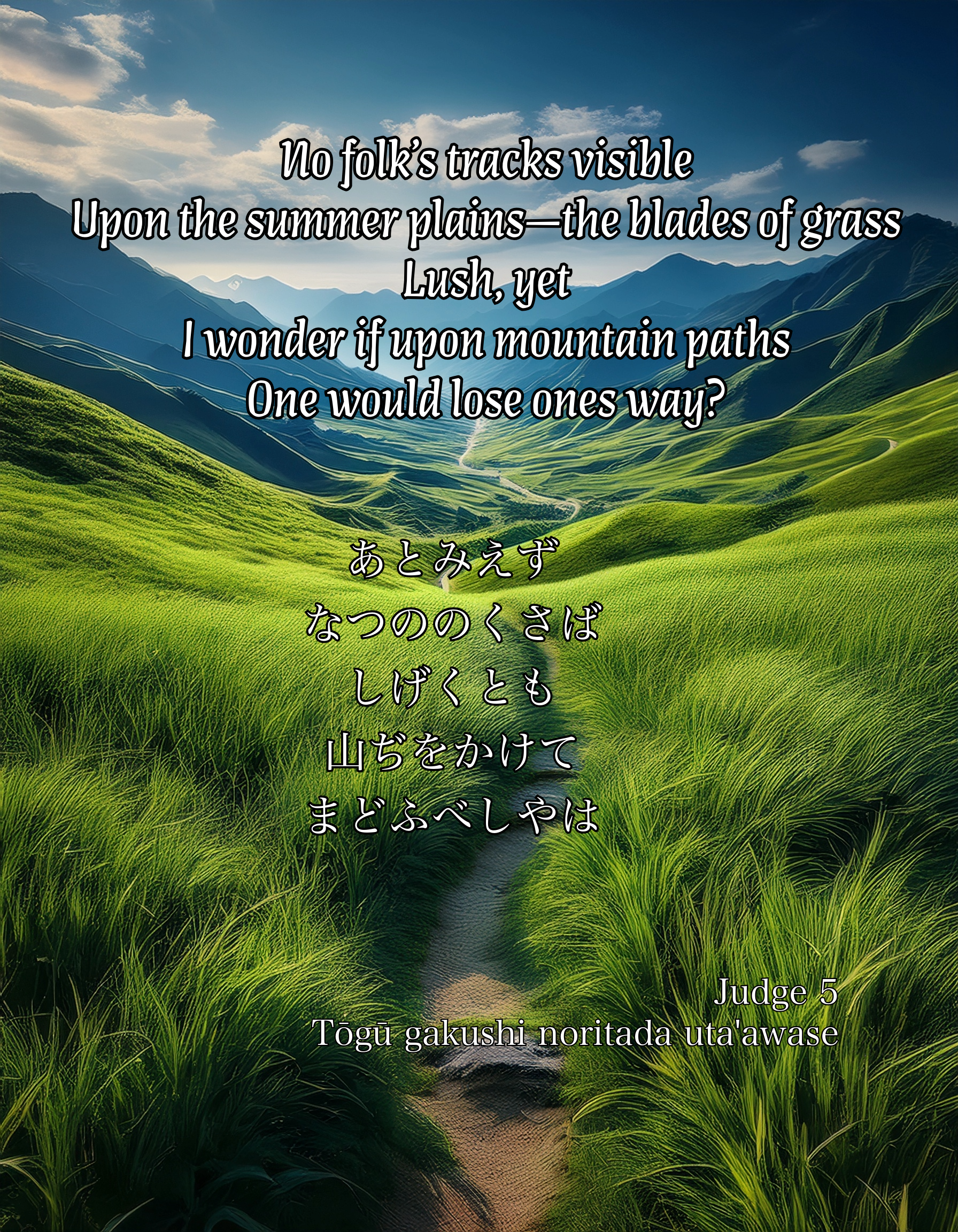
| ato miezu natsuno no kusaba shigeku tomo yamaji o kakete madoubeshi ya wa | No folk’s tracks visible Upon the summer plains—the blades of grass Lush, yet I wonder if upon mountain paths One would lose ones way? |
Judge 5


[i] Yasō no michi shigeshi 野草路滋
Left
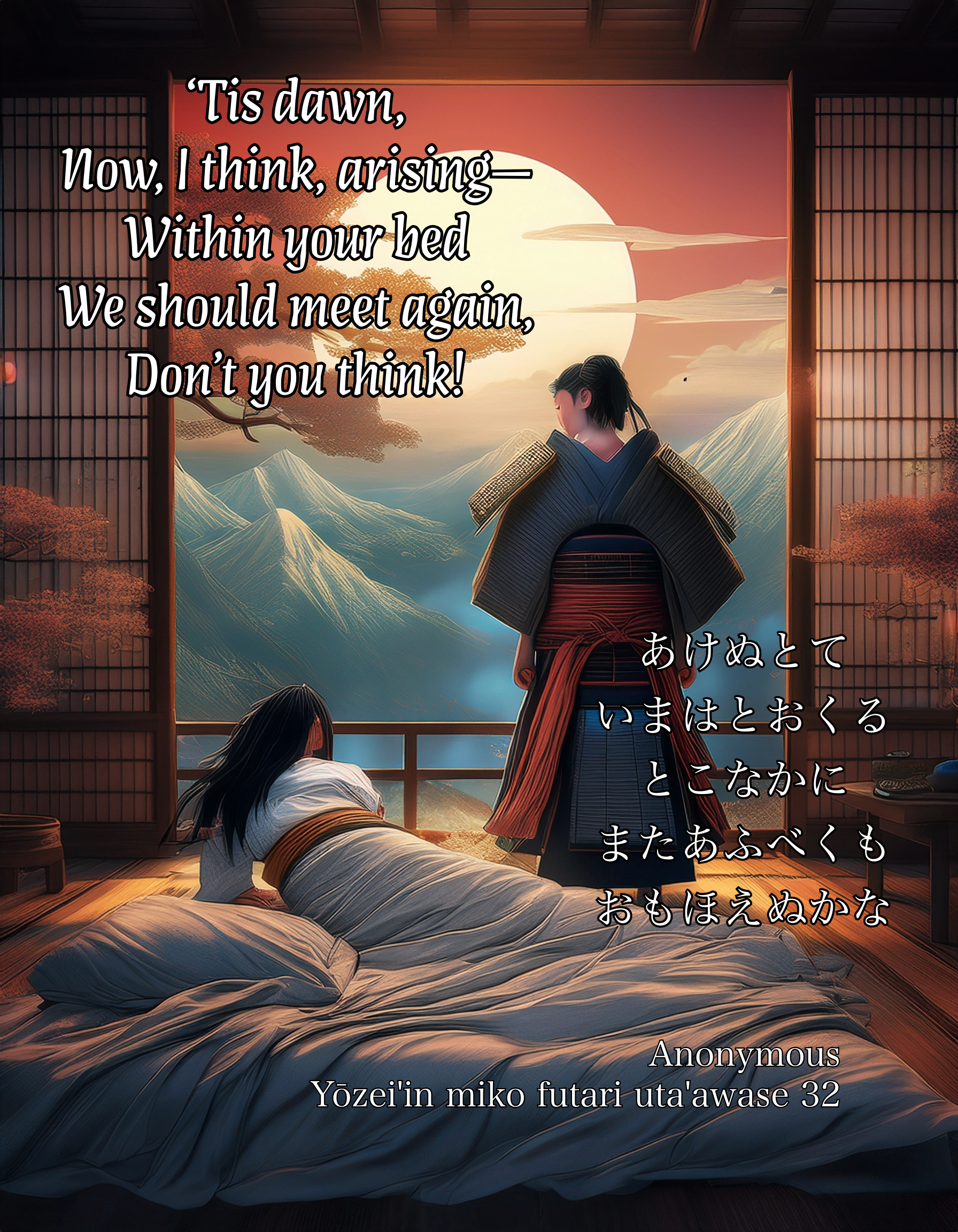
あけぬとていまはとおくるとこなかにまたあふべくもおもほえぬかな
| akenu tote ima wa to okuru toko naka ni mata aubeku mo omohoenu kana | ‘Tis dawn, Now, I think, arising— Within your bed We should meet again, Don’t you think! |
32
Right
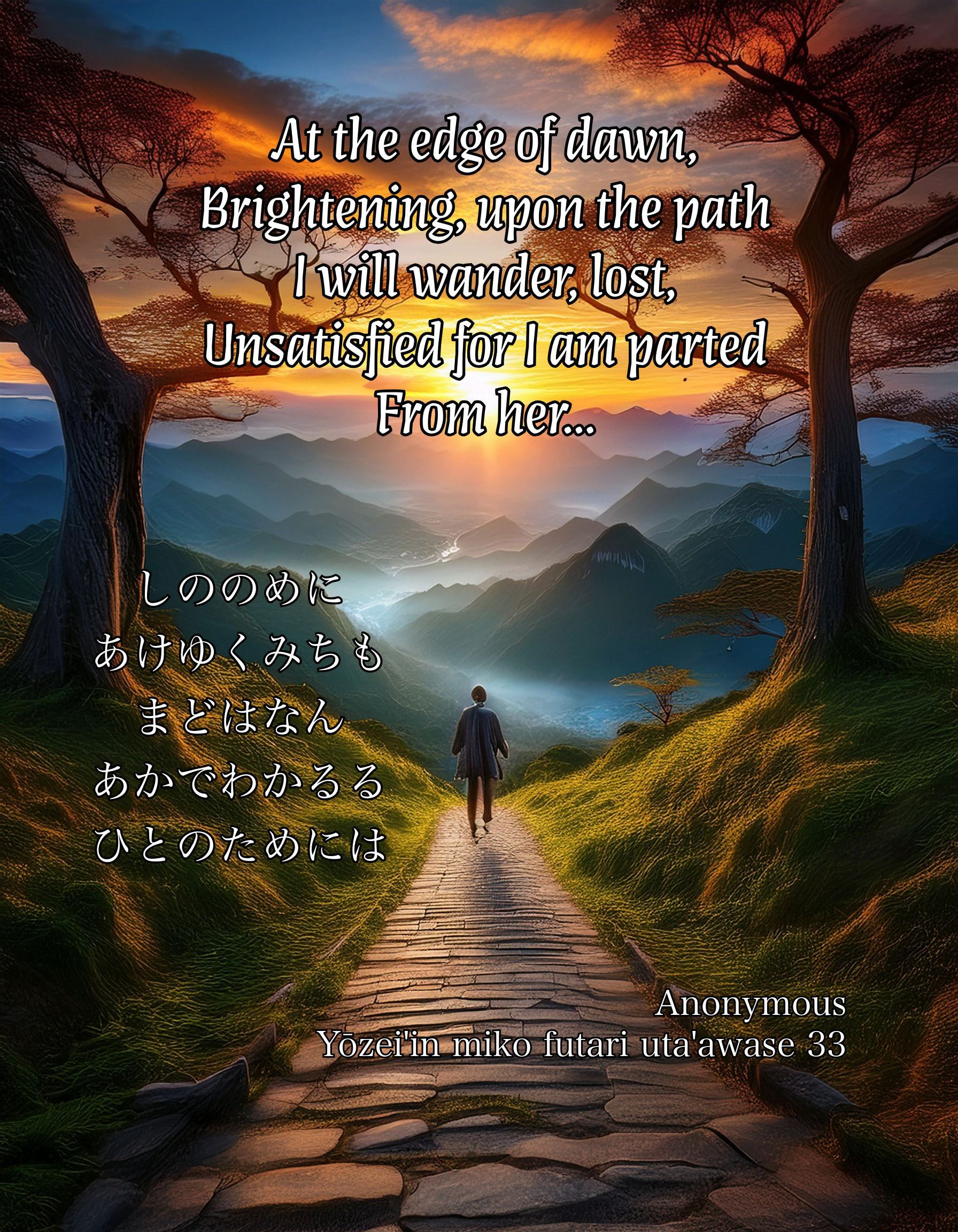
しののめにあけゆくみちもまどはなんあかでわかるるひとのためには
| shinonome ni akeyuku michi mo madowanan akade wakaruru hito no tame ni wa | At the edge of dawn, Brightening, upon the path I will wander, lost, Unsatisfied for I am parted From her… |
33