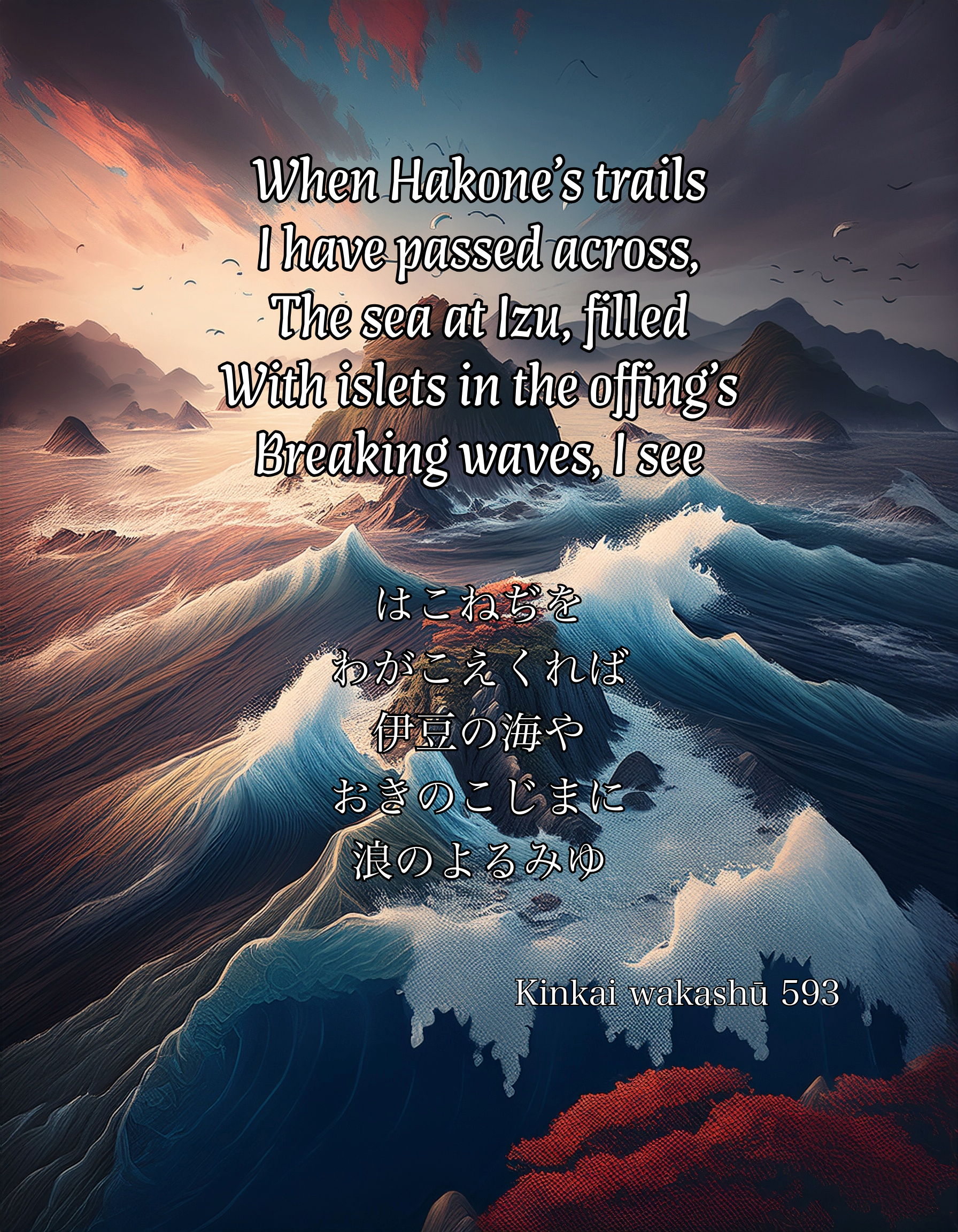
When I had gone out to view Mount Hakone, there were islets with waves breaking over them. When I asked my companions if they knew the name of the sea there, and the answer came back that it was the Izu sea.
はこねぢをわがこえくれば伊豆の海やおきのこじまに浪のよるみゆ
hakoneji o wa ga koekureba izu no umi ya oki no kojima ni nami no yoru miyu
When Hakone’s trails I have passed across, The sea at Izu, filled With islets in the offing’s Breaking waves, I see.
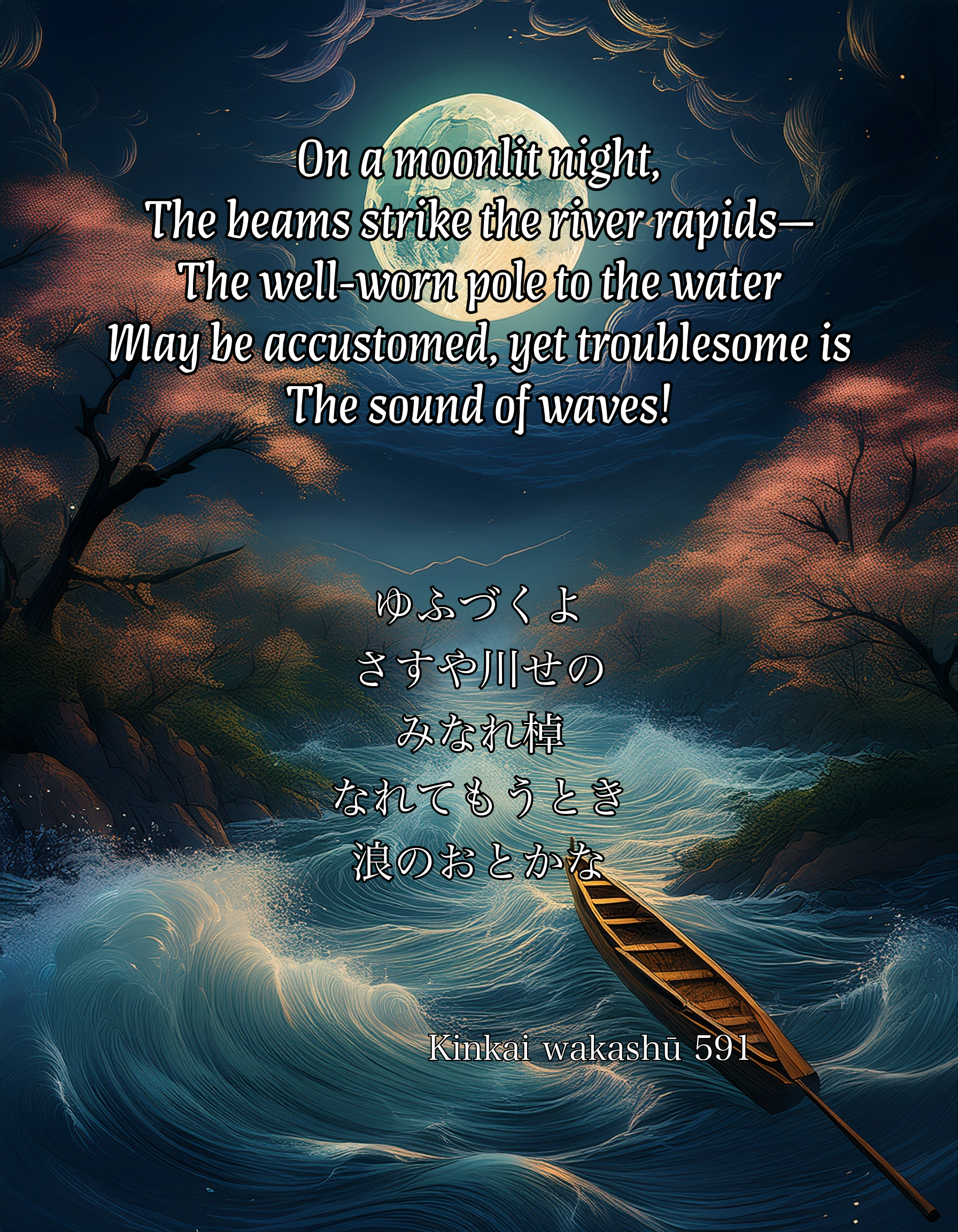
There is a river called the Sagami River. I composed this to say I would board a boat and cross it after the moon had risen.[i]
ゆふづくよさすや川せのみなれ棹なれてもうとき浪のおとかな
yūzukuyo sasu ya kawase no minarezao narete mo utoki nami no oto kana
On a moonlit night, The beams strike the river rapids— The well-worn pole to the water May be accustomed, yet troublesome is The sound of waves![ii]
591
[i] This river would have been familiar to Sanetomo, as it flows into the sea some twenty kilometres to the west of Kamakura, where the shogunate was headquartered. Based on the poem, the boat would have been a ferry, punted, rather than sailed across it.
[ii] See: Topic unknown. ゆふづく夜さすやをかべの松のはのいつともわかぬこひもするかな yūzukuyo / sasu ya okabe no / matsu no ha no / itsu to mo wakanu / koi mo suru kana ‘On a moonlit night / The beams strike the hillside / Through the pine needles / All year round, / As constant is my longing.’ Anonymous (Kokinshū XI: 490)
ureshisa wa ōtsu no hama ni tatsu nami no kazu mo shirarenu kimi ga miyo kana
My joy is Great, as upon Ōtsu Beach Break waves In numbers quite unknown, Such is my Lord’s reign most fair!
Cell of Fragrant Cloud 67
Right
かすがやまみねのしらがしよろづよをきみにといへばかみもいさめず
kasugayama mine no shiragashi yorozuyo o kimi ni to ieba kami mo isamezu
Kasuga Mountain has White-barked evergreen oaks upon its peak: ‘Ten thousand generations For my Lord!’—should I say that, The God will surely not refuse!
Cell of Compassionate Light 68
The poem of the Left’s ‘Great, as upon Ōtsu Beach’ and what follows is something that sounds grievously prosaic. With that said, there are many parts of the poem which are not. What is the poem of the Right’s ‘White-barked evergreen oaks on its peak / Ten thousand generations’ linked with in the remainder of the poem? I wonder what it’s composed about… The Left doesn’t contain any errors, so I still say it wins.
The Left’s poem, as I have said in an earlier round, appears to lack smoothness. Is the poem of the Right’s ‘white-barked evergreen oaks’ a long-standing expression? I can’t seem to recall a prior precedent. ‘The God will surely not refuse’ is vague, too. Is it asking the deity’s favour for the speaker? While I am somewhat hesitant, given my appallingly constricted knowledge, I will, fearfully, say that this is inferior.
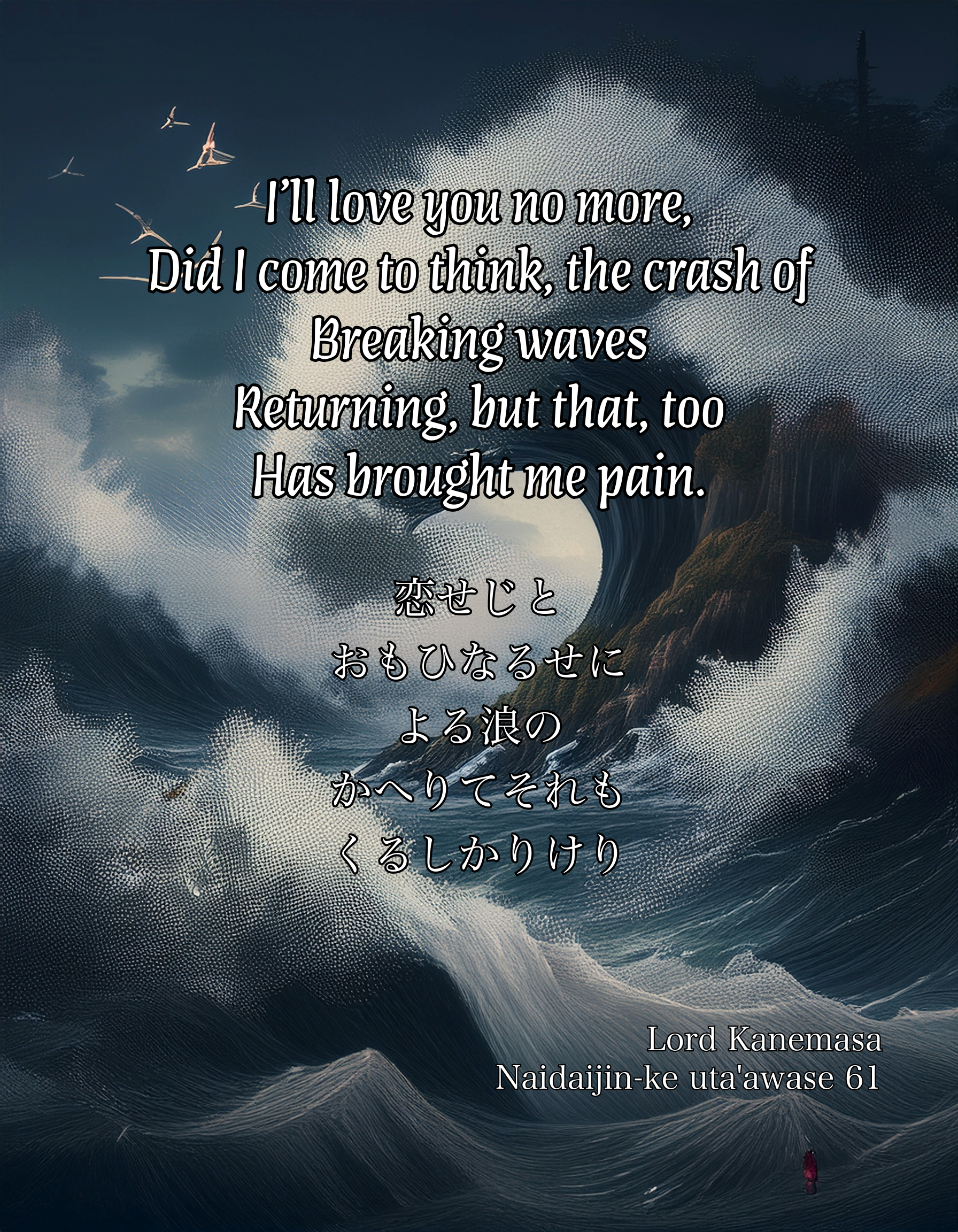
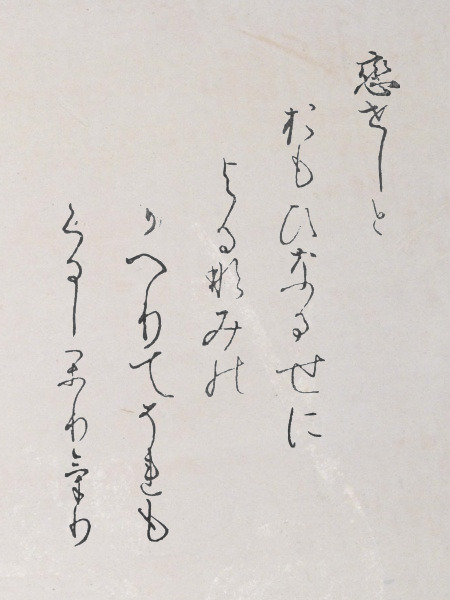
koiseji to omoinaru se ni yoru nami no kaerite sore mo kurushikarikeri
I’ll love you no more, Did I come to think, the crash of Breaking waves Returning, but that, too Has brought me pain.
Lord Kanemasa 61
Right (Both Judges – Win)
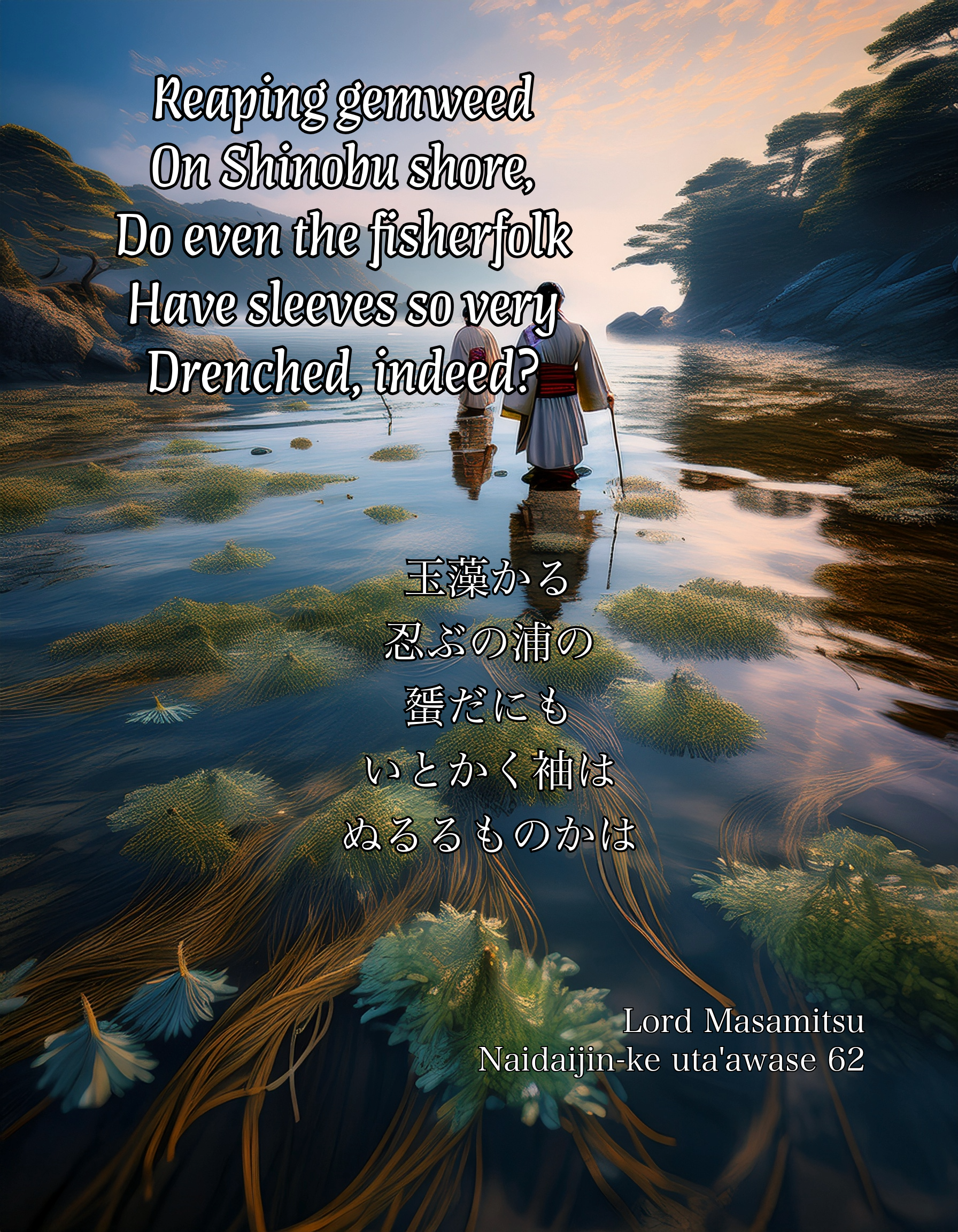
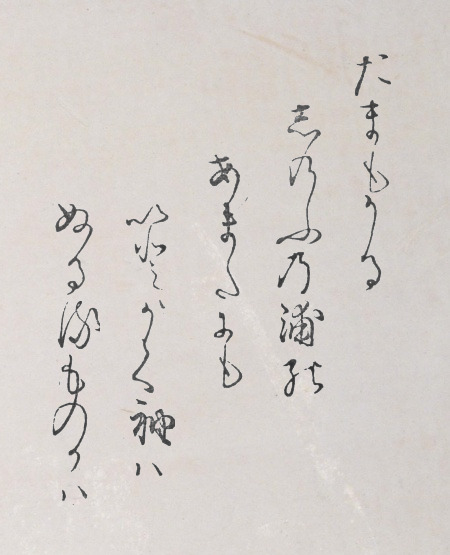
玉藻かる忍ぶの浦の蜑だにもいとかく袖はぬるるものかは
tamamo karu shinobu no ura no ama dani mo ito kaku sode wa nururu mono ka wa
Reaping gemweed On Shinobu shore, Do even the fisherfolk Have sleeves so very Drenched, indeed?
Lord Masamitsu 62
Toshiyori states: both of these are charming, however, a line from a famous poem is used for as the initial section, and in such cases the new poem should not closely evoke the source. Someone once said something similar, a long time ago. It’s a bit inferior, isn’t it.
Mototoshi states: neither of these contain any errors, yet the section following the central ‘crash of / Breaking waves’ seems intermittently painful, with sleeves damper than those of the fisherfolk on Shinobu shore. It seems a bit better at present.