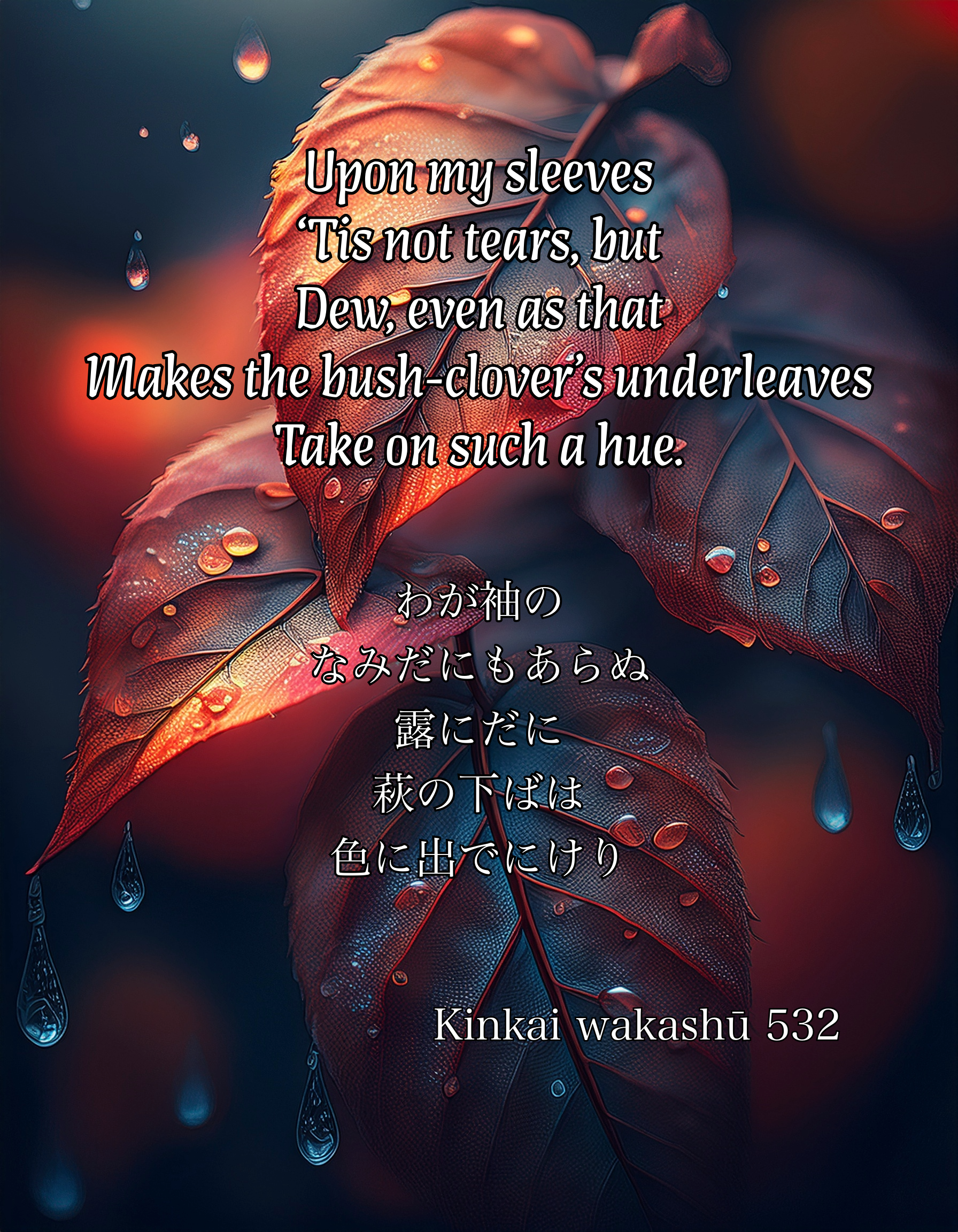
ひとりふす草の枕のよるのつゆは友なき鹿のなみだなりけり
| hitori fusu kusa no makura no yoru no tsuyu wa tomo naki shika no namida narikeri | Lying alone Upon a grassy pillow The dew tonight is A friendless stag’s Tears. |
578
Left
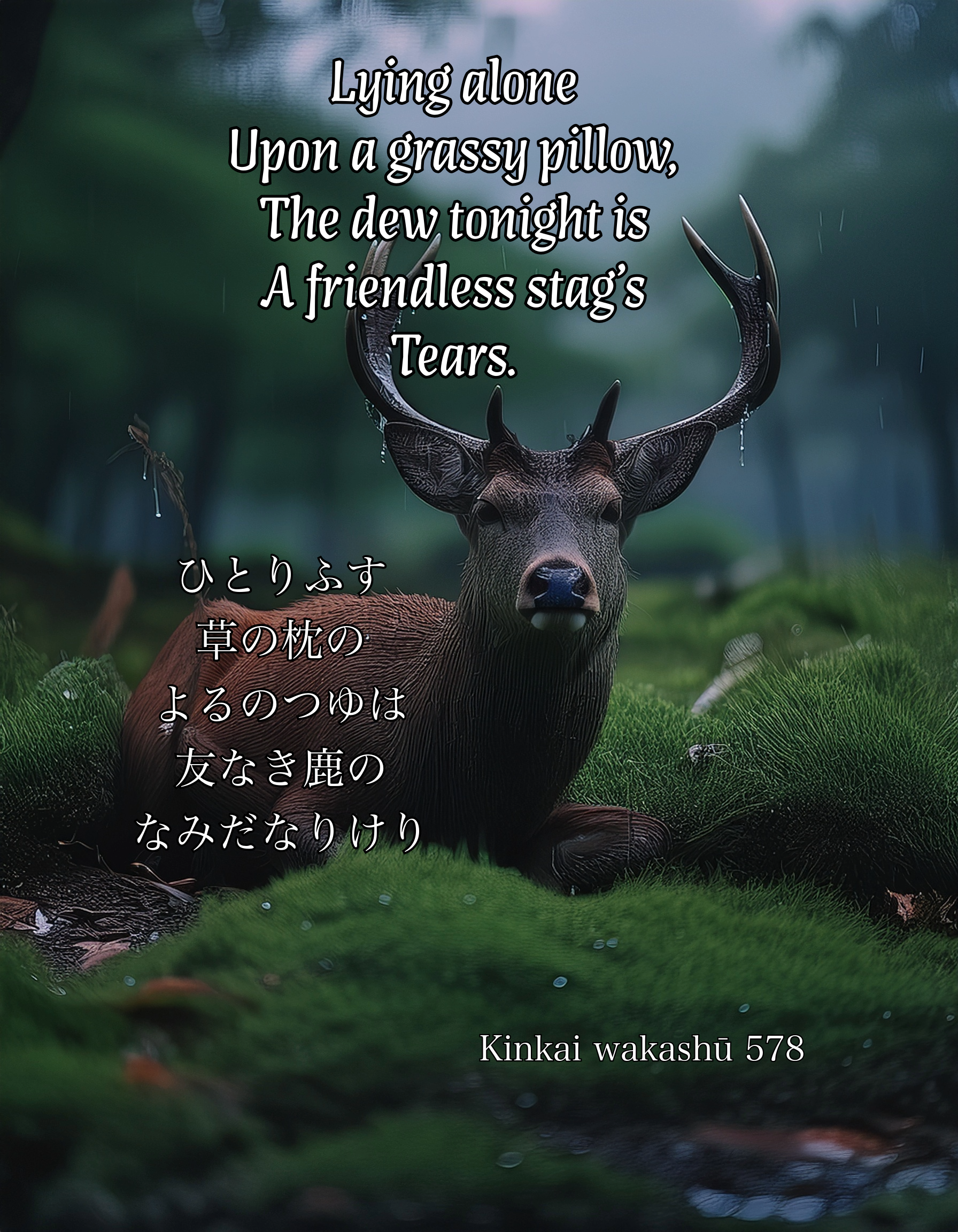
なみだがはせけどとまらずあかつきのわかれはをしのうきねをぞする
| namidagawa sekedo tomarazu akatsuki no wakare wa oshi no ukine o zo suru | The river of my tears I dam, yet they cease not: Dawn’s Parting I regret, as a mandarin Drifting in fitful sleep. |
36
Right
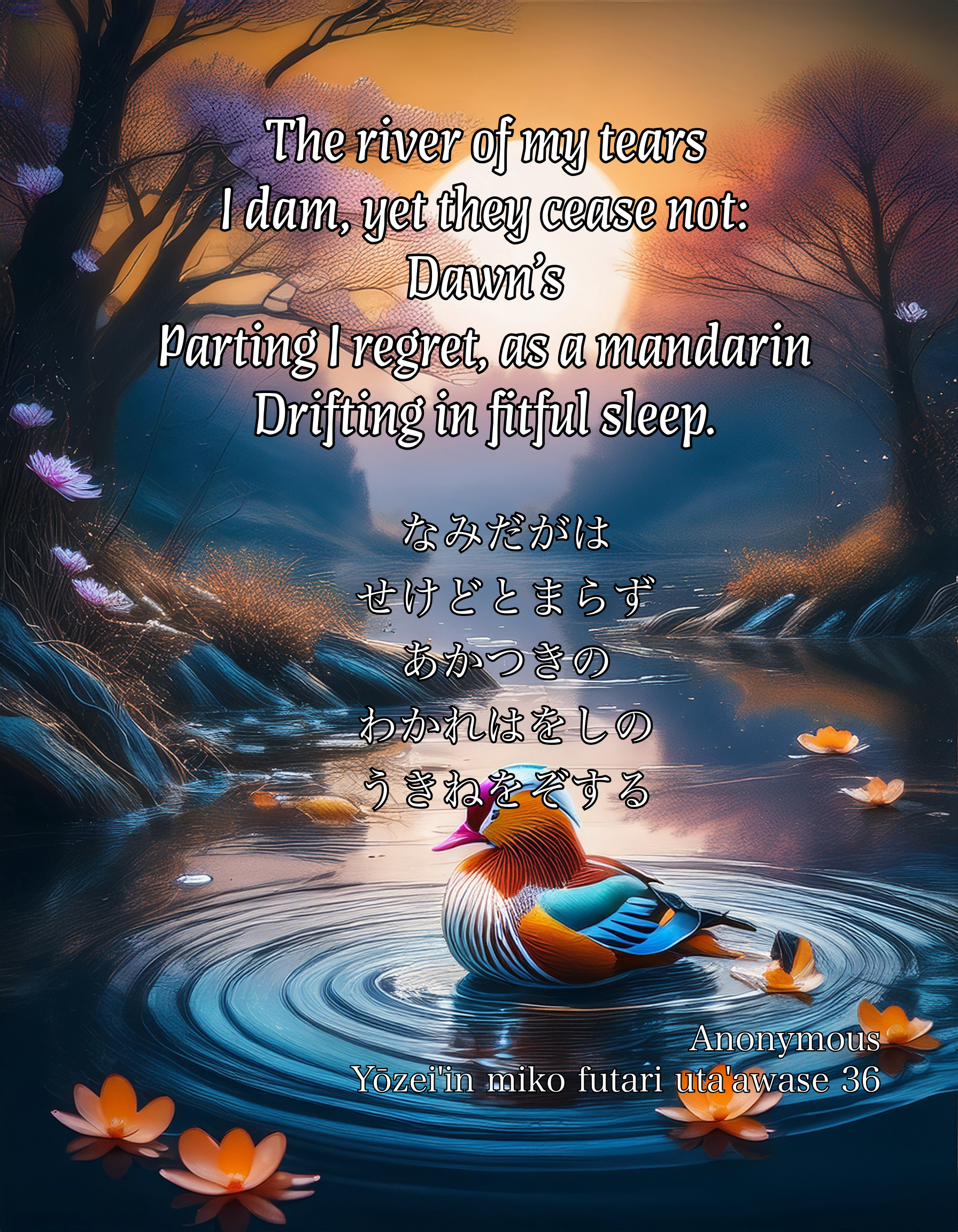
おきてゆくかたもしられずまどふかななみだもそでもめにさはりつつ
| okiteyuku kata mo shirarezu madou kana namida mo sode mo me ni sawaritsutsu | Rising and departing, Knowing not where to go, I am lost! My tears and my sleeves, too, Ever sting my eyes… |
37
Left
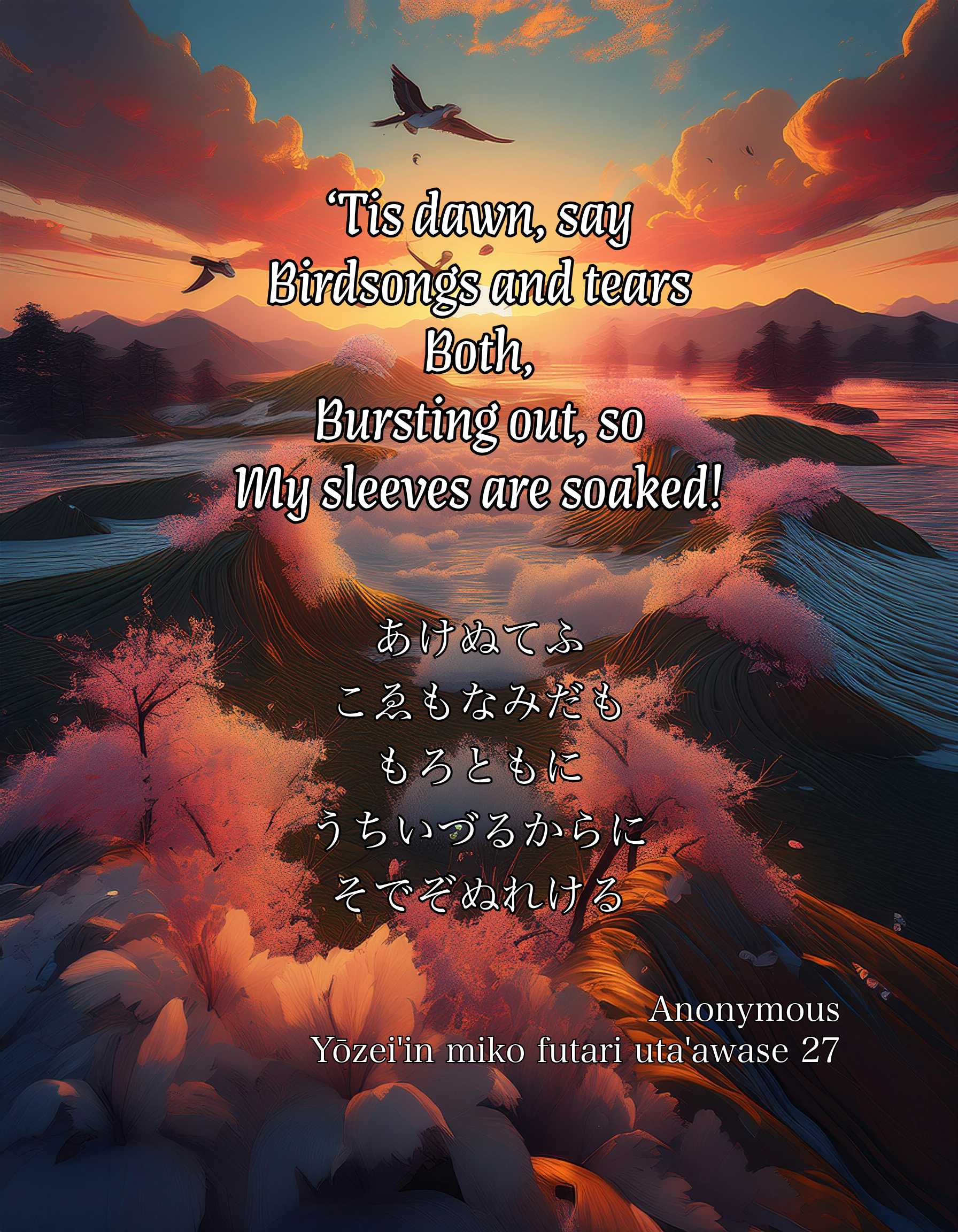
はるのよのあかぬわかれのあかつきはちへのにしきをたつにざりける
| haru no yo no akanu wakare no akatsuki wa chie no nishiki o tatsu ni zarikeru | After a spring night, Unsatisfied, parting at The dawn, Sewn a thousandfold, the brocade Through which I go! |
26
Right
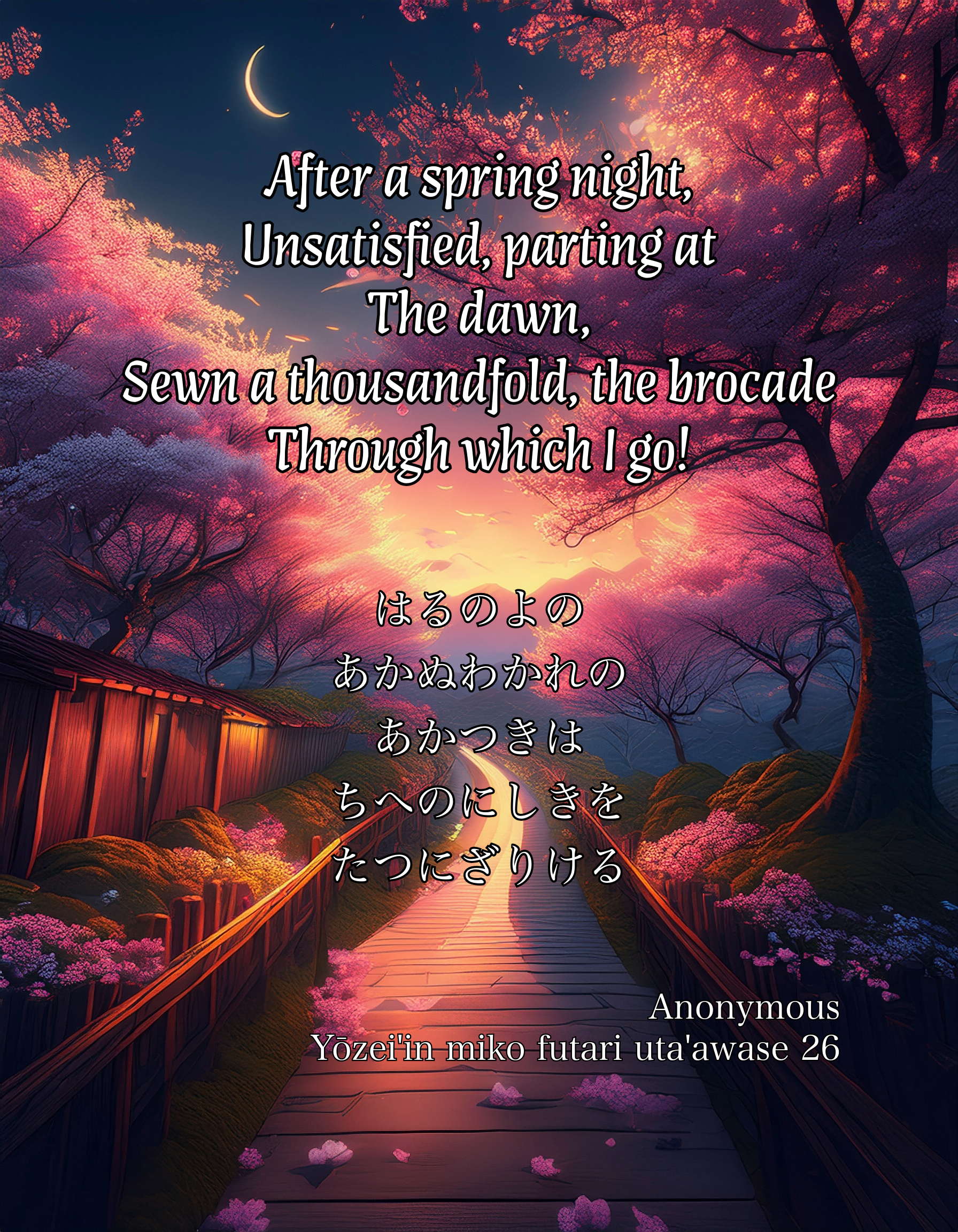
あけぬてふこゑもなみだももろともにうちいづるからにそでぞぬれける
| akenu chō koe mo namida mo morotomo ni uchi’izuru kara ni sode zo nurekeru | ‘Tis dawn, say Birdsongs and tears Both, Bursting out, so My sleeves are soaked! |
27
On the same conception, when the Lay Priest and Former Chancellor had ten poem sequences composed at his residence.
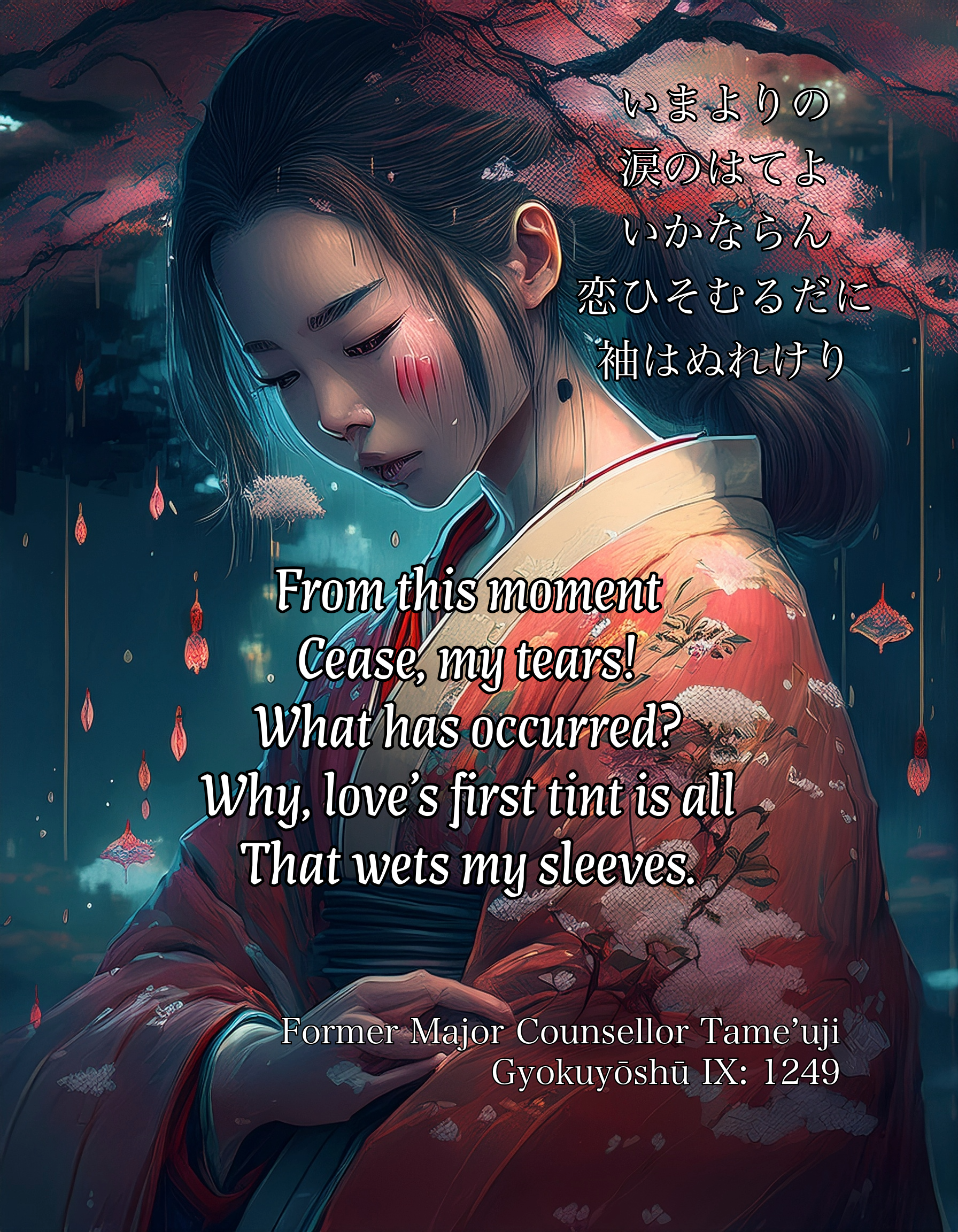
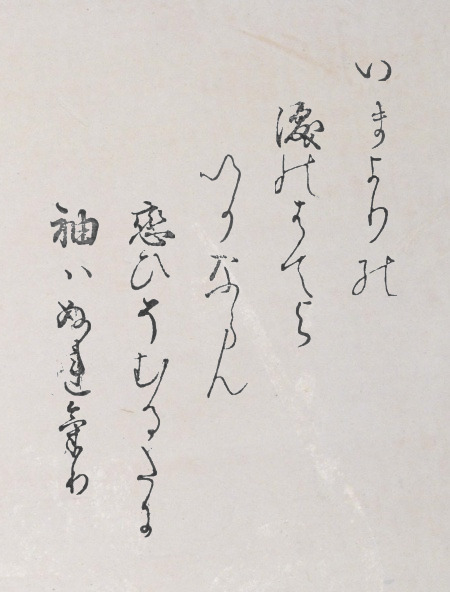
いまよりの涙のはてよいかならん恋ひそむるだに袖はぬれけり
| ima yori no namida no hateyo ika naran koisomuru dani sode wa nurekeri | From this moment Cease, my tears! What has occurred? Why, love’s first tint is all That wets my sleeves. |
Former Major Counsellor Tame’uji
Round Thirty-Six
Left
秋をおもふ涙やもろき夕月夜木葉がくれに鹿ぞ鳴くなる
| aki o omou namida ya moroki yūzukuyo ko no hagakure ni shika zo nakunaru | Filled with autumn feelings Do tears drip down? On a moonlit evening Hidden ‘mong the leafy trees, A stag does call. |
Dōchin
71
Right (Win)
を山田に風の吹きしくいなむしろよなよな鹿のふしどなりけり
| oyamada ni kaze no fukishiku inamushiro yonayona shika no fushidonarikeri | Across the mountain paddies The wind blows, spreading The rice into a coverlet, where Night after night, the stag Does lay his head. |
Dharma Master Nyokan
72
The Left’s poem does not appear to have any faults worth indicating, yet the Right’s poem is still more pleasant. It should win.


Love.
Left
人知れぬ恋の涙はうぐひすの初声にこそながれいでぬれ
| hito shirenu koi no namida wa uguisu no hatsukoe ni koso nagare’idenure | Unknown to all My tears of love With the warbler’s First cry have Burst into flow! |
3
Right
いかならむときか忘れむ春霞たちゐる空も君ぞこひしき
| ika naramu toki ka wasuremu harugasumi tachi’iru sora mo kimi zo koishiki | What is to become of me? Can I forget the time, when The spring haze Rising into the skies, too, Was dear to me as you? |
4


Round Thirty-Two
Left (Tie)
上葉ふく朝の原の秋風におのれうつろふ萩の下露
| uwaba fuku ashita no hara no akikaze ni onore utsurou hagi no shitazuyu | Blowing upon the upper leaves Over Ashita Plain, The autumn breeze touches, Fading all of itself The dripping dew upon the bush clover. |
Tomoshige
63
Right
今よりはたが涙とか成りぬらん下葉色づく秋萩の露
| ima yori wa ta ga namida to ka narinuran shitaba irozuku akihagi no tsuyu | From now on Whose tears might They become? Colouring the underleaves Are dewdrops upon the autumn bush clover…[1] |
Dharma Master Zenshin
64
Left and Right are in the same style. The Right’s poem wonders ‘whose are these tears’ and has a person’s tears as the dew upon the grass, which is something one often hears. Using dew on the grass as a person’s tears is a bit vague, yet it’s not going so far as to be a definite fault. These should tie.


[1] An allusive variation on: Topic unknown. あきはぎのしたば色づく今よりやひとりある人のいねがてにする akihagi no / shitaba irozuku / ima yori ya / hitori aru hito no / inegatenisuru ‘The autumn bush clover’s / Underleaves are colouring / From this point on, / For one all alone / Will sleep be harder to find?’ Anonymous (KKS IV: 220)