karibito no toyama o komete yakishi yori shita moe’izuru nobe no sawarabi
Since hunters All the nearby mountains Have burned Budding beneath is Fresh bracken in the meadows.
Sagami 9
Right (Win)
花をだにをりてかへらんさわらびはをぎのやけのにいまぞおひいづる
hana o dani orite kaeran sawarabi wa ogi no yakeno ni ima zo oi’izuru
At least some blossom Let us pick and then return! Fresh bracken On the burned plain of cogon grass Is now a’sprouting!
Jijū no menoto 10
‘Fresh bracken’ is something which folk of old referred to in various ways, and the latter poem is in keeping with this. ‘At least some blossom / Let us pick and then return!’ is an extremely charming mental image, if one had simply seen it budding, one would wonder why the poet has not sought out some other location before returning home. Moving on to ‘Since hunters / All the nearby mountains’, this is an overly hackneyed, and thus distasteful, expression like ‘on eastern roads’, so the latter poem is superior, isn’t it.
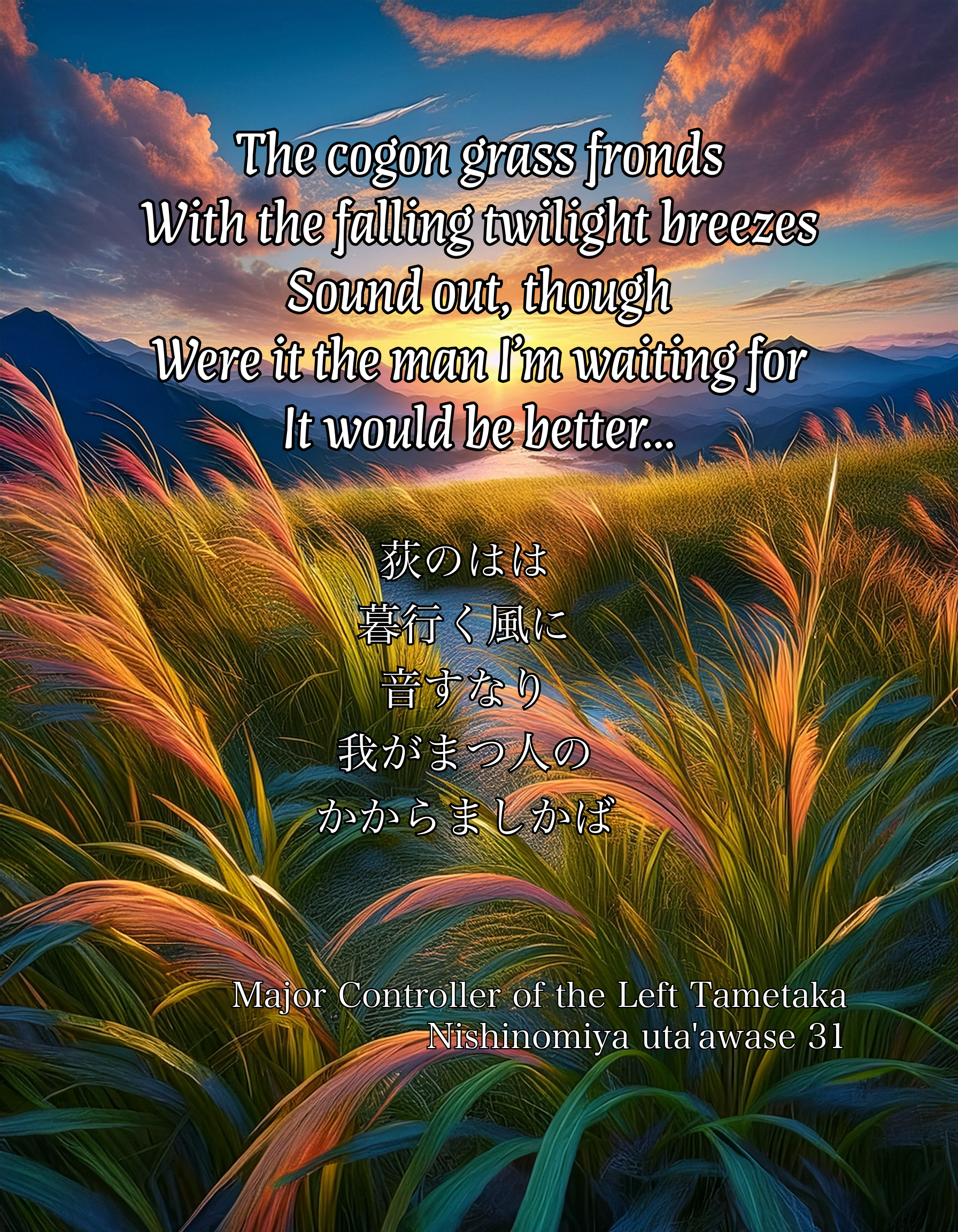
ogi no ha wa kureyuku kaze ni otosu nari wa ga matsu hito no kakaramashikaba
The cogon grass fronds With the falling twilight breezes Sound out, though Were it the man I’m waiting for It would be better…
Major Controller of the Left Tametaka 31
Right
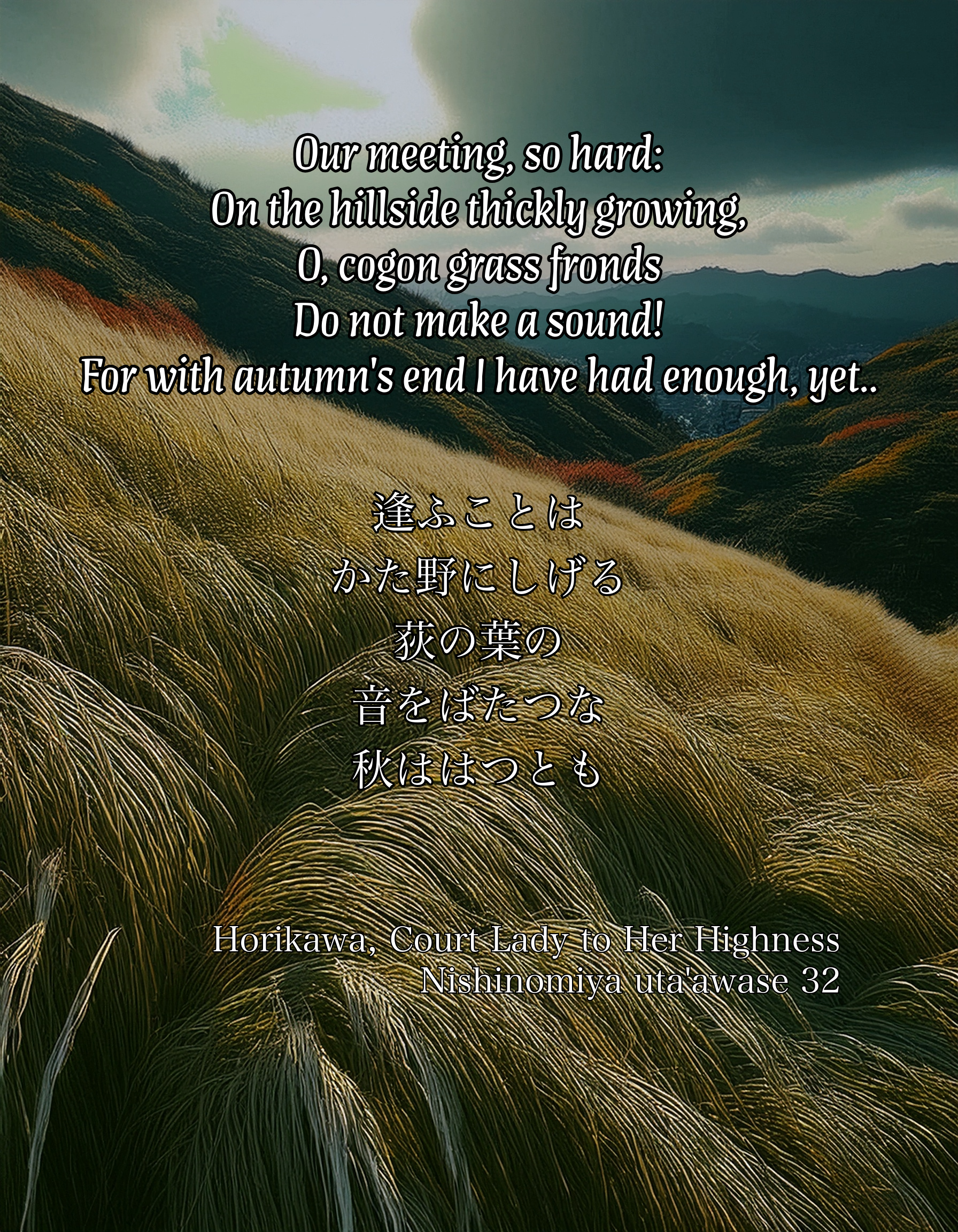
逢ふことはかた野にしげる荻の葉の音をばたつな秋ははつとも
au koto wa katano ni shigeru ogi no ha no oto oba tatsu na aki wa hatsu tomo
Our meeting, so hard: On the hillside thickly growing, O, cogon grass fronds Do not make a sound! For with autumn’s end I have had enough, yet..
Horikawa, Court Lady to Her Highness 32
I feel that the emotions encompassed by the sound of the wind in ‘Were it the man I’m waiting for / It would be better’ sounded more striking than ‘On the hillside thickly growing, / O, cogon grass fronds’.
kaze samumi ise no hama ogi wakeyukeba koromo kari ga ne nami ni naku nari
The wind’s so chill, as Through the silver grass upon the beach at Ise I forge my way, that I’d borrow a robe with goose cries Sounding ‘cross the waves!