Topic unknown.
みなといづるあまのを舟のいかりなはくるしき物とこひをしりぬる
| minato iduru ama no wobune no ikarinaFa kurusiki mono to koFi o sirinuru | Leaving port, A fisher’s tiny boat Its anchor rope So painful it is To know passion’s yearning. |
Anonymous
Left
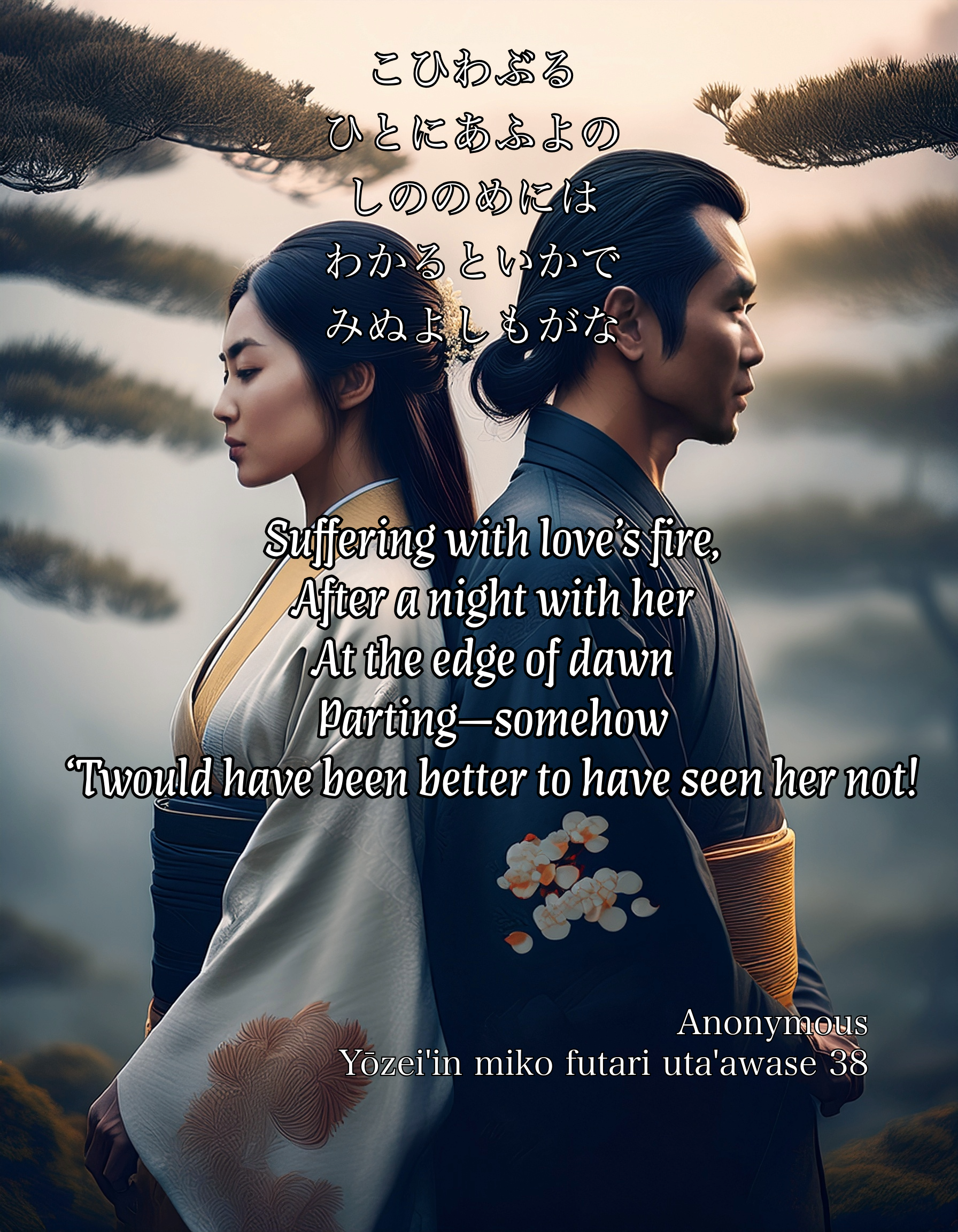
こひわぶるひとにあふよのしののめにはわかるといかでみぬよしもがな
| koi waburu hito ni au yo no shinonome ni wa wakaru to ikade minu yoshi mogana | Suffering with love’s fire, After a night with her At the edge of dawn Parting—somehow ‘Twould have been better to have seen her not! |
38
Right
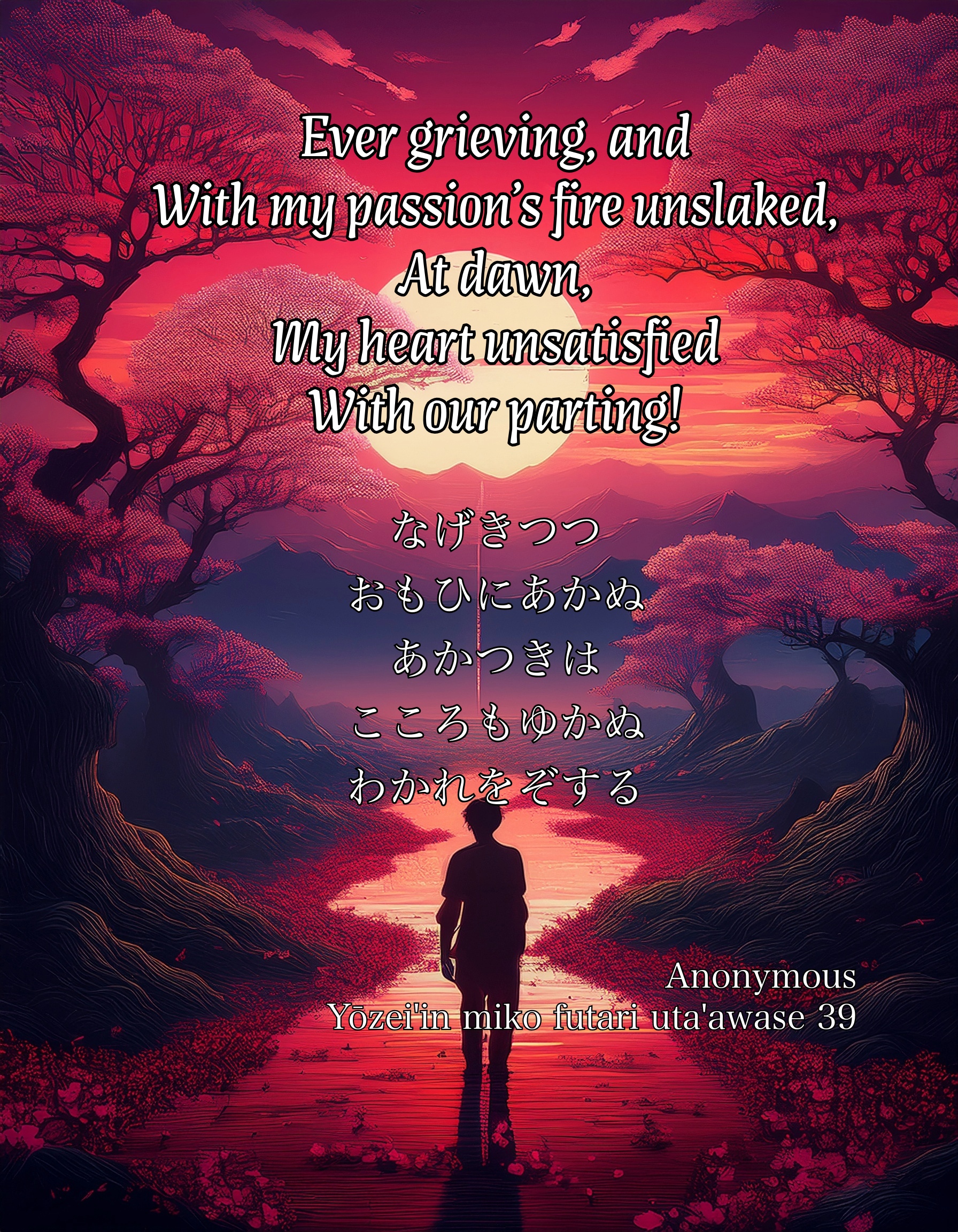
なげきつつおもひにあかぬあかつきはこころもゆかぬわかれをぞする
| nagekitsutsu omoi ni akanu akatsuki wa kokoro mo yukanu wakare o zo suru | Ever grieving, and With my passion’s fire unslaked, At dawn, My heart unsatisfied With our parting! |
39
Round Three
Left (Both Judges – Win)
いはぬまの下はふ蘆のねを重みひまなき恋を君知るらめや
| iwanuma no shitahau ashi no ne o shigemi himanaki koi o kimi shirurame ya | Silently beneath the marsh rocks Creep the reeds’ Roots in such profusion, Not a space free from love, but Does my lady know, I wonder? |
A Court Lady
53
Right
身をつみて思ひや知るとこころみにながためつらき人もあらなん
| mi o tsumite omoi ya shiru to kokoromi ni na ga tame tsuraki hito mo aranan | Pinching flesh, Would you know passion’s fire? To test it, I wish For you there was a cruel One, too… |
Lord Masakane
54
Toshiyori states: the first poem is extremely charming. It seems to have no faults to mention. In the second poem, ‘For you there was a cruel one’ would be something quite impolite if said by a woman. Court ladies may lose their composure, yet they still appear to speak with dignity. In the absence of a prior poem as precedent, the first poem should win, I think.
Mototoshi states: this poem seems to have no faults to mention, and of the two, ‘beneath creep the reeds’ seems a bit more gently refined at present.


おくしもにふかくうつれるきくのはなしももこころやいろをそむらん
| oku shimo ni fukaku utsureru kiku no hana shimo mo kokoro ya iro o somuran | Falling frost has Deeply marked The chrysanthemum blooms— Does the frost, too, have a heart Dyed with passion’s hues? |
Yukiyoshi[1]
15
きくのはなこよひばかりははつ霜のおきてのみこそみまくほしけれ
| kiku no hana koyoi bakari wa hatsushimo no okite nomi koso mimaku hoshikere | The chrysanthemum blooms On this night, alone, By the first frosts Simply brushed Do I long to see! |
[Fujiwara no] Saneyori
16


[1] Possibly Minamoto no Yukiyoshi 源行義


