Composed and sent to the residence of the Superintendent Abbot of Tsurugaoka[i] on a morning when snow had fallen.
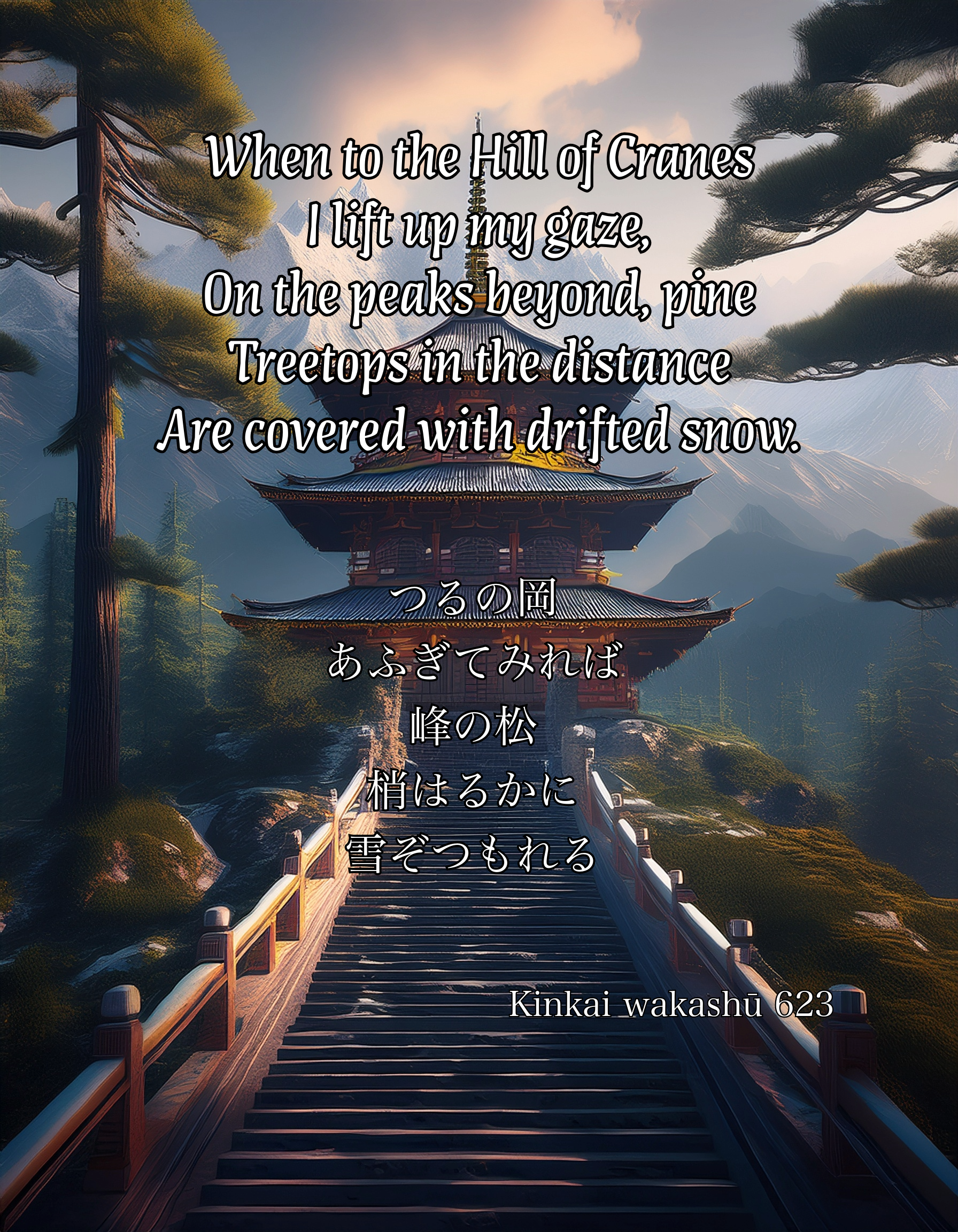
つるの岡あふぎてみれば峰の松梢はるかに雪ぞつもれる
tsuru no oka ōgite mireba mine no matsu kozue haruka ni yuki zo tsumoreru
When to the Hill of Cranes I lift up my gaze, On the peaks beyond, pine Treetops in the distance Are covered with drifted snow.
623
[i] Tsurugaoka Hachiman Shrine (Tsurugaoka hachimangū 鶴岡八幡宮) is located in Yukinoshita in Kamakura and venerated Hachiman, the deity of war and warriors as the patron of the Minamoto clan. The shrine thus was, and still is, one of the focal points of the city and where many of its most important festivals are held. It was also the location of Sanetomo’s assassination in 1219. The Superintendent Abbot (bettō sōzu 別当僧都) to whom Sanetomo sent this time was probably the shrine’s third, Teigyō 定暁 (dates unknown) (Higuchi 2016, 96).
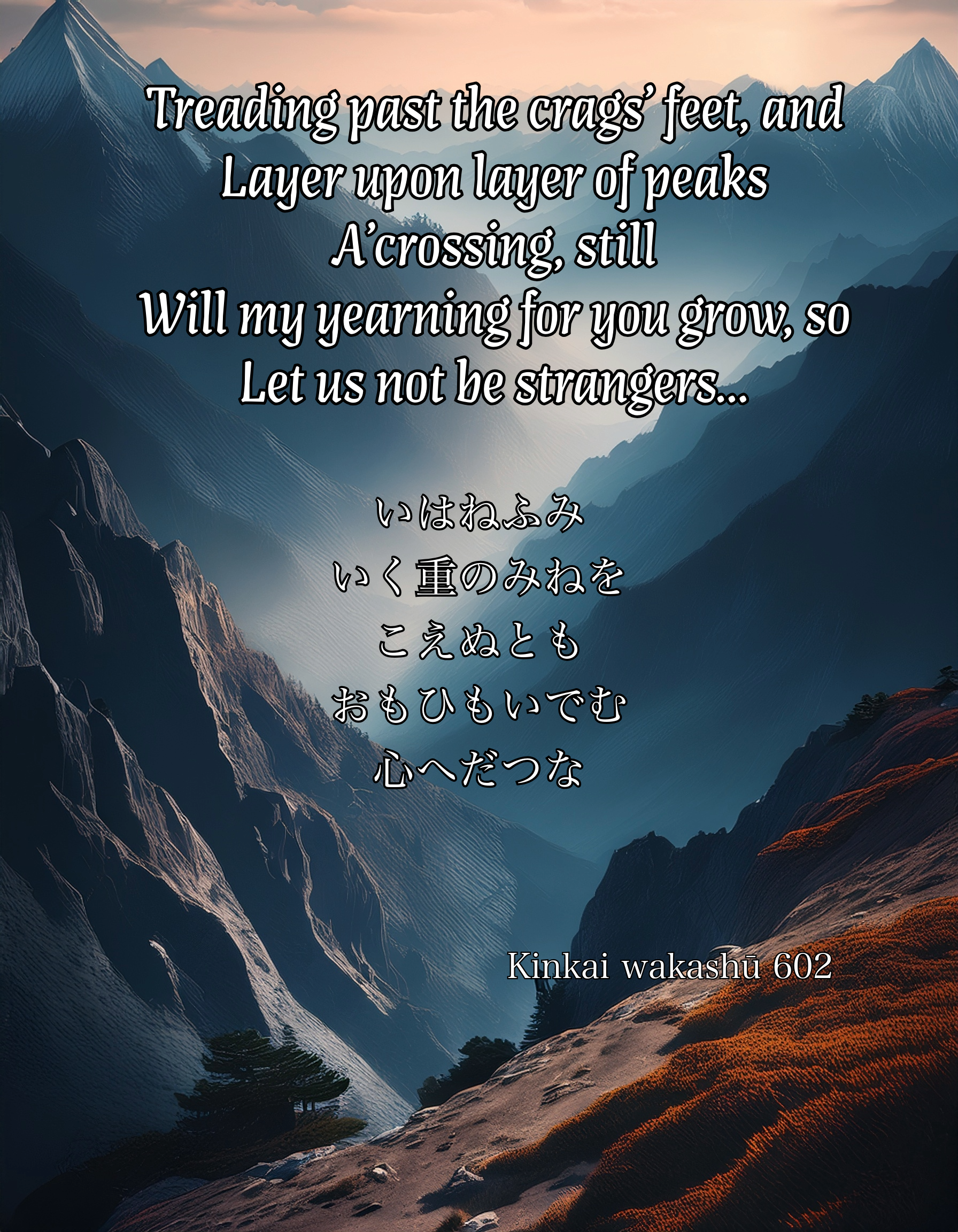
iwane fumi ikue no mine o koenu tomo omoi mo idemu kokoro hedatsu na
Treading past the crags’ feet, and Layer upon layer of peaks A’crossing, still Will my yearning for you grow, so Let us not be strangers…[i]
602
[i] See: Composed in the conception of parting when he took part in a hundred-poem sequence. 別れても心へだつな旅ごろも幾重かさなる山路なりとも wakarete mo / kokoro hedatsu na / tabigoromo / ikue kasanaru / yamaji naritomo ‘We may part, yet / Let us not be strangers; / Travellers’ robes / Place layer on layer, / Though mountain paths lie in-between.’ Fujiwara no Sada’ie (Senzaishū VII: 497)
kaminazuki shigure fururashi okuyama wa toyama no momiji ima sakarinari
In the Godless Month Chill showers have fallen, it seems, Deep within the mountains, while On the peaks nearby the scarlet leaves Are now at their finest.