A poem on accumulated sins.
ほのほのみ虚空にみてる阿鼻地獄ゆくへもなしといふもはかなし
| honō nomi kokū ni miteru abijigoku yukue mo nashi to iu mo hakanashi | Flames alone Fill the skies of The lowest hell— No other destination have I, So sad to say… |
652

When Dharma Master Sosen (he known as Taneyuki at the time) had gone to Shimōsa, I sent this to him in the Eleventh Month, Kenpō 6 [1218] to say he should return.
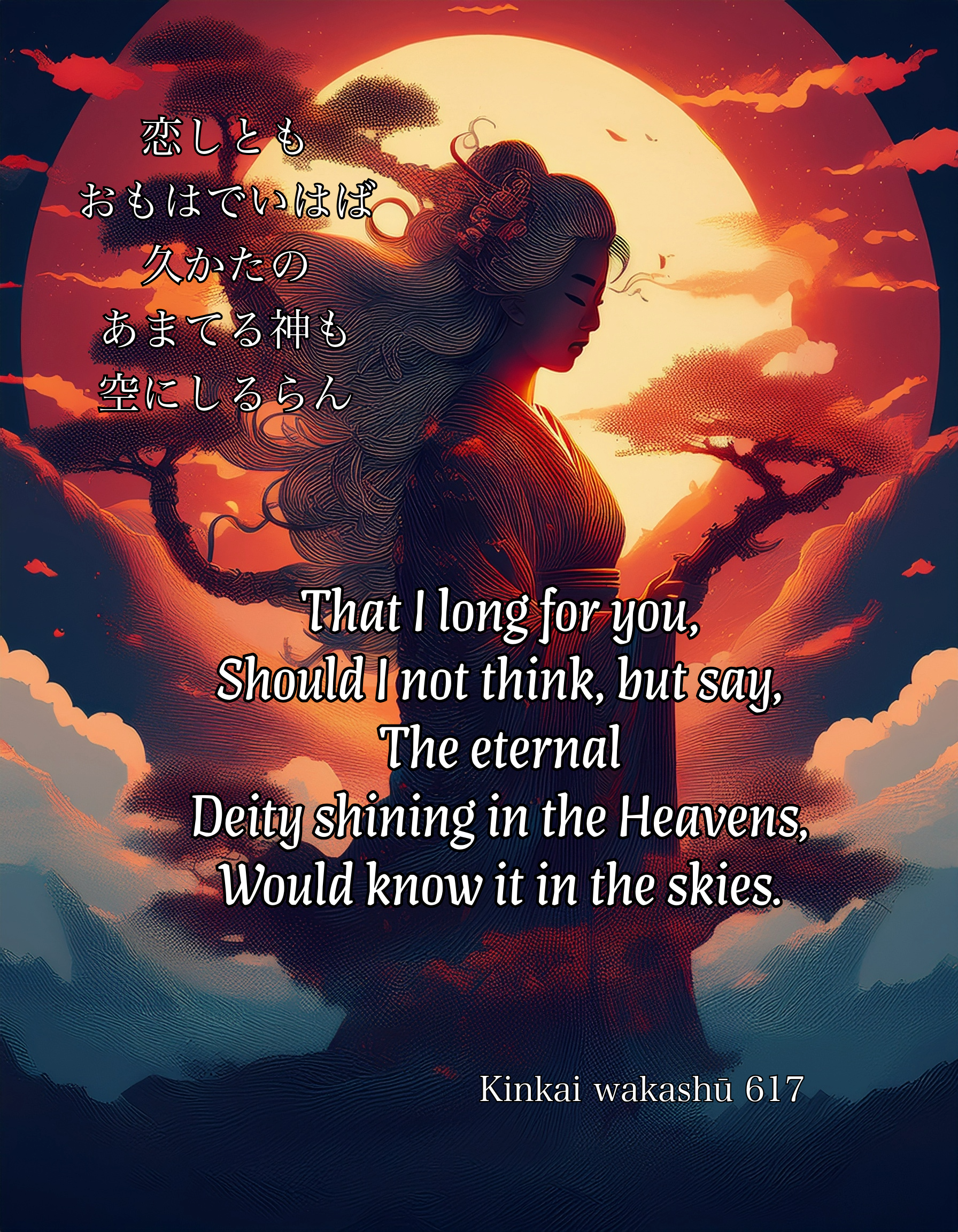
恋しともおもはでいはば久かたのあまてる神も空にしるらん
| koishi to mo omowade iwaba hisakata no ama teru kami mo sora ni shiruran | That I long for you, Should I not think, but say, The eternal Deity shining in the Heavens, Would know it in the skies.[i] |
617
[i] See: Composed on the conception of felicitation for the poetry match held at the residence of His Excellency, Saneyuki. みづがきのひさしかるべき君が代をあまてる神やそらにしるらん mizugaki no / hisashikarubeki / kimi ga yo o / ama teru kami ya / sora ni shiruran ‘As sacred precincts, / Eternal shall be / My Lord’s reign, as / Shining in the Heavens the deity / In the skies must know!’ Fujiwara no Tametada (Kin’yōshū V: 328)
Composed on the conception of felicitation for the poetry match held at the residence of His Excellency, Saneyuki.
みづがきのひさしかるべき君が代をあまてる神やそらにしるらん
| midugaki no Fisasikarubeki kimi ga yo wo ama teru kami ya sora ni siruran | As sacred precincts, Eternal shall be My Lord’s reign, as Shining in the Heavens the deity In the skies must know! |
Fujiwara no Tametada

Original
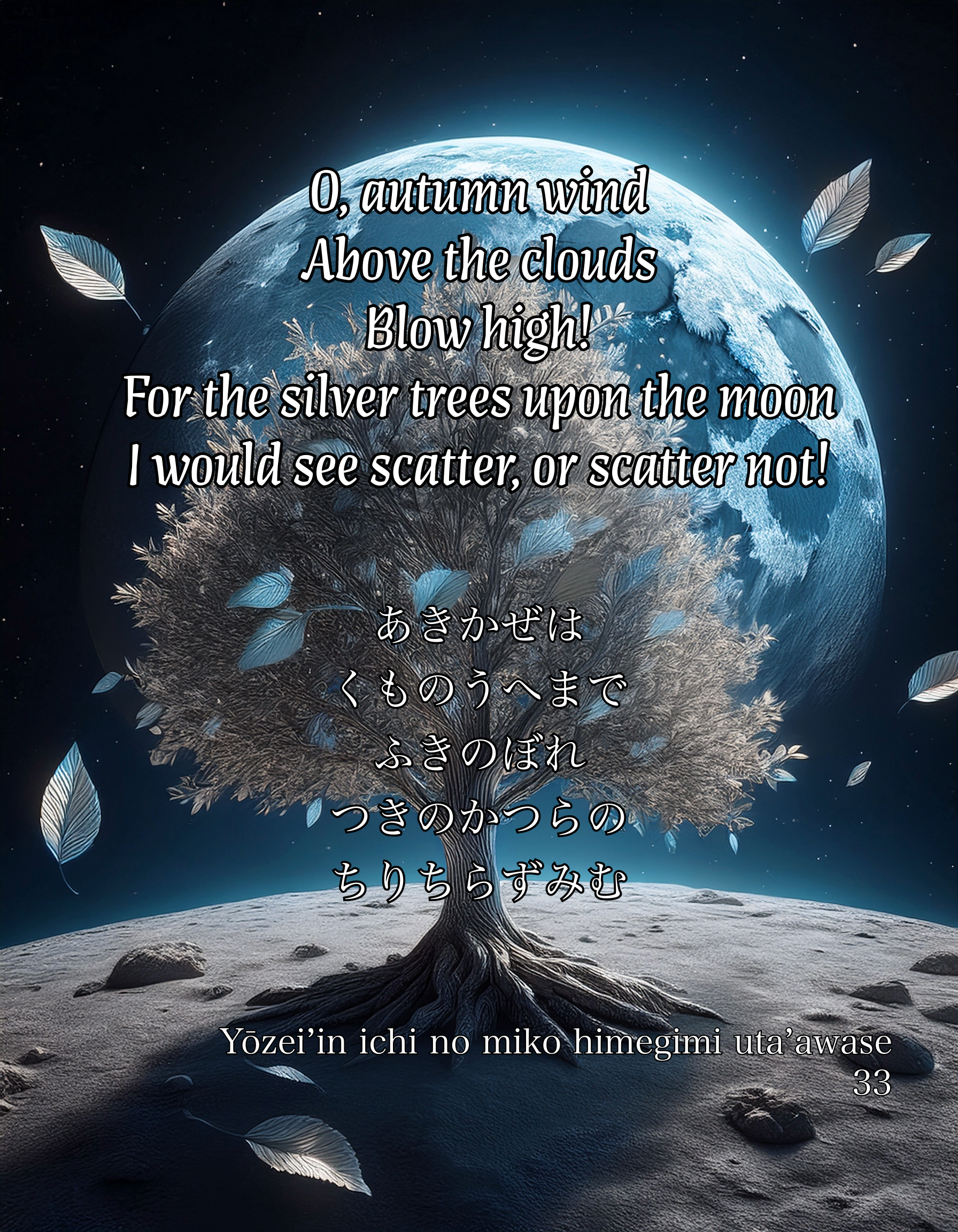
あきかぜはくものうへまでふきのぼれつきのかつらのちりちらずみむ
| akikaze wa kumo no ue made fukinobore tsuki no katsura no chiri chirazu mimu | O, autumn wind Above the clouds Blow high! For the silver trees upon the moon I would see scatter, or scatter not! |
33
Left (Win)
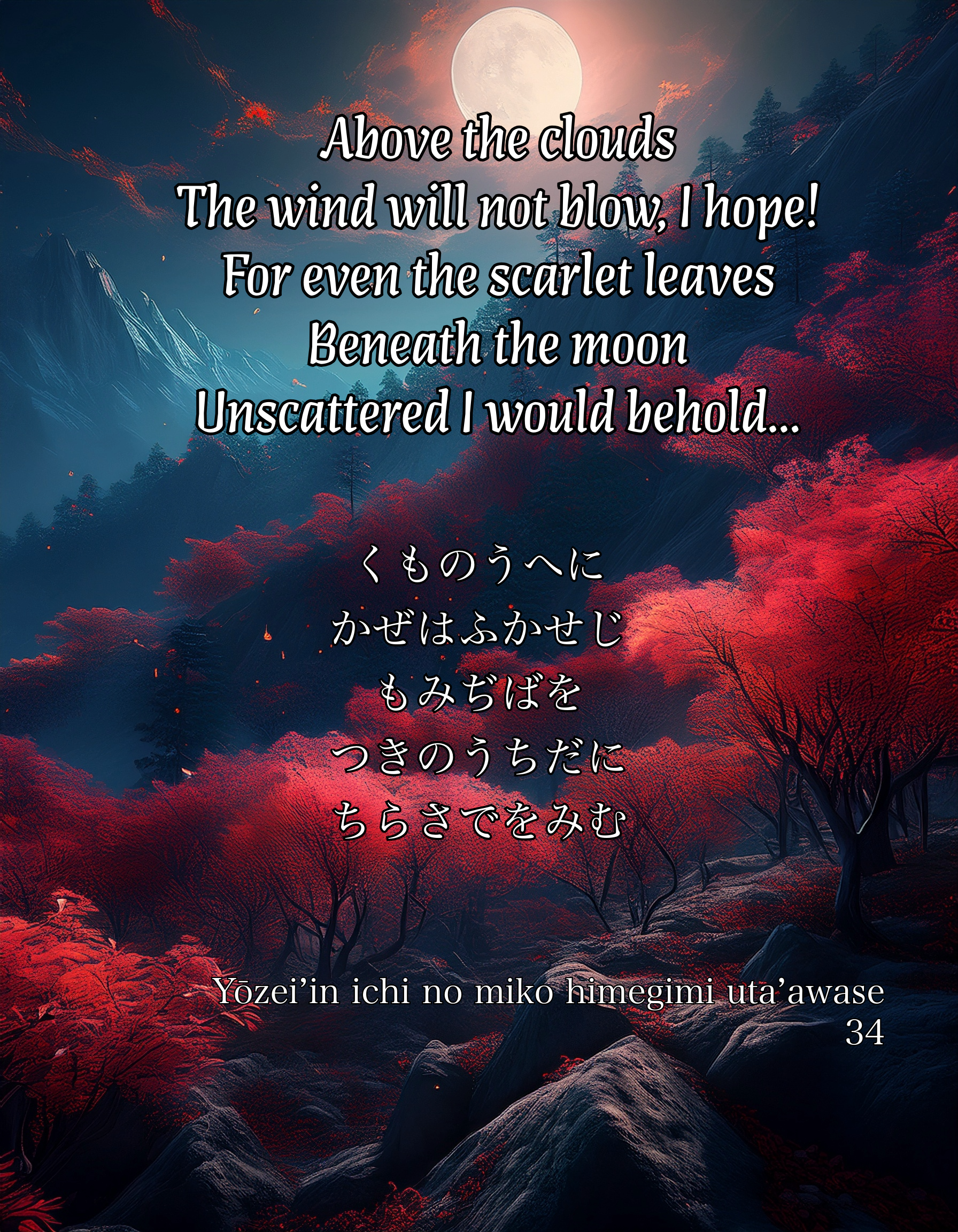
くものうへにかぜはふかせじもみぢばをつきのうちだにちらさでをみむ
| kumo no ue ni kaze wa fukaseji momijiba o tsuki no uchi dani chirasade o mimu | Above the clouds The wind will not blow, I hope! For even the scarlet leaves Beneath the moon Unscattered I would behold… |
34
Right
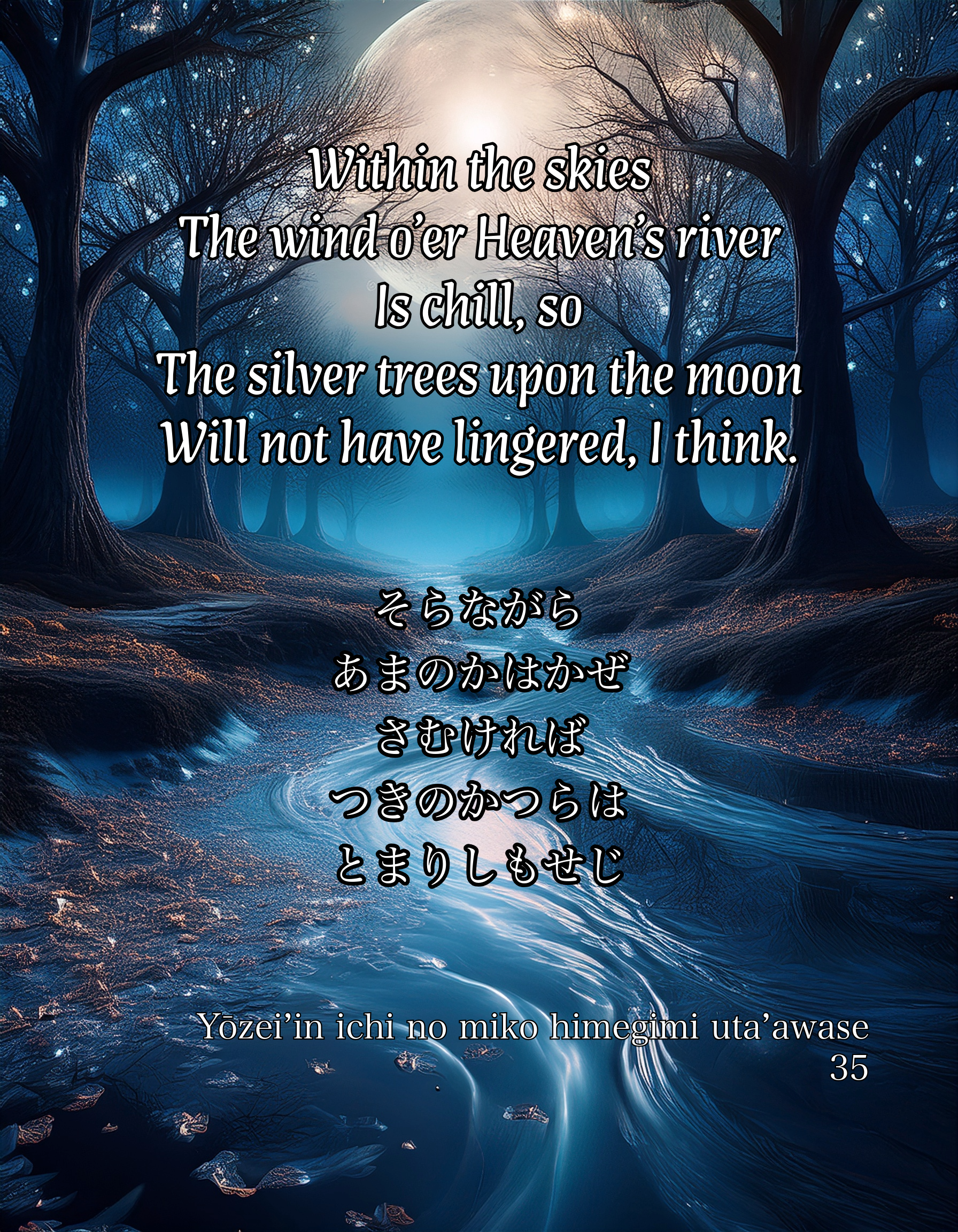
そらながらあまのかはかぜさむければつきのかつらはとまりしもせじ
| sora nagara ama no kawakaze samukereba tsuki no katsura wa tomarishi mo seji | Within the skies The wind o’er Heaven’s river Is chill, so The silver trees upon the moon Will not have lingered, I think. |
35
A shower at a journey’s lodging
たびの空なれぬはにふのよるのとこ侘しきまでにもる時雨かな
| tabi no sora narenu hanyū no yoru no toko wabishiki made ni moru shigure kana | Beneath a journey’s skies With unfamiliar mud walls Around my bed tonight, Sad and lonely have I become With the shower dripping through![i] |
581

[i] See: On disembarking. 旅のそらはにふのこやのいぶせさにふるさといかにこひしかるらん tabi no sora / hanyū no koya no / ibusesa ni / furusato ika ni / koishikaruran ‘Beneath a journey’s skies / Within a mud hut and / Filled with gloom / For my ancient home how much / I do seem to long…’ Captain of the Third Rank Shigehira (Heike monogatari 85)
Original
ひとこふるこころはそらにかよへばやそらもなみだもともにしぐるる
| hito kouru kokoro wa sora ni kayoeba ya sora mo namida mo tomo ni shigururu | Yearning for him, does My heart into the skies And back fly? The skies and my tears, Both, are naught but showers… |
18
Left
ひとこふるこころはそらもなきものをいづこよりふるしぐれなるらむ
| hito kouru kokoro wa sora mo naki mono o izuko yori furu shigure naruramu | Yearning for him, My heart within the skies Is not, so Where is it that these falling Showers might be from? |
19
Right
おほかたのものおもふときにしぐるるをあきのそらとはみゆるなるらん
| ōkata no mono’omou toki ni shigururu o aki no sora to wa miyuru naruran | In general When sunk in gloomy thought, Showers fall— How like the autumn skies It does seem… |
20


Original
さほやまのははそのいろはうすけれどあきはふかくもなりにけるかな
| saoyama no hahaso no iro wa usukeredo aki wa fukaku mo narinikeru kana | On Mount Sao The oaks’ hues are Frail, yet Autumn ever deeper Grows! |
Sakanoue no Korenori
15
Left (Win)
さほやまのみねのもみぢばいろいろにたつあさぎりぞそらにしるらむ
| saoyama no mine no momijiba iroiro ni tatsu asagiri zo sora ni shiruramu | On Mount Sao The autumn leaves upon the peak Have many hues— The rising morning mists mean That ‘tis surely known up in the skies. |
16
Right
うすきこきいろのかぎりぞさほやまはあきはつるまであさきとなみそ
| usuki koki iro no kagiri zo saoyama wa aki hatsuru made asaki to na mi so | Both deep and pale Hues are fair extreme! But on Mount Sao Until the end of autumn Frail I would not have them be! |
17


Left
ねざめつつみをうぐひすのねをぞなくはなさかりにしきみをこふれば
| nezametsutsu mi o uguisu no ne o zo naku hana sakarinishi kimi o koureba | Every time I wake, My flesh, as a warbler, Lets out sobbing cries, For, fair as a blossom in bloom, It is you I long for, my lady… |
7
Right
ことにいでてなにかいふべきねざめつつこふるしたひもそらにとくらむ
| koto ni idete nani ka iubeku nezametsutsu kouru shitahimo sora ni tokuramu | To put it into words, What is there I can say? Every time I wake, Your underbelt, which I want so, Seems to be loosening in the skies alone. |
8


Round Five
Left (Tie)
うちきらしあまぎるそらと見しほどにやがてつもれる雪の白山
| uchikirashi amagiru sora to mishi hodo ni yagate tsumoreru yuki no shirayama | Suddenly concealed By mist, the skies I glimpsed and In a moment drifted Snow covered Shira Mountain with white. |
Controller’s Graduate
51
Right
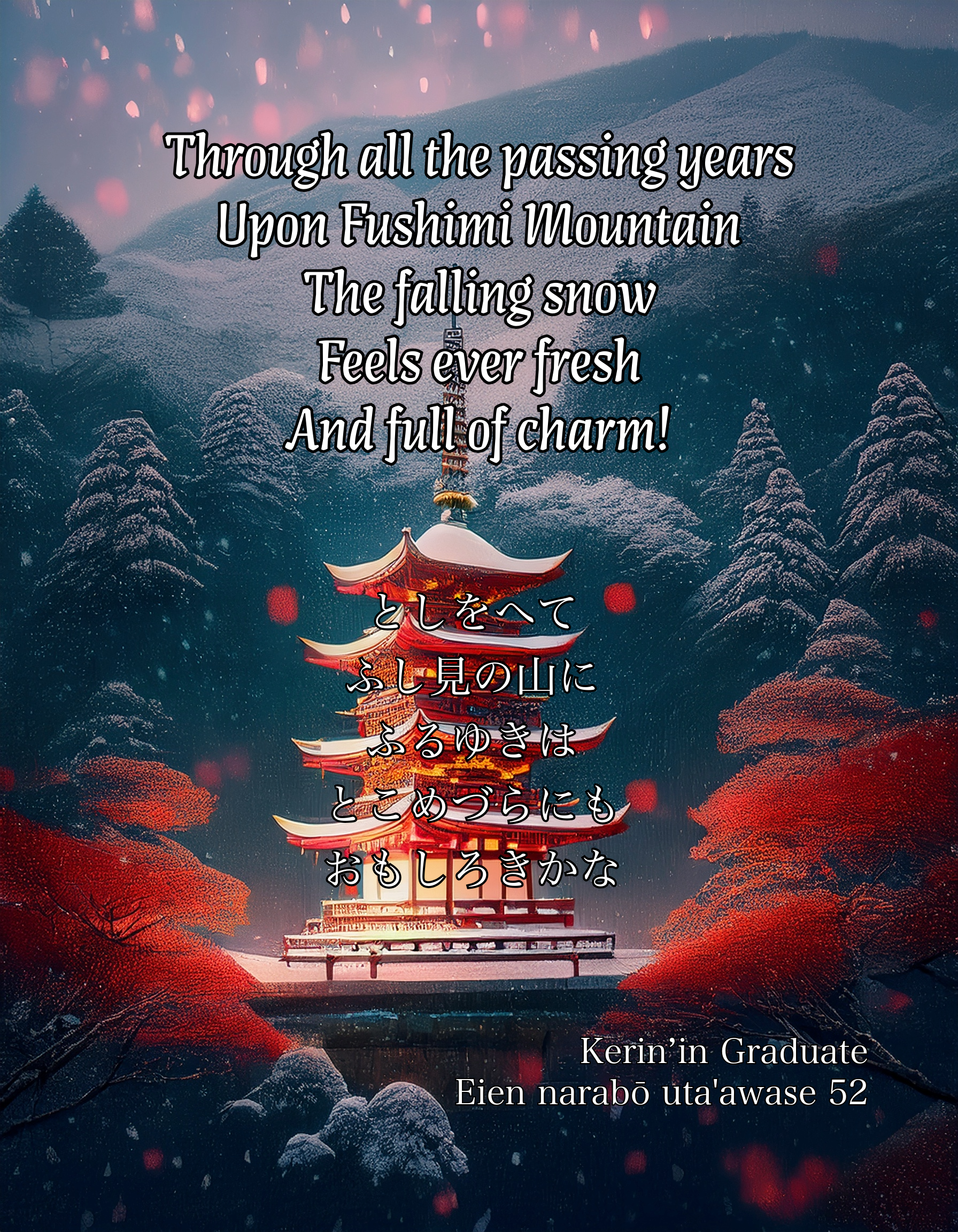
としをへてふし見の山にふるゆきはとこめづらにもおもしろきかな
| toshi o hete fushimi no yama ni furu yuki wa tokomezura ni mo omoshiroki kana | Through all the passing years Upon Fushimi Mountain The falling snow Feels ever fresh And full of charm! |
Kerin’in Graduate
52
The poem of the Left’s ‘Suddenly concealed / By mist, the skies’ is a clear case of repeating the same meaning. In addition, ‘snow covered Shira Mountain’ is one which is snow-capped regardless of whether it’s summer or winter. It’s not a mountain where one would be startled at seeing it ‘suddenly concealed’. The poem of the Right says that ‘through all the passing years the estate at Fushimi…feels ever fresh’, which seems as if this poem is specifying a period when this applies. It’s certainly a bit of a reach to say that this would be charming, but it’s not incongruous. Thus, I make this a tie.
I am unable to grasp the sense of the Left poem’s ‘suddenly concealed’. If it had been ‘concealed with falling’ then that would be better. In addition, I don’t understand the final ‘snow covered Shira Mountain’ either. I would have preferred it if the order had been ‘Shira Mountain’s snow’, but putting the ‘snow’ first seems to lack fluency and so, regretfully I would change this.
The Right’s ‘Fushimi Mountain’ is difficult to understand. It seems that ‘estate’ is a more standard composition, and ‘mountain’ is a novel usage. Having ‘Fushimi’ ‘feel fresh’ is evidence of thought, but even so, ‘mountain’ is vague.