Tag Archives: sode

Yōzei’in ichi no miko himegimi uta’awase 02

Original

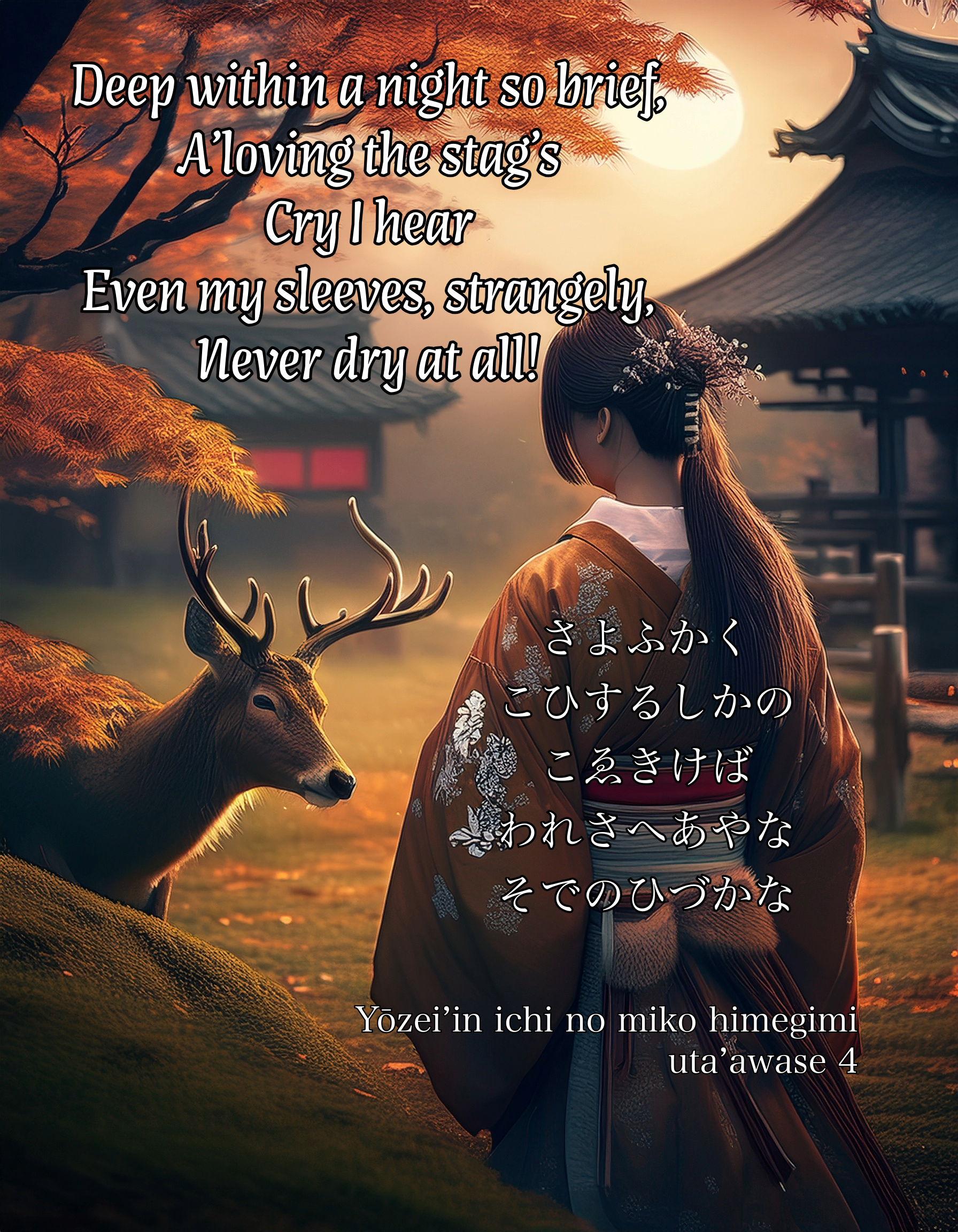
さよふかくこひするしかのこゑきけばわれさへあやなそでのひづかな

sayo fukaku
koisuru shika no
koe kikeba
ware sae ayana
sode no hizu kana
Deep within a night so brief,
A’loving, the stag’s
Cry I hear
Even my sleeves, strangely,
Never dry at all!

4

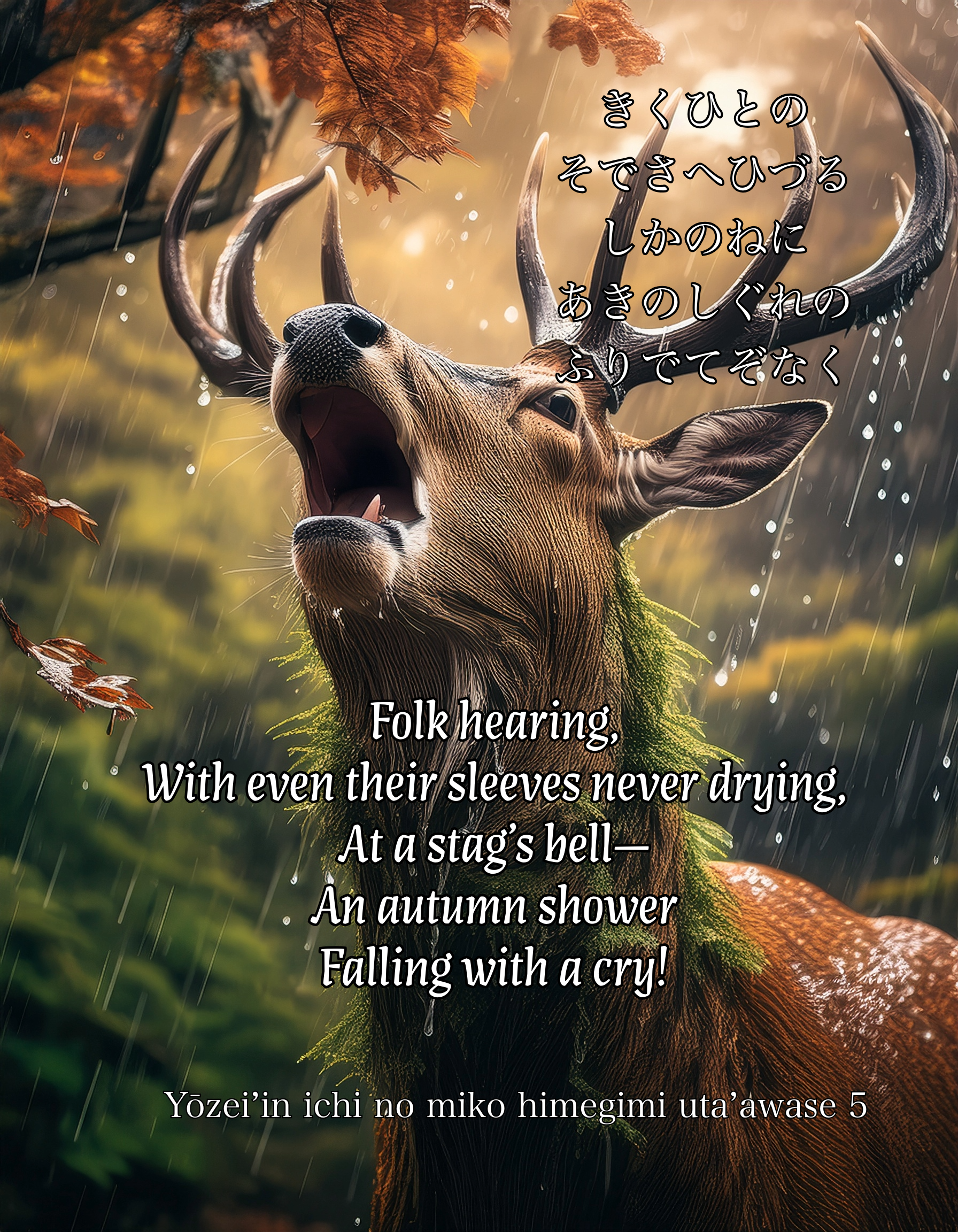
きくひとのそでさへひづるしかのねにあきのしぐれのふりでてぞなく

kiku hito no
sode sae hizuru
shika no ne ni
aki no shigure no
furidete zo naku
Folk hearing,
With even their sleeves never drying,
At a stag’s bell—
An autumn shower
Falling with a cry!

5

Only one poem was requested in response this round.

Tōgū gakushi noritada uta’awase 07

The scent of orange blossom incense on the breeze[i]

Left

ふくかぜに花たちばなぞにほふなるむかしのそでにあやまたれつつ

fuku kaze ni
hanatachibana zo
niou naru
mukashi no sode ni
ayamataretsutsu
With the gusting breeze
Orange blossom’s
Fragrance comes—
For those sleeves of bygone days
Do I ever mistake it…

13

Right

つねよりもことにもあるかなけふをまつはなたちばなのかぜのにほひは

tsune yori mo
koto ni mo aru kana
kyō o matsu
hanatachibana no
kaze no nioi wa
More than ever
So special it is!
For today have I awaited,
Orange blossom’s
Scented breeze…

14

In general, orange blossom is scented during early summer showers or has its fragrance carried on the evening breeze, so I wonder about the folk of bygone days: there’s nothing to compare it with, making the Left’s poem as hackneyed as one on Isonokami, yet there’s nothing special about it, like a weed growing under the eaves. The Right’s poem has ‘for today have I awaited’, which I think requires a reference to sweet-flags. My overall impression of both poems is that their conceptions are unclear.

[Judge’s poem missing]


[i] Rōkitsu bōfū 盧橘芳風

Yōzei’in miko futari uta’awase 19

Left

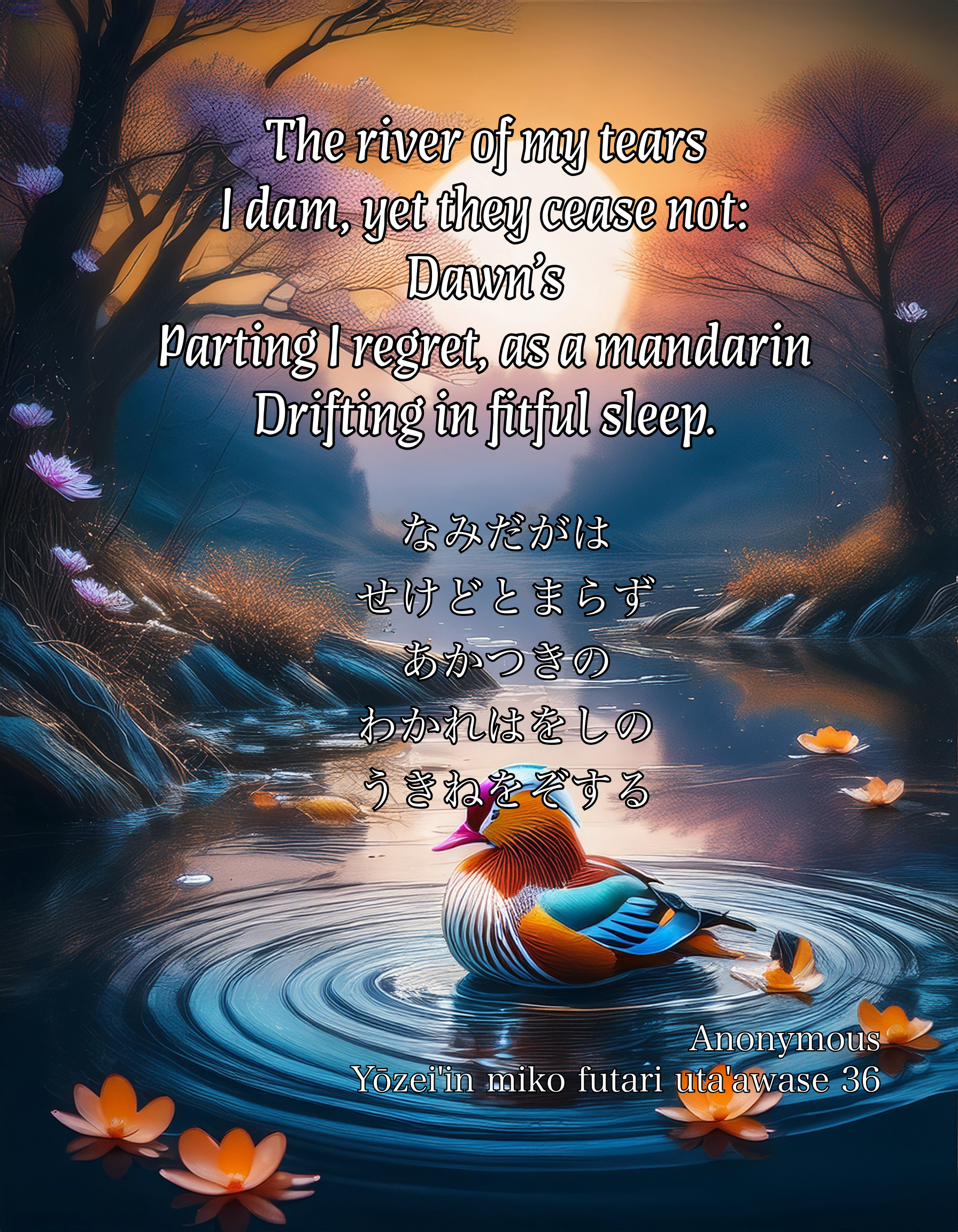
なみだがはせけどとまらずあかつきのわかれはをしのうきねをぞする

namidagawa
sekedo tomarazu
akatsuki no
wakare wa oshi no
ukine o zo suru
The river of my tears
I dam, yet they cease not:
Dawn’s
Parting I regret, as a mandarin
Drifting in fitful sleep.

36

Right

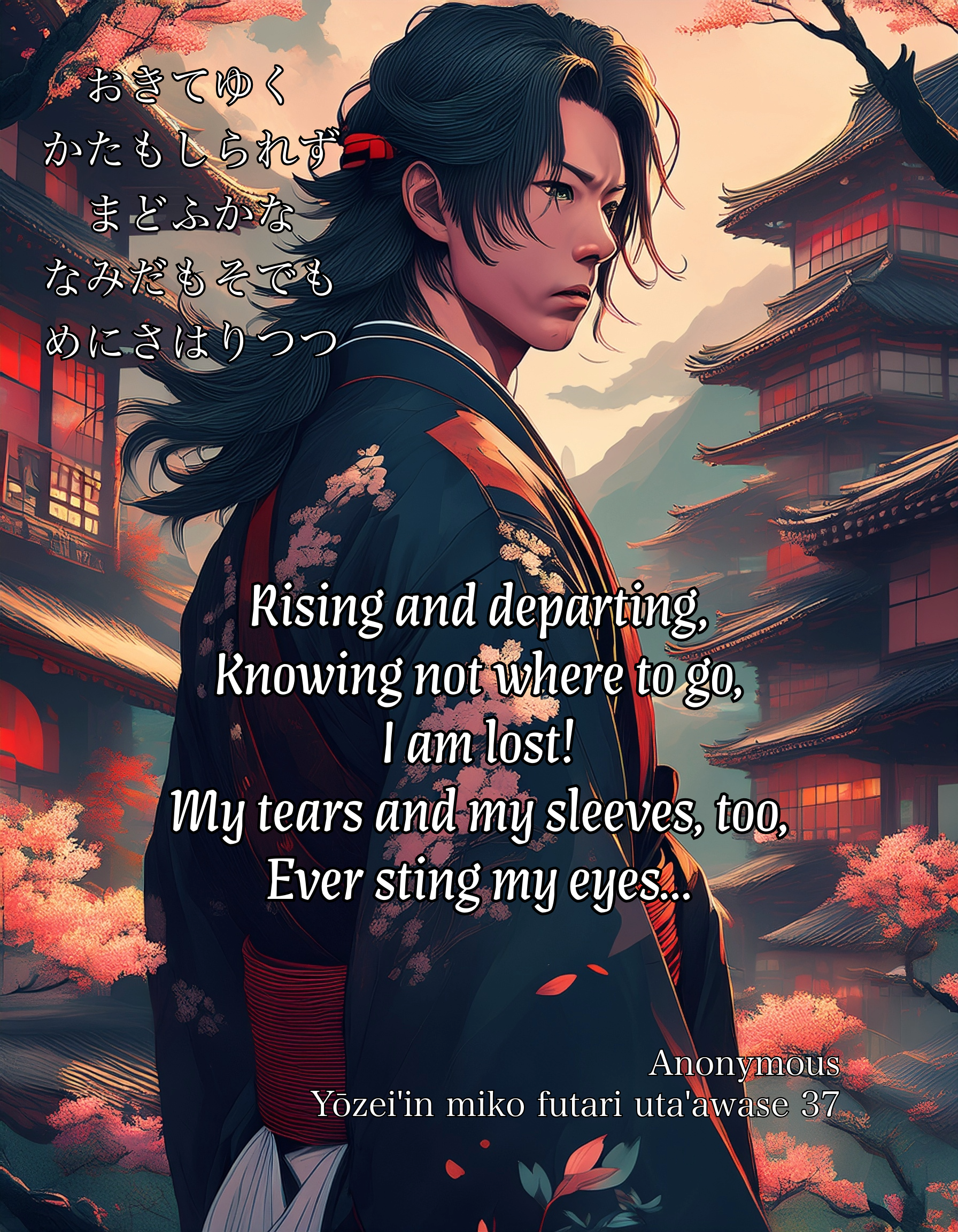
おきてゆくかたもしられずまどふかななみだもそでもめにさはりつつ

okiteyuku
kata mo shirarezu
madou kana
namida mo sode mo
me ni sawaritsutsu
Rising and departing,
Knowing not where to go,
I am lost!
My tears and my sleeves, too,
Ever sting my eyes…

37

Yōzei’in miko futari uta’awase 14

Left

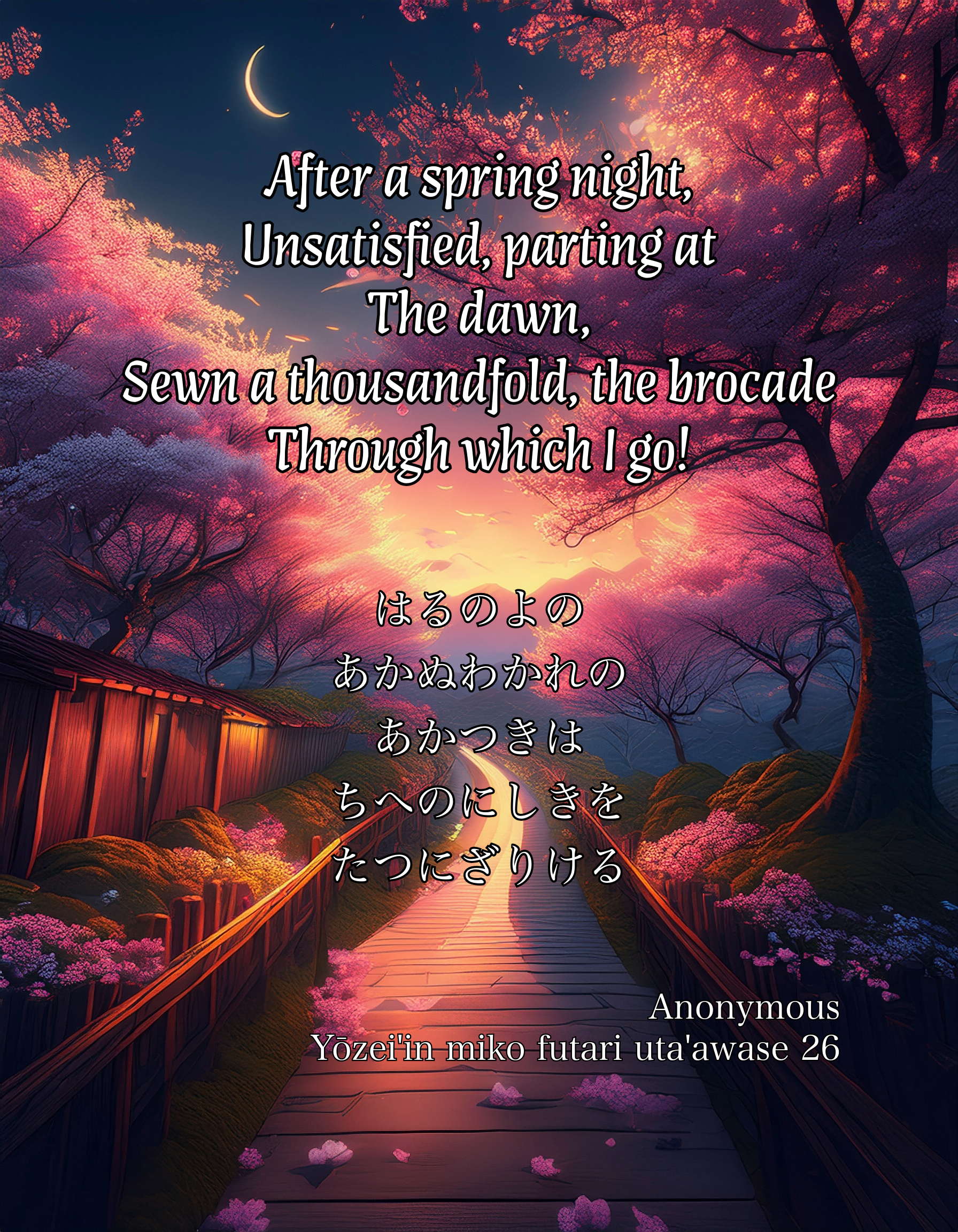
はるのよのあかぬわかれのあかつきはちへのにしきをたつにざりける

haru no yo no
akanu wakare no
akatsuki wa
chie no nishiki o
tatsu ni zarikeru
After a spring night,
Unsatisfied, parting at
The dawn,
Sewn a thousandfold, the brocade
Through which I go!

26

Right

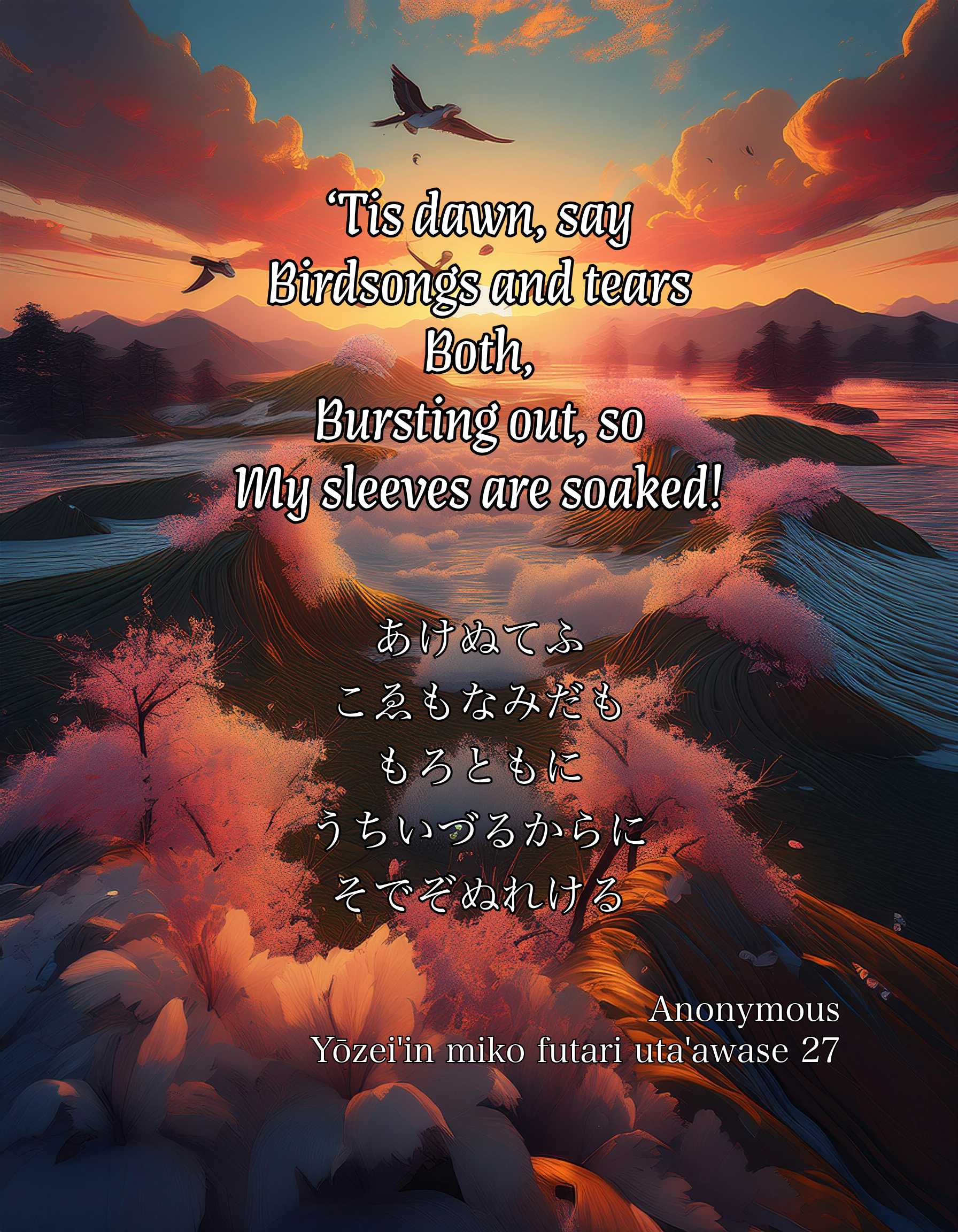
あけぬてふこゑもなみだももろともにうちいづるからにそでぞぬれける

akenu chō
koe mo namida mo
morotomo ni
uchi’izuru kara ni
sode zo nurekeru
‘Tis dawn, say
Birdsongs and tears
Both,
Bursting out, so
My sleeves are soaked!

27

Nishinomiya uta’awase 12

Round Twelve

Left

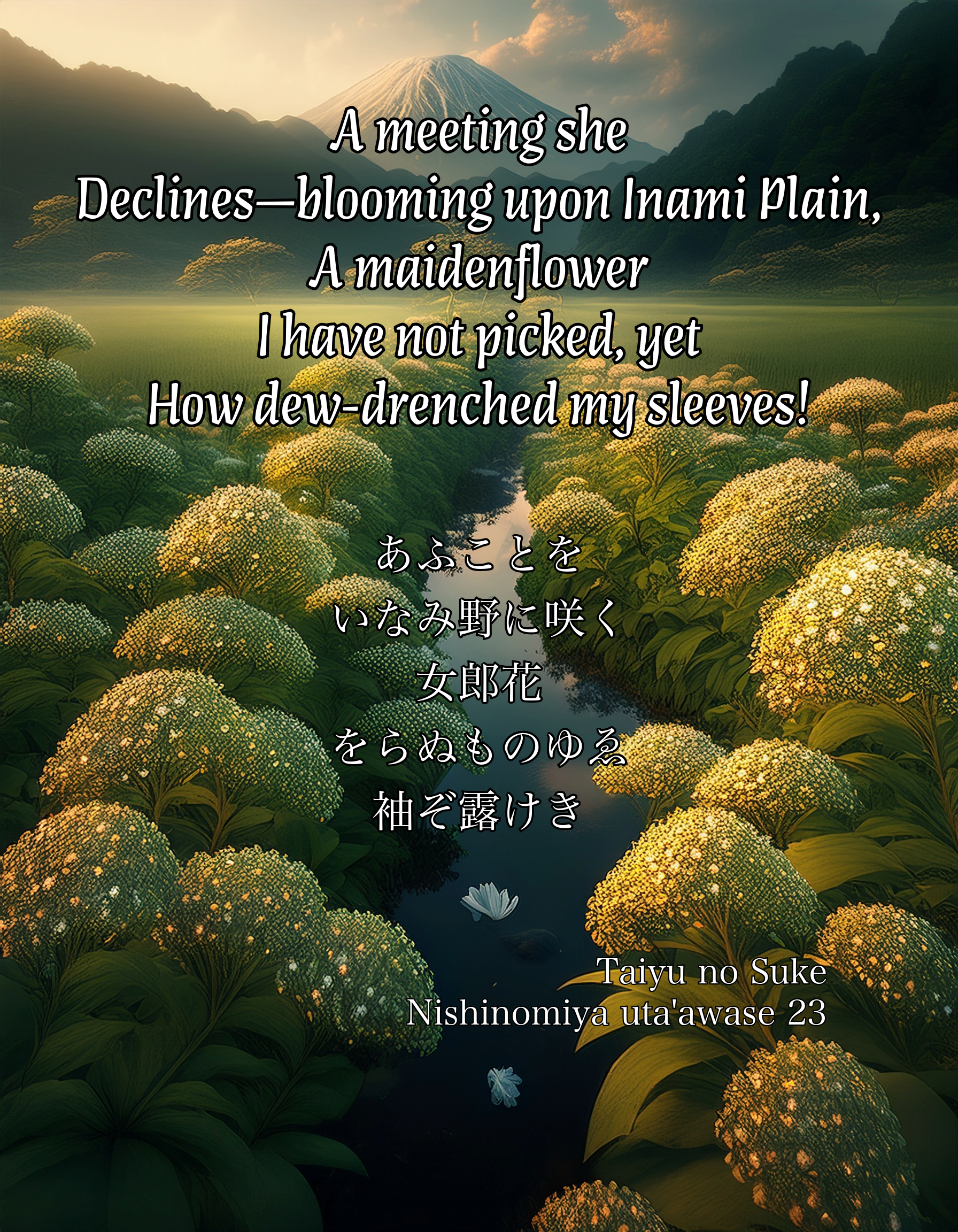
あふことをいなみ野に咲く女郎花をらぬものゆゑ袖ぞ露けき

au koto o
inamino ni saku
ominaeshi
oranu mono yue
sode zo tsuyukeki
A meeting she
Declines—blooming upon Inami Plain,
A maidenflower
I have not picked, yet
How dew-drenched my sleeves!

Taiyu no Suke
23

Right

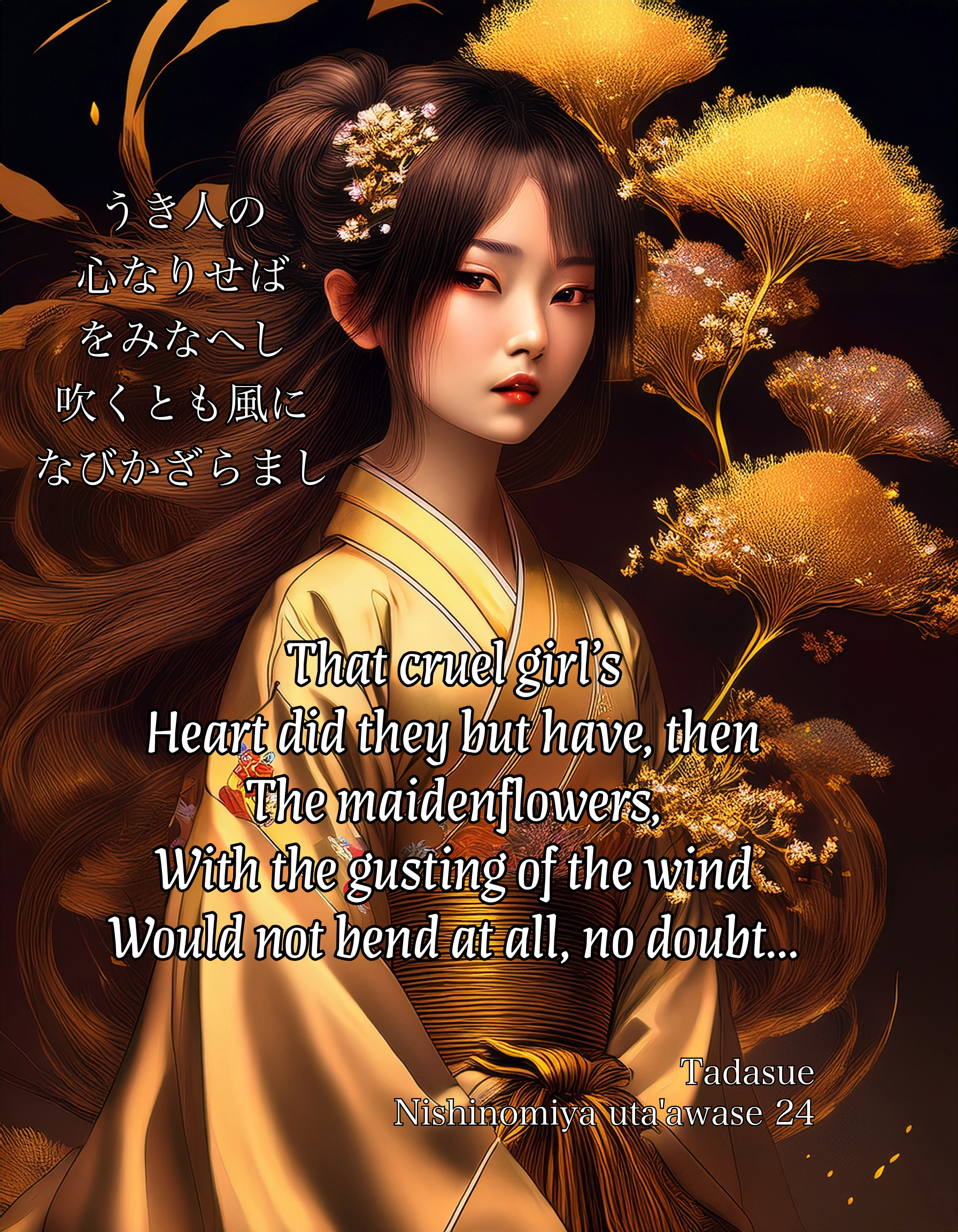
うき人の心なりせばをみなへし吹くとも風になびかざらまし

ukibito no
kokoro nariseba
ominaeshi
fuku tomo kaze ni
nabikazaramashi
That cruel girl’s
Heart did they but have, then
The maidenflowers,
With the gusting of the wind
Would not bend at all, no doubt…

Tadasue
24

‘With the gusting of the wind’ and so forth sounds more in keeping with the topic at present than ‘blooming upon Inami Plain, / A maidenflower’.

Nishinomiya uta’awase 11

The Same and Maidenflowers

Round Eleven

Left

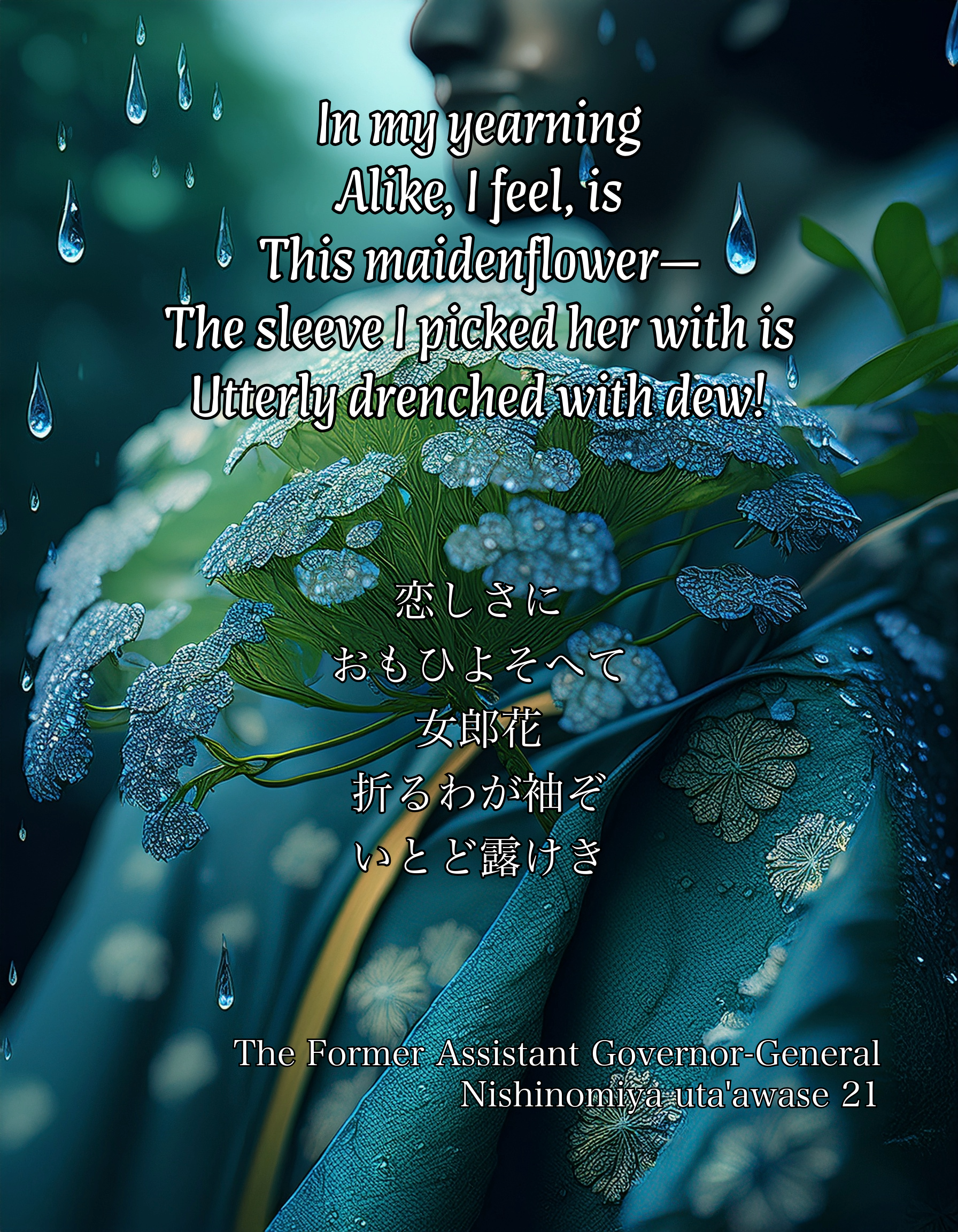
恋しさにおもひよそへて女郎花折るわが袖ぞいとど露けき

koishisa ni
omoi’yosoete
ominaeshi
oru wa ga sode zo
itodo tsuyukeki
In my yearning
Alike, I feel, is
This maidenflower—
The sleeve I picked her with is
Utterly drenched with dew!

The Former Assistant Governor-General
21

Right

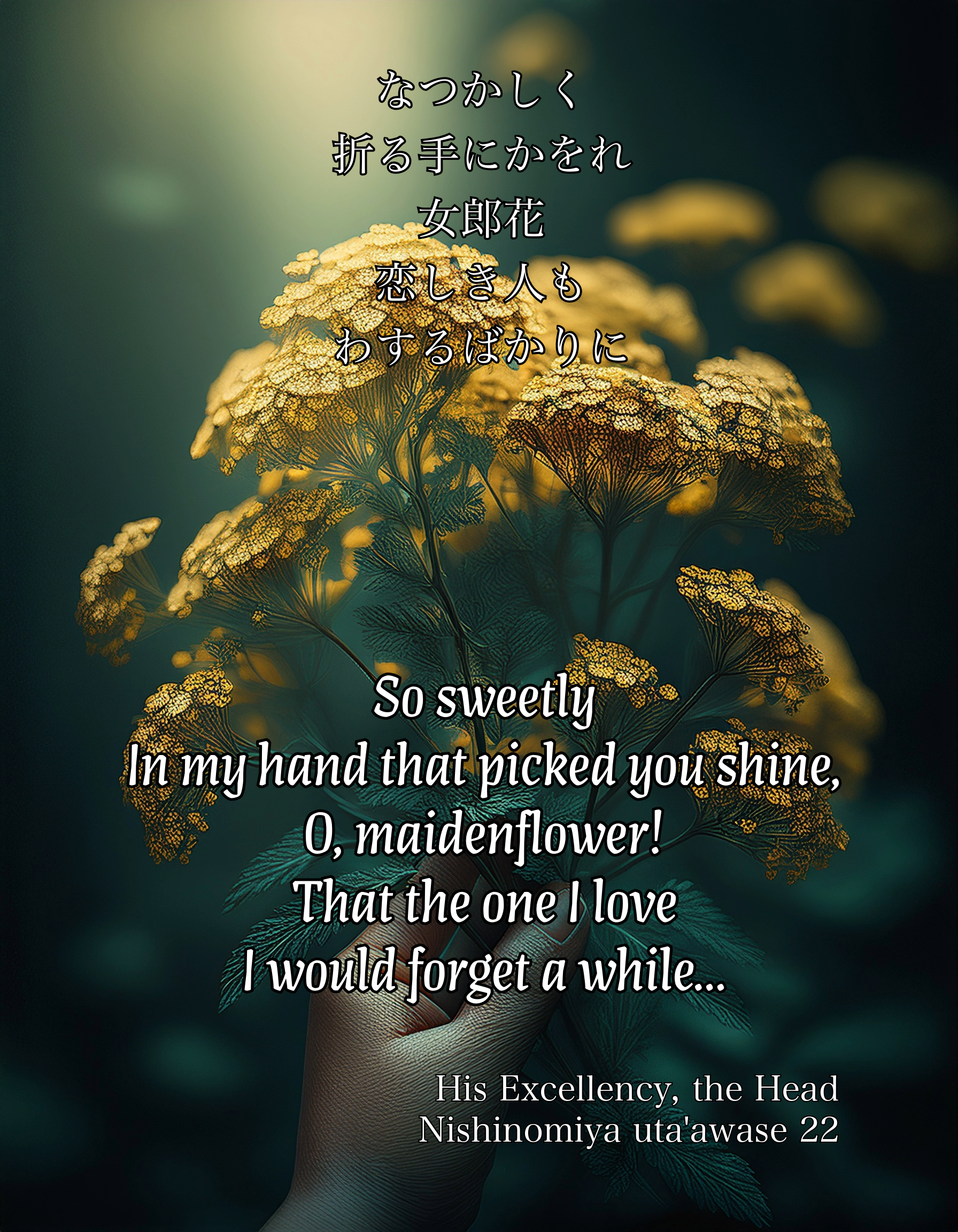
なつかしく折る手にかをれ女郎花恋しき人もわするばかりに

natsukashiku
oru te ni kaore
ominaeshi
koishiki hito mo
wasuru bakari ni
So sweetly
In my hand that picked you shine,
O, maidenflower!
That the one I love
I would forget a while…

His Excellency, the Head
22

The Left’s ‘sleeve I picked her with is / Utterly drenched with dew’ is a form of words entirely in tune with the topic—it appears charmingly exactly how a poem in a poetry match should be. Then the Right expresses as somewhat shallow and unreliable conception of love that might be forgotten in the face of the shine of a maidenflower picked and held in the hand. Thus, I feel the dew-drenched sleeves are superior here, aren’t they.

Nishinomiya uta’awase 09

Round Nine

Left

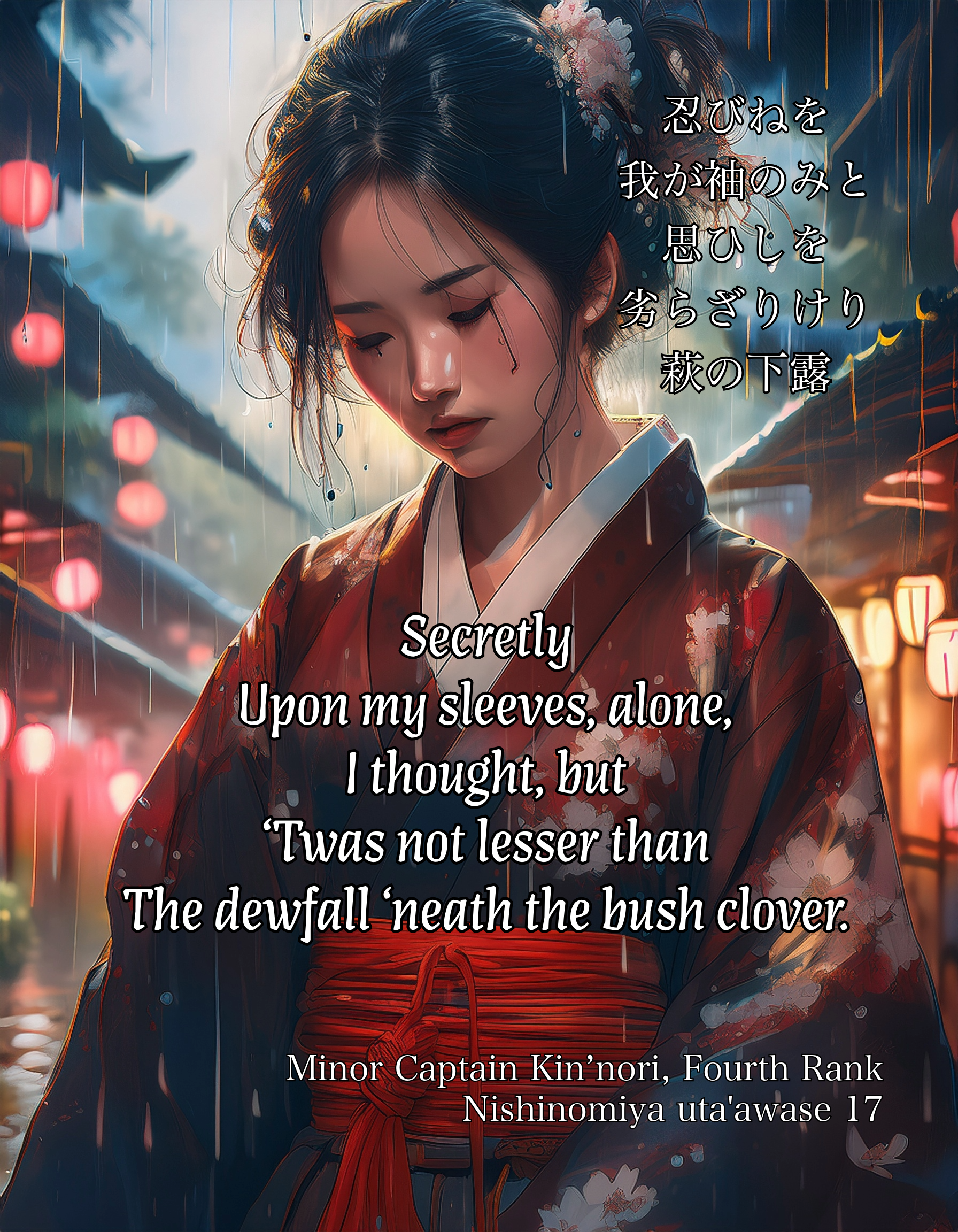
忍びねを我が袖のみと思ひしを劣らざりけり萩の下露

shinobine o
wa ga sode nomi to
omoishi o
otorazarikeri
hagi no shitazuyu
Secretly
Upon my sleeves, alone,
I thought, but
‘Twas not lesser than
The dewfall ‘neath the bush clover.

Minor Captain Kin’nori, Fourth Rank
17

Right

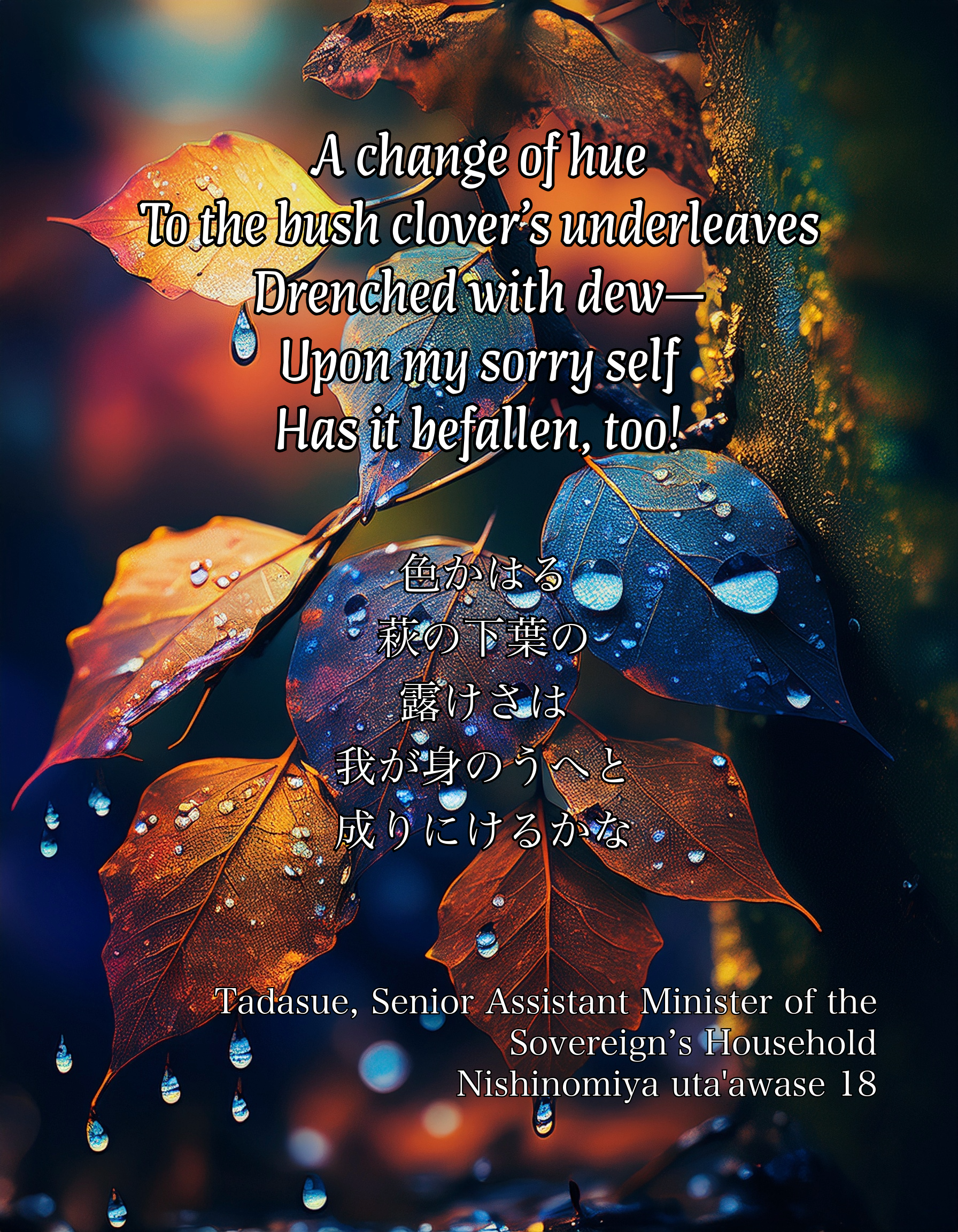
色かはる萩の下葉の露けさは我が身のうへと成りにけるかな

iro kawaru
hagi no shitaba no
tsuyukesa wa
wa ga mi no ue to
narinikeru kana
A change of hue
To the bush clover’s underleaves
Drenched with dew—
Upon my sorry self
Has it befallen, too!

Tadasue, Senior Assistant Minister of the Sovereign’s Household
18

The image of the droplets of secretly wept upon the poet’s sleeves not being less than those of the dewdrops beneath the bush clover appears extremely charming and moving. In addition, the pain expressed by one’s sorry self being as dew-drenched as the bush clover’s underleaves—this has left my own sleeves, both left and right, seeming as soaked with dewdrops from the bush clover.
Yōzei’in miko futari uta’awase 09

Left

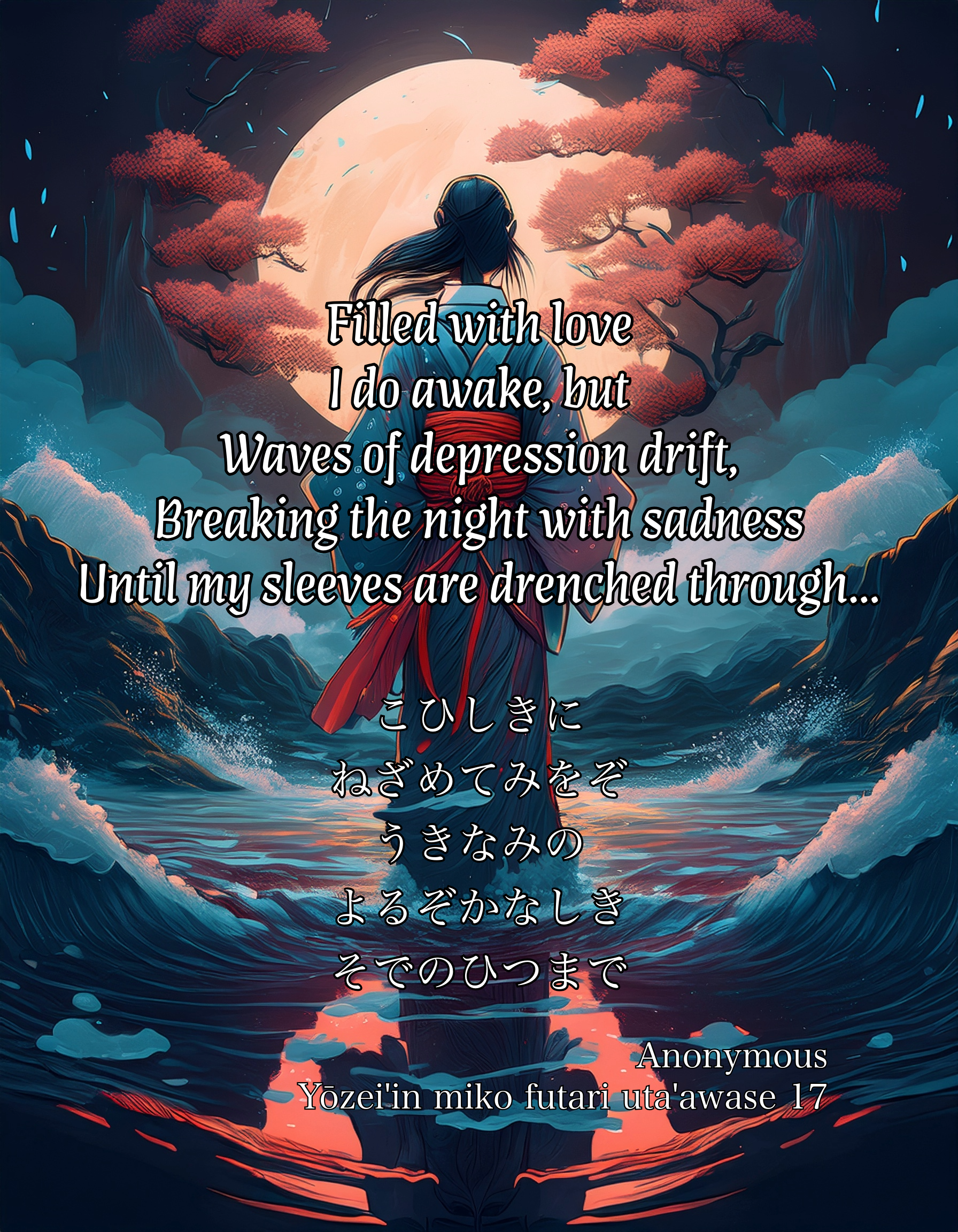
こひしきにねざめてみをぞうきなみのよるぞかなしきそでのひつまで

koishiki ni
nezamete mi o zo
ukinami no
yoru zo kanashiki
sode no hitsu made
Filled with love
I do awake, but
Waves of depression drift,
Breaking the night with sadness
Until my sleeves are drenched through…

17

Right

うつつにもゆめにもみえずなりぬればさむるよなよなねをのみぞなく

utsutsu ni mo
yume ni mo miezu
narinureba
samuru yonayona
ne o nomi zo naku
In both reality, and
Dreams I see her not—
When it comes to that, then
On waking night after night
Will I simply weep!

18