Left
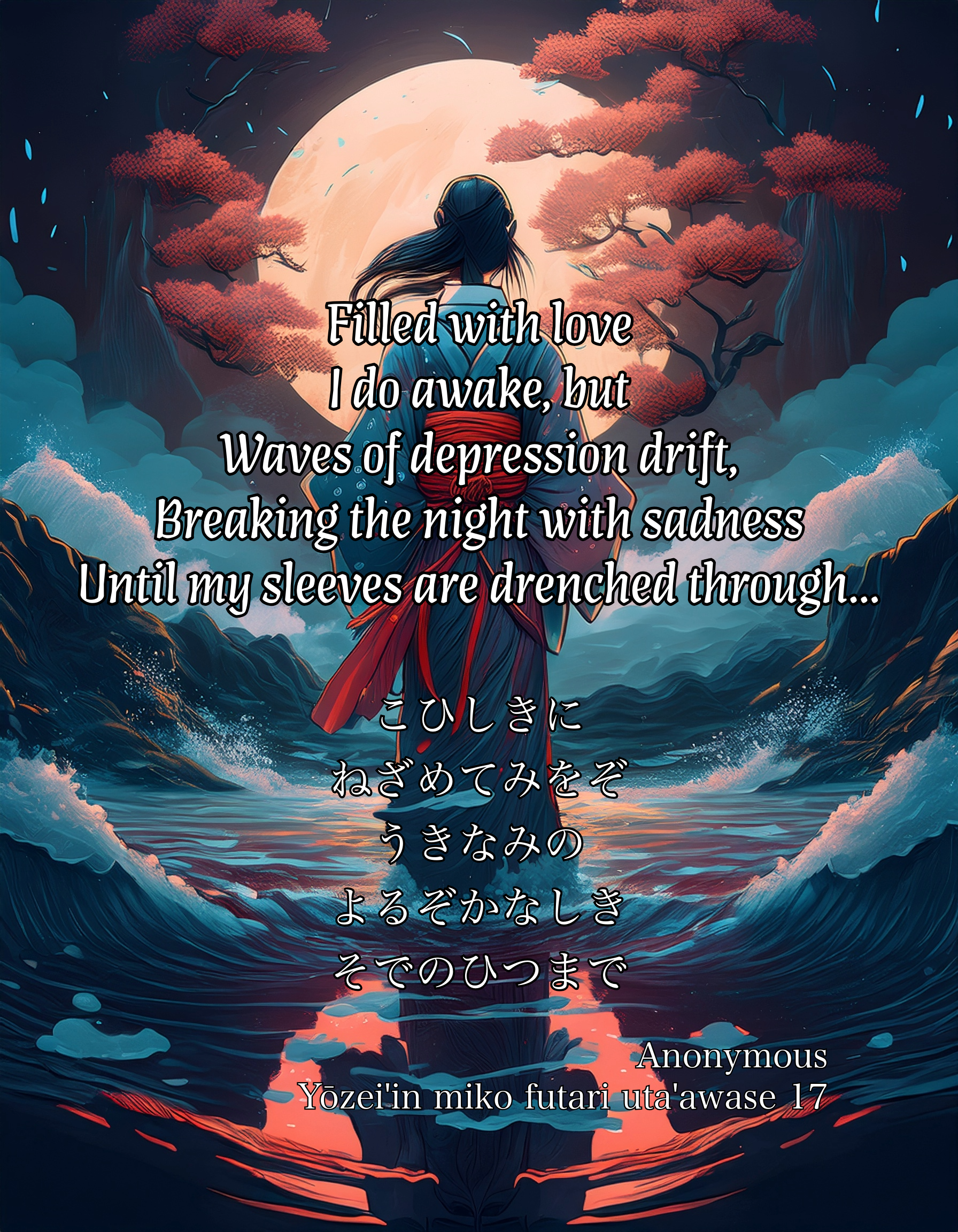
こひしきにねざめてみをぞうきなみのよるぞかなしきそでのひつまで
koishiki ni nezamete mi o zo ukinami no yoru zo kanashiki sode no hitsu made Filled with love
17
Right
うつつにもゆめにもみえずなりぬればさむるよなよなねをのみぞなく
utsutsu ni mo yume ni mo miezu narinureba samuru yonayona ne o nomi zo naku In both reality, and
18
The two princes of former Emperor Yōzei held a poetry match, occupying the Left and Right on the topics of ‘love on waking’ and ‘love after a dawn parting’.
Love on Waking
Left
ねてよりもさめてののちのわびしきはつらきうつつにまどふなりけり
nete yori mo samete no nochi no wabishiki wa tsuraki utsutsu ni madou narikeri More than sleeping
1
Right
くやくやとまちてねざめにおきたればつきよりほかにいるひとぞなき
kuyakuya to machite nezame ni okitareba tsuki yori hoka ni iru hito zo naki Such painful thoughts
2
Left – Bellflower
ゆめのみもかよへどあらぬありきぢかうつつにいかでみるよしもがな
yume nomi mo kayoedo aranu arikiji ka u tsutsu ni ikade miru yoshi mogana Simply in my dreams
21
This poem is an acrostic with ‘bellflower’ (kichikau ) contained in arikiji ka utsutsu . Old Japanese was written without indicating voicing, so chi and ji would have been identical at the time.
Right – Missing
昨日まで花のちるをぞ惜みこし夢かうつつか夏もくれにけり
kinō made hana no chiru o zo oshimikoshi yume ka utsutsu ka natsu mo kurenikeri Until yesterday
さくらばなさくとみし間に散りにけり夢かうつつか春の山風
sakurabana saku to mishi ma ni chirinikeri yume ka utsutsu ka haru no yamakaze The cherry blossom
Topic unknown.
ぬる夢にうつつのうさもわすられておもひなぐさむほどぞはかなき
nuru yume ni utsutsu no usa mo wasurarete omoinagusamu hodo zo hakanaki On appearing in a dream, then
Princess Yoshiko, Junior Consort
Created with Soan .
Left
うつつにもゆめにもひとによるしあへばくれゆくばかりうれしきはなし
utsutsu ni mo yume ni mo hito ni yoru shi aeba kureyuku bakari ureshiki wa nashi In reality and
Mitsune
Right (Win)
たまもかるあまとはなしにきみこふるわがころもでのかわくときなき
tamamo karu ama to wa nashi ni kimi kouru wa ga koromode no kawaku toki naki Reaping gemweed,
58
Left (Tie)
うつつにはさらにもいはじさくらばなゆめにもちるとみえばうからむ
utsutsu ni wa sara ni mo iwaji sakurabana yume ni mo chiru to mieba ukaramu In the waking world
Mitsune
Right
はなのいろをうつしとどめよかがみやまはるよりのちにかげやみゆると
hana no iro o utsushi to tomeyo kagamiyama haru yori nochi ni kage ya miyuru to The blossoms’ hues’
Korenori[i]
[i] This poem is included in Shūishū (I: 73), attributed to Korenori, with the headnote, ‘From Former Emperor Uda’s Poetry Contest.’
Left
あひみてはむつましくこそなるときけつれなさのみもまさるきみかな
aimite wa mutsumashiku koso naru to kike tsurenasa nomi mo masaru kimi kana On meeting
35
Right (Win)
あかずしてわかれし人をゆめにみてうつつにさへもおつるなみだか
akazushite wakareshi hito o yume ni mite utsutsu ni sae mo otsuru namida ka Unsated
36
Topic unknown.
ねられぬをしひてわがぬる春の夜の夢をうつつになすよしもがな
nerarenu o Unable to sleep
Anonymous
Posts navigation
'Simply moving and elegant'