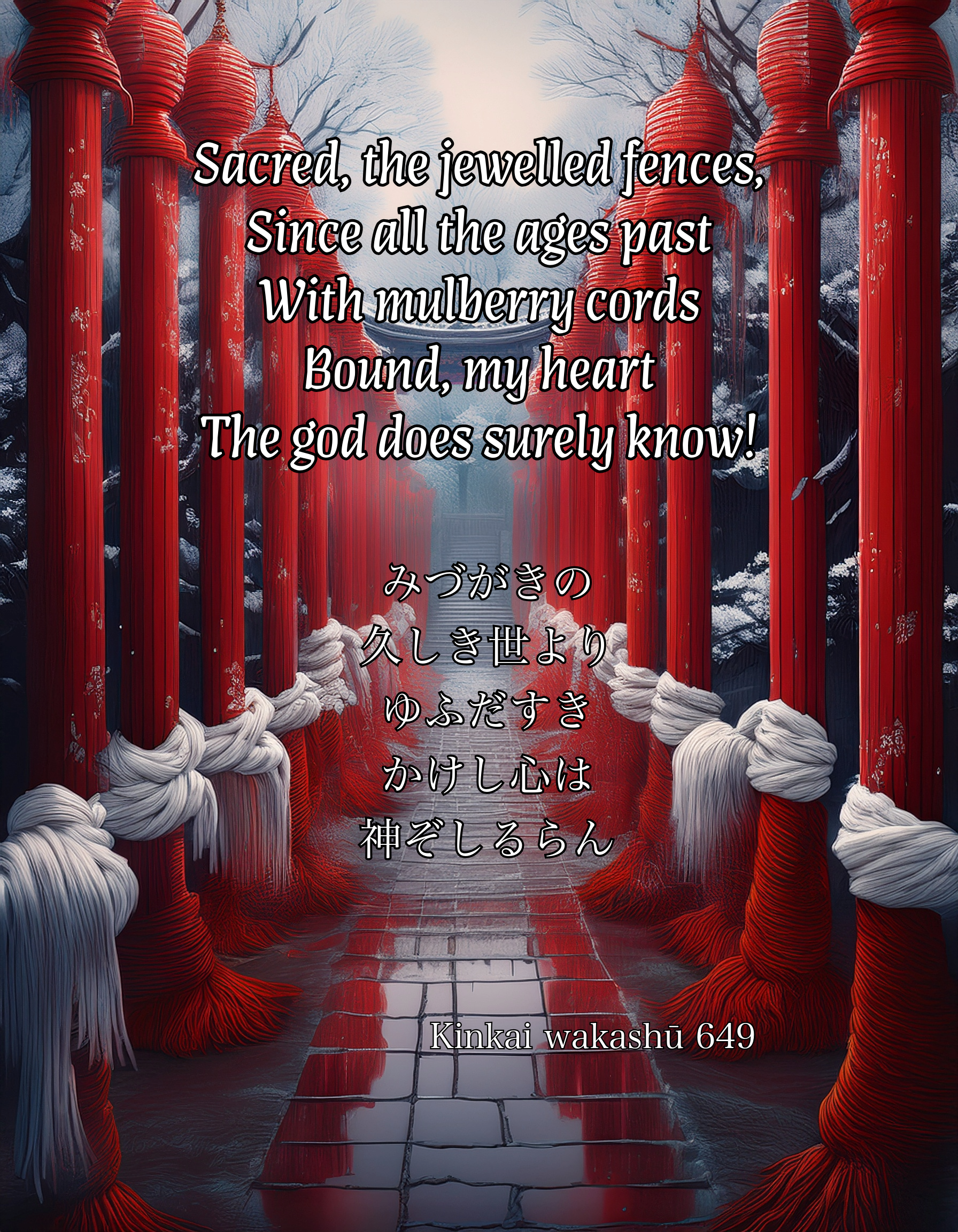
みづがきの久しき世よりゆふだすきかけし心は神ぞしるらん
| mizugaki no hisashiki yo yori yūdasuki kakeshi kokoro wa kami zo shiruran | Sacred, the jewelled fences, Since all the ages past With mulberry cords Bound, my heart The god does surely know! |
649
Original
めづらしきけふのかすがのやをとめをかみもこひしとしのばざらめや
| mezurashiki kyō no kasuga no yaotome o kami mo koishi to shinobazarame ya | Charming, Today at Kasuga Were maidens eight— Would the deity, too, such yearning Be unable to recall?[1] |
1
In reply:
Left (Tie)
やをとめをかみししのばばゆふだすきかけてぞこひむけふのくれなば
| yaotome o kami shi shinobaba yūdasuki kakete zo koimu kyō no kurenaba | If maidens eight The deity does recall, then Cords of mulberry cloth Would he hang that on this beloved Day evening should not fall… |
2
Right
ちはやぶるかみしゆるさばかすがのにたつやをとめのいつかたゆべき
| chihayaburu kami shi yurusaba kasuga no ni tatsu yaotome no itsuka tayubeki | Should the mighty Deity permit, Upon Kasuga plain Stand maidens eight— How long would they endure? |
3


[1] A variant of this poem occurs in Shūishū: Composed when officials from the provinces presented twenty-one poems on the occasion of an imperial progress to Kasuga by the former Teiji Emperor in Engi 20: めづらしきけふのかすがのやをとめを神もうれしとしのばざらめや mezurashiki / kyō no kasuga no / yaotome o / kami mo ureshi to / shinobazareme ya ‘Charming, / Today at Kasuga / Were maidens eight— / Would the deity, too, such joy / Be unable to recall?’ Fujiwara no Tadafusa (SIS X: 620)
Winter
Left
冬くれば紅葉ふりしく神無月佐保の山辺はむべもりぬらん
| fuyu kureba momiji furishiku kaminazuki saho no yamabe wa mube morinuran | When the winter comes, Scarlet leaves, falling and scattering In the Godless Month, Upon the slopes of Mount Saho, Indeed, are at their finest. |
19
冬ごもりかれてみゆらん梅がえは今はた花の春はにほはん
| fuyugomori karete miyuran ume ga e wa ima hata hana no haru wa niowan | Sealed in winter, and All withered seeming, The plum tree’s branches, Now, for sure, the blossoms’ Spring will scent. |
20
冬みれば水もまかせぬ小山田にいつすき返し種をまきけん
| fuyu mireba mizu mo makasenu oyamada ni itsu sukikaeshi tane o makiken | ‘Tis winter, I see, so There’s no water to draw for The little mountain paddies: O, when might I till them, and Sow my seeds, I wonder? |
21
Right
時雨降る宿にすまへば冬の夜に錦とみゆる木木の花かな
| shigure furu yado ni sumaeba fuyu no yo ni nishiki to miyuru kigi no hana kana | Showers fall Upon the house where I do dwell, so Upon a winter’s night As brocade do seem The blossoming trees! |
22
ゆふだすき神の社にかけつればしもし降るにもたのもしきかな
| yūdasuki kami no yashiro ni kaketsureba shimo shi furu ni mo tanomashiki kana | Sacred mulberry cords Around the God’s shrine Are hung, so Even amidst the frost fall, The future does seem bright! |
23
白雲のふたへふりしくときは山うらはへとしはみどりなりけれ
| shiragumo no futae furishiku tokiwa yama ura hae toshi wa midori narikere | Clouds of white Lie scattered, twofold, upon The unchanging mountain: Stretching out behind, the year Is simply green. |
24
あきのよの月のひかりはきよけれどひとのこころのくまはてらさず[1]
| aki no yo no tsuki no hikari wa kiyokeredo hito no kokoro no kuma wa terasazu | On an autumn night The moon’s light is So clear, yet upon Her heart’s Depths it fails to shine. |
55
ゆふだすきかけてのみこそこひしけれあきとしなればひと
| yūdasuki kakete no koso koishikere aki to shi nareba hito | Cords of mulberry cloth Hung, are all the more Dear; When the autumn comes, She… |
56
The final words of this poem have not survived, so we need to use our imaginations to think of how it might have concluded.
Left.
雲の上を出づる使のもろかづら向かふ日影にかざすけふかな
| kumo no ue o izuru tsukai no morokazura mukau hikage ni kazasu kyō kana |
From above the clouds The messengers emerge; Bearing branches, hollyhock decked, Bent towards the sun-bright power In adornment on this day. |
215
Right (Win).
ゆふだすきかけてぞ頼む玉かづらあふひうれしきみあれと思へば
| yūdasuki kakete zo tanomu tamakazura aoi ureshiki miare to omoeba |
With mulberry-cloth Garlanded, wishing for A jewelled belt of Hollyhocks, on this joyful Festive day… |
The Provisional Master of the Empress’ Household Office.
216
The Right have no particular remarks to make about the Left’s poem. The Left, however, comment, ‘“Festival” (matsuri)and “festive” (miare) are somewhat different. They do not refer to events held on the same day.’
Shunzei responds, ‘While the Left’s “Bent towards the sun-bright power” (mukau hikage) certainly provides no evidence of a lack of feeling, in overall form the Right’s poem seems more elegantly flowing [migi utazama, iinagasaretaru yō]. While it is true that the festive days begin two days prior to the festival itself, the term can also apply to the evening of the festival day, and so the two can be seen as synonymous. The Right would seem to win.’