Dark shade beneath the mountain trees[i]
Left
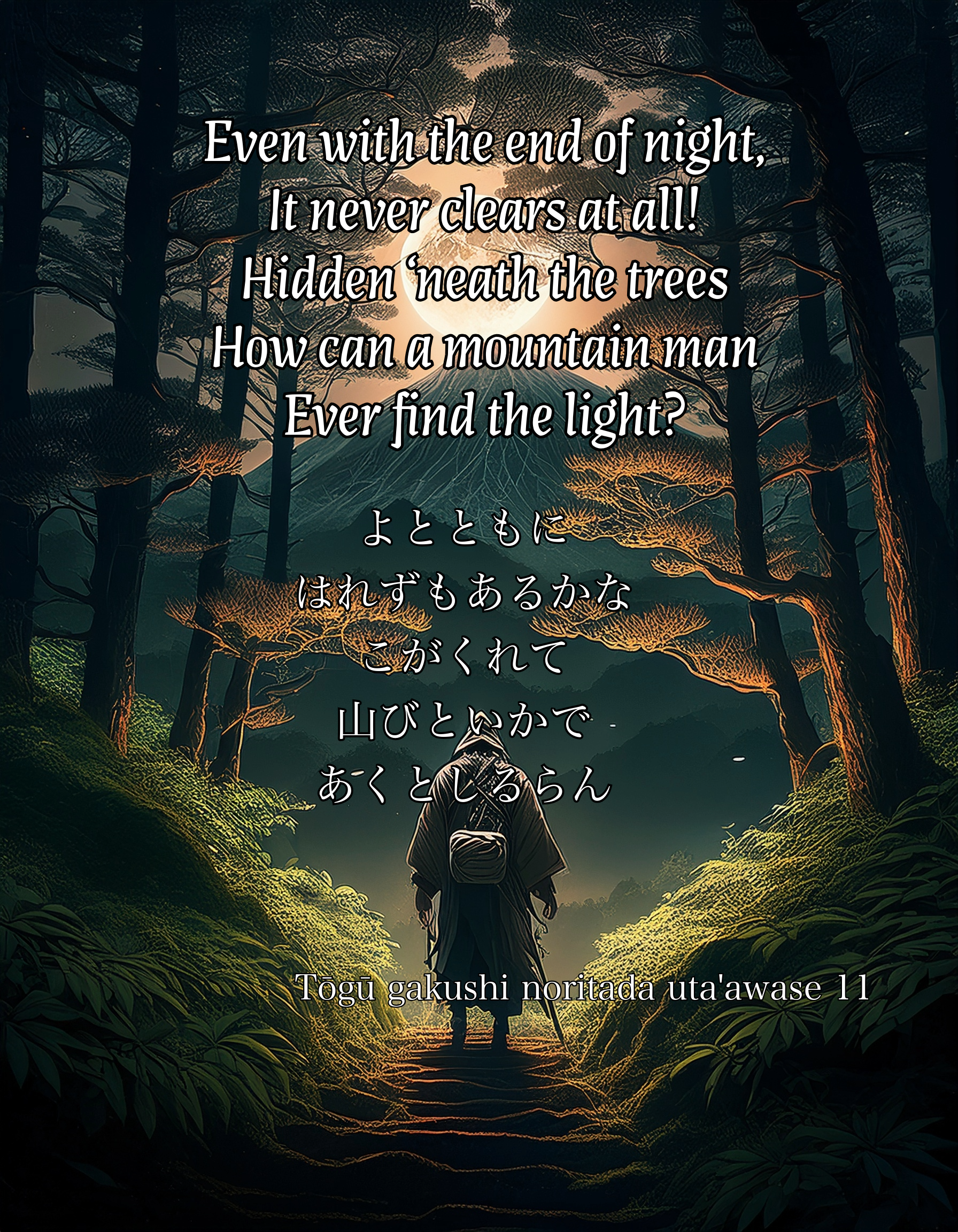
よとともにはれずもあるかなこがくれて山びといかであくとしるらん
| yo to tomo ni harezu mo aru kana kogakurete yamabito ikade aku to shiruran | Even with the end of night, It never clears at all! Hidden ‘neath the trees How can a mountain man Ever find the light? |
11
Right
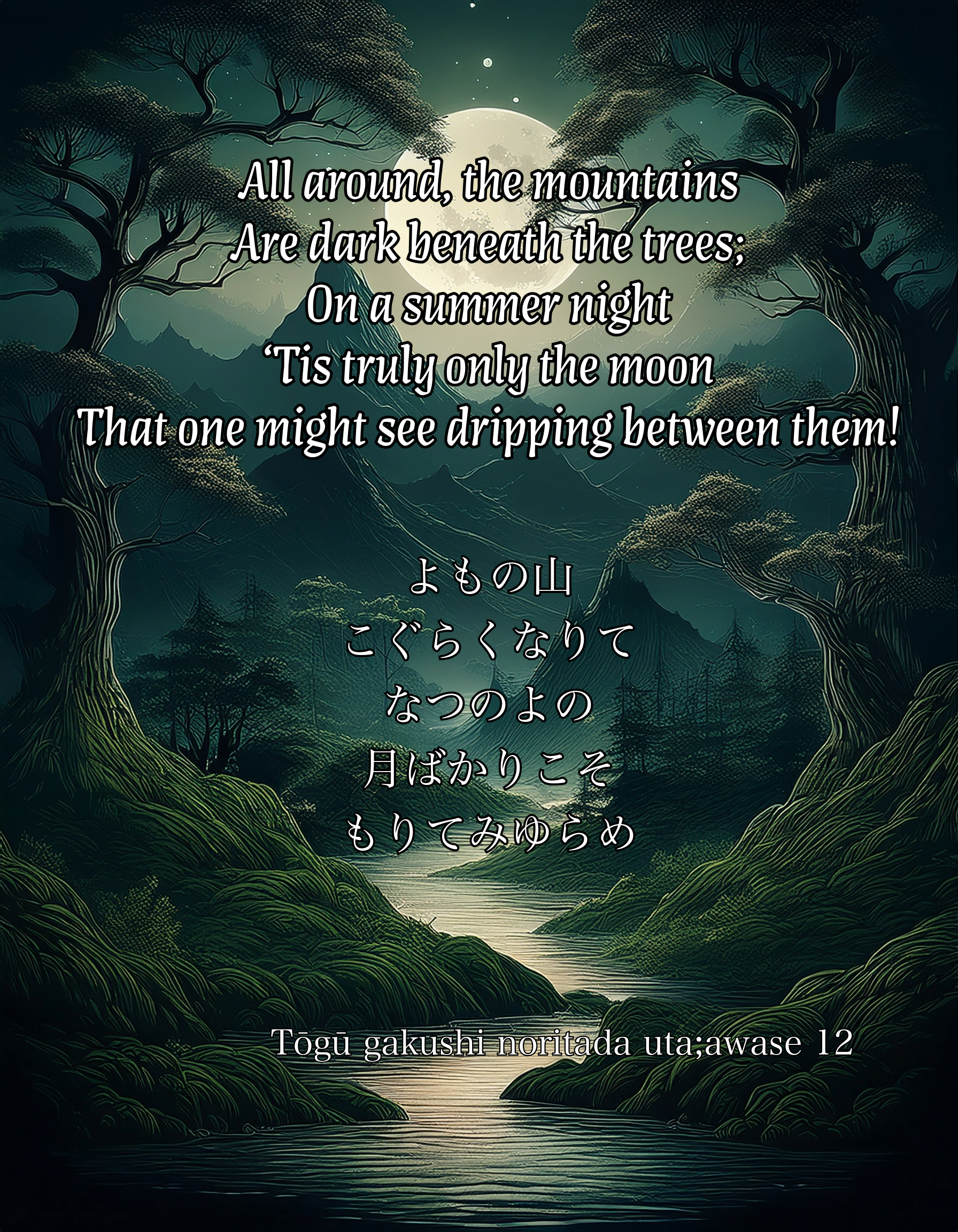
よもの山こぐらくなりてなつのよの月ばかりこそもりてみゆらめ
| yomo no yama koguraku narite natsu no yo no tsuki bakari koso morite miyurame | All around, the mountains Are dark beneath the trees; On a summer night ‘Tis truly only the moon That one might see dripping between them! |
12
This topic refers to a hunted stag concealed among the trees in the summer mountains. There is not a particular strong feeling of either evergreen or other types of mountain forests,[ii] but the Left’s poem has ‘Even with the end of night’, forgetting that this implies a season of biting wind and showers striking the leaves on the trees—thus the darkness here is excessively conceived. While the Right takes ‘dark shade’ as an opportunity to compose with the elevated conception of the moon dripping between the trees—and surpasses the peaks in doing this—I wonder if the conceptions of both poems don’t contain brightness? Thus, both Left and Right are examples of the ‘Reizei Palace’,[iii] so I would decide on a tie for these.
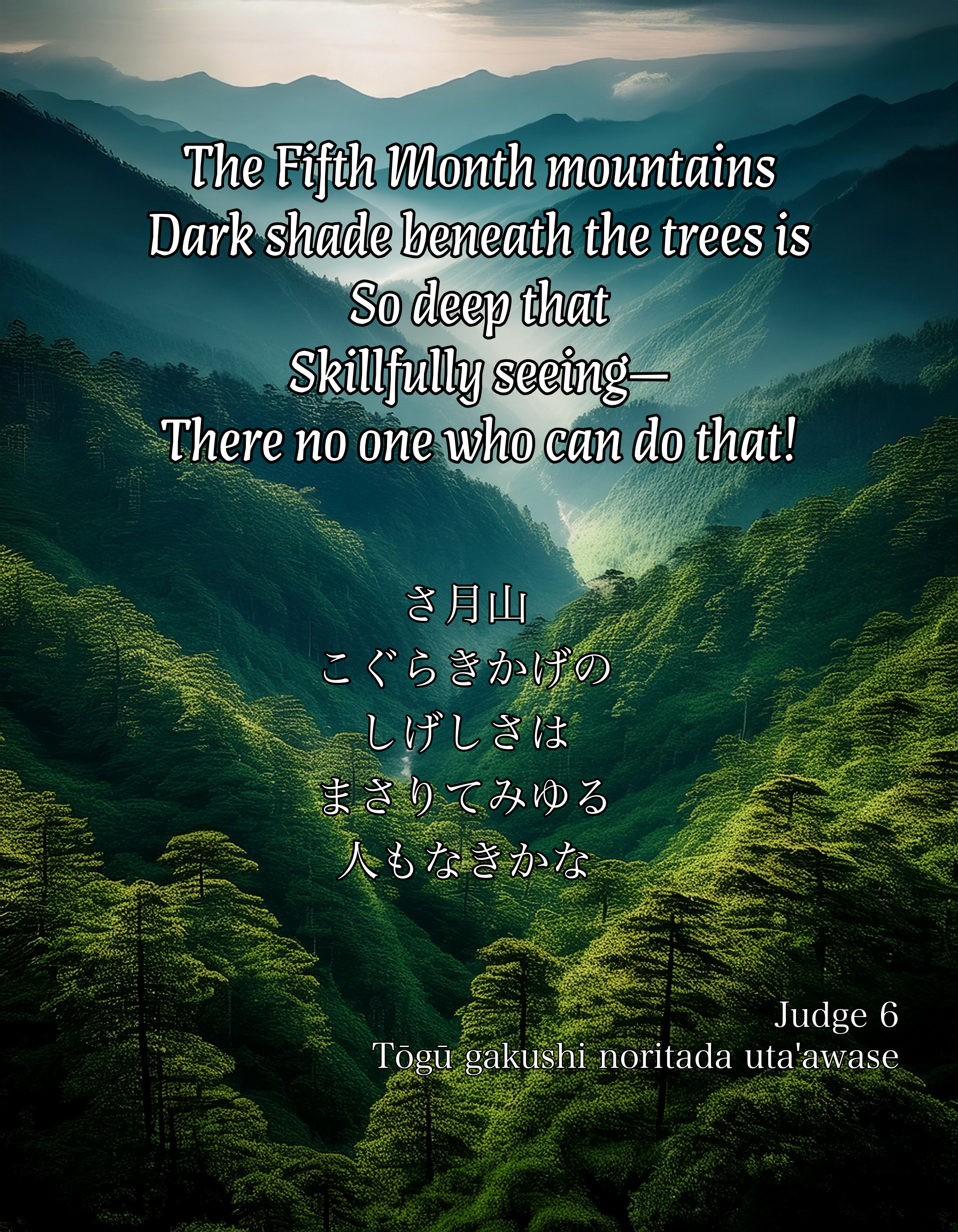
| satsuki yama koguraki kage no shigeshisa wa masarite miyuru hito mo naki kana | The Fifth Month mountains Dark shade beneath the trees is So deep that Skillfully seeing— There no one who can do that! |
Judge 6
[i] Yamagi no kagegurashi山樹蔭暗
[ii] The expression Noritada uses here Tokiwayama makeyama is obscure, so this interpretation is speculative.
[iii] Another unclear expression, but from the context apparently an idiom that means ‘poems not matching the topic’.