Topic unknown.
うの花のさけるかきねはみちのくのまがきのしまの浪かとぞ見る
| unoFana no sakeru kakine Fa mitinoku no magaki no sima no nami ka to zo miru | The deutzia Blooming by the brushwood fence: as In Michinoku, Upon Magaki Isle Waves breaking, do they appear! |
Anonymous
Plovers.
朝ぼらけあとなき波になく千鳥あなことごとしあはれいつまで
| asaborake ato naki nami ni naku chidori ana kotogotoshi aware itsu made | At the break of dawn, No wake upon the waves where Cry the plovers— O, such a tumult, How long will such sorrow last?[i] |
708
[i] See: A poem by Novice Manzei. 世間乎 何物尓将譬 旦開 榜去師船之 跡無如 yo no naka o / nani ni tatoemu / asabiraki / kogi inishi fune no / ato naki ga goto ‘This mundane world, / To what might I compare? / At dawn’s breaking, / A boat rowed out but / Has left no wake at all—that’s it.’ (Man’yōshū III: 351)
During the reign of the Kanpyō emperor, the gentlemen in service to His Majesty, sent a sake jar to the ladies waiting upon Her Majesty, the empress, with a request for some leftover imperial sake. Her Majesty’s chamberlains, laughing, presented the jar before Her Majesty, but in the end said nothing to her, and when a messenger arrived to inform the gentlemen of this, he sent this back from among His Majesty’s chamberlains.
玉だれのこがめやいづらこよろぎのいその浪わけおきにいでにけり
| tamadare no kogame ya idura koyogi no iso no nami wake oki ni idenikeri | Hung with jewels, O, where has gone that little flask? From the rocky shore of Koyogi, Forging through the waves into the offing Has it departed. |
Lord Toshiyuki

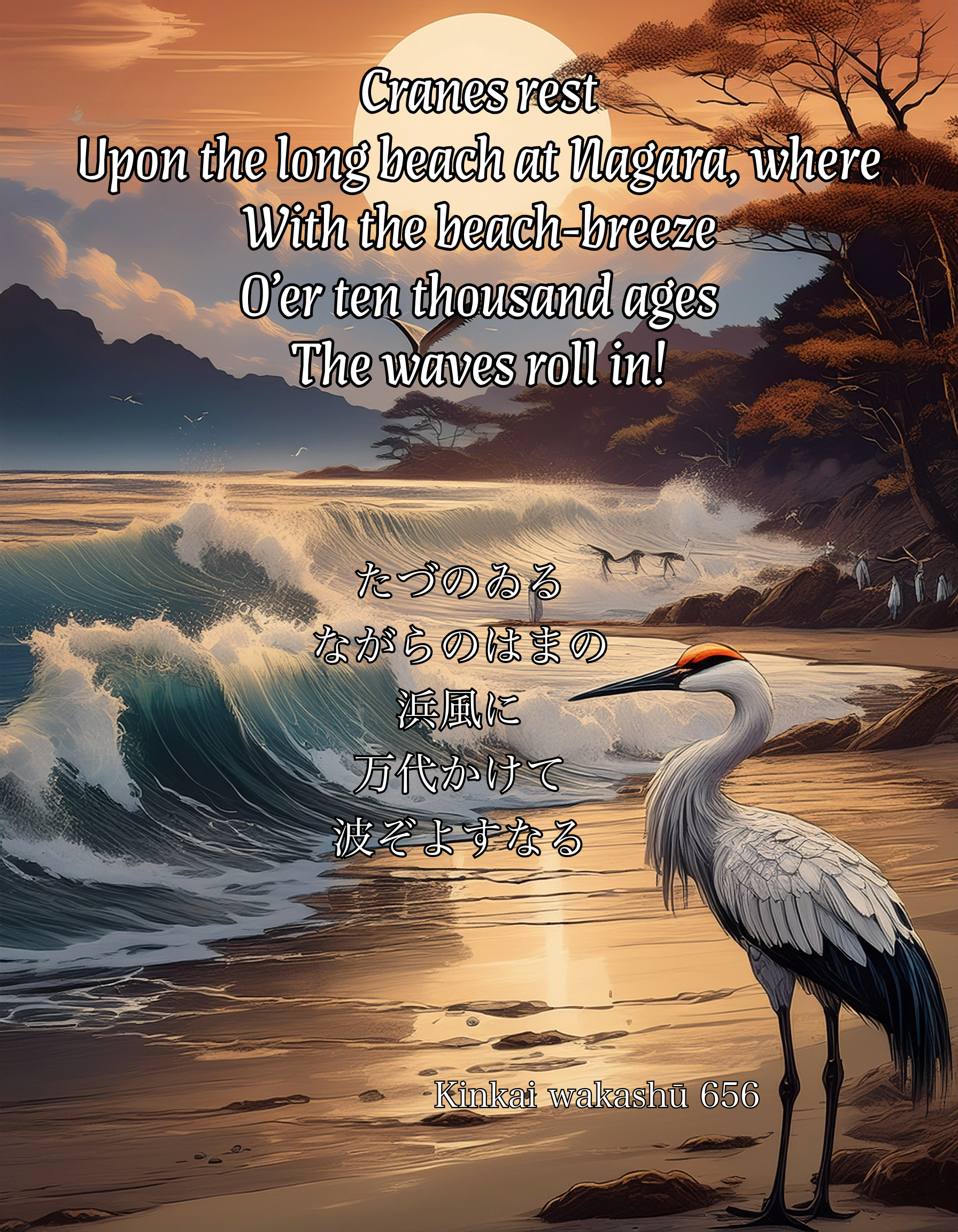
たづのゐるながらのはまの浜風に万代かけて波ぞよすなる
| tazu no iru nagara no hama no hamakaze ni yorozuyo kakete nami zo yosu naru | Cranes rest Upon the long beach at Nagara, where With the beach-breeze O’er ten thousand ages The waves roll in![i] |
656
[i] See: Topic unknown. おきつかぜ夜半にふくらし難波がたあか月かけて浪ぞよすなる oki tsu kaze / yowa ni fukurashi / naniwagata / akatsuki kakete / nami zo yosu naru ‘The wind from out the offing / Has blown throughout the night, it seems: / At Naniwa Inlet / With the break of dawn / The waves roll in!’ Supernumerary Middle Counsellor Sadayori (Shinkokinshū XVII: 1597); and: Composed on the bridge at Nagara. 春の日のながらのはまに舟とめていづれか橋と問へどこたへぬ haru no hi no / nagara no hama ni / fune tomete / izure ka hashi to / toedo kotaenu ‘In the springtime sun / At the beach of Nagara / I halted my boat; / ‘Where is the bridge?’ I / Asked, yet answer came there none.’ Dharma Master Egyō (Shinkokinshū XVII: 1595)
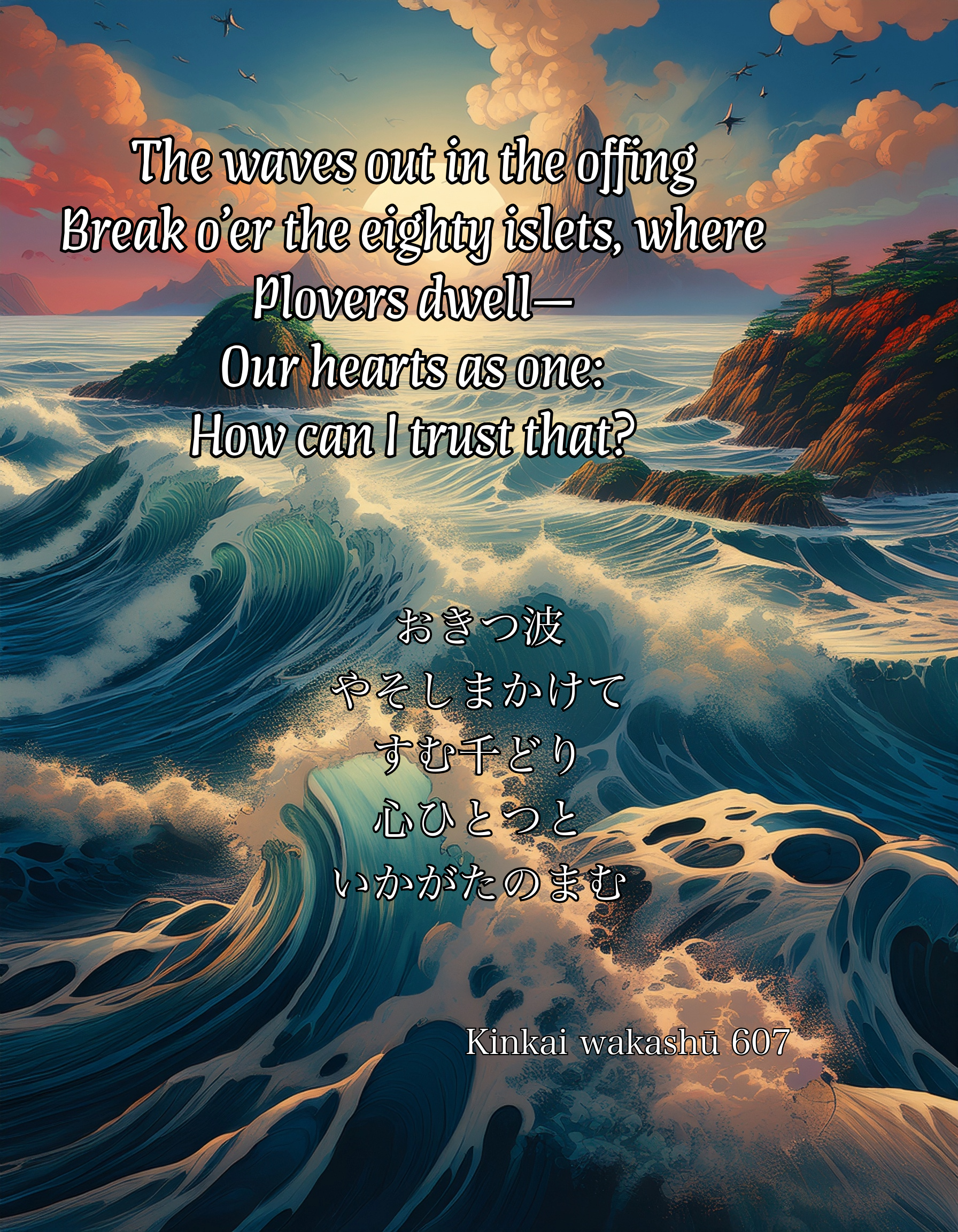
Sent with something to Dharma Master Sosen[i] when he was away.
| oki tsu nami yasoshima kakete sumu chidori kokoro hitotsu to ikaga tanomamu | The waves out in the offing Break o’er the eighty islets, where Plovers dwell— Our hearts as one: How can I trust that? |
607
[i] Sosen 素暹 (?-1263) did not take orders until 1245-46, some twenty-six years after Sanetomo’s assassination in 1219, so at the time of this poem’s composition, he would still have been known by his secular name, Tō no Taneyuki 東胤行.Taneyuki, like his father, Shigetani 重胤 (1177?-1247?) was a close attendant of Sanetomo, and he continued this service after the latter’s death, eventually serving Kujō Yoritsune 九条頼経 (1218-1256), Kujō Yoritsugu 九条頼嗣 (1239-1256) and Prince Munetaka 宗尊(1242-1274), the fourth, fifth and sixth Kamakura shoguns, respectively, although Shigetani took orders following Sanetomo’s death. Both father and son were known as waka poets, with Sosen having twenty-two poems in imperial anthologies from Shokugosenshū.
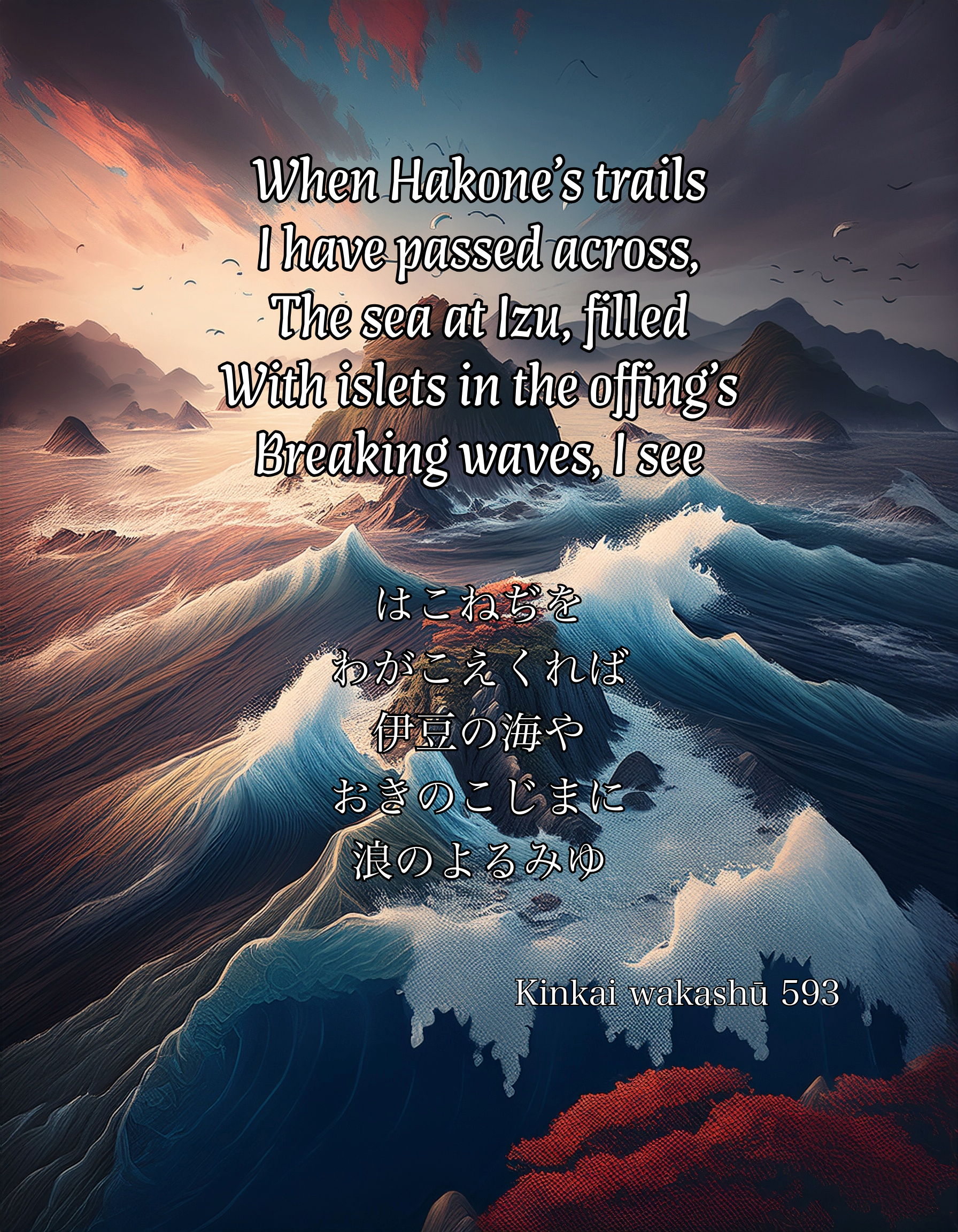
When I had gone out to view Mount Hakone, there were islets with waves breaking over them. When I asked my companions if they knew the name of the sea there, and the answer came back that it was the Izu sea.
はこねぢをわがこえくれば伊豆の海やおきのこじまに浪のよるみゆ
| hakoneji o wa ga koekureba izu no umi ya oki no kojima ni nami no yoru miyu | When Hakone’s trails I have passed across, The sea at Izu, filled With islets in the offing’s Breaking waves, I see. |
593