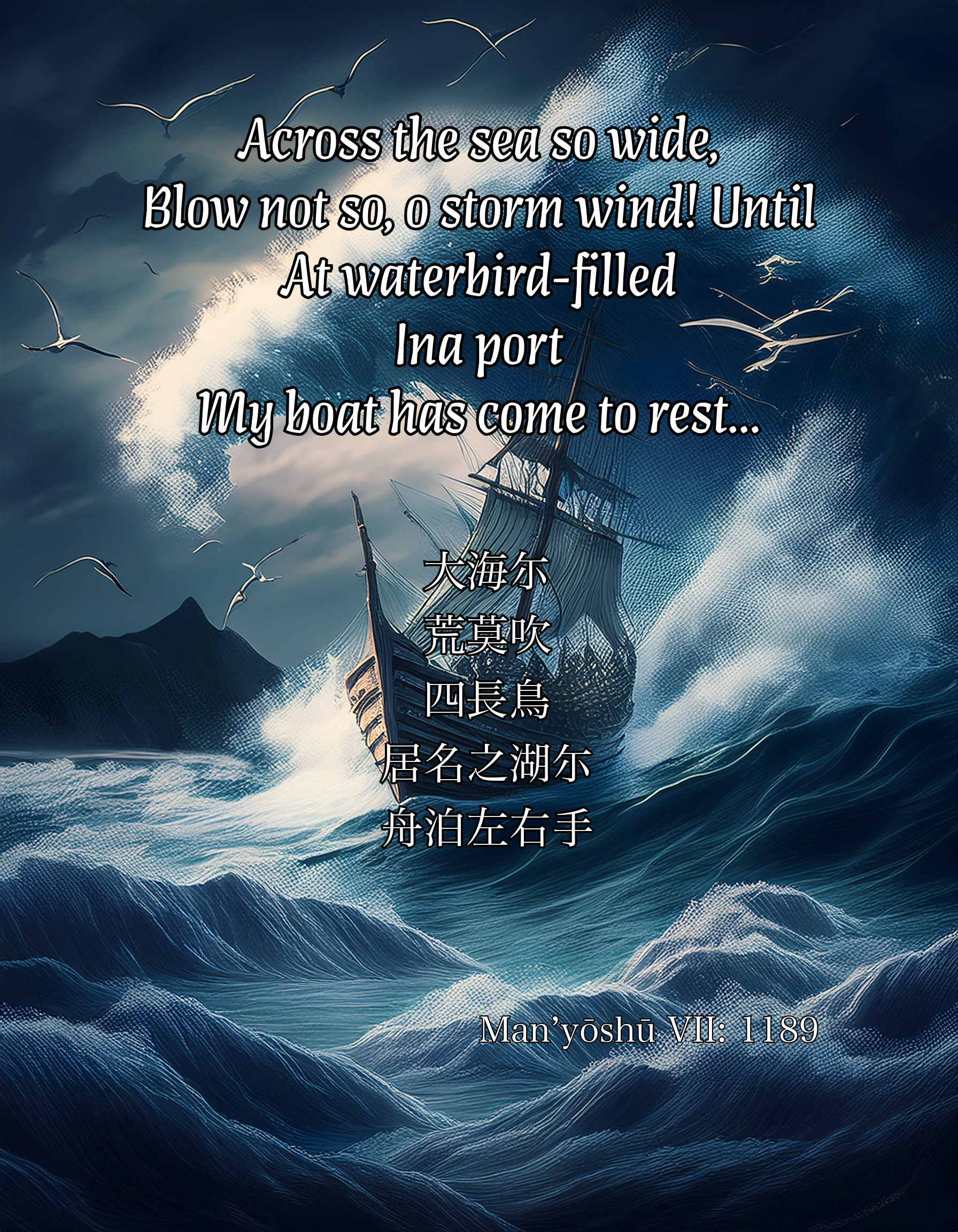
A poem from Michinoku.
みちのくはいづくはあれどしほがまの浦こぐ舟のつなでかなしも
| mitinoku Fa iduku Fa aredo siFogama no ura kogu Fune no tunade kanasi mo | O, Michinoku, This may be true elsewhere, too, but At Shiogama Bay, a rowing boat’s Hawsers move me most! |
Anonymous
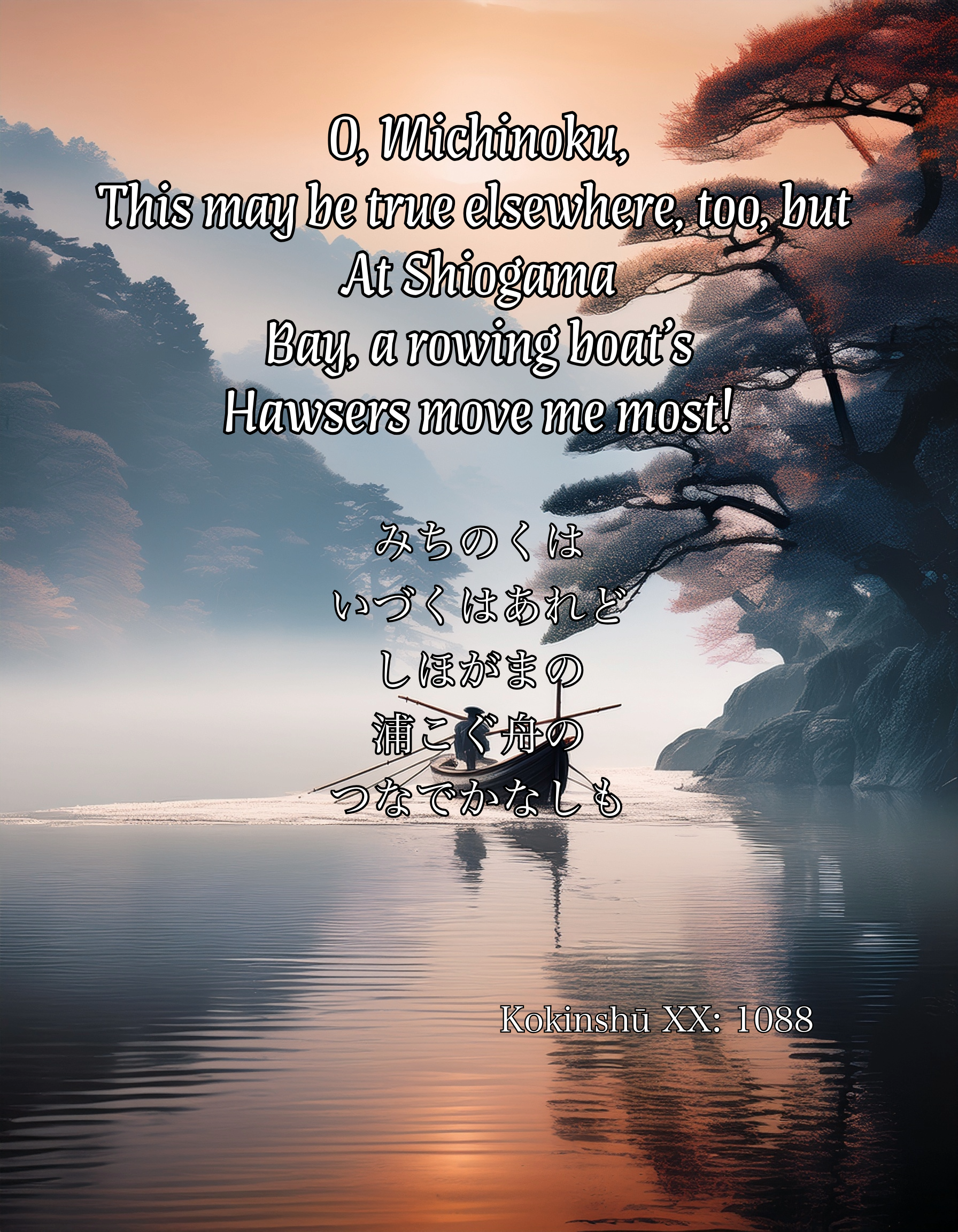
Lodging on a journey.
みなと風いたくな吹きそしながどりゐなの水うみに船とむるまで
| minato kaze itaku na fuki so shinagatori ina no mizu’umi ni fune tomuru made | O, harbour breeze Blow not so strongly! Until At waterbird-filled Ina Lake The ferry has made port…[i] |
570
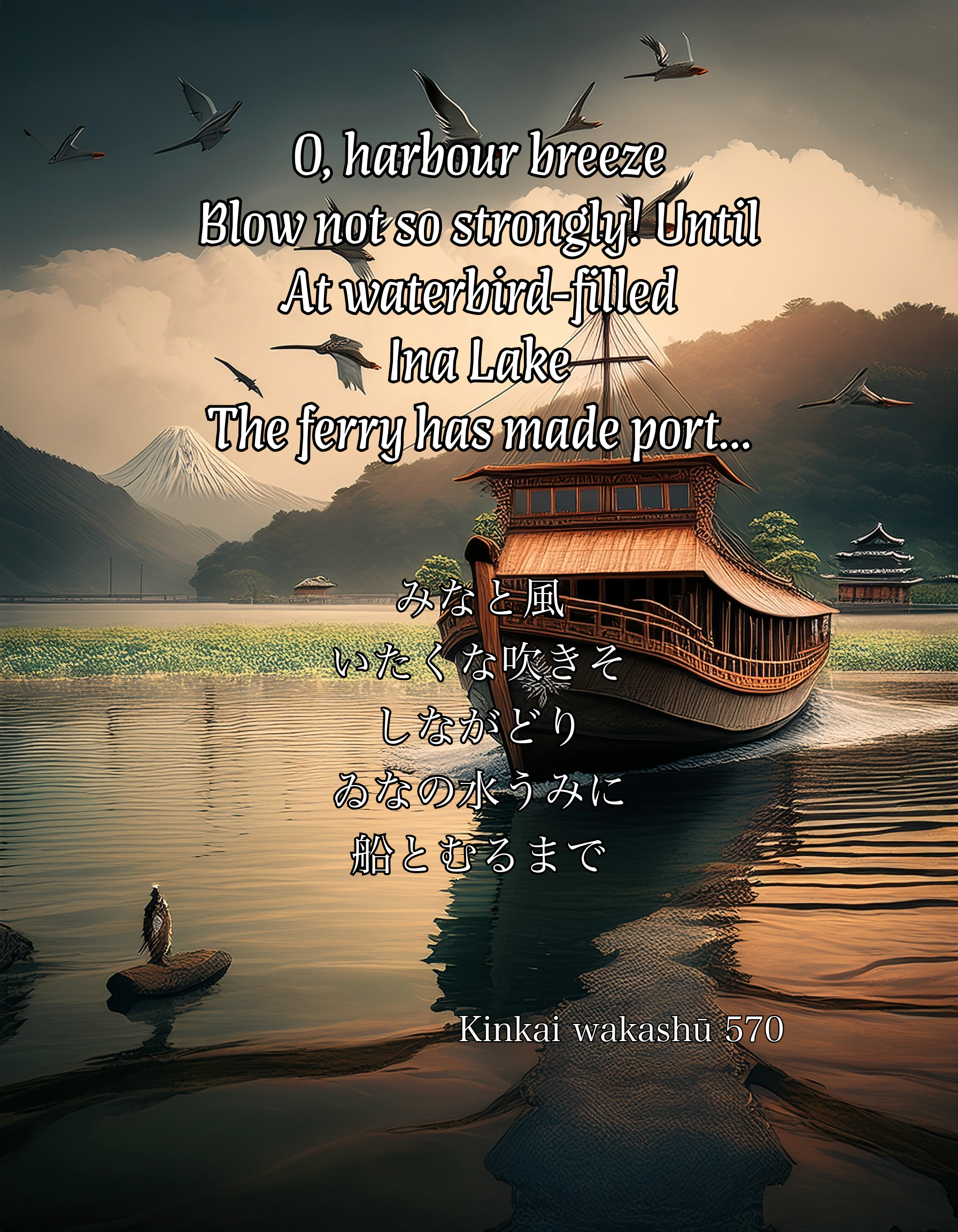
[i] See: 大海尓 荒莫吹 四長鳥 居名之湖尓 舟泊左右手 ōki umi ni/ arashi na fuki so / shinagatori / ina no minato ni / fune hatsuru made ‘Across the sea so wide, / Blow not so, o storm wind! Until / At waterbird-filled / Ina port / My boat has come to rest…’ (Man’yōshū VII: 1189)
Round Thirteen
Left (Tie)
われもいかでよにながらへてすみよしのまつのちとせのゆくすゑもみむ
| ware mo ikade yo ni nagaraete sumiyoshi no matsu no chitose no yukusue mo mimu | Somehow, I, too, Would endure in this world, that Sumiyoshi’s Pine’s thousand years End I would see! |
Masahira
125
Right
たとへけむなみはわがみにあらはれぬこぎゆくふねのあとはほかかは
| tatoekemu nami wa wagami ni arawarenu kogiyuku fune no ato wa hoka ka wa | Might I compare The waves, which on my sorry self Have made their mark, with A boat rowing out, leaving A wake, or if not that then what? [1] |
Chikashige
126
The Left seems to be imagining something very unrealistic. The Right has the poem ‘To what should I compare it? / Just as dawn is breaking’ in mind, and appears to have the charming conception of sorrowing over the face of Grand Duke Jiang appearing in the waves on the Wei River, but ‘if not that then what?’ sounds a bit overblown. With that being said, the Left feels like a plea for good fortune, and the Right evokes impermanence. The matters are only distantly connected, and thus in terms of faults and merits they are equal.


[1] An allusive variation on: Topic unknown. 世の中をなににたとへむあさぼらけこぎゆく舟のあとのしら浪 yo no naka o / nani ni tatoemu / asaborake / kogiyuku fune no / ato no shiranami ‘This mundane world: / To what should I compare it? / Just as dawn is breaking, / A boat rows out / Whitecaps in its wake.’ Novice Mansei (SIS XX: 1327)
When His Majesty’s gentlemen were composing poems on love and the wind, during the reign of former emperor Toba.
おひかぜに八重のしほぢをこぐ舟のほのかにだにもあひみてしかな
| oikaze ni yae no shioji o kogu fune no honoka ni dani mo aimiteshi kana | The pursuing wind Tracks ‘cross eightfold tidal paths To reach the boat a’rowing out, Its sails, so distant, but Even a glimpse of you would do! |
Supernumerary Middle Counsellor Morotoki
Left (Tie)
あふことのいまはかたほになるふねのかざままつ身はよるかたもなし
| au koto no ima wa katao ni naru fune no kazama matsu mi wa yoru kata mo nashi | Meeting you has made me Now a reef-sailed Boat Awaiting the wind, with No course to set. |
33
Right
ねでまちしはつかのつきのはつかにもあひみしことをいつかわすれむ
| nede machishi hatsuka no tsuki no hatsuka ni mo aimishi koto o itsuka wasuremu | Sleepless I awaited The twentieth night’s moon, when In the dimness We did meet— When might I forget it? |
34
A poem on Mount Kagu by Kamo no Taruhito.
天之芳来山 霞立 春尓至婆 松風尓 池浪立而 櫻花 木乃晩茂尓 奥邊波 鴨妻喚 邊津方尓 味村左和伎 百礒城之 大宮人乃 退出而 遊船尓波 梶棹毛 無而不樂毛 己具人奈四二
天降りつく 天の香具山 霞立つ 春に至れば 松風に 池波立ちて 桜花 木の暗茂に 沖辺には 鴨妻呼ばひ 辺つ辺に あぢ群騒き ももしきの 大宮人の 退り出て 遊ぶ船には 楫棹も なくて寂しも 漕ぐ人なしに
| amorituku ame no kaguyama kiri tatu paru ni itareba matukaze ni ikenami tatite sakurabana ko no kuresige ni okipe ni pa kamo tuma yobapi petupe ni adi murasawagi momosiki no opomiyabito no makaridete asobu pune ni pa kadisawo mo nakute sabusi mo kogu pito nasi ni | Descended from heaven is Sacred Mount Kagu where Mists arise When the spring does come, The wind through the pines Raises waves from pond waters, and Cherry blossom’s Profusion shades the trees, while Out in the offing, Ducks call for a mate and On the shore Teals flock noisily; Hundredfold, The palace folk were wont to Travel out On pleasure boats, but Oars and poles Are there none—so sad— For there’s not a soul to row them… |