fujibakama kitemiru hito mo naki yado ni koisu chō na no ikade tachiken
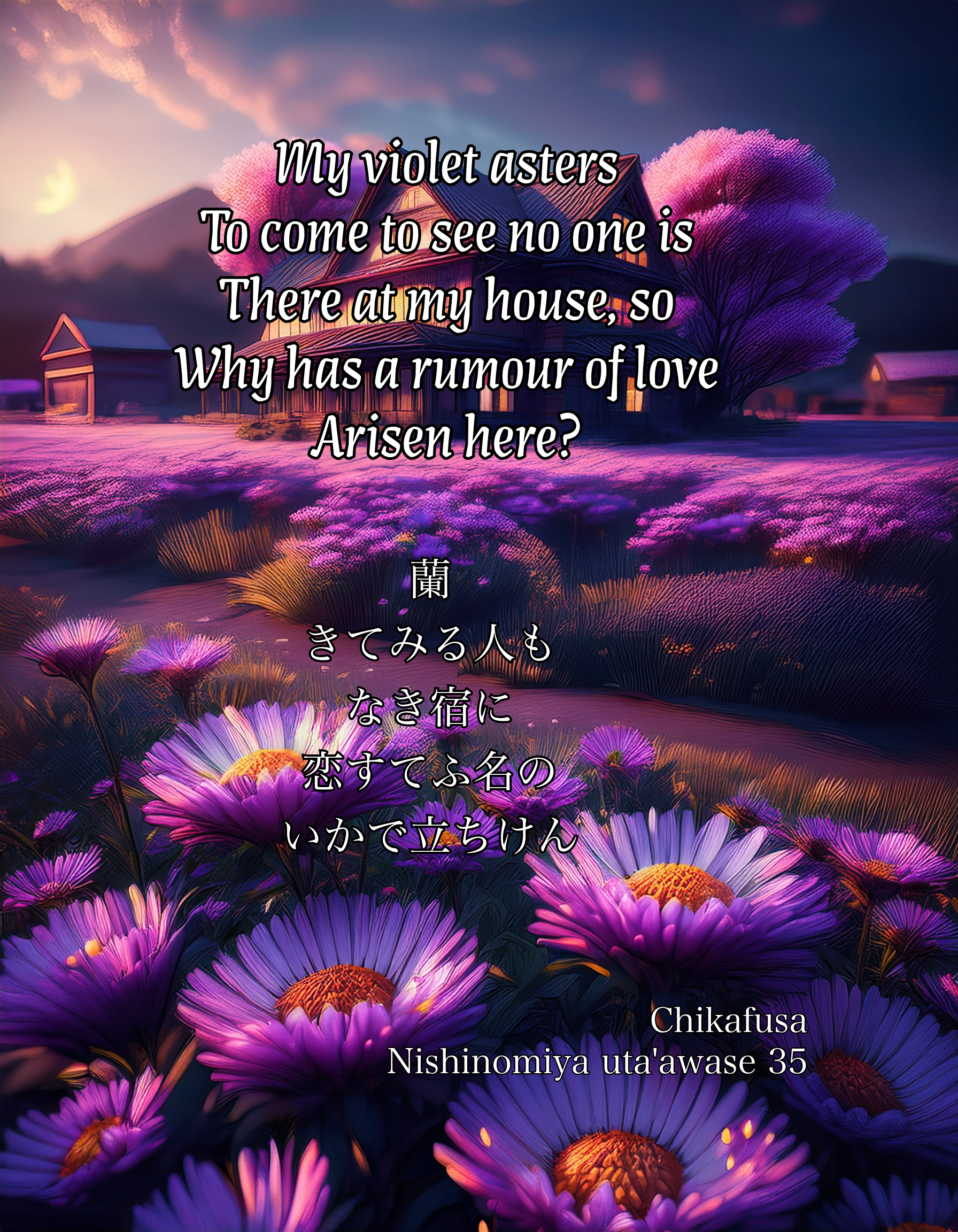
My violet asters To come to see no one is There at my house, so Why has a rumour of love Arisen here?
Chikafusa 35
Right
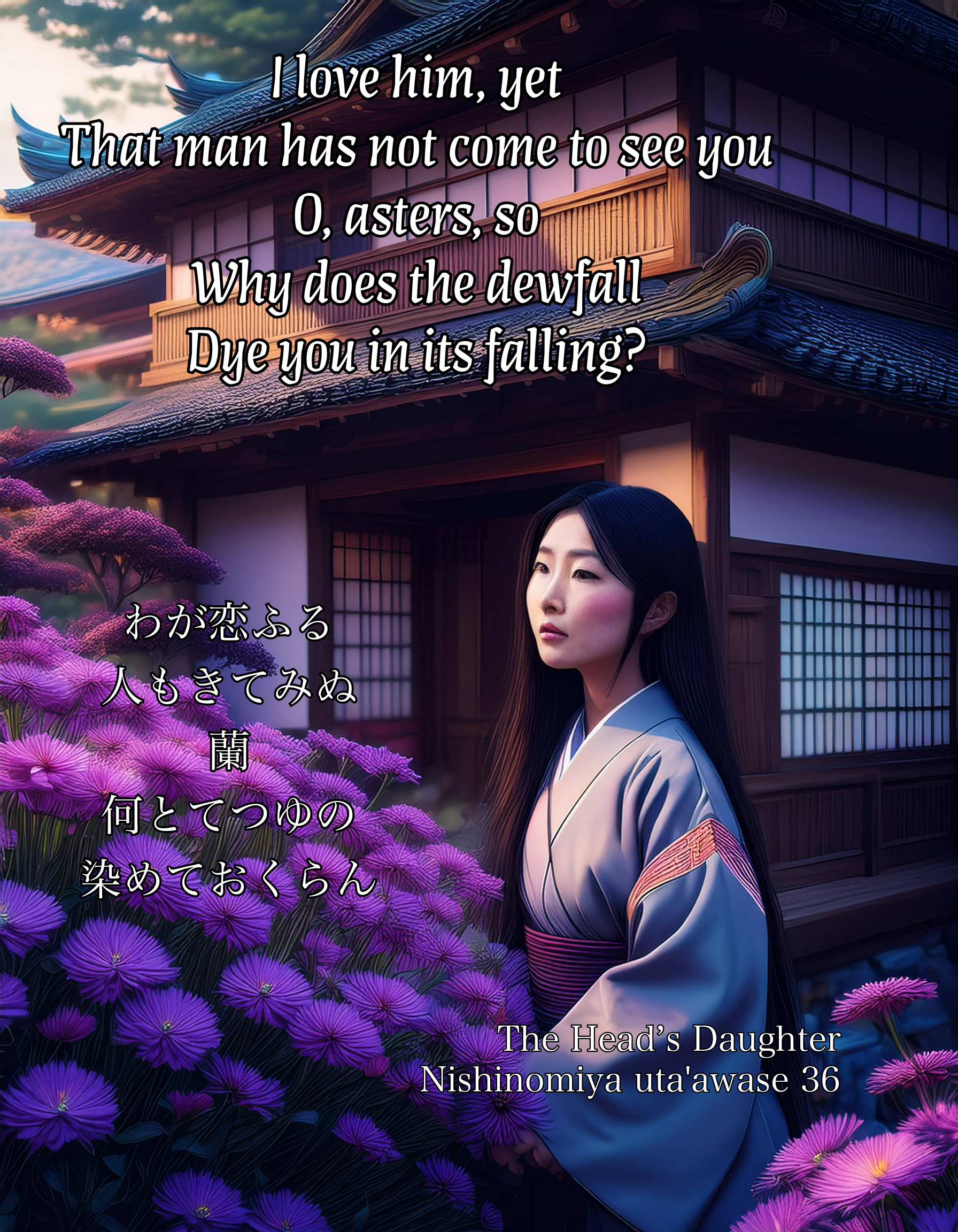
わが恋ふる人もきてみぬ蘭何とてつゆの染めておくらん
wa ga kouru hito mo kiteminu fujibakama nani tote tsuyu no somete’okuran
I love him, yet That man has not come to see you O, asters, so Why does the dewfall Dye you in its falling?
The Head’s Daughter 36
The Left’s overall impression is not bad, but I am curious about why a rumour of love should darken the door of a house, if it’s one where ‘no one comes to see’. Then, the Right uses ‘Why does the dewfall / Dye you in its falling?’—this seems like an excessive use of diction and the sequencing doesn’t sound smooth, so these seem of about the same standard.
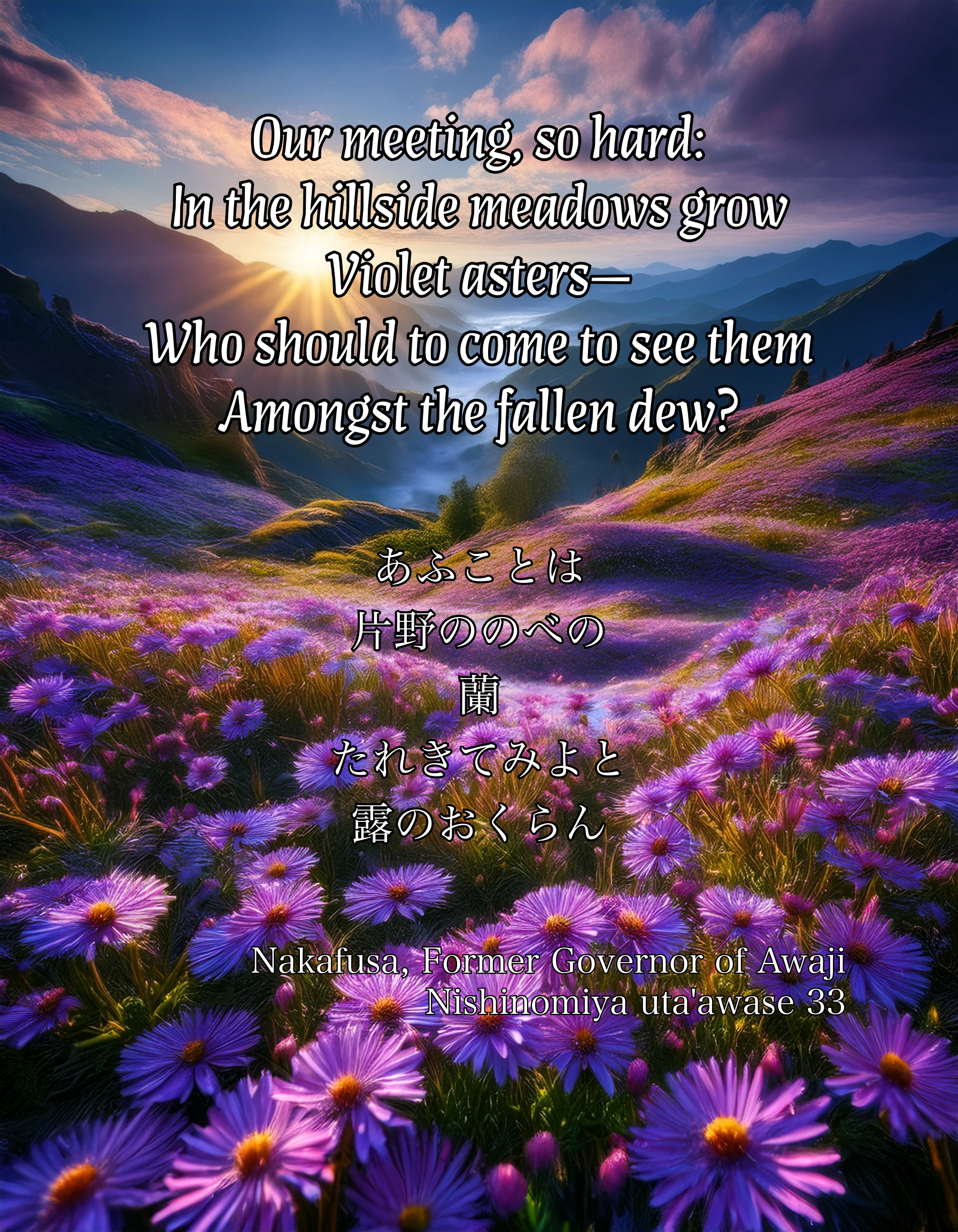
au koto wa katano no nobe no fujibakama tare kitemiyo to tsuyu no okuran
Our meeting, so hard: In the hillside meadows grow Violet asters— Who should to come to see them Amongst the fallen dew?
Nakafusa, Former Governor of Awaji 33
Right
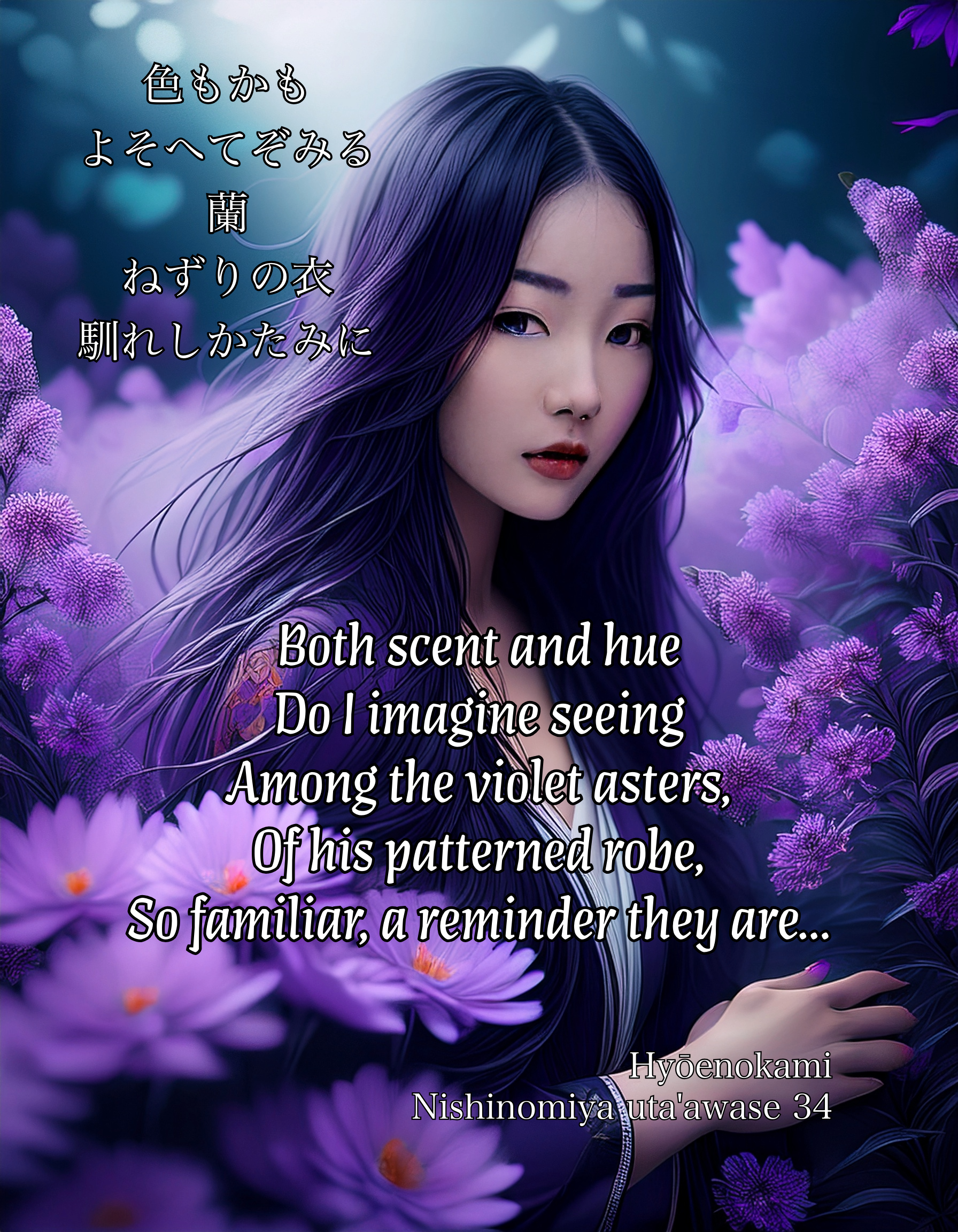
色もかもよそへてぞみる蘭ねずりの衣馴れしかたみに
iro mo ka mo yosoete zo miru fujibakama nezuri no koromo nareshi katami ni
Both scent and hue Do I imagine seeing Among the violet asters, Of his patterned robe, So familiar, a reminder they are…
Hyōenokami 34
These poems, both Left and Right, appear to be of about the same quality, but while I am familiar with robes patterned with purple gromwell, I do wonder what it is that is patterning the robes here. Is the poet composing on asters imagining them to be gromwell? Even if that’s the case, the conception is not particularly apparent, so I have to say that the Left is better.
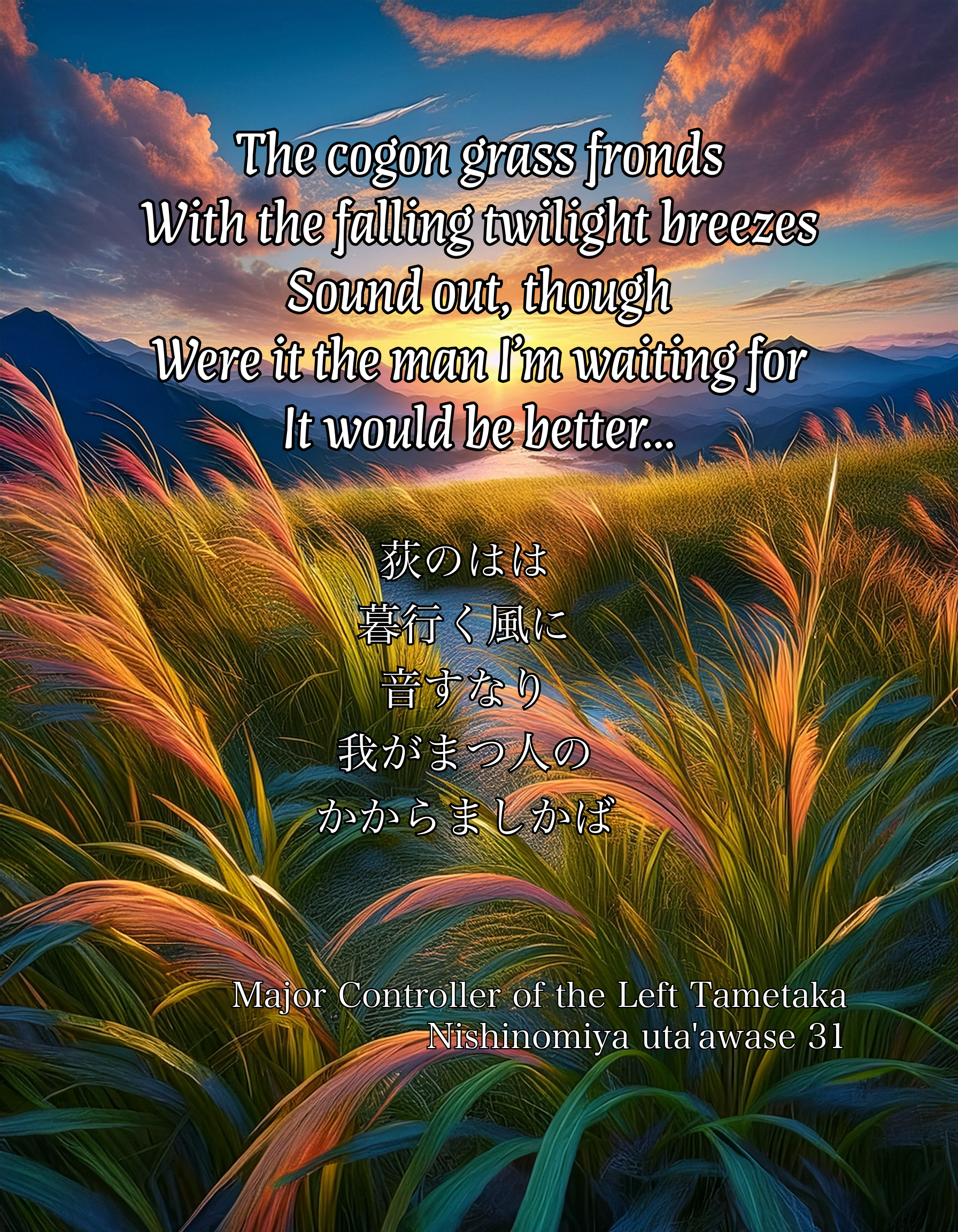
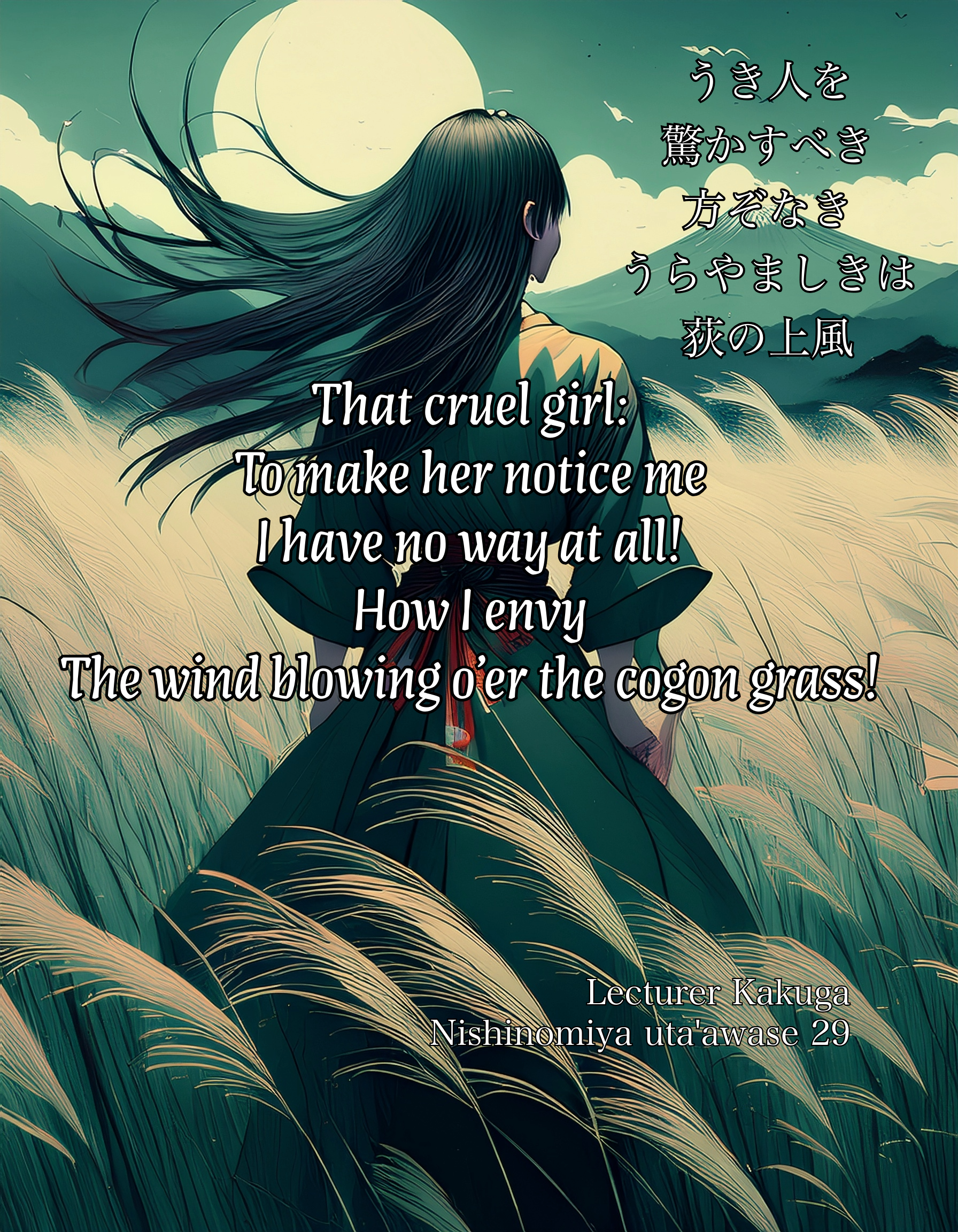
ogi no ha wa kureyuku kaze ni otosu nari wa ga matsu hito no kakaramashikaba
The cogon grass fronds With the falling twilight breezes Sound out, though Were it the man I’m waiting for It would be better…
Major Controller of the Left Tametaka 31
Right
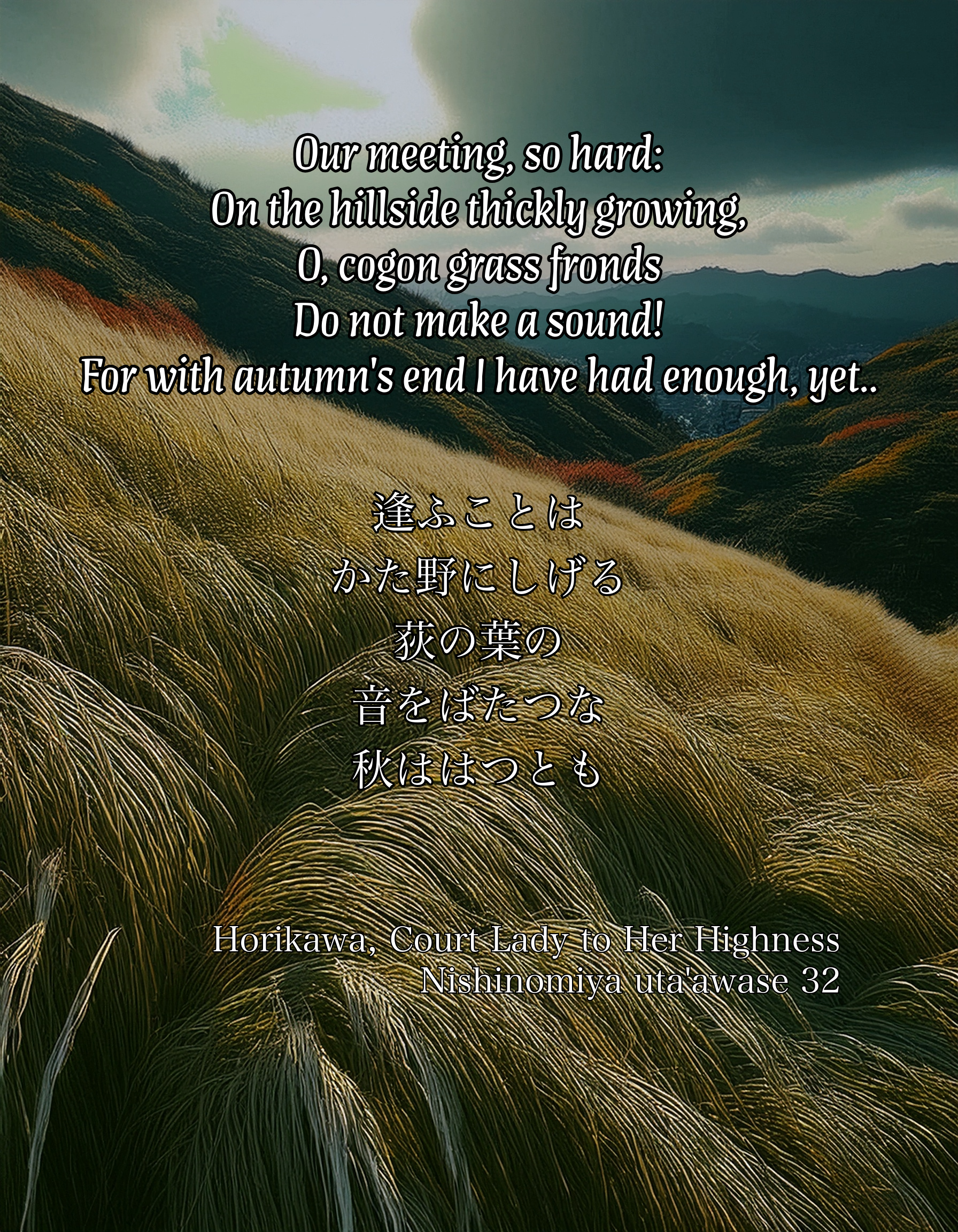
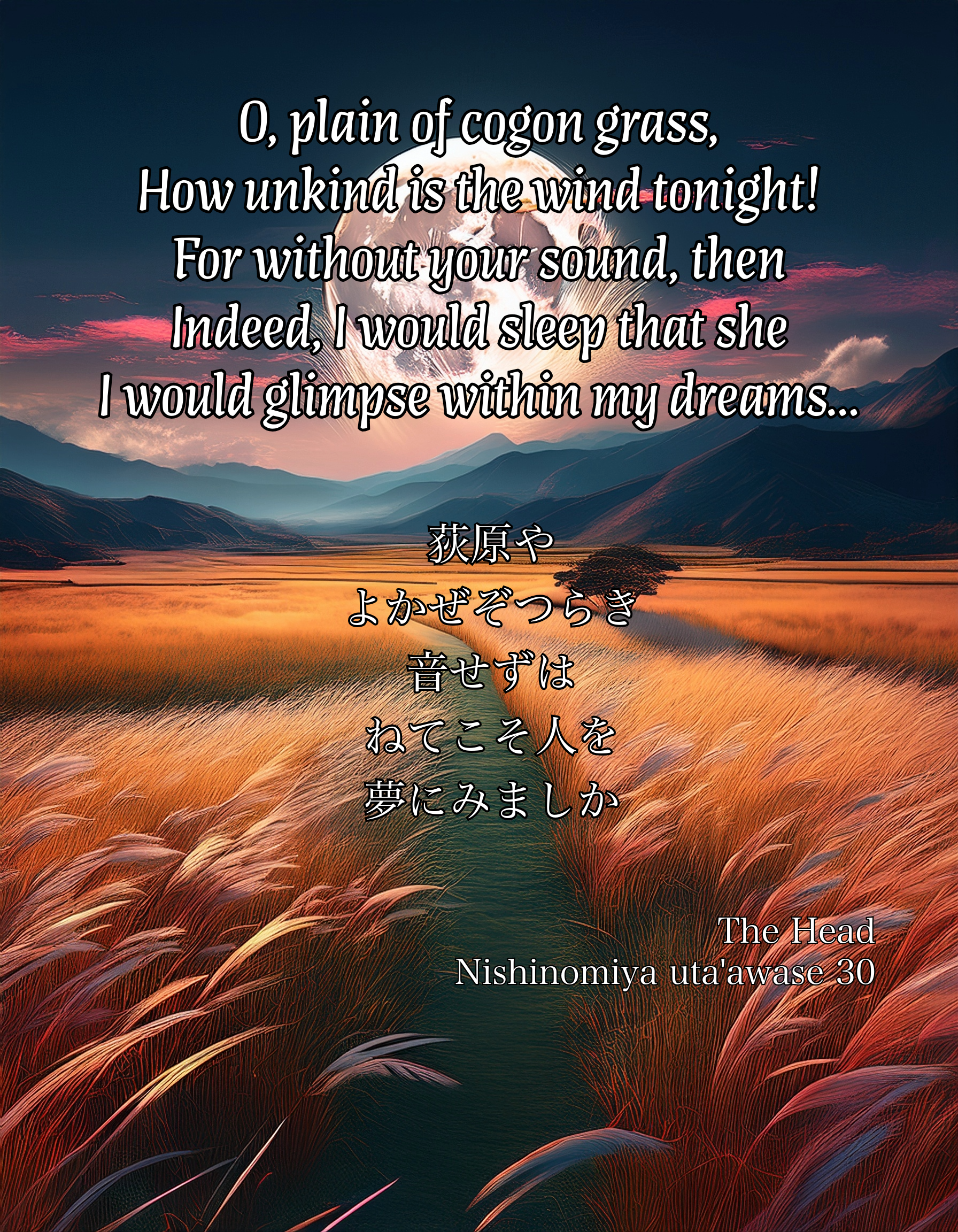
逢ふことはかた野にしげる荻の葉の音をばたつな秋ははつとも
au koto wa katano ni shigeru ogi no ha no oto oba tatsu na aki wa hatsu tomo
Our meeting, so hard: On the hillside thickly growing, O, cogon grass fronds Do not make a sound! For with autumn’s end I have had enough, yet..
Horikawa, Court Lady to Her Highness 32
I feel that the emotions encompassed by the sound of the wind in ‘Were it the man I’m waiting for / It would be better’ sounded more striking than ‘On the hillside thickly growing, / O, cogon grass fronds’.
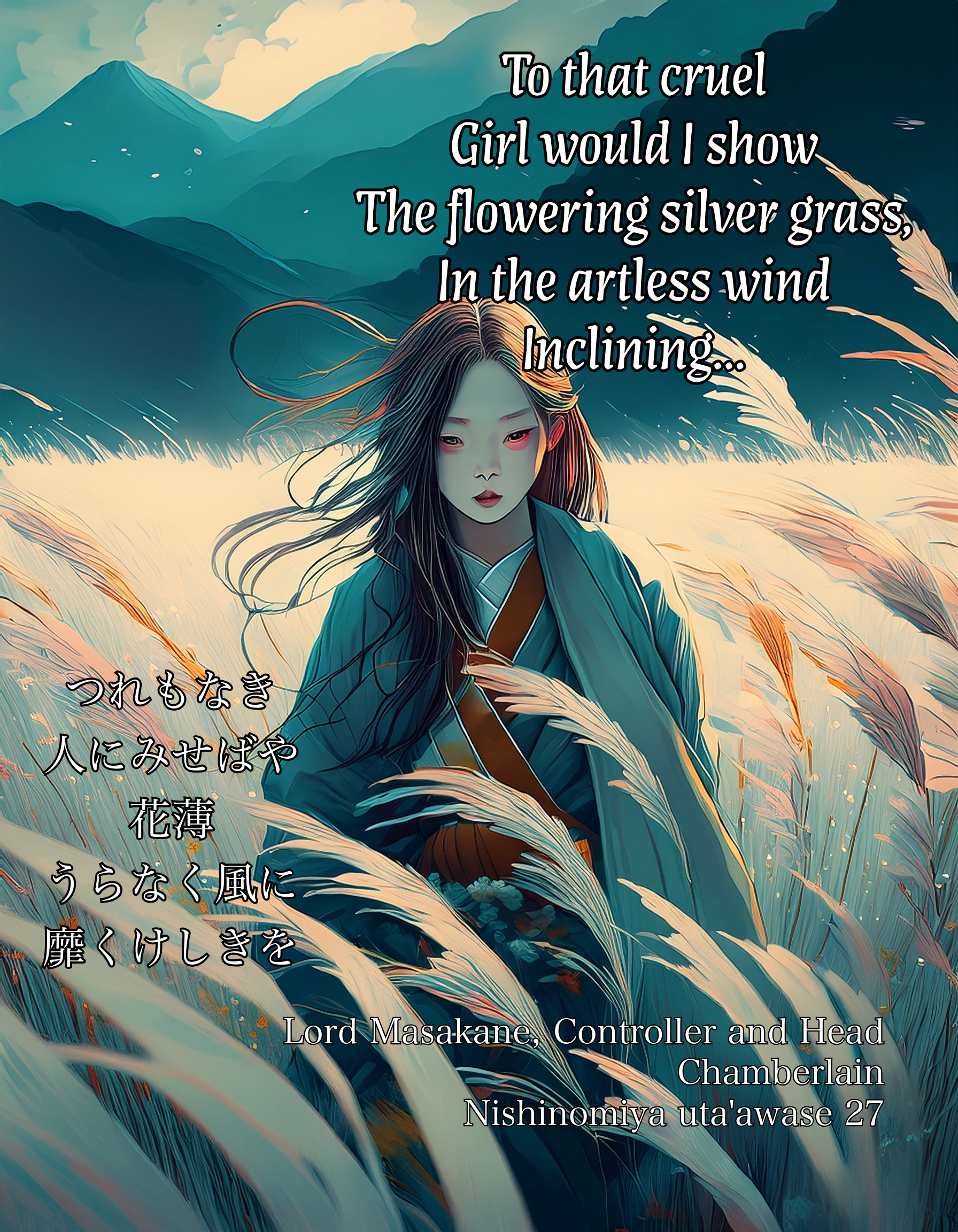
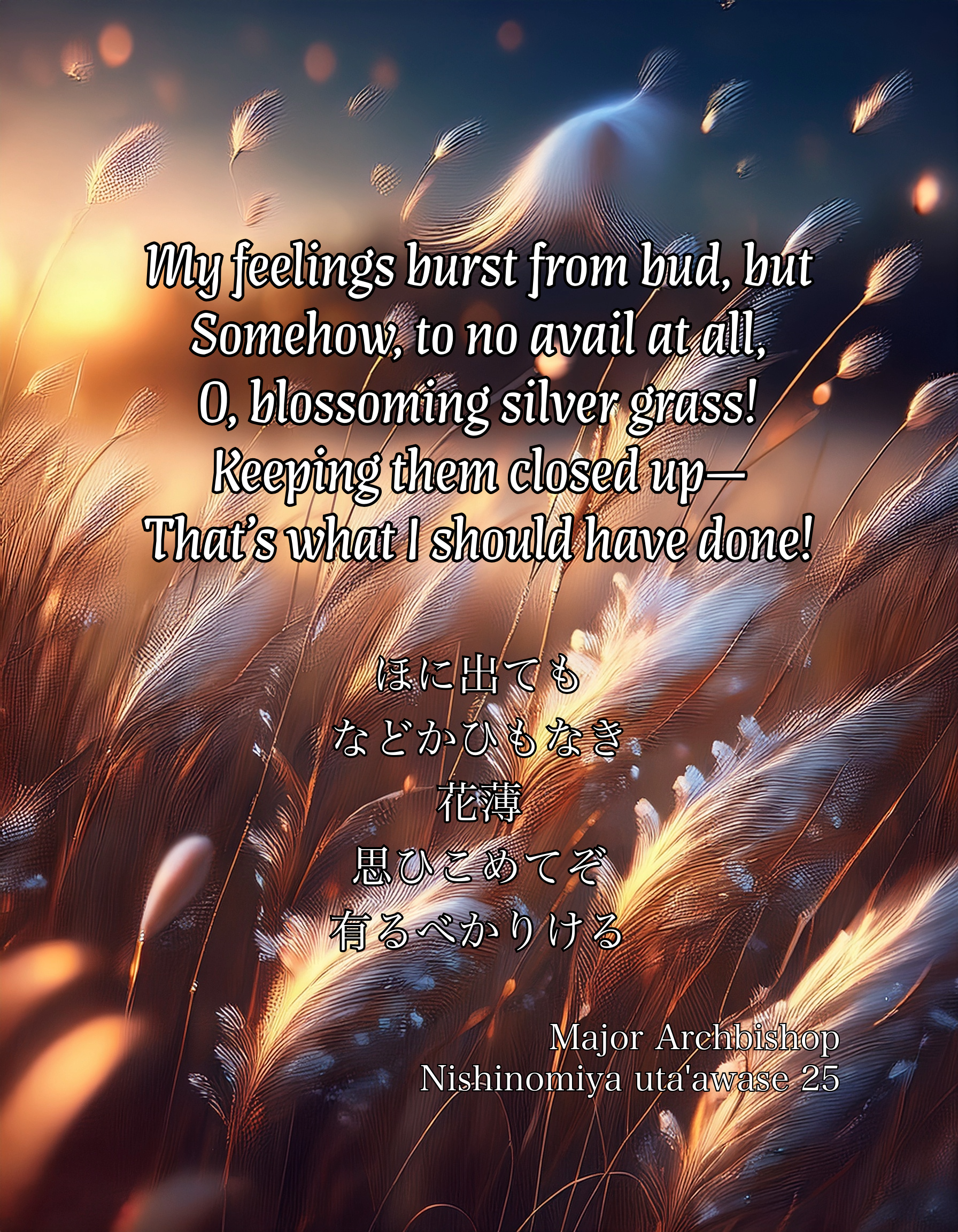
tsure mo naki hito ni miseba ya hanasusuki uranaku kaze ni nabiku keshiki o
To that cruel Girl would I show The flowering silver grass, In the artless wind Inclining…
Lord Masakane, Controller and Head Chamberlain 27
Right
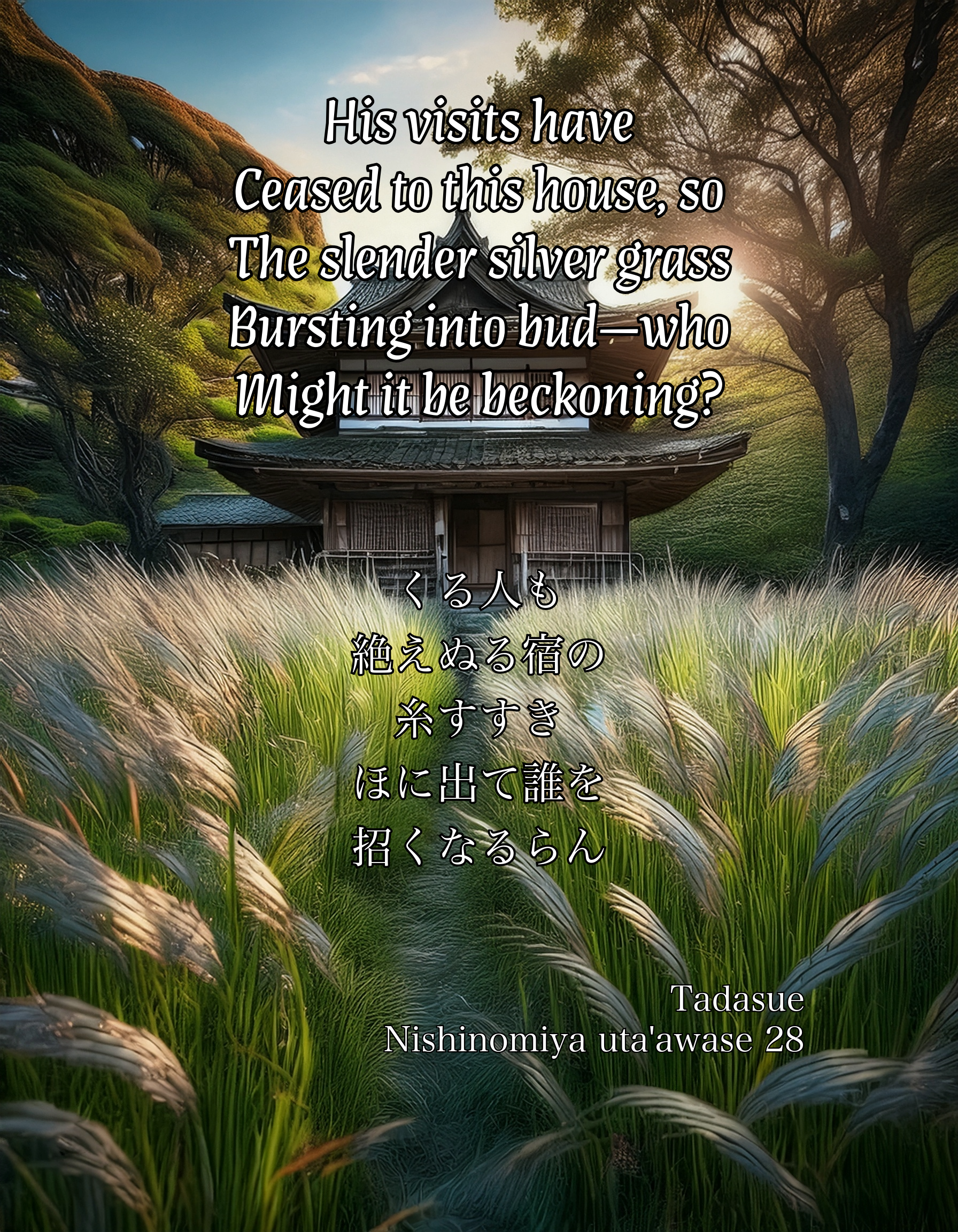
くる人も絶えぬる宿の糸すすきほに出て誰を招くなるらん
kuru hito mo taenuru yado no itosusuki ho ni idete tare o maneku naruran
His visits have Ceased to this house, so The slender silver grass Bursting into bud—who Might it be beckoning?
Tadasue 28
The Left’s poem, up to ‘would I show’ is poetic, but I do not feel that the expression ‘In the artless wind / Inclining’ is elegant. For the topic of love, it seems to me that both the beginning and the end of the poem is a slight case of ‘As a bamboo stalk / Has joints, from years gone by old-fashioned phrases’ lingering! The Right’s ‘Ceased to this house, so / The slender silver grass’ lacks anything remarkable about it, and seems excessively overgrown, so it’s impossible to decide on anyone as the winner or loser here.
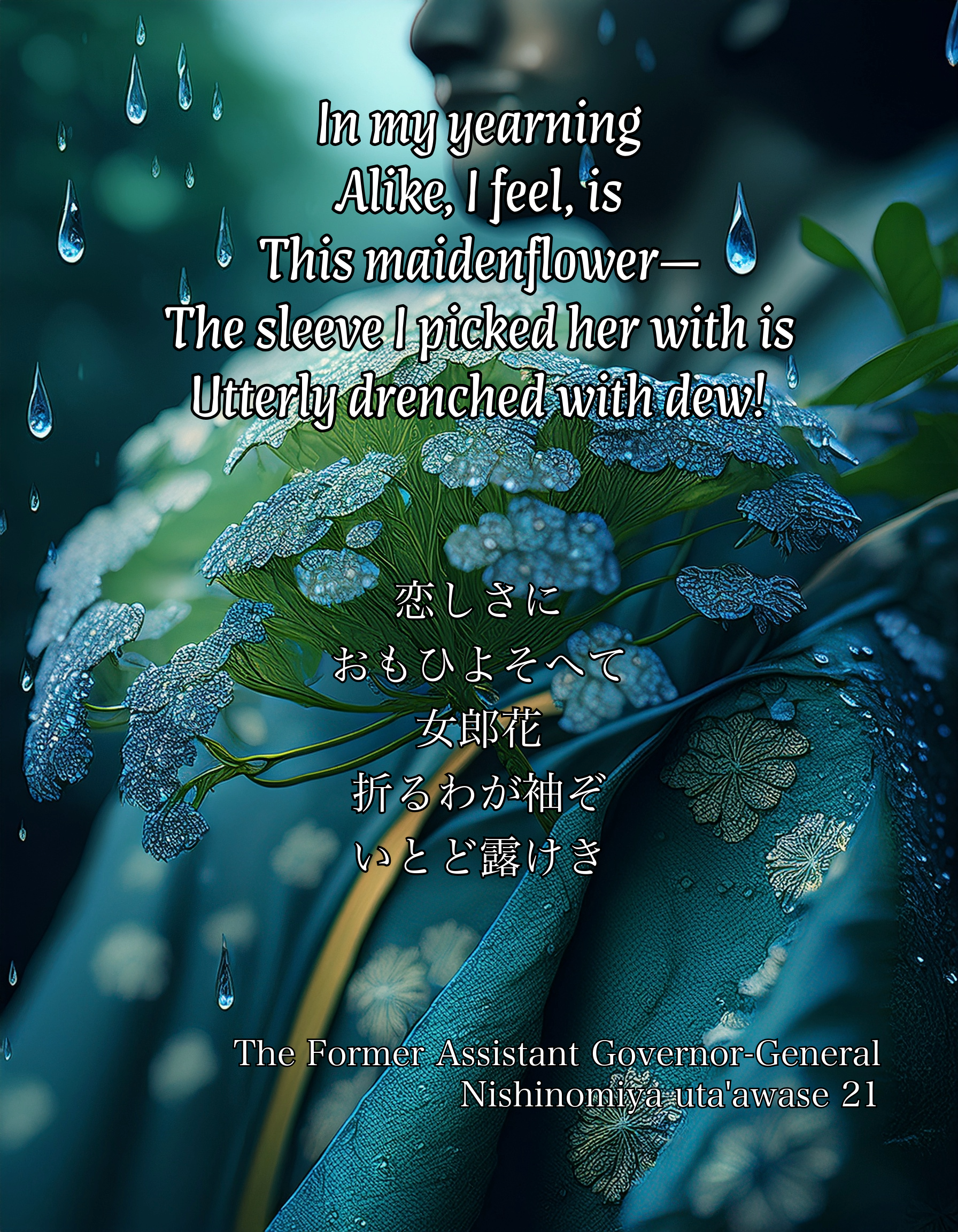
koishisa ni omoi’yosoete ominaeshi oru wa ga sode zo itodo tsuyukeki
In my yearning Alike, I feel, is This maidenflower— The sleeve I picked her with is Utterly drenched with dew!
The Former Assistant Governor-General 21
Right
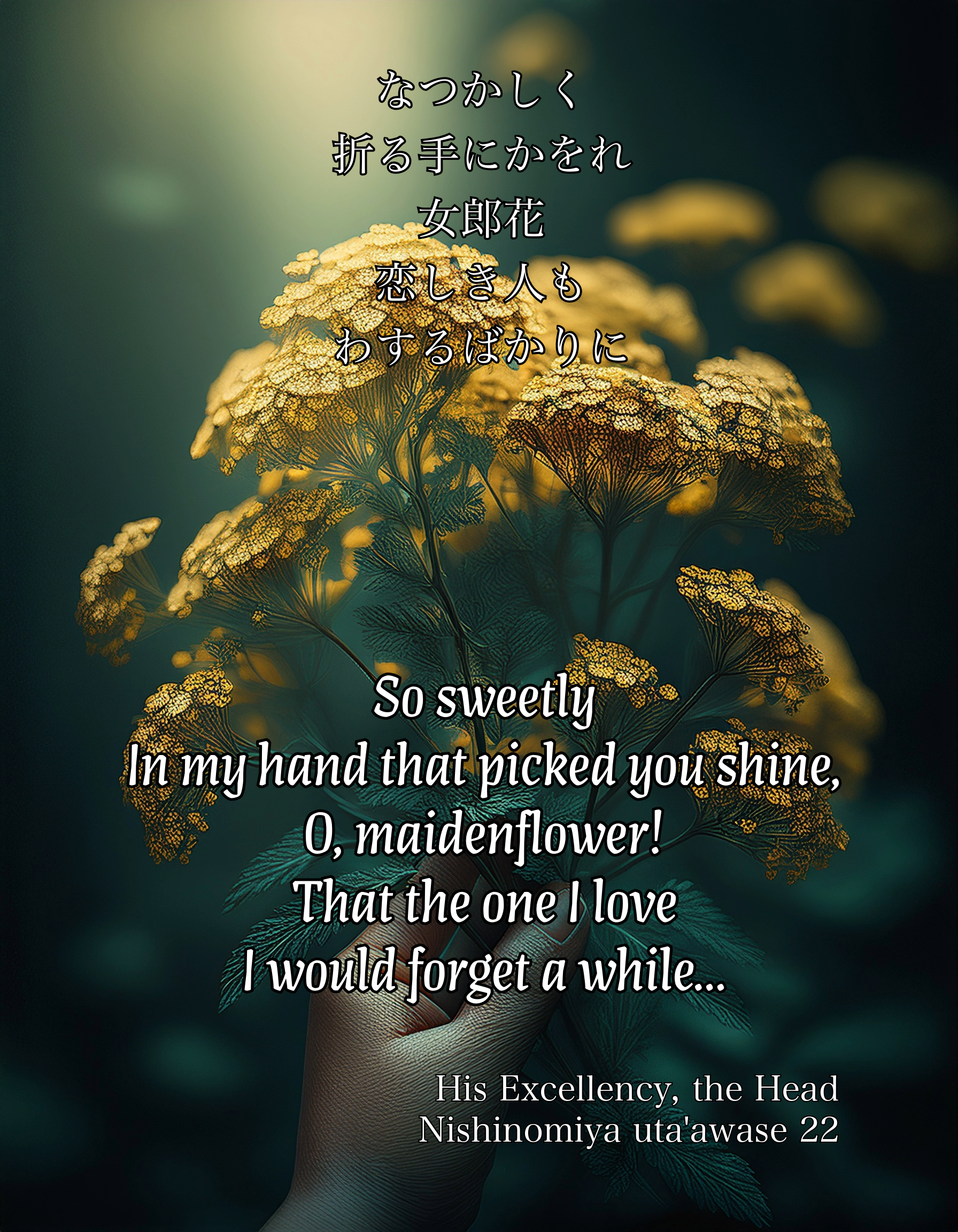
なつかしく折る手にかをれ女郎花恋しき人もわするばかりに
natsukashiku oru te ni kaore ominaeshi koishiki hito mo wasuru bakari ni
So sweetly In my hand that picked you shine, O, maidenflower! That the one I love I would forget a while…
His Excellency, the Head 22
The Left’s ‘sleeve I picked her with is / Utterly drenched with dew’ is a form of words entirely in tune with the topic—it appears charmingly exactly how a poem in a poetry match should be. Then the Right expresses as somewhat shallow and unreliable conception of love that might be forgotten in the face of the shine of a maidenflower picked and held in the hand. Thus, I feel the dew-drenched sleeves are superior here, aren’t they.
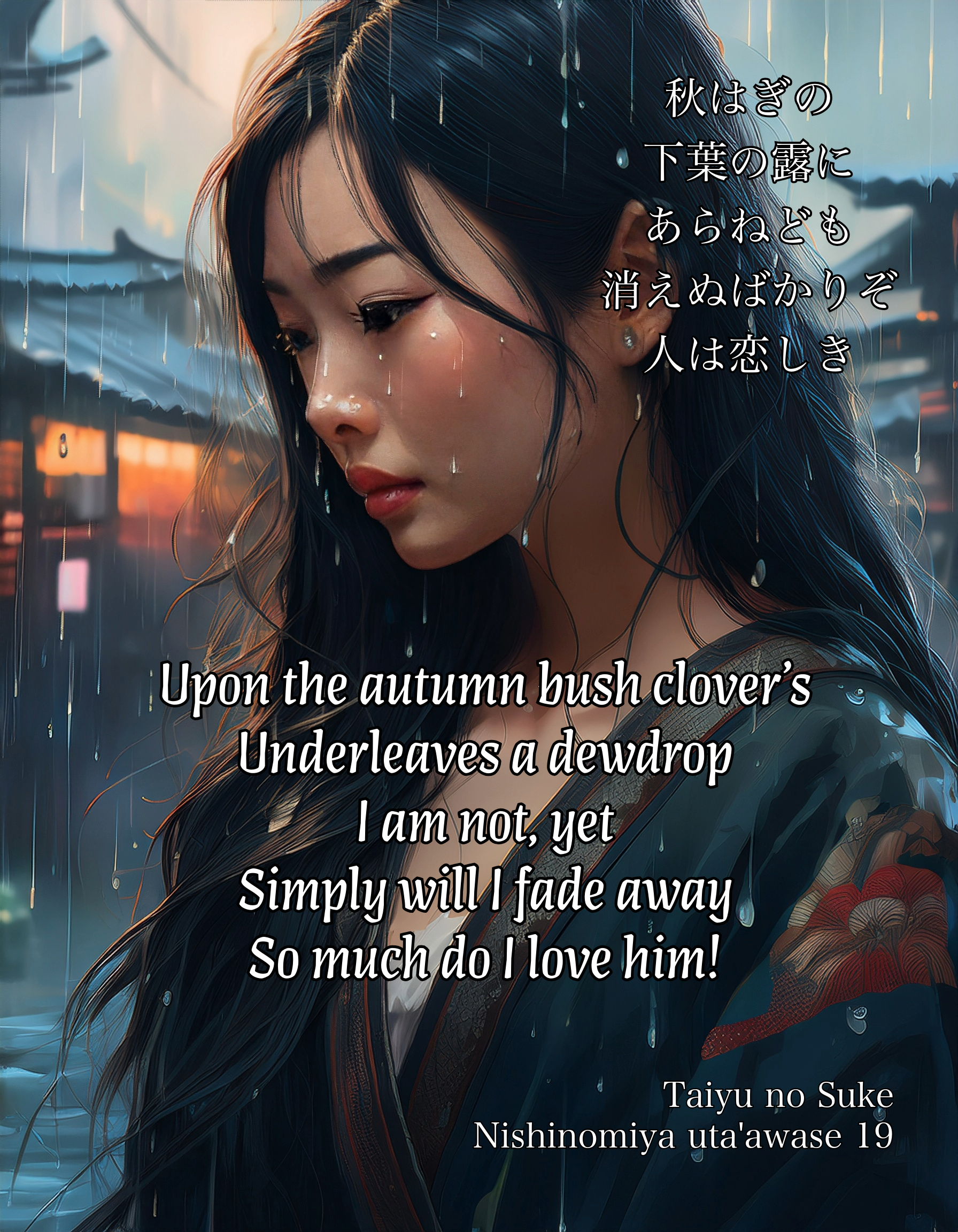
akihagi no shitaba no tsuyu ni aranedomo kienu bakari zo hito wa koishiki
Upon the autumn bush clover’s Underleaves a dewdrop I am not, yet Simply will I fade away So much do I love him!
Taiyu no Suke 19
Right
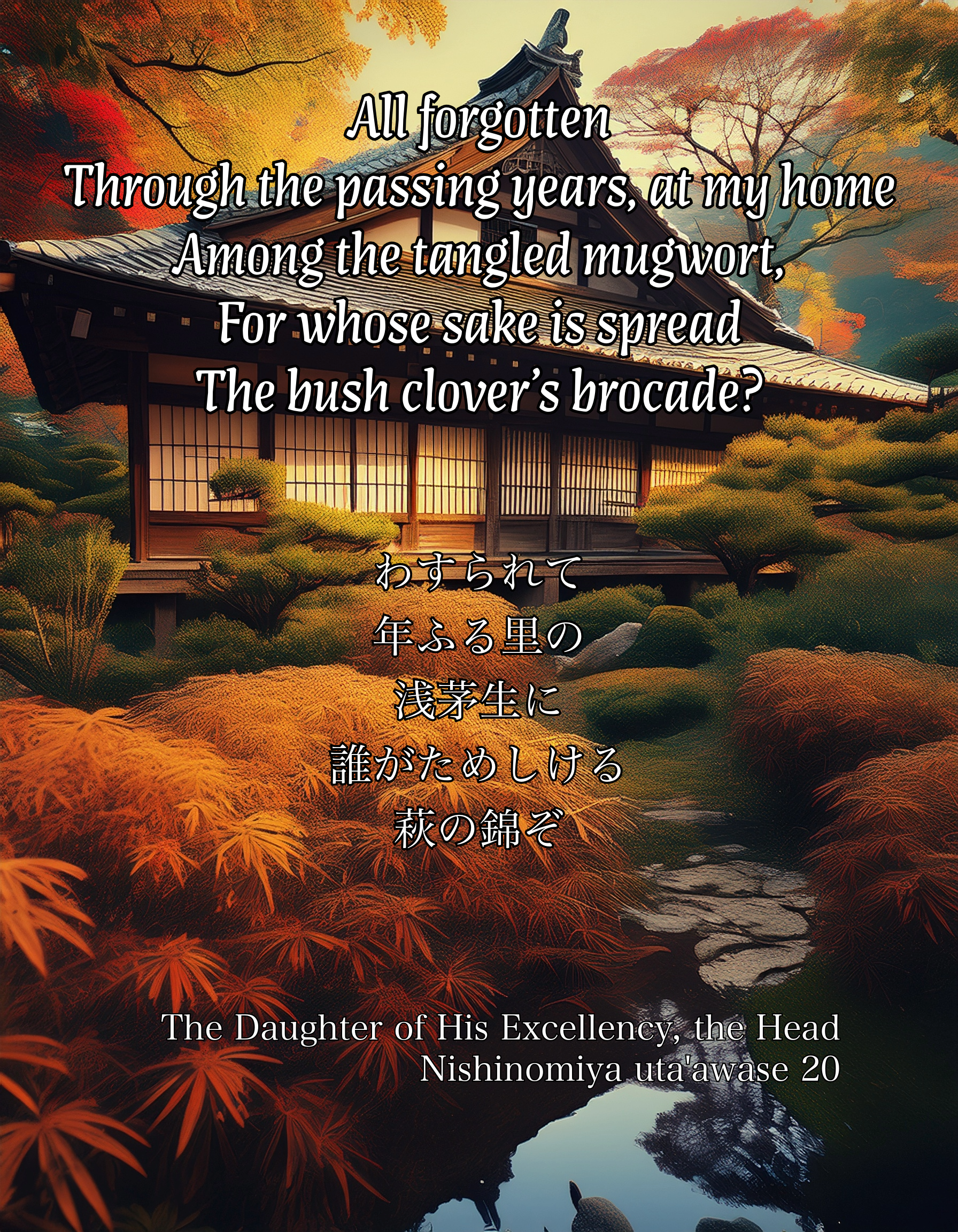
わすられて年ふる里の浅茅生に誰がためしける萩の錦ぞ
wasurarete toshi furu sato no asajū ni ta ga tame shikeru hagi no nishiki zo
All forgotten Through the passing years, at my home Among the tangled mugwort, For whose sake is spread The bush clover’s brocade?
The Daughter of His Excellency, the Head
20
I feel that the poem of the Left is conspicuously poetic, saying ‘Simply will I fade away / So much do I love him!’ while the poem of the Right’s ‘Through the passing years, at my home / Among the tangled mugwort, / For whose sake is spread / The bush clover’s brocade?’ makes me want to ask the bush clover the same question! The pull my heart in more than one direction, so here, too, I feel it’s not possible to decide on a winner or loser.