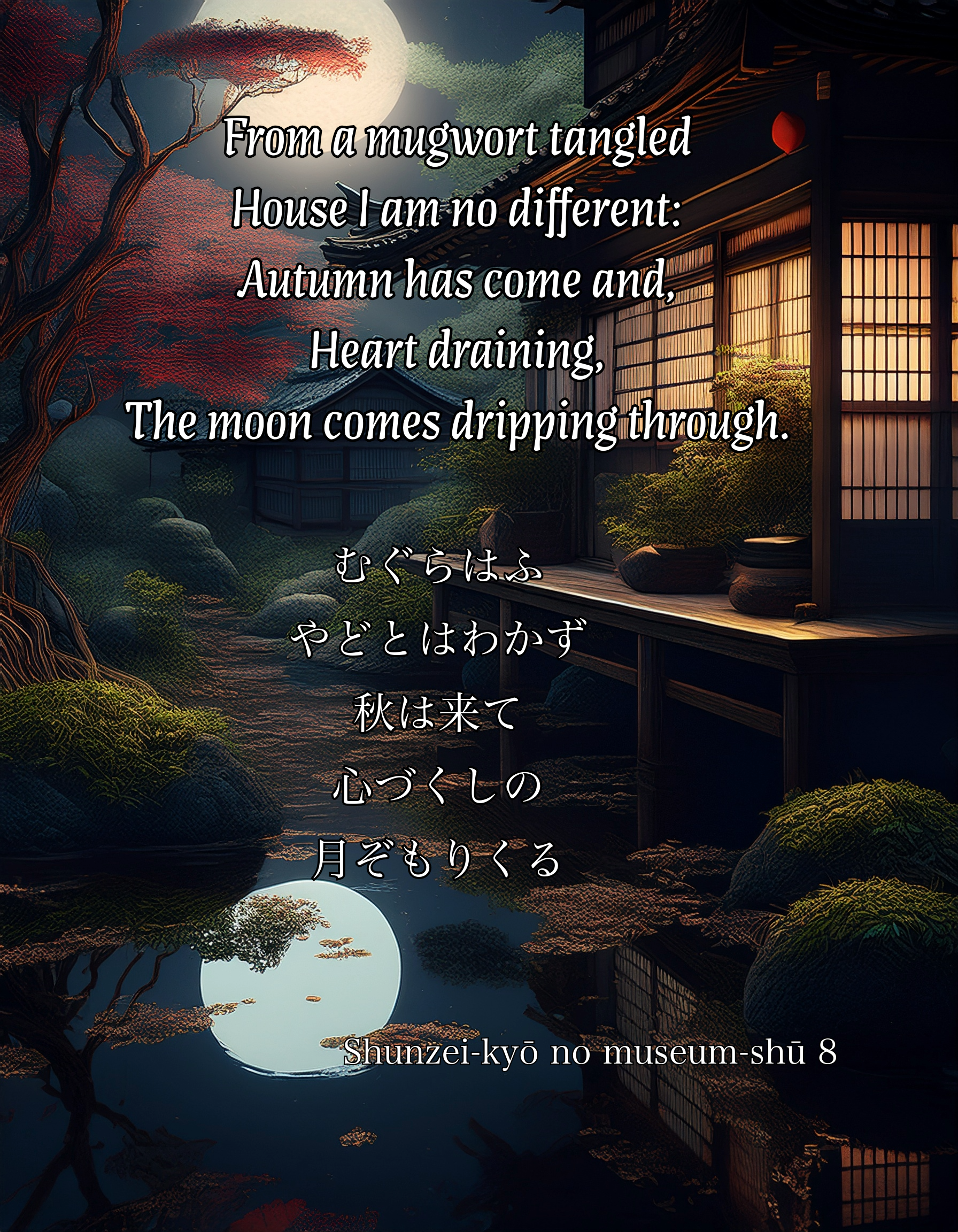
Autumn
むぐらはふやどとはわかず秋は来て心づくしの月ぞもりくる
mugura hau From a mugwort tangled [i]
8
[i] An allusive variation on: Topic unknown. このまよりもりくる月の影見れば心づくしの秋はきにけり ko no ma yori / morikuru tsuki no / kage mireba / kokorozukushi no / aki wa kinikeri ‘Between the trees / Drips moon / Light, seeing it I know / Heart draining / Autumn, has come at last.’ Anonymous (Kokinshū IV: 184
Round Nine: Quiet thoughts at Tanabata
Left
八重葎しげる軒ばをかき分けて星合の空をながめつるかな
yae mugura shigeru nokiba o kakiwakete hoshiai no sora o nagametsuru kana Eightfold thickets
Taira no Sadatsugu[1]
Right
七夕のあふよの程は思ひやる心さへこそ空にすみけれ
tanabata no au yo no hodo wa omoiyaru kokoro sae koso sora ni sumikere Tanabata is
Fujiwara no Kaneyuki[2]
[1] Taira no Sadatsugu 平貞継. The identity of this individual is unclear. This poem is his sole appearance in a poetry contest.
[2] 藤原兼行
Ancient Estates 故郷
むぐらはひよもぎがそまとあれはててふりにし里は人かげもせず
mugurahai Creepers crawl around
Higo
Ancient Estates 故郷
八重むぐらへだてつつふる故郷にいづくぞとだにとふ人もなし
yaemugura With eightfold layers of tangled creepers
Akinaka
山里の葎の垣に這ふ蔦の色にて秋の深きをぞ知る
yamazato no
Upon this moutain hut’s
Higo
On fresh growth by creepers: meeting at a meagre hut.
いも植て門は葎のわか葉哉
imo uete
Potatoes planted, and
(1688)
'Simply moving and elegant'