玉桙之 道去夫利尓 不思 妹乎相見而 恋比鴨
たまほこの みちゆきぶりに おもはぬに いもをあひみて こふるころかも
| tamapoko no mitiyukiburi ni omopanu ni imo wo apimite kopuru koro kamo | Jewelled-spear straight The road I travelled when Unexpectedly Did I meet a maiden– How I love her these days! |
When the autumn wind was blowing coldly, around the time his wife passed away.
思ひきや秋のよ風のさむけきにいもなきとこにひとりねむとは
| omoFiki ya aki no yokaze no samukeki ni imo naki toko ni Fitori nemu to Fa | How unexpected is The autumn night’s wind, So cold upon My bed where, without my darling I must sleep alone. |
Senior Assistant Governor General Kuni’akira

[One of] two poems composed to express his grief and sorrow by Kawabe no Miyahito when he saw the coffin of a young girl in the pine groves of Himeshima in Wadō 4 [711].
妹之名者 千代尓将流 姫嶋之 子松之末尓 蘿生万代尓
いもがなは ちよにながれむ ひめしまの こまつがうれに こけむすまでに
| imo ga na pa tiyo ni nagaremu pimesima no komatu ga ure ni kokemusu made ni | This maiden’s name Will drift down a thousand ages Until Himeshima’s Pine seedling shoots are Choked with hanging moss. |
Kawabe no Miyahito

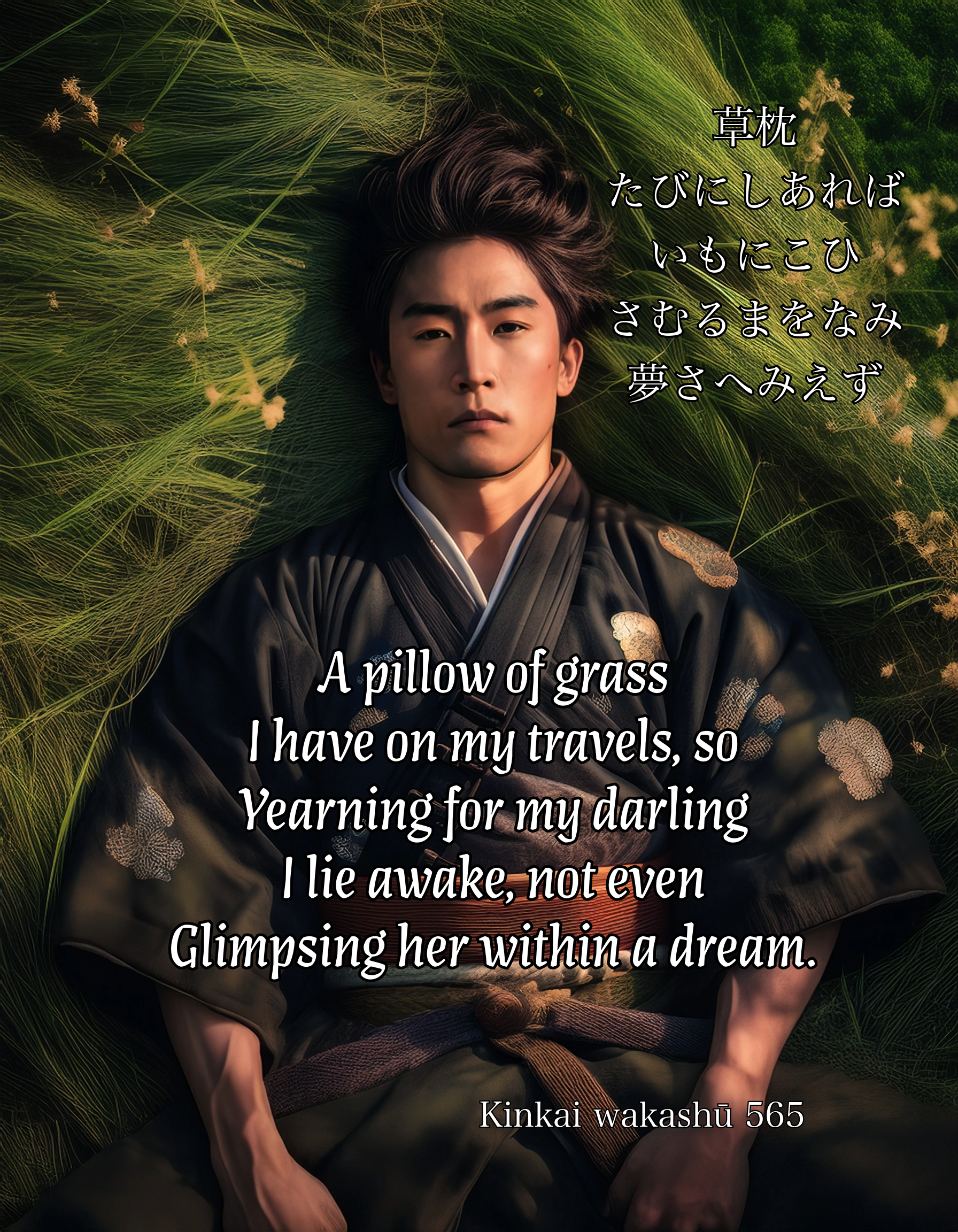
草枕たびにしあればいもにこひさむるまをなみ夢さへみえず
| kusamakura tabi ni shi areba imo ni koi samuru ma o nami yume sae miezu | A pillow of grass I have on my travels, so Yearning for my darling I lie awake, not even Glimpsing her within a dream.[i] |
565
[i] See: 家有者 笥尓盛飯乎 草枕 旅尓之有者 椎之葉尓盛 ie ni areba/ ke ni moru ii o / kusamakura / tabi ni shi areba / shii no ha ni moru ‘When I am at home / The pots are full of rice, but / Pillowed on the grass / On this journey now / Only the chinquapin leaves are plentiful…’ Prince Arima (Man’yōshū II: 142)


