Composed on Shintō in relation to ancient estates.
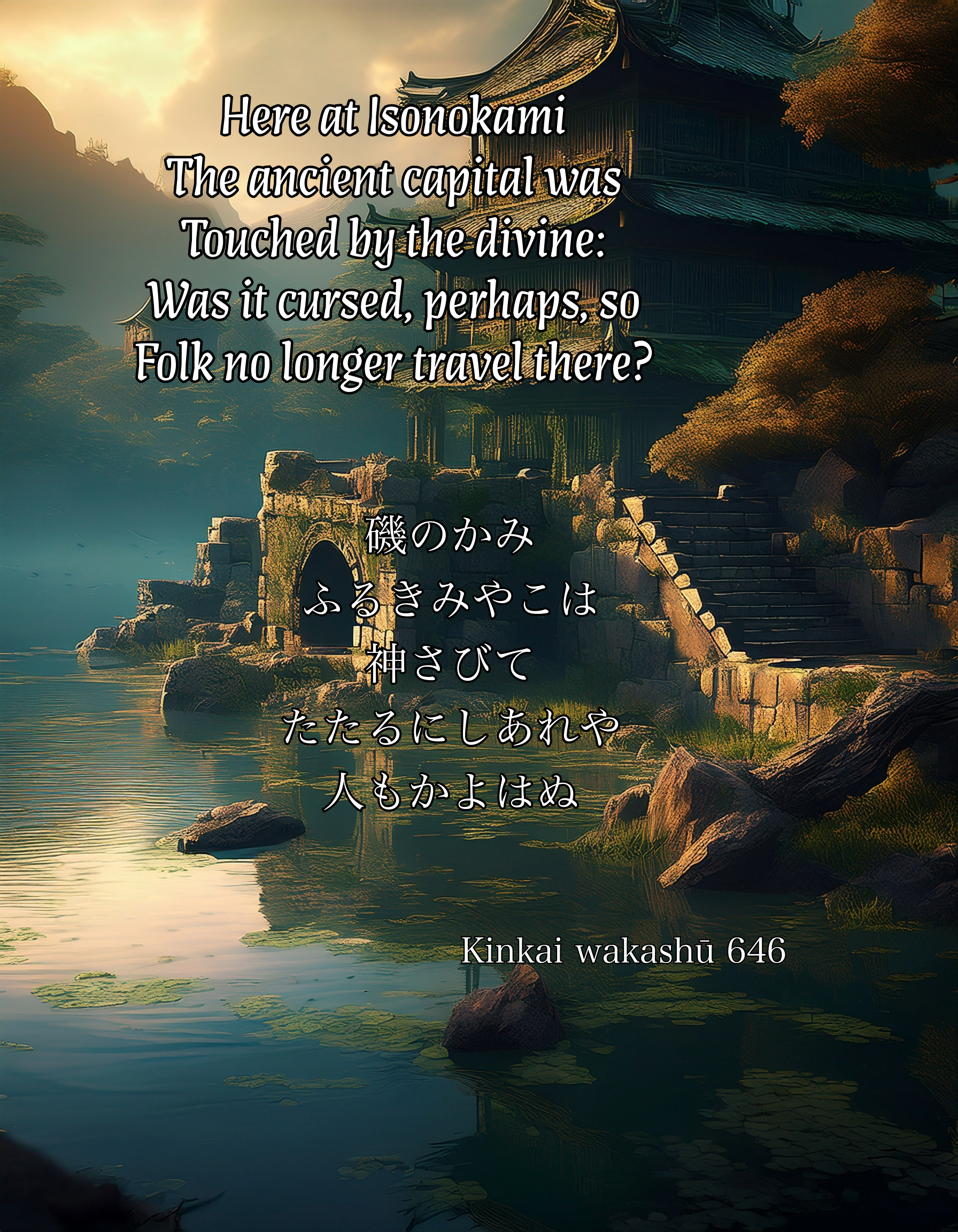
磯のかみふるきみやこは神さびてたたるにしあれや人もかよはぬ
iso no kami furuki miyako wa kami sabite tatarunishi are ya hito mo kayowanu
Here at Isonokami The ancient capital was Touched by the divine: Was it cursed, perhaps, so Folk no longer travel there?[i]
646
[i] See: Composed at the Isonokami temple in Nara on hearing the cuckoo sing. いその神ふるき宮この郭公聲ばかりこそむかしなりけれ isonokami / furuki miyako no / hototogisu / koe bakari koso / mukashi narikere ‘Here at Isonokami / In the ancient capital / The cuckoo’s / Call alone / Is as of old.’ Dharma Master Sosei (Kokinshū III: 144)