toyokuni no kiku no somamatsu oinikeri shirazu ikuyo no toshi ka henikemu
In the land of Toyo The timber pines at Kiku Have grown old; I know not how many ages and Years they have passed through…[i]
692
[i] See: 豊洲 聞浜松 心裳 何妹 相云始 toyokuni no / kiku no hamamatsu / nemokoro ni / nani shika imo ni / ai’iisomekemu ‘As in the land of Toyo / At Kiku the beach-pines, / Sweetly, / Why has my darling / Begun to meet and talk with me?’ Kakinomoto no Hitomaro Collection (Man’yōshū XII: 3130)
hingashi no kuni ni wa ga oreba asahi sasu hakoya no yama no kage to nariniki
In eastern Lands do I dwell, but when The morning sun shines Upon distant Gushe Mountain[i] Its shadow falls upon me.
681
[i] Mount Gushe 姑射山 (Jp. koya no yama) is a mountain in Shanxi 山西 in northern China, which was said to be the dwelling place of immortals. Here, Sanetomo is using it as a euphemism for the imperial palace in Kyoto and, by association the emperor.
naniwagata ashi no maroya no tabine ni wa shigure wa noki no shizuku ni zo shiru
In Naniwa’s tidelands, In a reed-roofed hut, Dozing on my travels— A shower by the eaves Dripping droplets is revealed!
Lord Tsunemori 85
Right
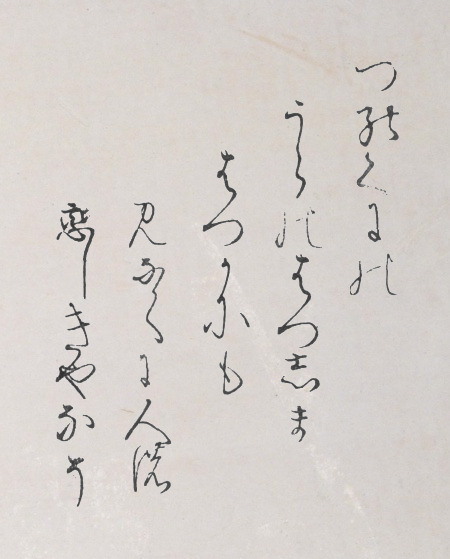
つのくにのこやのたびねにしぐれしてなにかはもらむあしのやへぶき
tsu no kuni no koya no tabine ni shigureshite nani ka wa moramu ashi no yaebuki
In the land of Tsu In Koya, in a hut dozing on my travels During a shower— Will anything drip through My roof’s eightfold thatch?
Lord Yorisuke 86
Both Left and Right are set in a traveller’s lodge in Sesshū province, but the Left appears to lack configuration and conception, it has long been said that using four of the character in a poem in a poetry match is a fault, but it does not sound to me as if the four uses of no here are a particular problem. With that being said, starting with ‘dozing on my travels’ [tabine ni wa]and then having ‘a shower by the eaves’ [shigure ni wa] uses wa twice and this seems to sound a bit discordant. The Right, while it refers to the same sort of shower from a cloudless sky, starts with ‘during a shower’ and follows this with ‘will anything drip through?’, which seems to sound a bit contradictory. I can’t help but feel it would have been better had it been ‘even though it showers’ and then had ‘will anything’. However, both poems are about reed roofed huts during a shower and it really is difficult to distinguish between them. Thus, I make this a tie.