[i] This poem is included in Fubokushō (VI: 2017), attributed to Kanemori, with the headnote ‘Kerria, Poetry Match held by the Reikeiden Junior Consort, Second Month, Tenryaku 11’.
[ii] This poem is included in Shikashū (I: 46) as an anonymous poem with the headnote ‘Composed for the Poetry Match held at the Residence of the Reikeiden Junior Consort’.
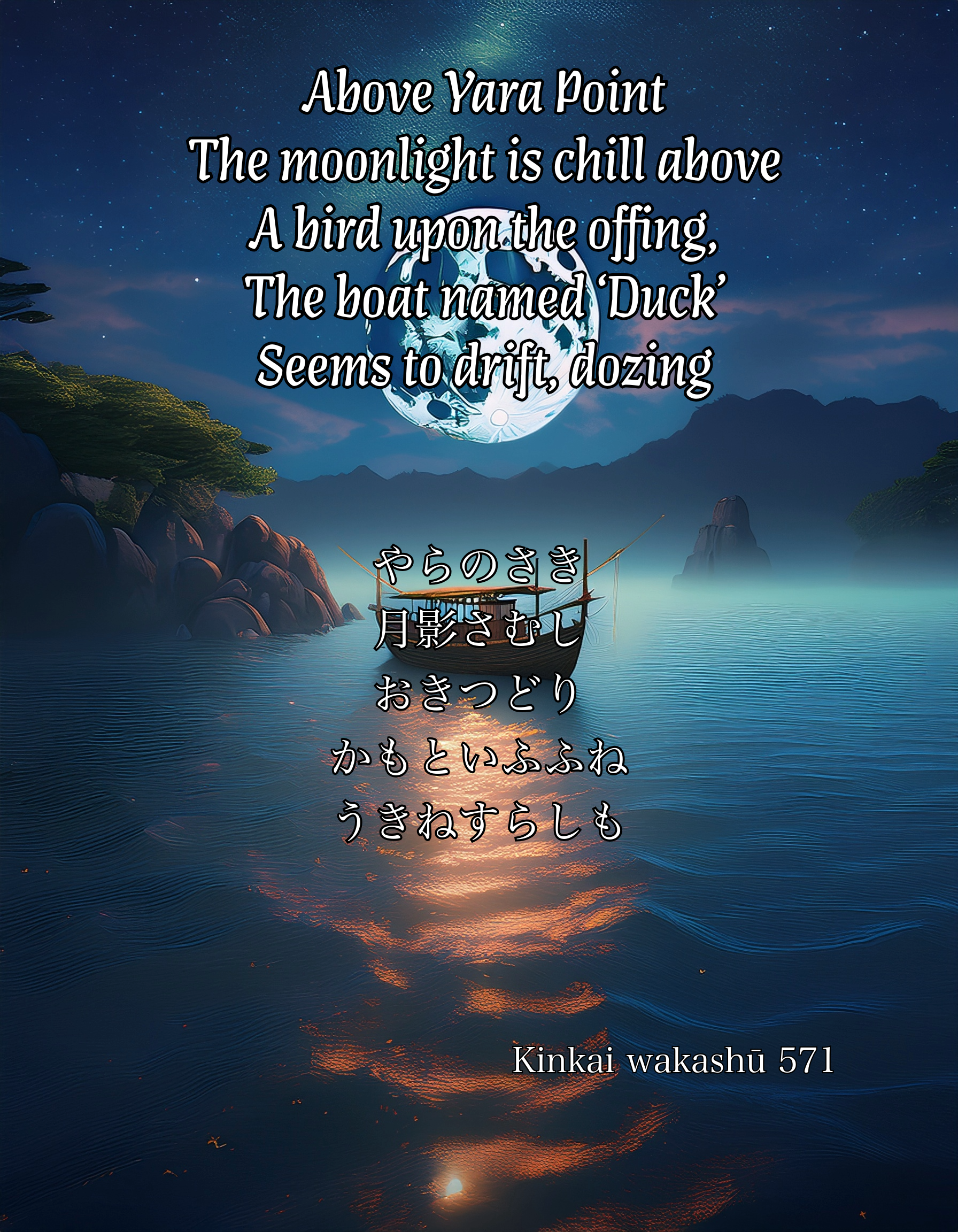
yara no saki tsukikage samushi okitsudori kamo to iu fune ukinesurashi mo
Above Yara Point The moonlight is chill above A bird upon the offing, The boat named ‘Duck’ Seems to drift, dozing…[i]
571
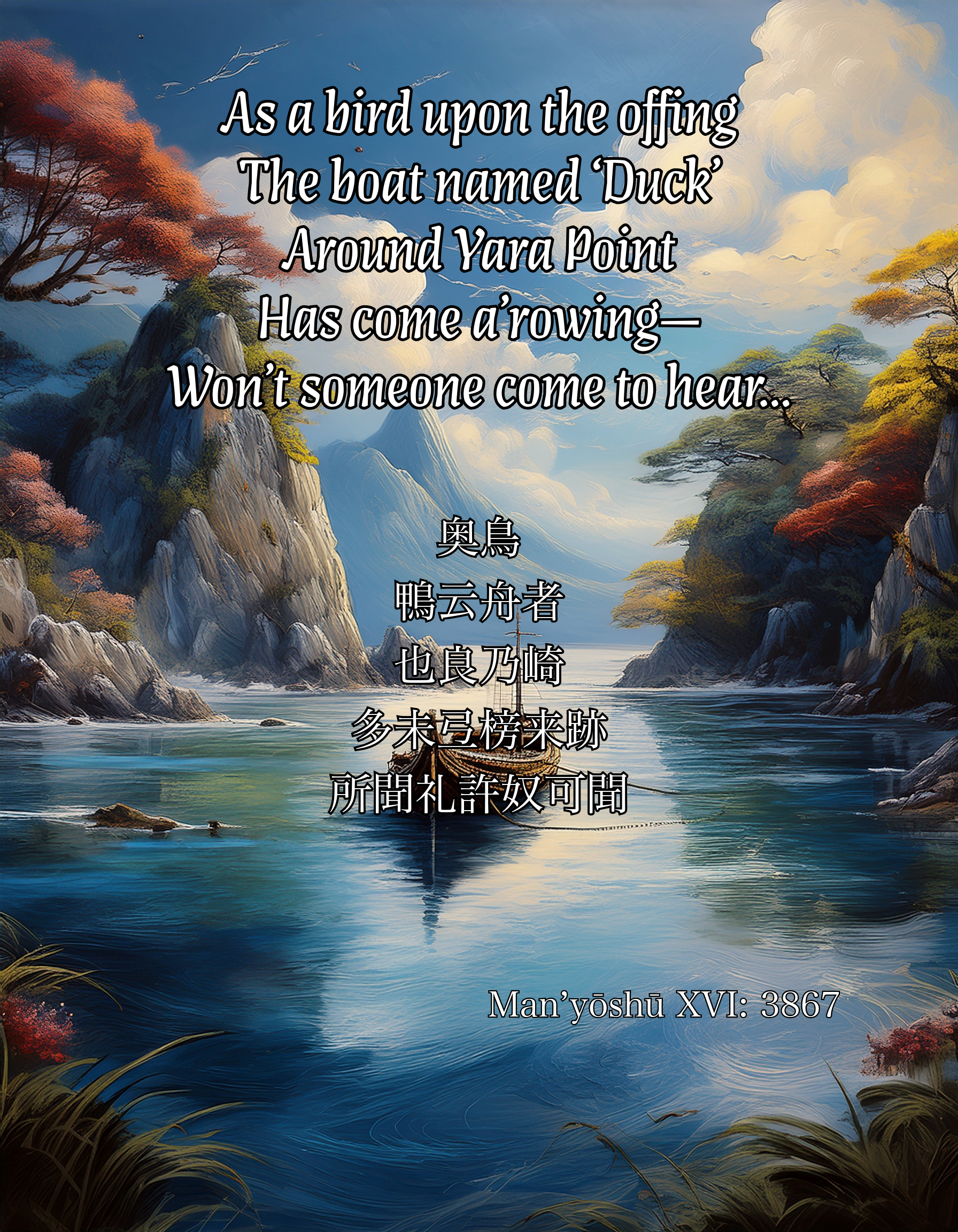
[i] See: [One of] Ten poems by fishermen from Shiga, in the province of Chikuzen. 奥鳥 鴨云舟者 也良乃崎 多未弖榜来跡 所聞礼許奴可聞 okitsutori / kamo to iu fune wa / yara no saki / tamite kogiku to / kikoekonu kamo ‘As a bird upon the offing / The boat named ‘Duck’ / Around Yara Point / Has come a’rowing— / Won’t someone come to hear…’ (Man’yōshū XVI: 3867)
sumiyoshi no nago no hamabe ni asarishite kyō zo shirinuru ikeru kai oba
At Sumiyoshi On Nago’s seashore Have I gathered shellfish, for Today, I know too well, that There is a point to life…
Taifu 133
Right
なげかじなよはさだめなきことのみかうきをもゆめとおもひなせかし
nagekajina yo wa sadamenaki koto nomi ka uki o mo yume to omoinase kashi
Do not fall to grief! Is this world uncertain and Nothing more? It’s cruelties, too, as but a dream Imagine!
Sadanaga 134
The poem of the Left has a suitable conception for this match and its configuration, again, has a singular, simple style. The poem of the Right, too, has a singular, almost prosaic conception, yet beginning ‘nothing more?’ and then having ‘imagine!’ is a further instance of diction which completely abandons poetic norms. Indeed, I have to say the Left wins.