When returning from a pilgrimage to the twin shrines, there was a river called the Maekawa running before my beachside lodging.[i] Rain had been falling, so the waters were extremely high—I composed this when we crossed the river at sunset.
浜べなるまへの川せを行く水のはやくもけふのくれにけるかな
hamabe naru mae no kawase o yuku mizu no hayaku mo kyō no kurenikeru kana
On the beachside The Mae’s river rapids’ Waters flow As fast as today Draws into evening.
702
[i] This lodging was at what is now Sakawa 酒匂 within the bounds of Odawara 小田原 on the coast of Sagami Bay (Higuchi 2016, 181)
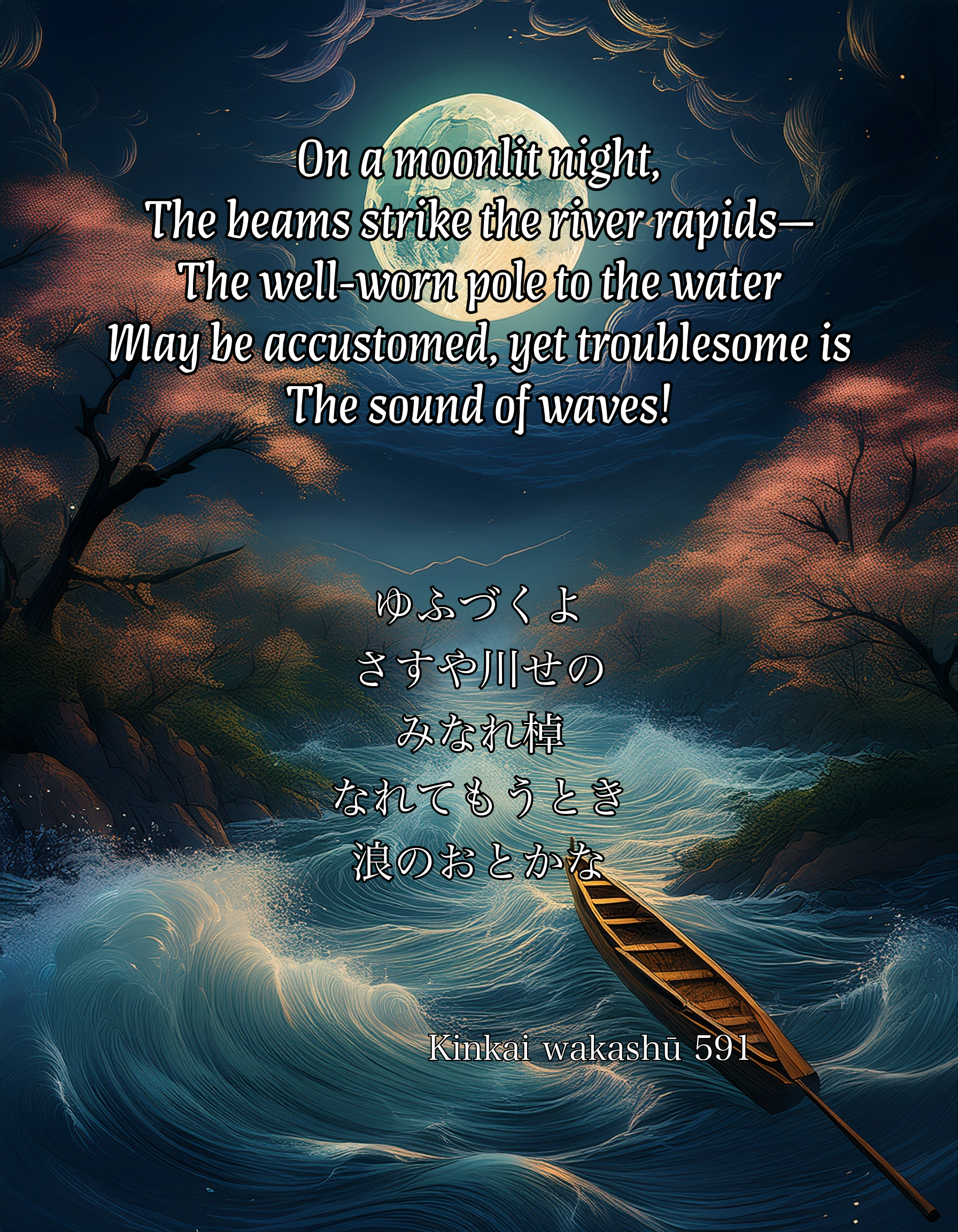
There is a river called the Sagami River. I composed this to say I would board a boat and cross it after the moon had risen.[i]
ゆふづくよさすや川せのみなれ棹なれてもうとき浪のおとかな
yūzukuyo sasu ya kawase no minarezao narete mo utoki nami no oto kana
On a moonlit night, The beams strike the river rapids— The well-worn pole to the water May be accustomed, yet troublesome is The sound of waves![ii]
591
[i] This river would have been familiar to Sanetomo, as it flows into the sea some twenty kilometres to the west of Kamakura, where the shogunate was headquartered. Based on the poem, the boat would have been a ferry, punted, rather than sailed across it.
[ii] See: Topic unknown. ゆふづく夜さすやをかべの松のはのいつともわかぬこひもするかな yūzukuyo / sasu ya okabe no / matsu no ha no / itsu to mo wakanu / koi mo suru kana ‘On a moonlit night / The beams strike the hillside / Through the pine needles / All year round, / As constant is my longing.’ Anonymous (Kokinshū XI: 490)