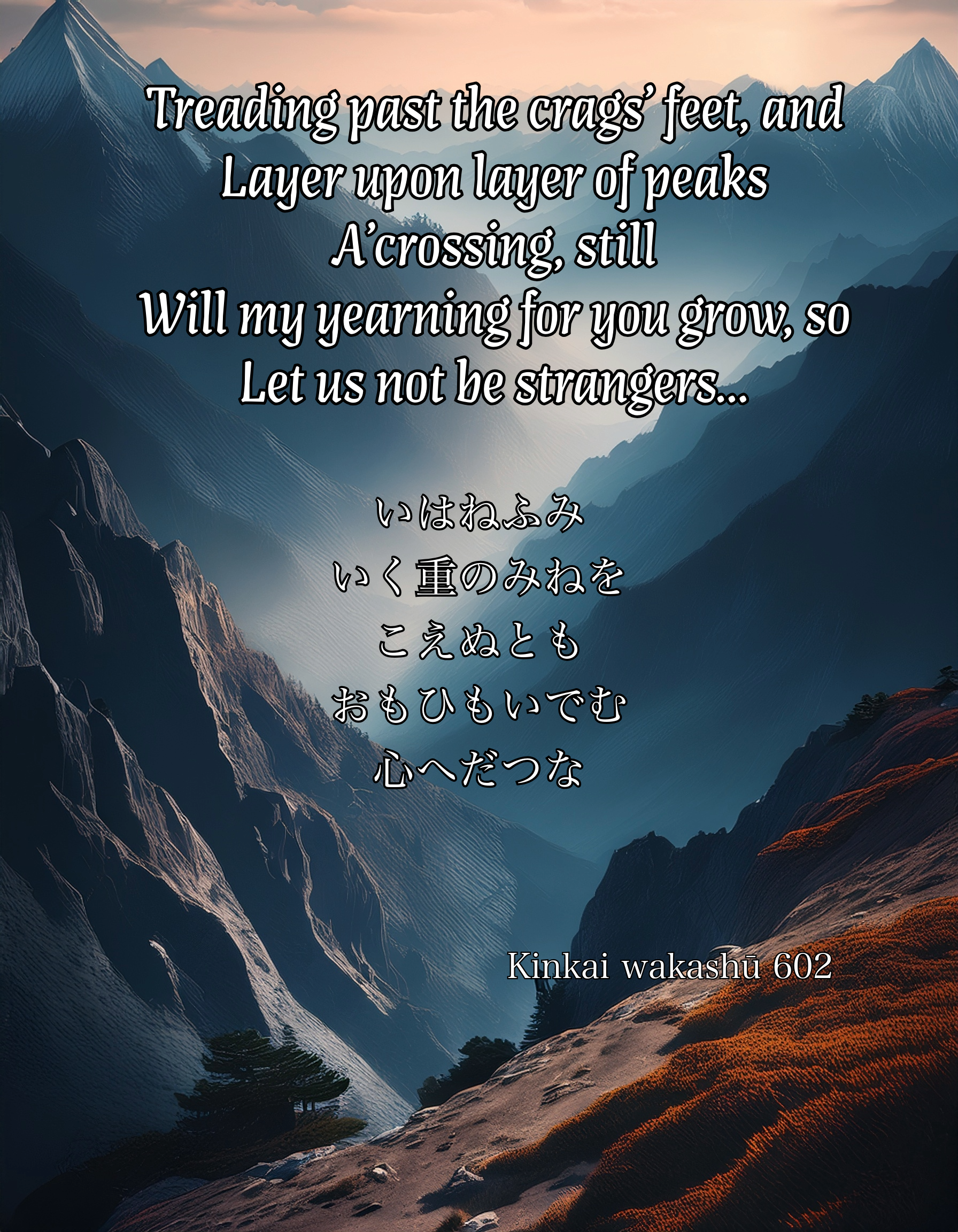
iwane fumi ikue no mine o koenu tomo omoi mo idemu kokoro hedatsu na
Treading past the crags’ feet, and Layer upon layer of peaks A’crossing, still Will my yearning for you grow, so Let us not be strangers…[i]
602
[i] See: Composed in the conception of parting when he took part in a hundred-poem sequence. 別れても心へだつな旅ごろも幾重かさなる山路なりとも wakarete mo / kokoro hedatsu na / tabigoromo / ikue kasanaru / yamaji naritomo ‘We may part, yet / Let us not be strangers; / Travellers’ robes / Place layer on layer, / Though mountain paths lie in-between.’ Fujiwara no Sada’ie (Senzaishū VII: 497)
The Gentlemen of the Right: no faults to mention. The Gentlemen of the Left state: the Right’s poem does not have anything to say beyond what is contained in its origin poem.
In judgement: the Left’s poem takes the conception of Komachi’s poem ‘my feet don’t rest, constantly trailing to you, yet’ (ashi mo yasumezu kayoedomo) and skilfully adds ‘Until I awaken it is ever painful’ (nezame made nao kurushiki). The Right’s poem is based upon the poem ‘where, through night’s depths, my Lord’ (yowa ni ya kimi ga), but then says ‘Dwells my heart whipped by whitecaps’ (kokoro ni kakaru oki tsu shiranami), which sounds pleasant, too. They are comparable and should tie.