Nishinomiya uta’awase 15

Cogon grass and the Same

Round Fifteen

Left

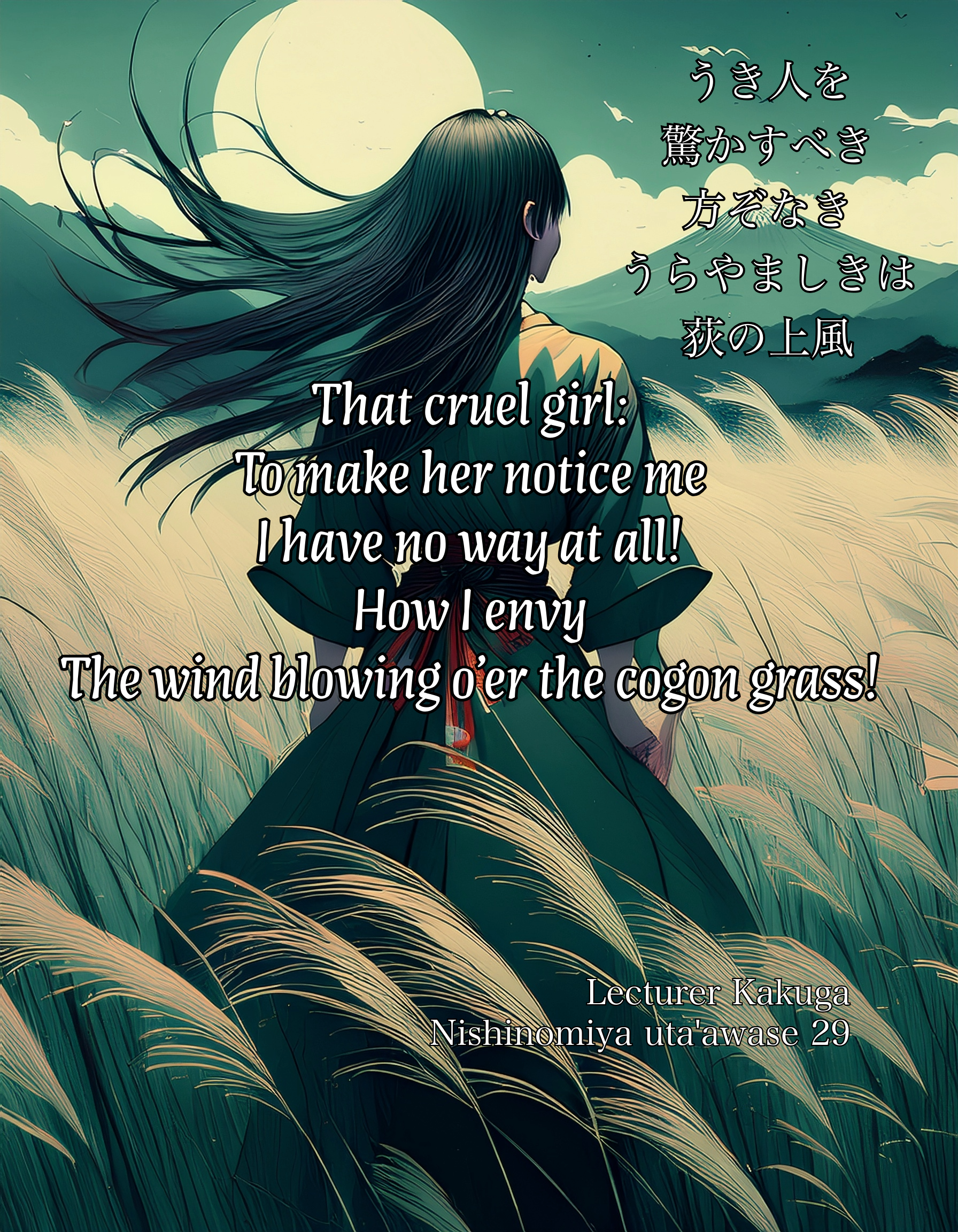
うき人を驚かすべき方ぞなきうらやましきは荻の上風

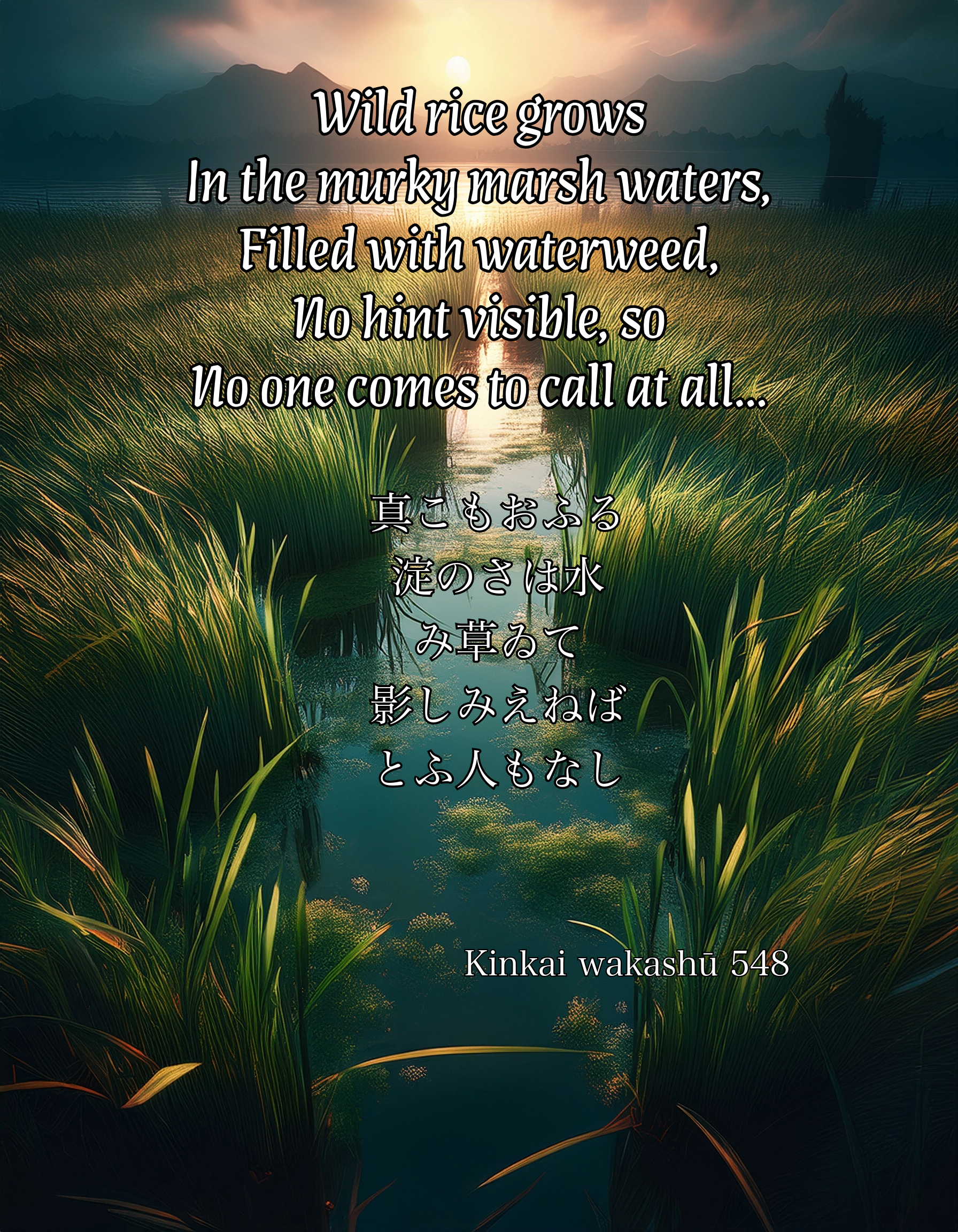
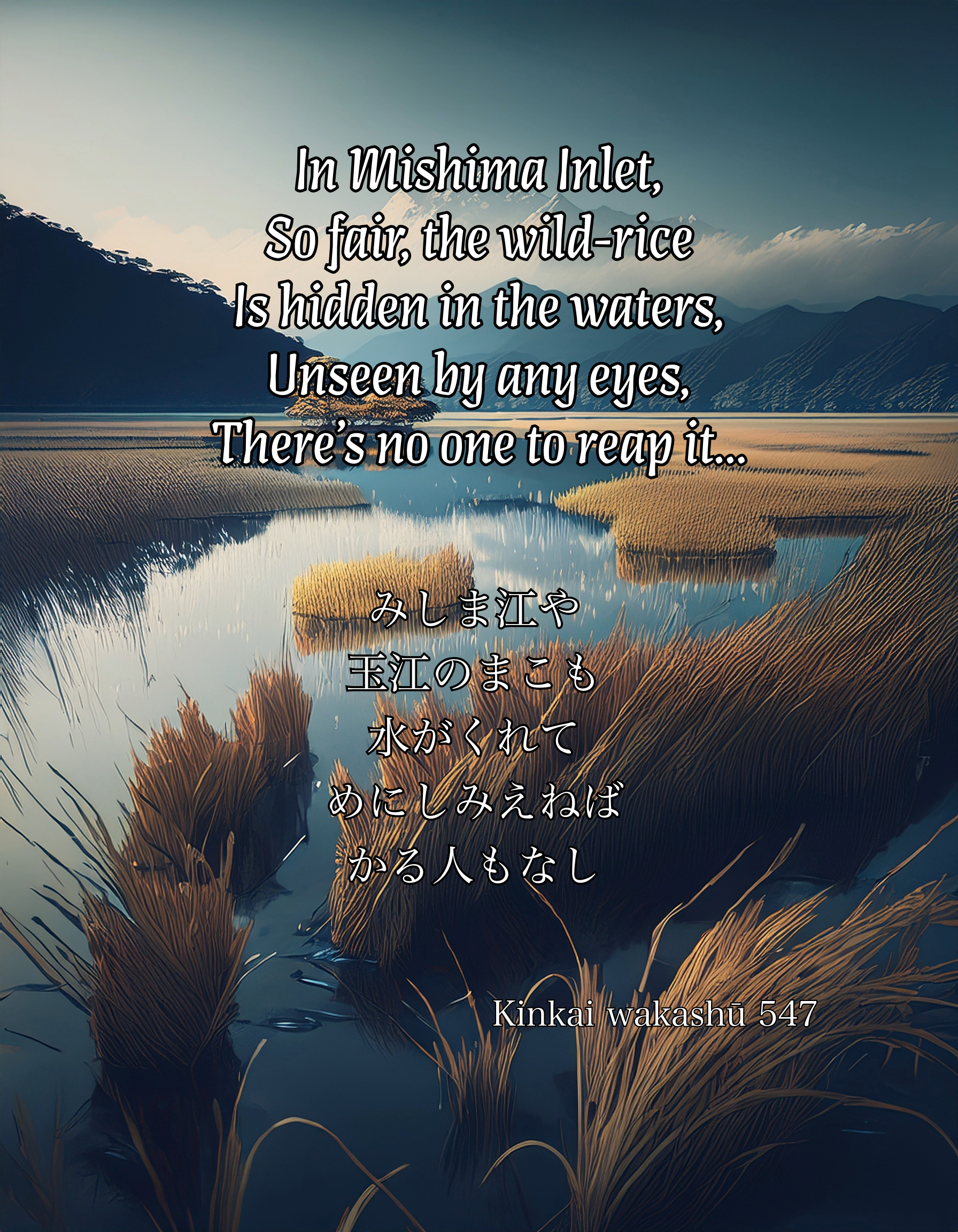
ukibito o
odorokasubeki
kata zo naki
urayamashiki wa
ogi no uwakaze
That cruel girl:
To make her notice me
I have no way at all!
How I envy
The wind blowing o’er the cogon grass!

Lecturer Kakuga
29

Right

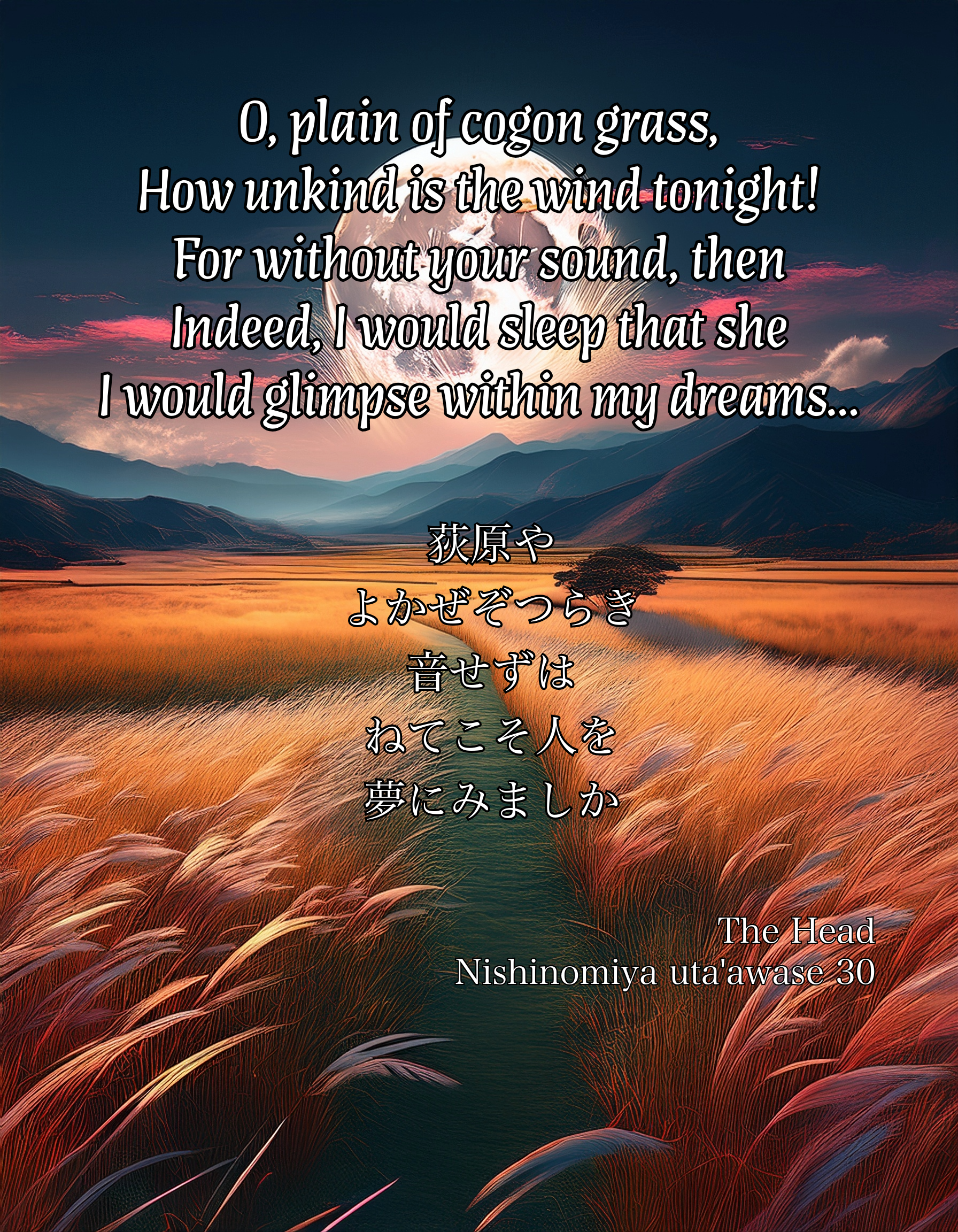
荻原やよかぜぞつらき音せずはねてこそ人を夢にみましか

ogiwara ya
yokaze zo tsuraki
oto sezu wa
nete koso hito o
yume ni mimashika
O, plain of cogon grass,
How unkind is the wind tonight!
For without your sound, then
Indeed, I would sleep that she
I would glimpse within my dreams…

The Head
30

The conception of love sounds superior at present in envying the ‘wind blowing o’er the cogon grass’ than it does in the ‘unkind is the wind tonight’.

Nishinomiya uta’awase 14

Round Fourteen

Left

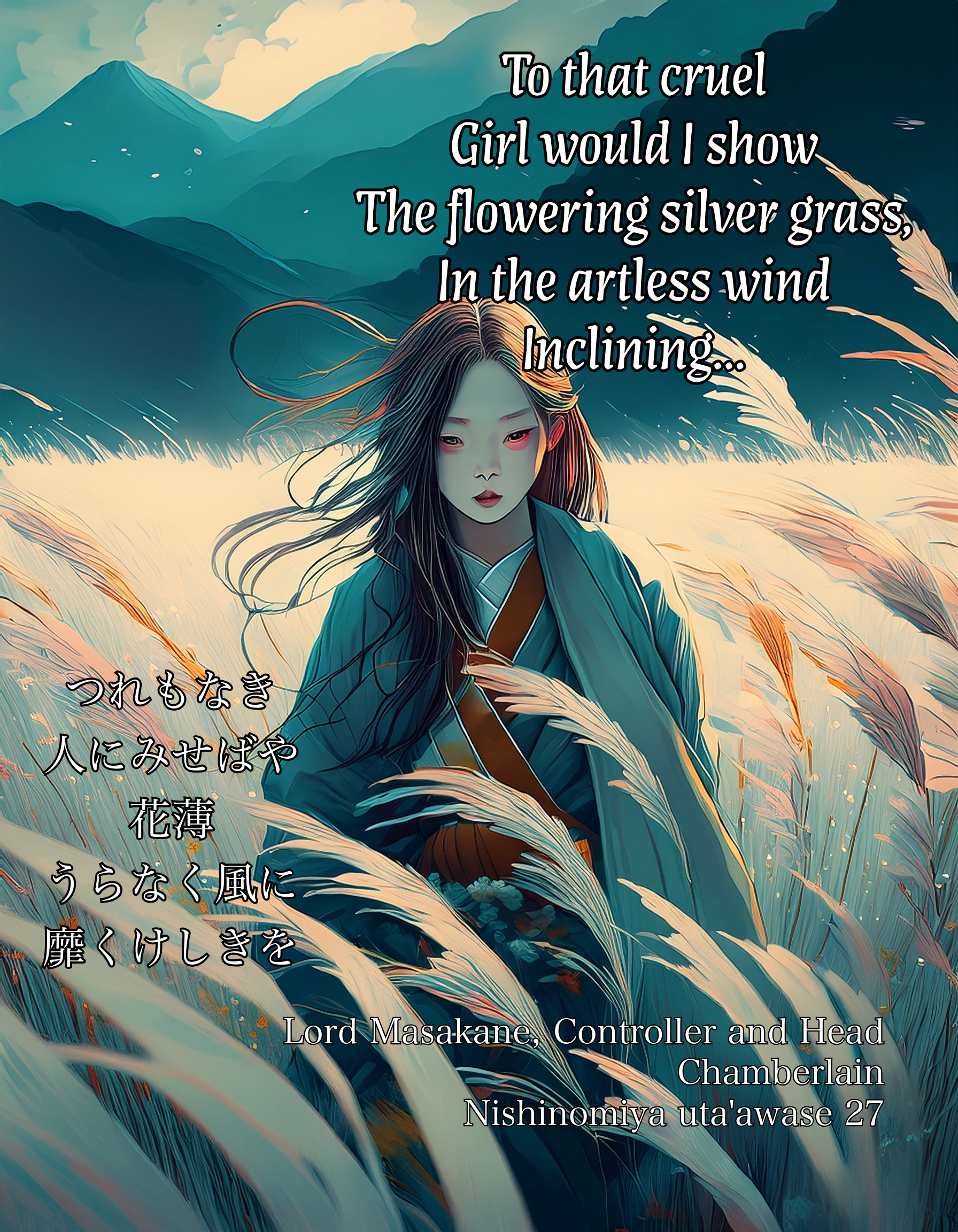
つれもなき人にみせばや花薄うらなく風に靡くけしきを

tsure mo naki
hito ni miseba ya
hanasusuki
uranaku kaze ni
nabiku keshiki o
To that cruel
Girl would I show
The flowering silver grass,
In the artless wind
Inclining…

Lord Masakane, Controller and Head Chamberlain
27

Right

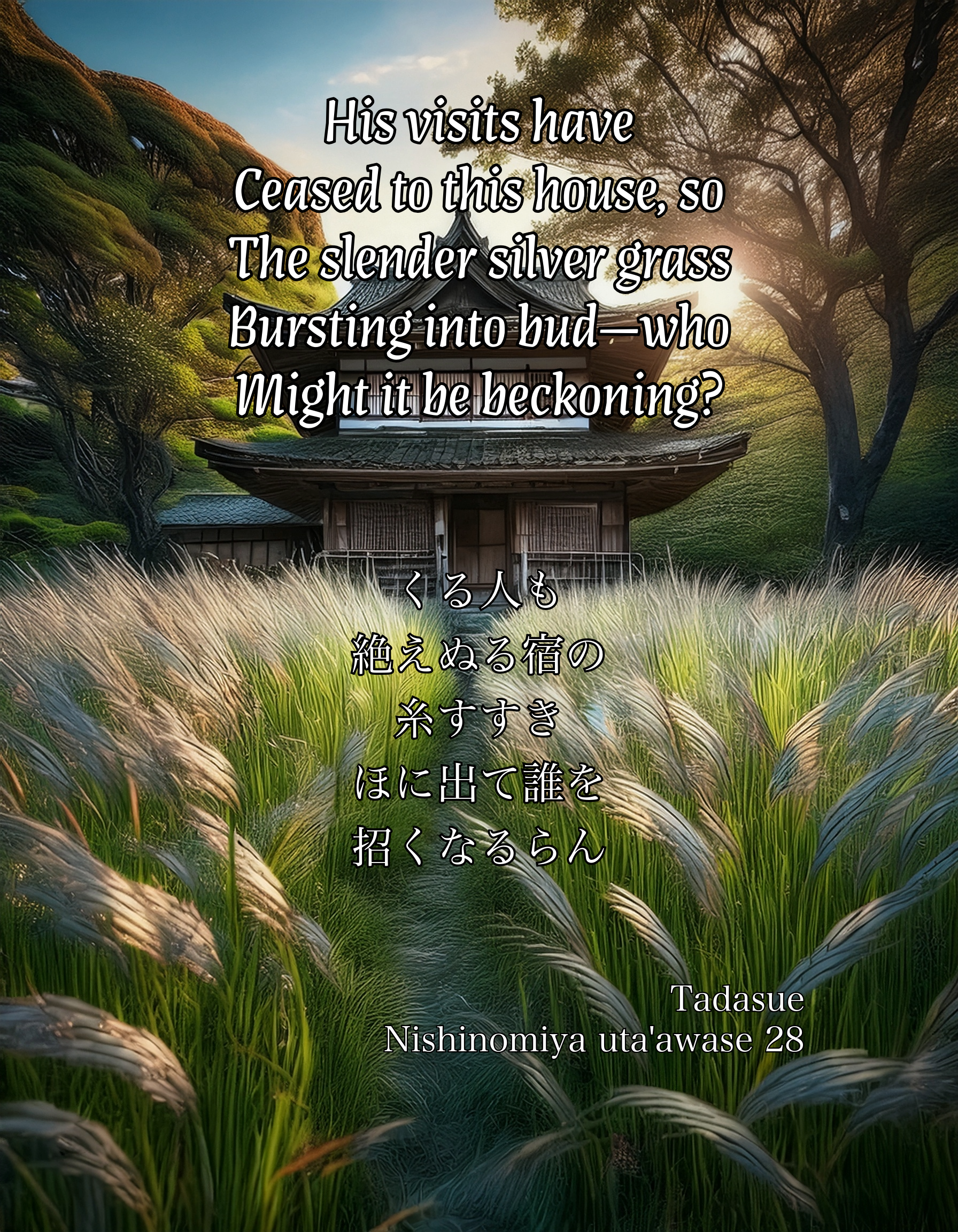
くる人も絶えぬる宿の糸すすきほに出て誰を招くなるらん

kuru hito mo
taenuru yado no
itosusuki
ho ni idete tare o
maneku naruran
His visits have
Ceased to this house, so
The slender silver grass
Bursting into bud—who
Might it be beckoning?

Tadasue
28

The Left’s poem, up to ‘would I show’ is poetic, but I do not feel that the expression ‘In the artless wind / Inclining’ is elegant. For the topic of love, it seems to me that both the beginning and the end of the poem is a slight case of ‘As a bamboo stalk / Has joints, from years gone by old-fashioned phrases’ lingering! The Right’s ‘Ceased to this house, so / The slender silver grass’ lacks anything remarkable about it, and seems excessively overgrown, so it’s impossible to decide on anyone as the winner or loser here.

Confusion over Cathay

I’ve just had a new article published online in the journal Japan Forum, entitled ‘Confusion over Cathay: attitudes to Chinese material in mediaeval Japanese poetic criticism’. This emerged from my studies of the ‘Poetry Contest in Six Hundred Rounds’ (Roppyakuban uta’awase 六百番歌合) as well as my general consideration of uta’awase criticism – more to come on that in a while, I hope!

The abstract of the article is:

This article investigates the reception and usage of Sinitic material within mediaeval Japanese poetic criticism, specifically focussing on the Roppyakuban uta’awase (‘Poetry Contest in Six Hundred Rounds’; 1193–94). It challenges the simplistic binary of the ‘wakan dialectic’ by analysing how poets and critics practically engaged with Sinitic material. The study highlights the conflicting attitudes between the contest’s judge, Fujiwara no Shunzei, and the participant Kenshō. Evidence from the contest reveals that while poets frequently incorporated Sinitic allusions and diction, Shunzei often criticised such usage, arguing that distinct aesthetic standards applied to uta (Japanese poetry) versus shi (Sinitic poetry). Conversely, Kenshō actively utilised Sinitic sources to validate his poetic positions and challenge Shunzei’s critical authority. Ultimately, the article demonstrates that while early mediaeval poet/critics did regard Sinitic material as a resource for the composition and criticism of uta, such usage could be contested and was subject to wider critical standards governing waka composition.

If that has whet your appetite to find out more, you can find the article here. It’s open access, so anyone can read it!

Nishinomiya uta’awase 13

Silver Grass and the Same

Round Thirteen

Left

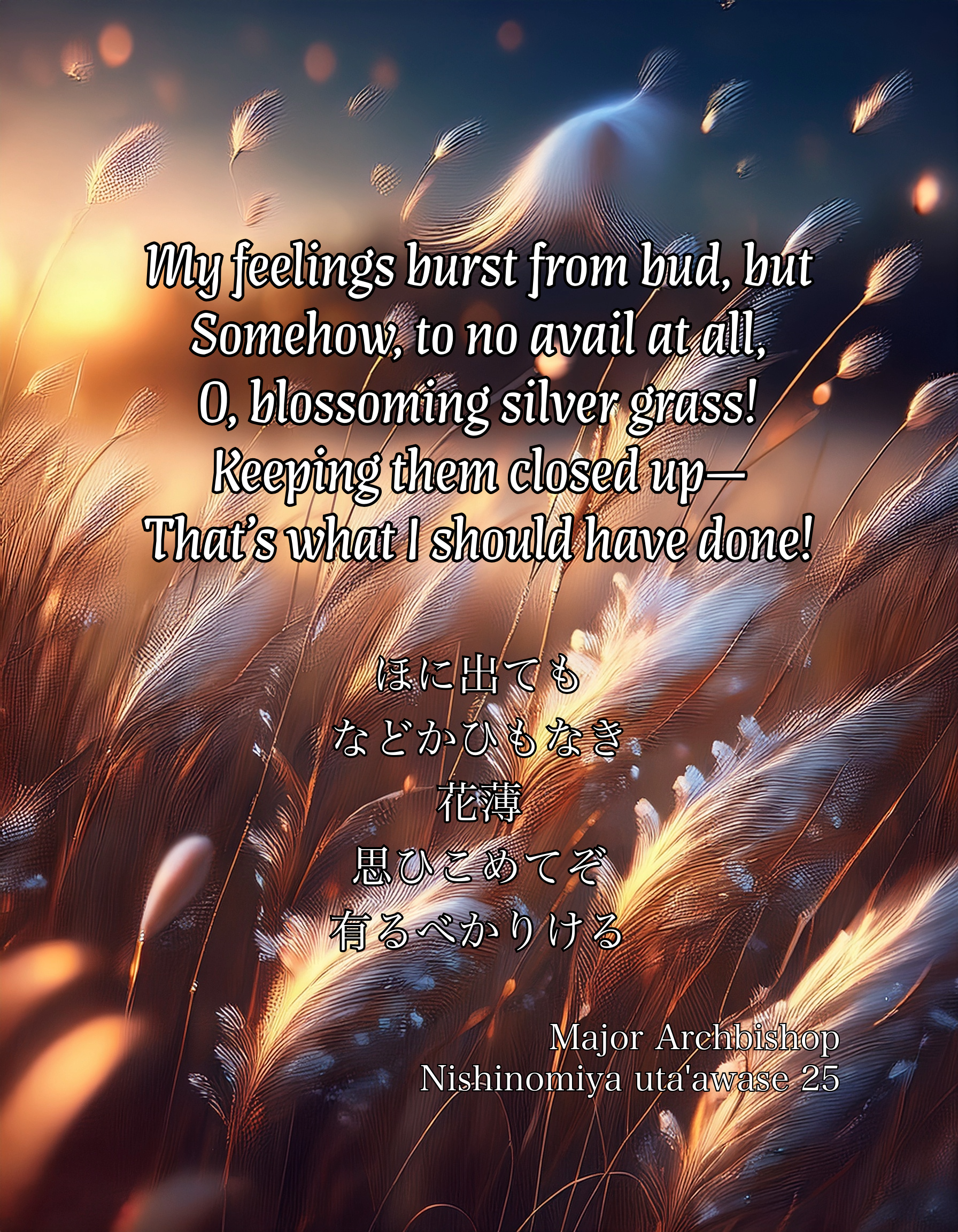
ほに出てもなどかひもなき花薄思ひこめてぞ有るべかりける

ho ni idetemo
nadoka kai mo naki
hanasusuki
omoikomete zo
arubekarikeru
My feelings burst from bud, but
Somehow, to no avail at all,
O, blossoming silver grass!
Keeping them closed up—
That’s what I should have done!

Major Archbishop
25

Right

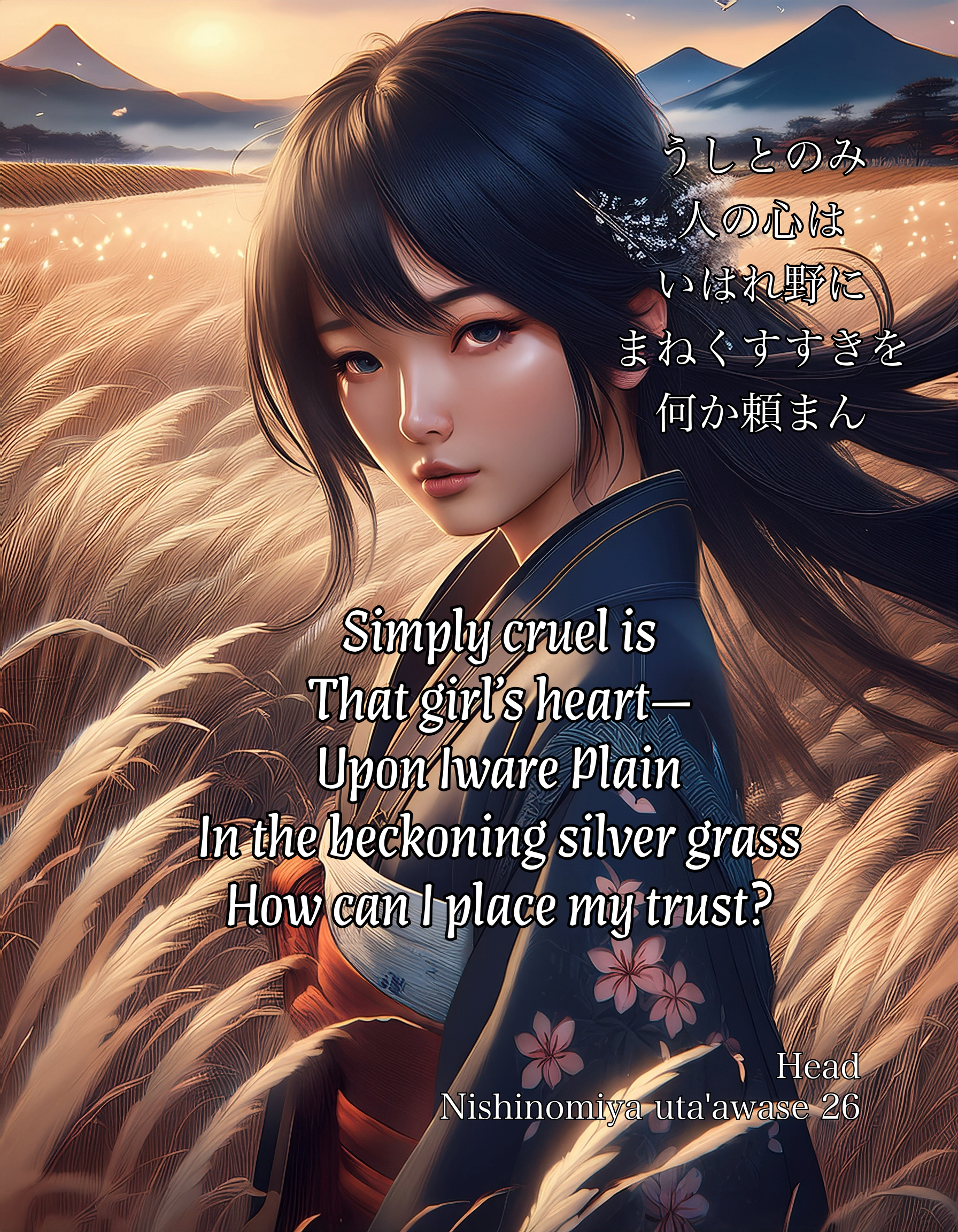
うしとのみ人の心はいはれ野にまねくすすきを何か頼まん

ushi to nomi
hito no kokoro wa
iwareno ni
maneku susuki o
nanika tanoman
Simply cruel is
That girl’s heart—
Upon Iware Plain
In the beckoning silver grass
How can I place my trust?

Head
26

Left and Right appear to be of about the same standard.

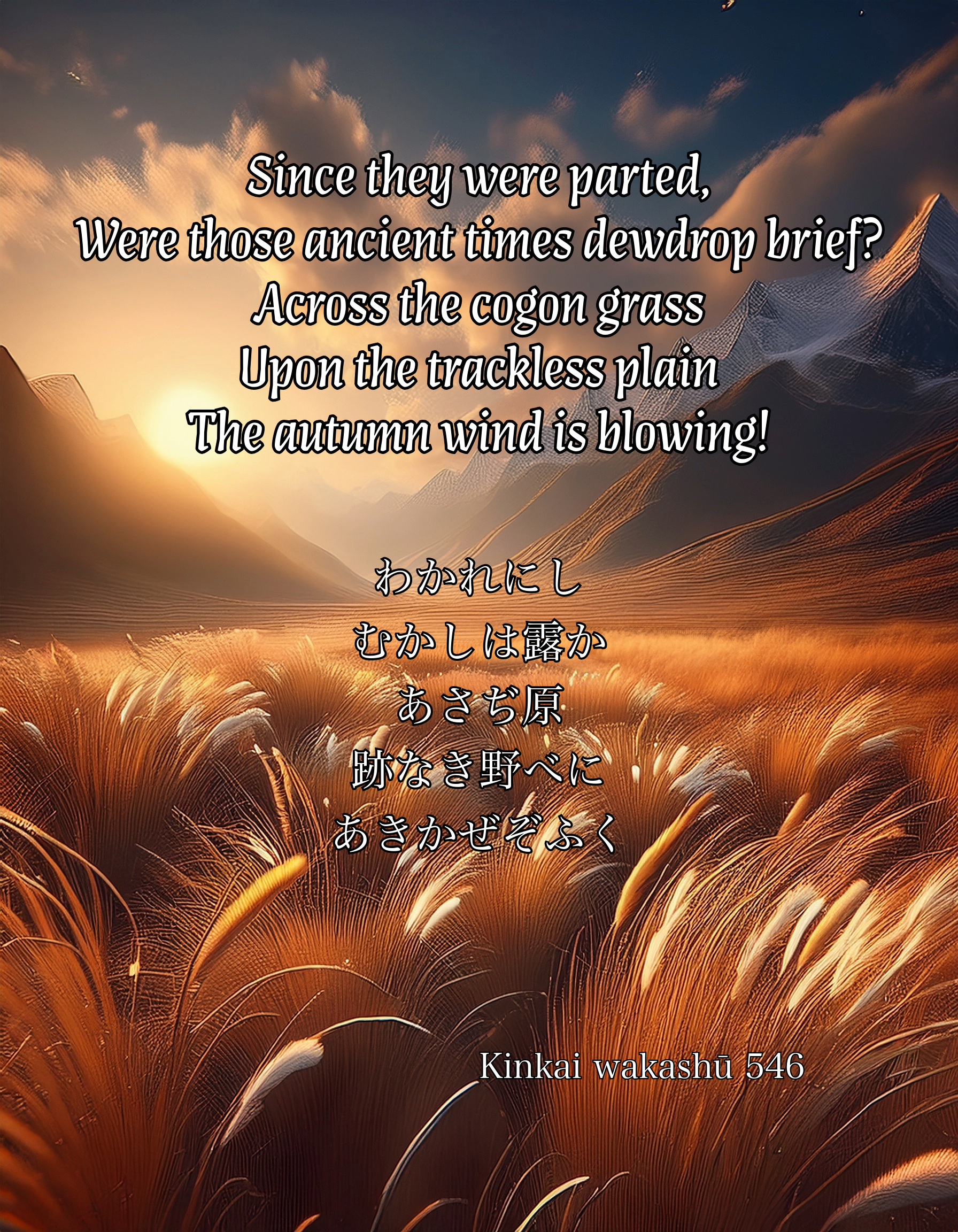
Kinkai wakashū 546

Love and tales.[i]

わかれにしむかしは露かあさぢ原跡なき野べにあきかぜぞふく

wakarenishi
mukashi wa tsuyu ka
asajiwara
ato naki nobe ni
akikaze zo fuku
Since they were parted,
Were those ancient times dewdrop brief?
Across the cogon grass
Upon the trackless plain
The autumn wind is blowing!

546


[i] The ‘tale’ here is the Song of Everlasting Woe about the doomed love between Yang Guifei and Emperor Xuanzong