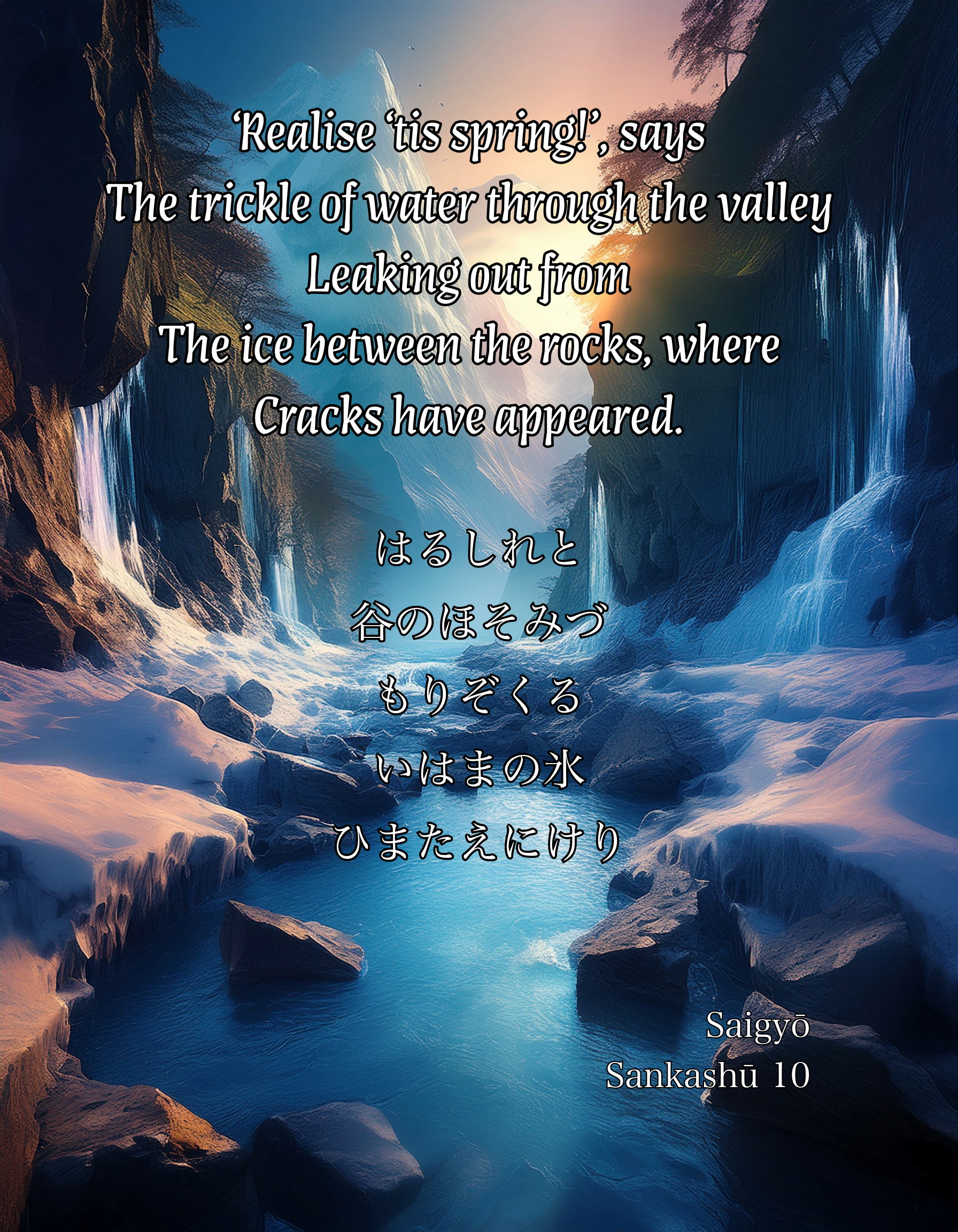
haru shire to tani no hosomizu mori zo kuru iwama no kōri hima taenikeri
‘Realise ‘tis spring!’, says The trickle of water through the valley Leaking out from The ice between the rocks, where Cracks have appeared.[ii]
[i] This poem has an alternate headnote: ‘On mountain waters announcing [spring], when various people were composing poems for the Bosatsu’in Ise Virgin.’ Gotō (1982, 12) notes that this is an erroneous reference to Imperial Princess Muneko (Tōshi) 統子内親王 (1126-1189), later known as Jōsaimon’in 上西門院, who, in fact, served as Kamo Virgin.
[ii] Saigyō composed on a similar theme for the Mimosugawa uta’awase 御裳濯河歌合 (‘Mimosugawa Poetry Match’; 1187) of his own poems: 岩まとぢし氷もいまはとけ初めて苔の下水道もとむなり iwama tojishi / kōri mo ima wa / tokehajimete / koke no shitamizu / michi motomu nari ‘Cracks between the crags sealed / By ice, now / Beginning to melt, and / The water ‘neath the ice / Seeks to find its way.’(Mimosugawa uta’awase 22)
When spring had arrived, I accompanied someone to the estate at Shiga, who had gone there due to a directional taboo, and seeing the haze over Meeting Hill…
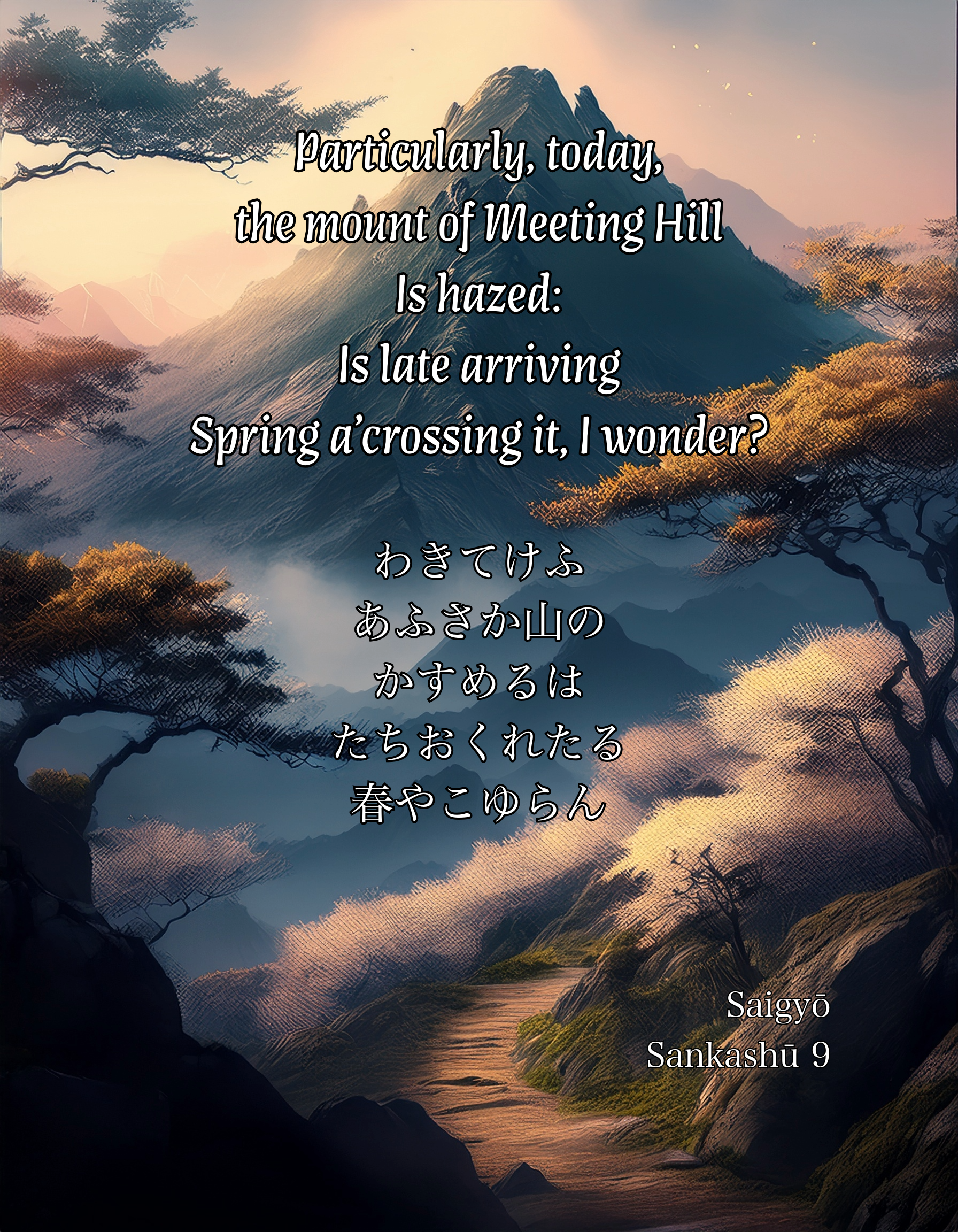
わきてけふあふさか山のかすめるはたちおくれたる春やこゆらん
wakite kyō ausakayama no kasumeru wa tachi’okuretaru haru ya koyuran
Particularly, today, The mount of Meeting Hill Is hazed: Is late arriving Spring a’crossing it, I wonder?
Composed on the conception of the arrival of spring, when I was spending the turning of the year near Naniwa[i] on a pilgrimage.[ii]
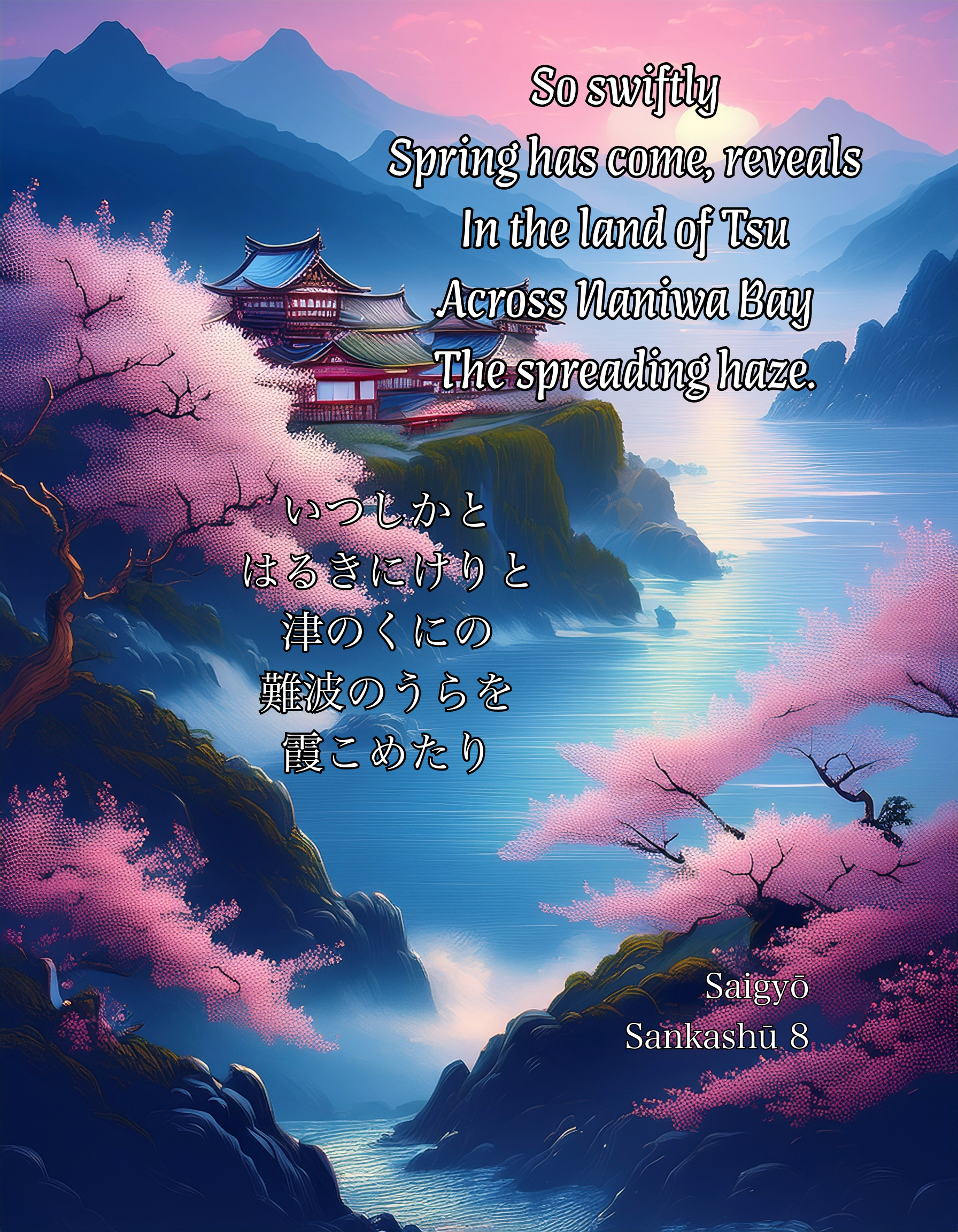
いつしかとはるきにけりと津のくにの難波のうらを霞こめたり
itsushika to haru kinikeri to tsu no kuni no naniwa no ura o kasumi kometari
So swiftly Spring has come, reveals, In the land of Tsu Across Naniwa Bay, The spreading haze.
[i] Naniwa 難波 lay near the mouth of the Yodo River in what is now Osaka. It was an important poetic location (utamakura), referenced in innumerable waka.
[ii] Most likely to Sumiyoshi Grand Shrine (sumiyoshi taisha 住吉大社) and the Shitennōji 四天王寺 temple which were important religious sites nearby.
When the New Year’s Day was the Day of the Rat.[i]
ねのびしてたてたる松にうゑそへんちよかさぬべきとしのしるしに
ne no bi shite tatetaru matsu ni uesoen chiyo kasanubeki toshi no shirushi ni
‘Tis the Day of the Rat, so Standing, pines Let us plant, That a thousand ages will mount up As a sign this year![ii]
[i] On the first Day of the Rat of the year, aristocrats would go out and gather a range of medicinal plants to brew a tonic to ward off ill health in the coming year. Among these were pine seedlings, which were displayed as symbols of longevity.
[ii] See: For the Day of the Rat celebrations at the palace in Eihō 4 [1084]. ねのびする野べのこまつをうつしうゑて年のをながく君ぞ引くべき ne no bi suru / nobe no komatsu o / utsushi’uete / toshi no o nagaku / kimi zo hikubeki ‘For the Day of the Rat / Pine seedlings from the plains / We transplant, that / The long thread of their years / Will draw our Lord with them!’ Supernumerary Middle Counsellor Michitoshi (Shinkokinshū VII: 729)
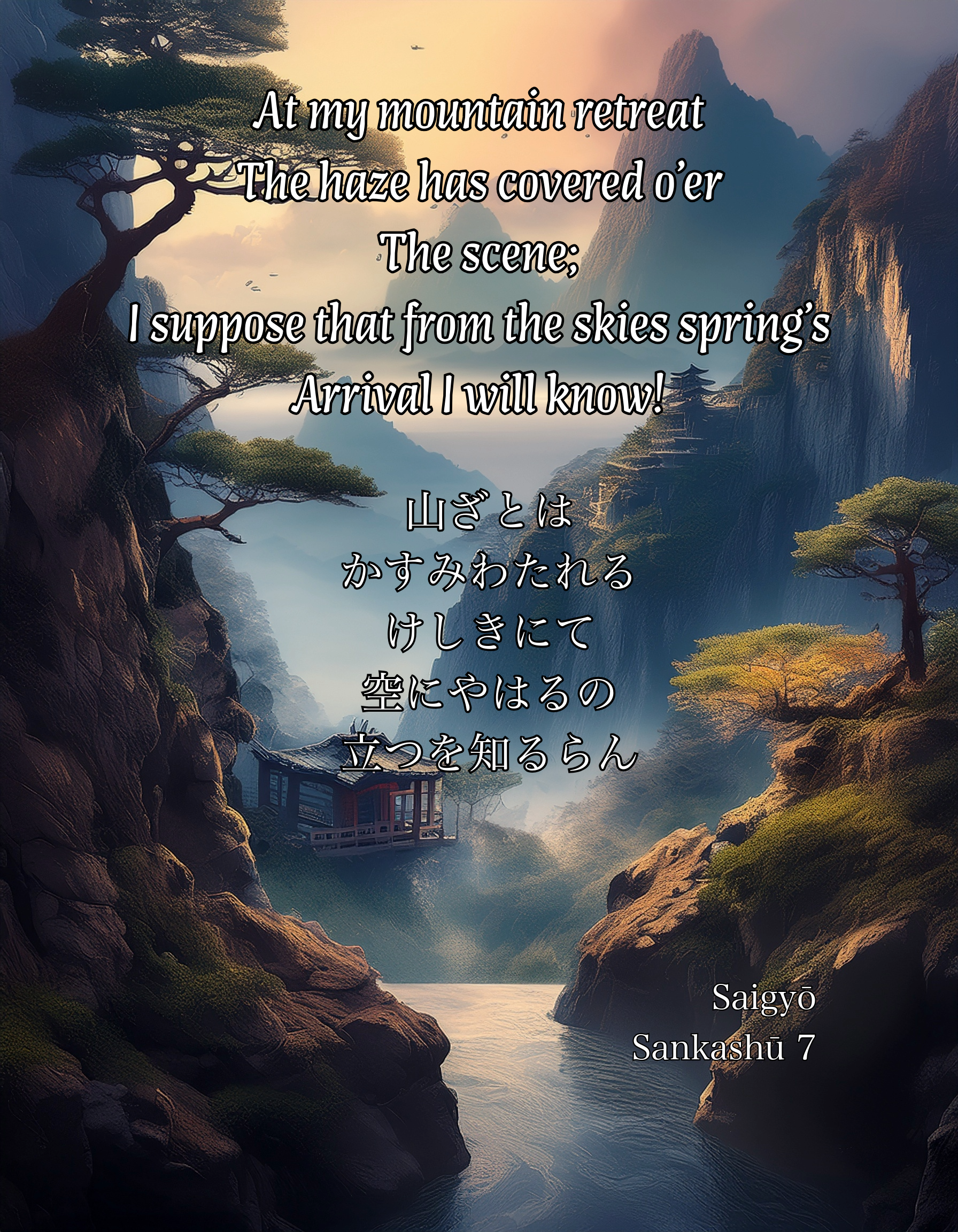
haru tatsu to omoi mo aenu asa ide ni itsu shika kasumu otowayama kana
Spring’s arrival I had not felt, but This morning, stepping out, Suddenly all hazed o’er was Otowa Mountain![i]
[i] See: Composed on the day spring arrived. 逢坂の關をや春もこえつらむ音羽の山のけさはかすめる ausaka no / seki o ya haru mo / koetsuramu / otowa no yama no / kesa wa kasumeru ‘At Meeting Hill / The barrier will spring, too, / Pass beyond? / In the Otowa Mountains / This morning is all hazed.’ Tachibana no Toshitsuna (Goshūishū I: 4)