Tōgū gakushi noritada uta’awase 04

Maidens spinning thread

Left

てにかけてくるなつごとにわぎもこがおほくのいとをひきてけるかな

te ni kakete
kuru natsu goto ni
wagimoko ga
ōku no ito o
hikitekeru kana
Through her hands a’running
Again, with every summer’s coming,
My darling girl
So much thread
Has spun!

7

Right

てもたゆくひきおくいとのたえまなくきみがみちよのさかゆべきかな

te mo tayuku
hiki’oku ito no
taemanaku
kimi ga michiyo no
sakayubeki kana
Her weary hands
A’spinning thread,
Never ending
My Lord’s reign through three thousand years
Of prosperity!

8

‘Maidens spinning’ is about their expertise at it, and is not something that you need to need to ponder over and over like a peasant’s hempen thread or struggle to pull apart like a hardened silk cocoon, but both Left and Right really seem to have spun things out, and I feel that, although there’s an air of elegance to start with, the diction at the end of both poems is confused, so I would make these a tie.

hidari migi
hiku te mo tayuku
tatsu ito wa
izukata e ka wa
yorubekaruran
Left and Right,
The hands spinning wearily,
Produce thread that
Heads off but,
I wonder where to?

Judge 4

Tōgū gakushi noritada uta’awase 03

Rice seedling Planters[i]

Left

てもたゆくむろのはやなへとりもあへずおのがおのがもいそぐめるかな

te mo tayuku
muro no hanae
tori mo aezu
ono ga ono ga mo
isogumeru kana
With gentle hands
The young seedlings in the root-house
Swiftly taking
Each and every one
Hurries along!

5

Right

なはしろとはるみしものをいつのまにたごおりたちてさなへとるらん

nawashiro to
haru mishi mono o
itsu no ma ni
tago oritachite
sanae toruran
The seed-shoots that
I saw in springtime have,
In but a moment, by
The lads standing in the paddies,
Taken for seedlings.

6

While it lacks a depth of conception of fallow paddies resembling the marshy mud between the reeds, surveying the scene in line with this time of year, it is certainly the case that men planting rice-seedlings appear—this is the superficial content of the Left’s poem, but its diction is somewhat stiff. The Right seem superior for its balance between the initial and latter section of the poem, it’s bright overall impression and its configuration implying the swift flow of water around the seedlings.

tori mo aezu
kokorogokoro ni
isogedomo
ama wa so shiranu
muro no hayanae
Swiftly over
Both conceptions
Have I hurried, yet
As a fisherman, am ignorant of
Young seedlings in the root-house!

Judge 3


[i] Torinaehito 取苗人

Aru tokoro no uta’awase zassai

水の泡や種となるらむ浮草のまく人なみの上に生ふれば

mizu no awa ya
tane to naruramu
ukikusa no
maku hitonami no
ue ni oureba
Might the foam upon the waters
Be its seeds, perhaps?
When the drifting waterweed
Twines atop a wave
Where it does grow…

1[i]

山里は冬ぞさびしさまさりける人めも草もかれぬとおもへば

yamazato wa
fuyu zo sabishisa
masarikeru
hitome mo kusa mo
karenu to omoeba
In a mountain retreat
Winter’s loneliness
Overwhelms
As both folks’ gaze and the grasses, too
Have withered away, I feel…

2[ii]

今日人をこふる心はあすか川流るる水に劣らざりけり

kyō hito o
kouru kokoro wa
asukagawa
nagaruru mizu ni
otorazarikeri
Today, for her
The love within my heart,
By the River Asuka’s
Running waters
Will not be outdone!

3[iii]


[i] This poem is included in Shūishū (IX: 524) as an anonymous poem with the headnote ‘Produced but not matched in a poetry contest.’

[ii] This poem is included in Muneyuki-shū (15) with the headnote ‘For a poetry match’.

[iii] This poem is included in Muneyuki-shū (16) with the headnote ‘For a poetry match’.

Tōgū gakushi noritada uta’awase 02

Mugwort in the Grounds[i]

Left

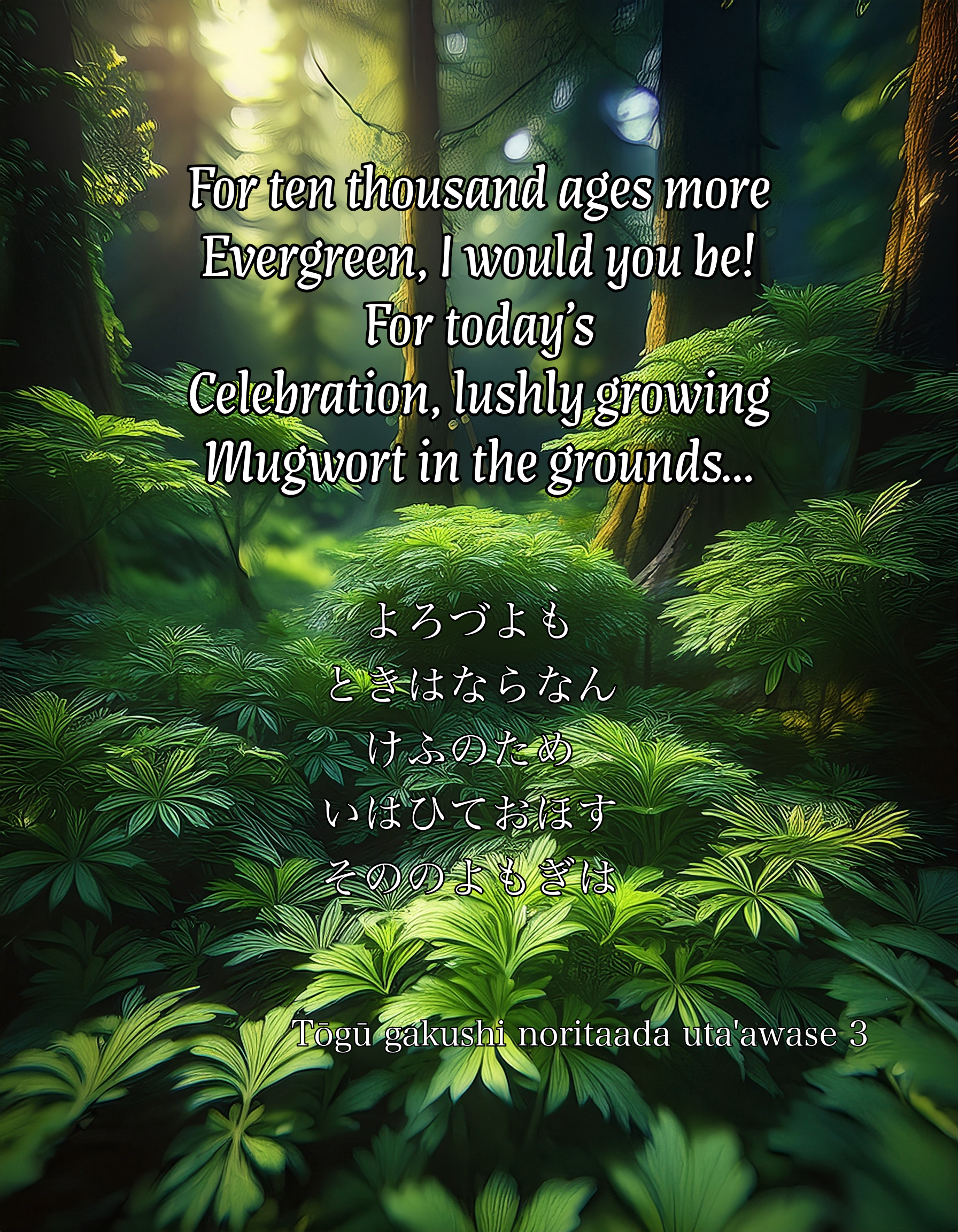
よろづよもときはならなんけふのためいはひておほすそののよもぎは

yorozuyo mo
tokiwa naranan
kyō no tame
iwaite ōsu
sono no yomogi wa
For ten thousand ages more
Evergreen, I would you be!
For today’s
Celebration, lushly growing
Mugwort in the grounds…

3

Right

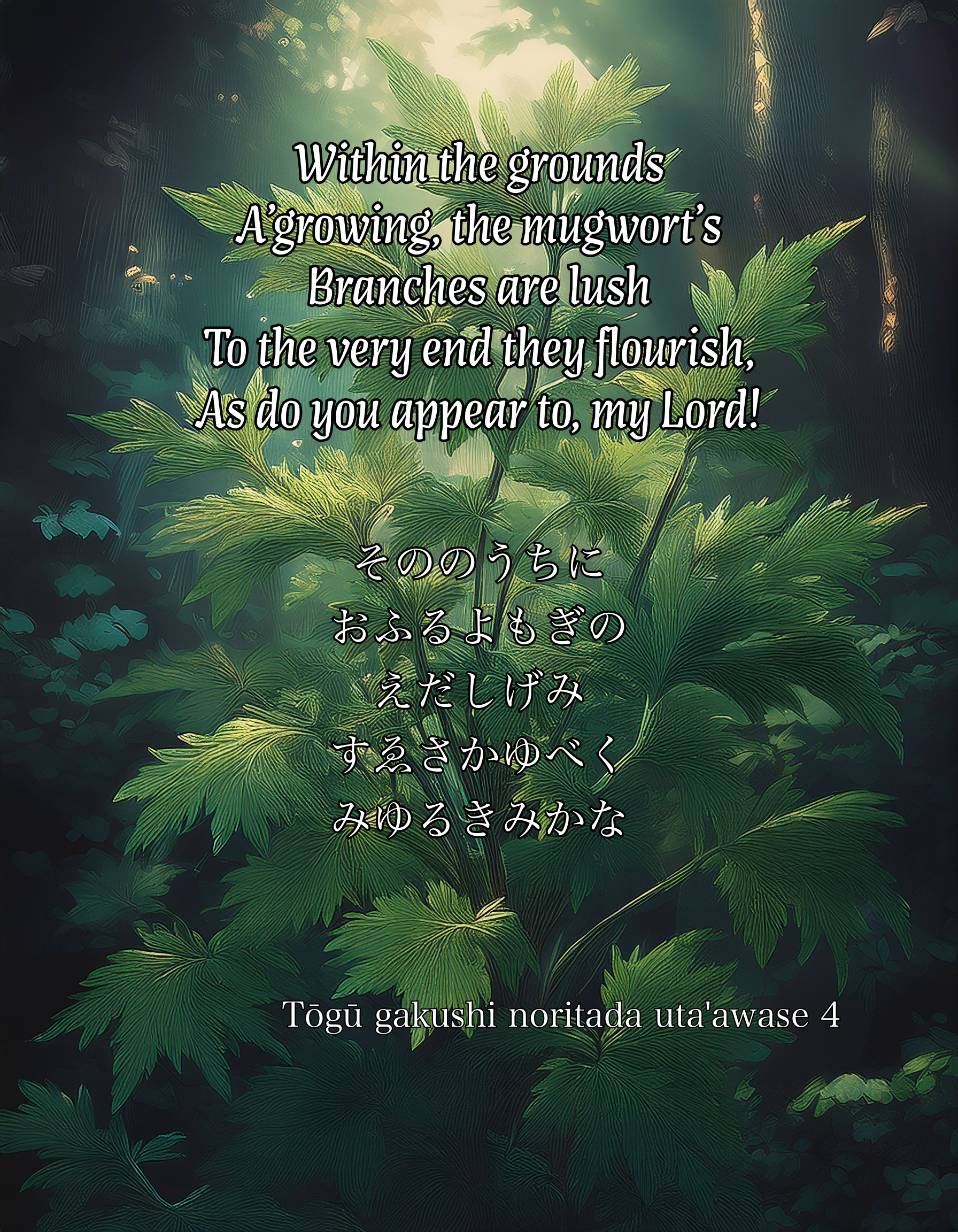
そののうちにおふるよもぎのえだしげみすゑさかゆべくみゆるきみかな

sono no uchi ni
ouru yomogi no
eda shigemi
sue sakayubeku
miyuru kimi kana
Within the grounds
A’growing, the mugwort’s
Branches are lush
To the very end they flourish,
As do you appear to, my Lord!

4

In ancient times, folk arose on this day with the dawn together with the birds and, taking those branches of mugwort from within their grounds that resembled people, dried them in the shade and made medicinal draughts—I wonder, were both Left and Right unaware of this? There is not even a dewdrop’s worth of diction in accordance with the topic, so I must make this round a tie.

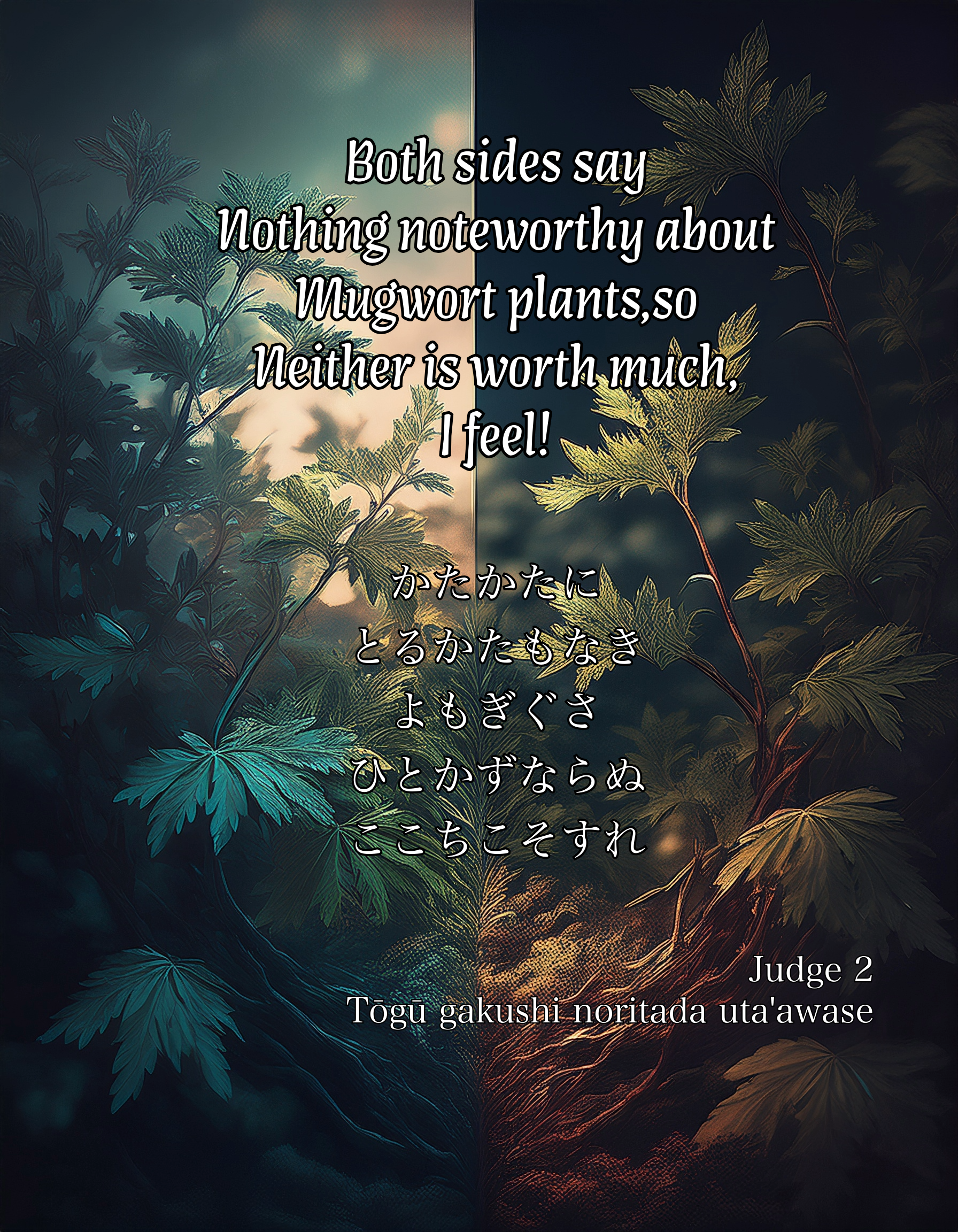
かたかたにとるかたもなきよもぎぐさひとかずならぬここちこそすれ

katakata ni
toru kata mo naki
yomogigusa
hito kazu naranu
kokochi koso sure
Both sides say
Nothing noteworthy about
Mugwort plants,so
Neither is worth much,
I feel!

Judge 2


[i] Sono no naka no yomogi 園中蓬

Tōgū gakushi noritada uta’awase 01

Poetry Match held by Noritada, Confucian Tutor to the Heir Apparent[i]

Topics

Poets

Judge

Sweet-flags in the Valley

Left

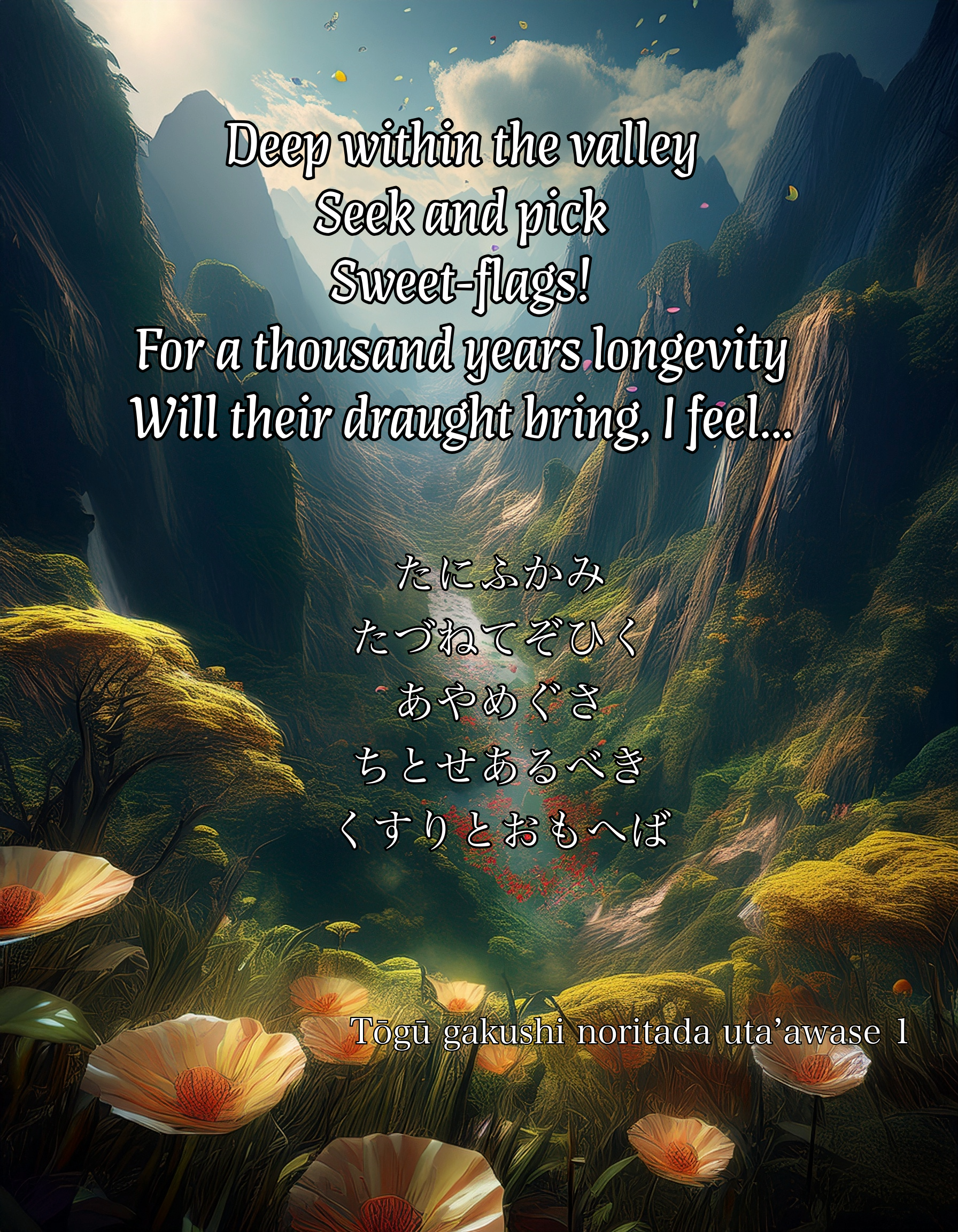
たにふかみたづねてぞひくあやめぐさちとせあるべきくすりとおもへば

tani fukami
tazunete zo hiku
ayamegusa
chitose arubeki
kusuri to omoeba
Deep within the valley
Seek and pick
Sweet-flags!
For a thousand years longevity
Will their draught bring, I feel…

1

Right

たにふかみおふるあやめのながきねはひきかつ人もあらじとぞおもふ

tani fukami
ouru ayame no
nagaki ne wa
hiki katsu hito mo
araji to zo omou
Deep within the valley
Grow sweet-flags—
So long their roots that
A skillful picker
Is there none, I feel!

2

Nine-knotted sweet-flags grow in valleys atop rocks, so every year on this day, folk gather together and pick sweet-flag roots to make medicine from them, so one should compose as though cupping the water of this conception in one’s hands. The overall impression of the Right’s poem, while it may be something encountered occasionally, is that it shows ignorance of the conception of the topic and only refers to how long the roots are—it loses, but there may be some depth there.

こころあさきみぎはにおふるあやめぐさひきどころなきものにざりける

kokoro asaki
migiwa ni ouru
ayamegusa
hikidokoro naki
mono ni zarikeru
Conception shallow
Right by the water’s edge a’growing
Are sweet flags:
There’s no value in picking
Such things!

Judge 1


[i] Tōgū gakushi noritada uta’awase 東宮学士義忠歌合