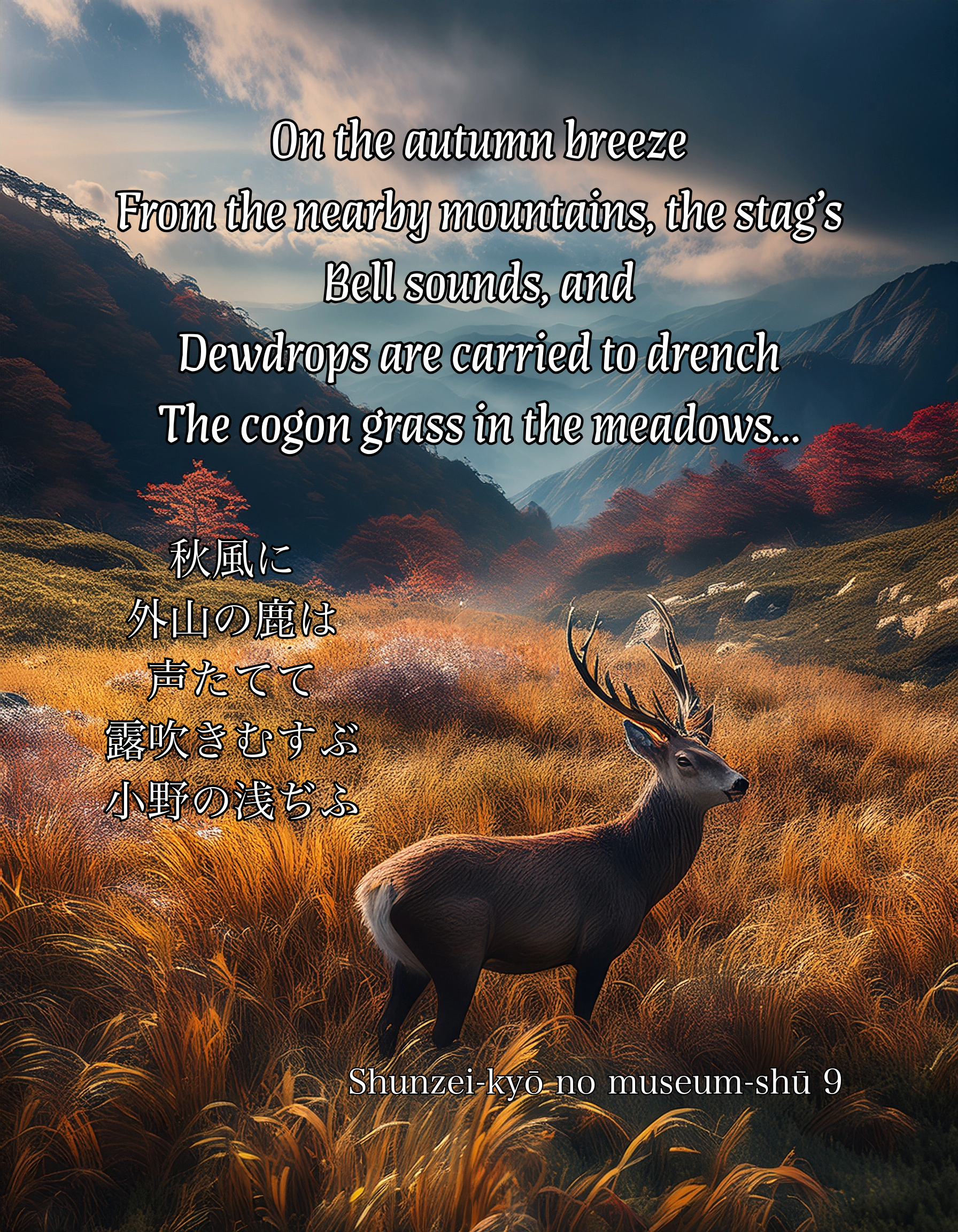
秋風に外山の鹿は声たてて露吹きむすぶ小野の浅ぢふ
| akikaze ni toyama no shika wa koe tatete tsuyu fukimusubu ono no asajū | On the autumn breeze From the nearby mountains, the stag’s Bell sounds, and Dewdrops are carried to drench The cogon grass in the meadows… |
9
Left (Tie)
あきの夜は雲もこころやありあけのかたぶくまでもすめる月かな
| aki no yo wa kumo mo kokoro ya ariake no katabuku made mo sumeru tsuki kana | On an autumn night Do the clouds, too, have feelings? Until at dawn Sets The moon, so clear? |
Lord Takanobu
1427
Right
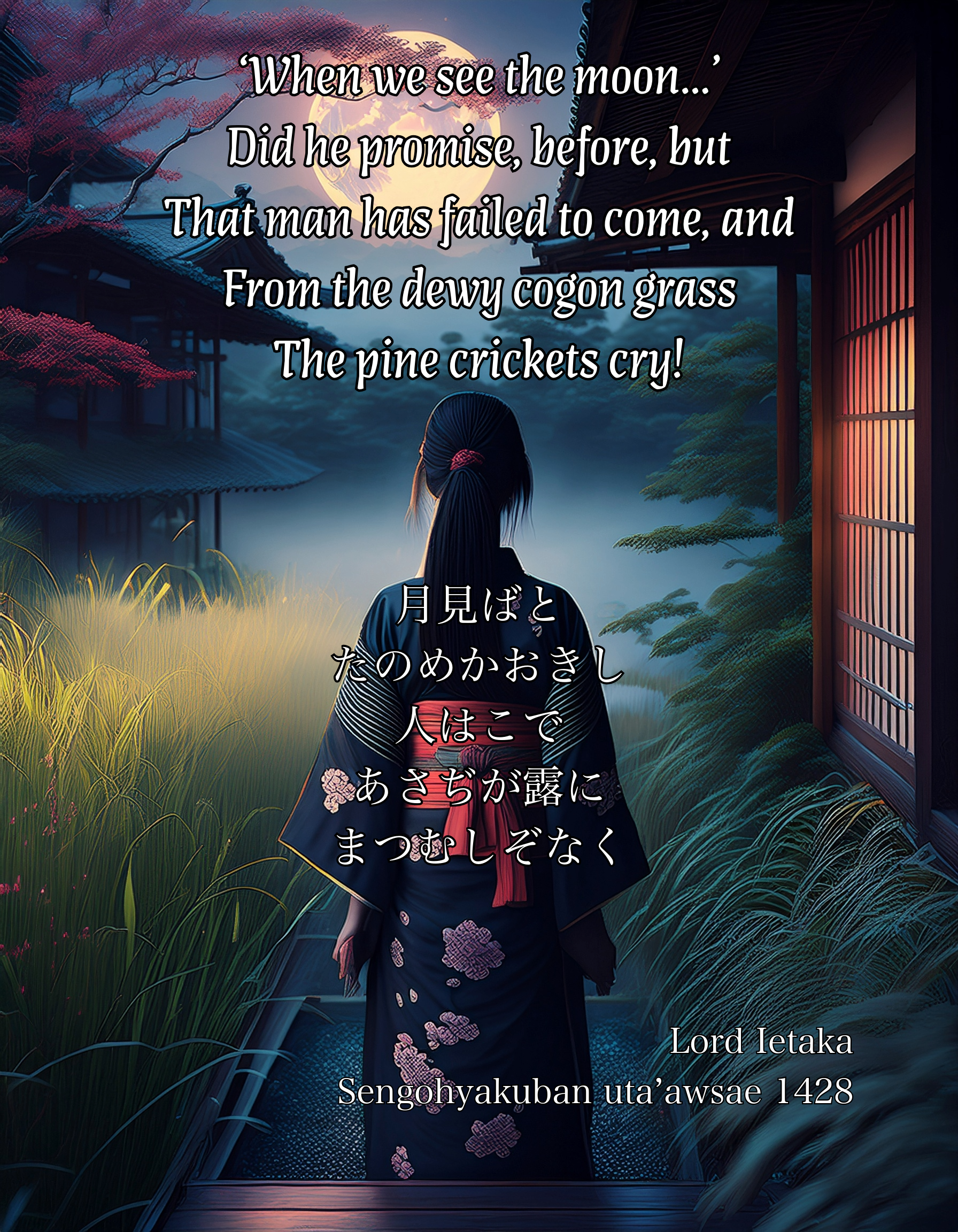
月見ばとたのめかおきし人はこであさぢが露にまつむしぞなく
| tsuki miba to tanome’okishi hito wa kode asaji ga tsuyu ni matsumushi zo naku | ‘When we see the moon…’ Did he promise, before, but That man has failed to come, and From the dewy cogon grass The pine crickets cry! |
Lord Ietaka
1428
Judgement:
日かずへぬとやまのつゆにしをるそできつつなれこしから衣かは
| hikazu henu toyama no tsuyu ni shioru sode kitsutsunarekoshi karakoromo ka wa | Days have passed, and The familiar mountains’ dew Weighs down my sleeves, So used am I to wearing A Cathay robe, no doubt! |
Round Five
Fresh bracken
Left
かりびとのとやまをこめてやきしよりしたもえいづるのべのさわらび
| karibito no toyama o komete yakishi yori shita moe’izuru nobe no sawarabi | Since hunters All the nearby mountains Have burned Budding beneath is Fresh bracken in the meadows. |
Sagami
9
Right (Win)
花をだにをりてかへらんさわらびはをぎのやけのにいまぞおひいづる
| hana o dani orite kaeran sawarabi wa ogi no yakeno ni ima zo oi’izuru | At least some blossom Let us pick and then return! Fresh bracken On the burned plain of cogon grass Is now a’sprouting! |
Jijū no menoto
10
‘Fresh bracken’ is something which folk of old referred to in various ways, and the latter poem is in keeping with this. ‘At least some blossom / Let us pick and then return!’ is an extremely charming mental image, if one had simply seen it budding, one would wonder why the poet has not sought out some other location before returning home. Moving on to ‘Since hunters / All the nearby mountains’, this is an overly hackneyed, and thus distasteful, expression like ‘on eastern roads’, so the latter poem is superior, isn’t it.
Round Twenty-One
Left (Win)
しがらきの外山の末の郭公たが里ちかき初音なるらん
| shigaraki no toyama no sue no hototogisu ta ga sato chikaki hatsune naruran | In Shigaraki At the foothills’ end A cuckoo By whose estate Might let out his first cry? |
Takasuke
41
Right
橘のにほひを空に尋ねきて山時鳥なかぬ日ぞなき
| tachibana no nioi o sora ni tazunekite yamahototogisu nakanu hi zo naki | Orange blossom’s familiar Scent within the skies I seek out, while The mountain cuckoo Fails to sing on not a single day… |
Shimotsuke
42
The Left poem’s ‘near whose estate does it first call’ does not sound bad. The Right’s poem, too, seems to have no faults to mention, yet the Left still wins by a hair.


Composed on the conception of gazing at mountain cherries in the distance, when people were drinking wine and composing poetry at the residence of the Minister of the Centre.
高砂の尾上のさくらさきにけりと山のかすみたたずもあらなん
| takasago no wonoFe no sakura sakinikeri toyama no kasumi tatazu mo aranan | On Takasago’s Heights the cherries Have bloomed; O, I wish the haze around the nearby peaks Would not rise at all! |
Lord Ōe no Masafusa

Composed on the conception of the beginning of winter.
草の葉もはや霜がれの色みえて外山かたかけ冬はきにけり
| kusa no ha mo haya shimogare no iro miete toyama katakake fuyu wa kinikeri | The blades of grass, Swiftly, their frost burned Hues do show All o’er the distant mountains Has the winter come. |
The Lay Priest and Former Regent and Minister of Left


