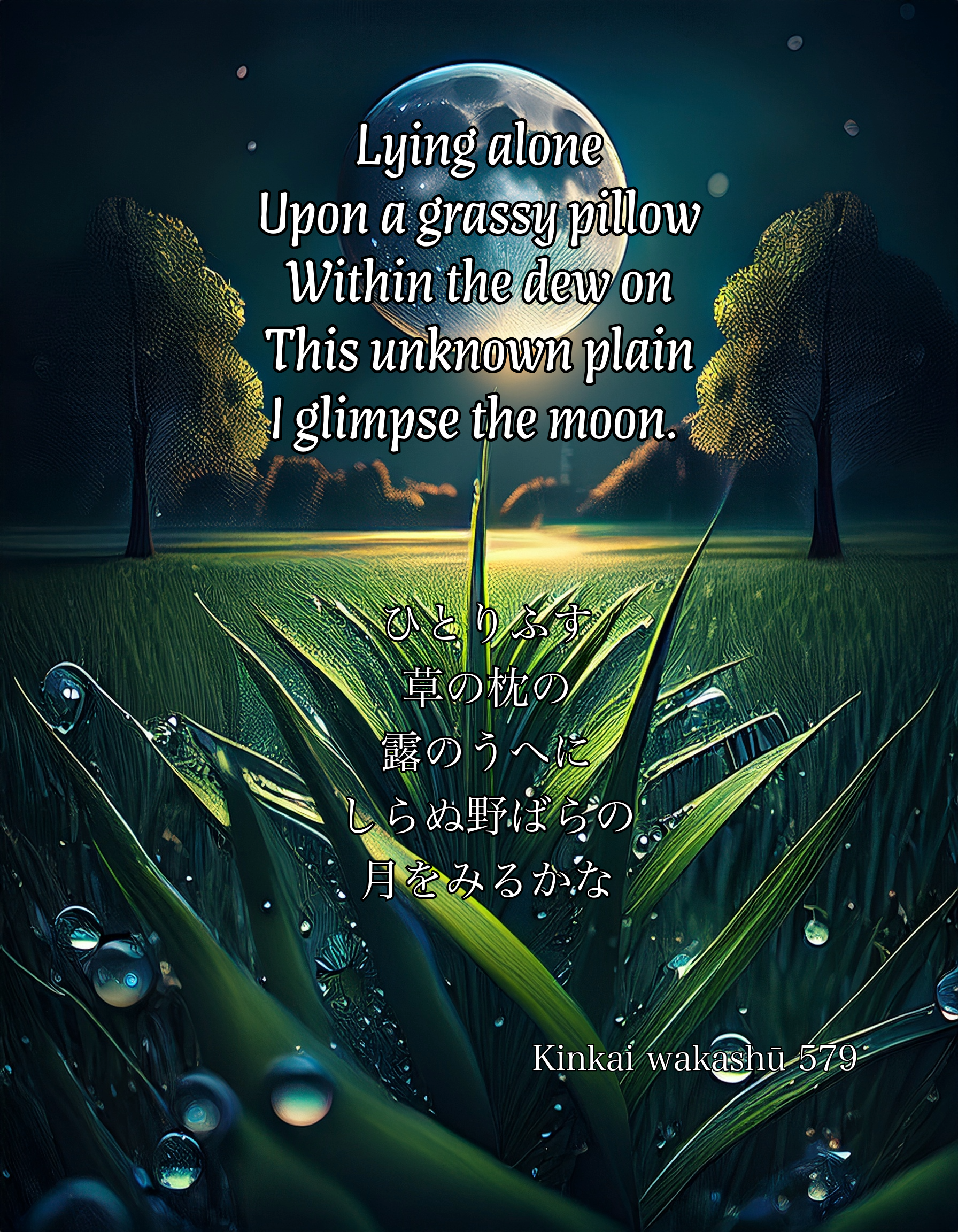
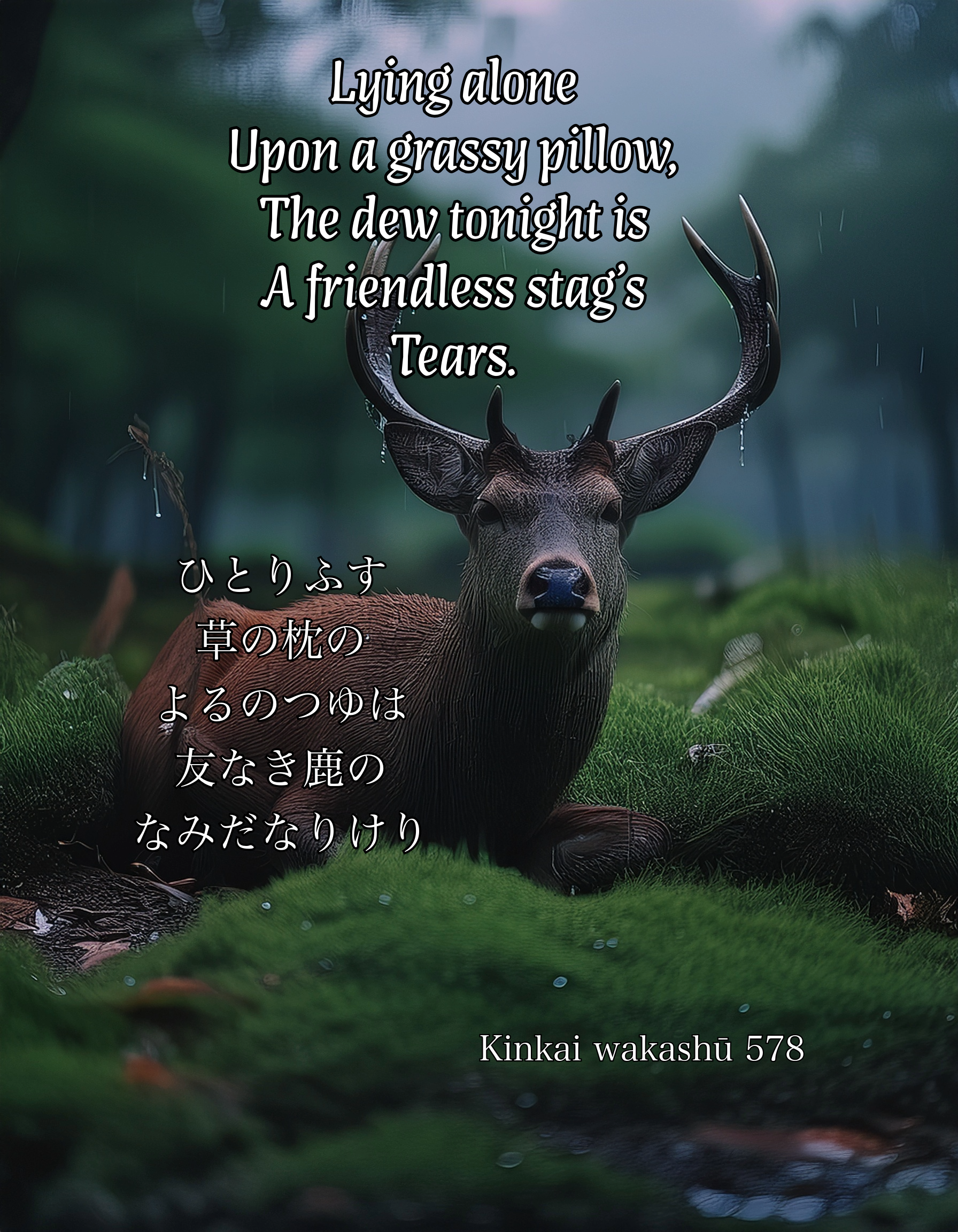
hitori fusu kusa no makura no tsuyu no ue ni shiranu nobara no tsuki o miru kana
Lying alone Upon a grassy pillow Within the dew on This unknown plain I glimpse the moon.[i]
579
[i] See: Composed on the moon above the mountains. あしびきの山ぢのこけの露のうへにねざめ夜ぶかき月を見るかな ashibiki no / yamaji no koke no / tsuyu no ue ni / nezame yobukaki / tsuki o miru kana ‘Resting upon leg-wearying / Mountain trails’ moss / Atop the dew / I awoke late at night / And glimpsed the moon.’ Fujiwara no Hideyoshi (Shinkokinshū IV: 398): and: Composed as a travel poem. けふは又しらぬ野ばらに行きくれぬいづれの山か月はいづらん kyō wa mata / shiranu nobara ni / yukikurenu / izure no yama ka / tsuki wa izuran ‘Today, once more / Across an unknown plain /I go at sundown; / Which will be the mountain / Where the moon does rise?’ Minamoto no Ienaga (Shinkokinshū X: 956)
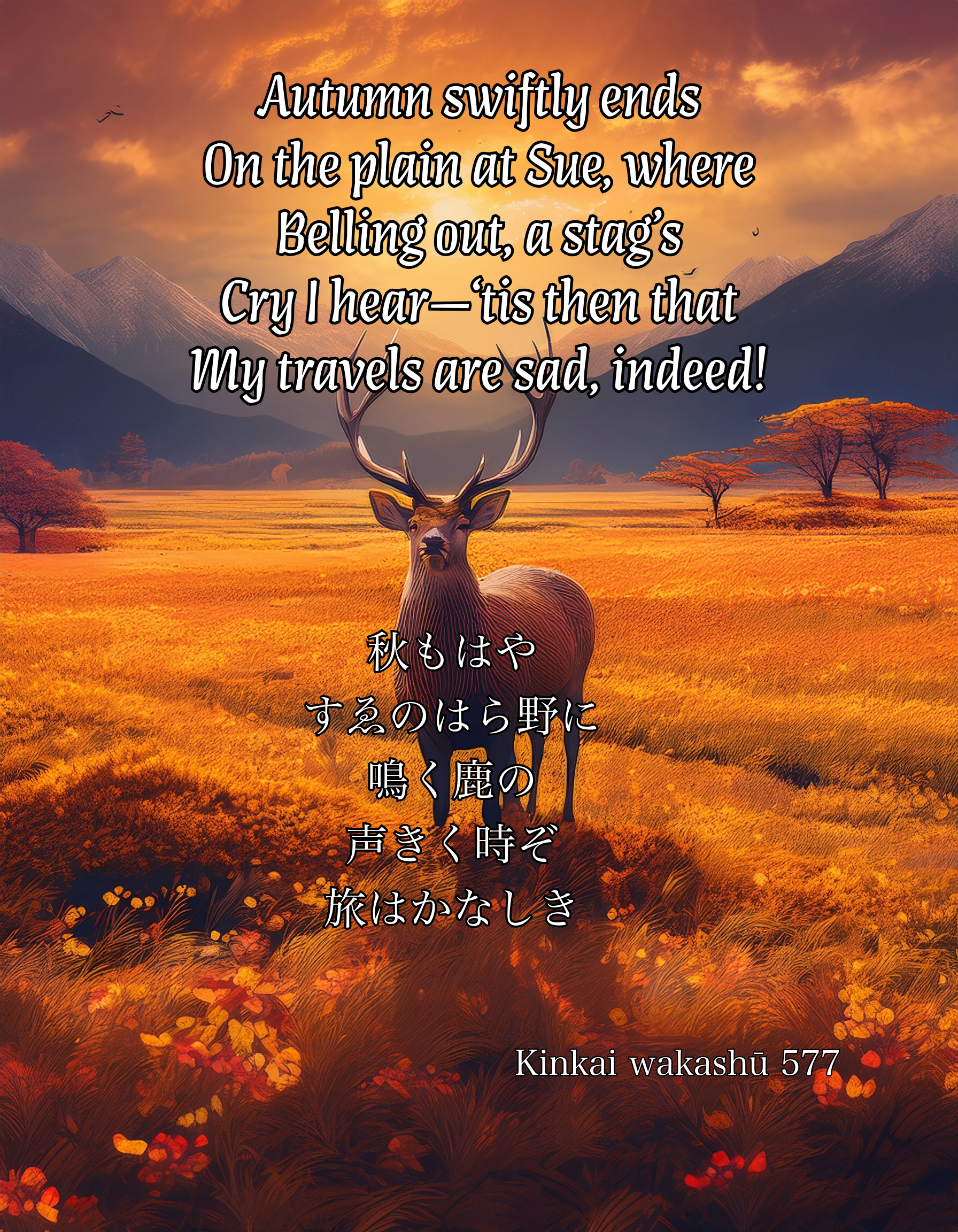
aki mo haya sue no harano ni naku shika no koe kiku toki zo tabi wa kanashiki
Autumn swiftly ends On the plain at Sue, where Belling out, a stag’s Cry I hear—‘tis then that My travels are sad, indeed![i]
577
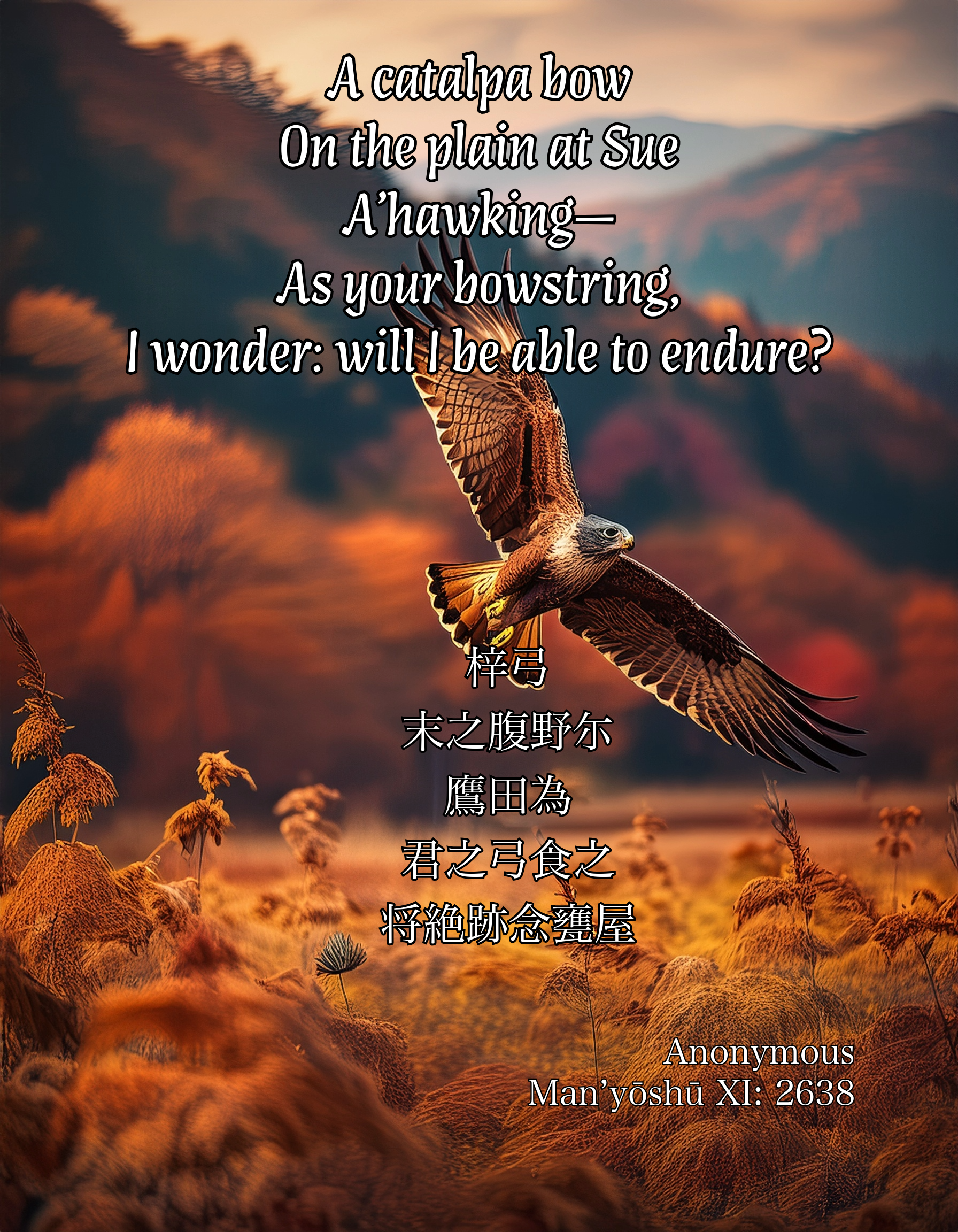
[i] An allusive variation on: 梓弓 末之腹野尓 鷹田為 君之弓食之 将絶跡念甕屋 azusayumi / sue no harano ni / togarisuru / kimi ga yuzuru no / taemu to omoe ya ‘A catalpa bow / On the plain at Sue / A’hawking— / As your bowstring, / I wonder: will I be able to endure?’ Anonymous (Man’yōshū XI: 2638); and: A poem from the poetry competition at Prince Koresada’s house. おく山に紅葉ふみわけなく鹿のこゑきく時ぞ秋は悲しき okuyama ni / momiji fumiwake / naku shika no / koe kiku toki zo / aki wa kanashiki ‘In the mountains’ heart / Forging through the autumn leaves, / A calling stag: / When I hear his voice I feel, / Autumn is sorrowful, indeed.’ Anonymous (Kokinshū IV: 215)
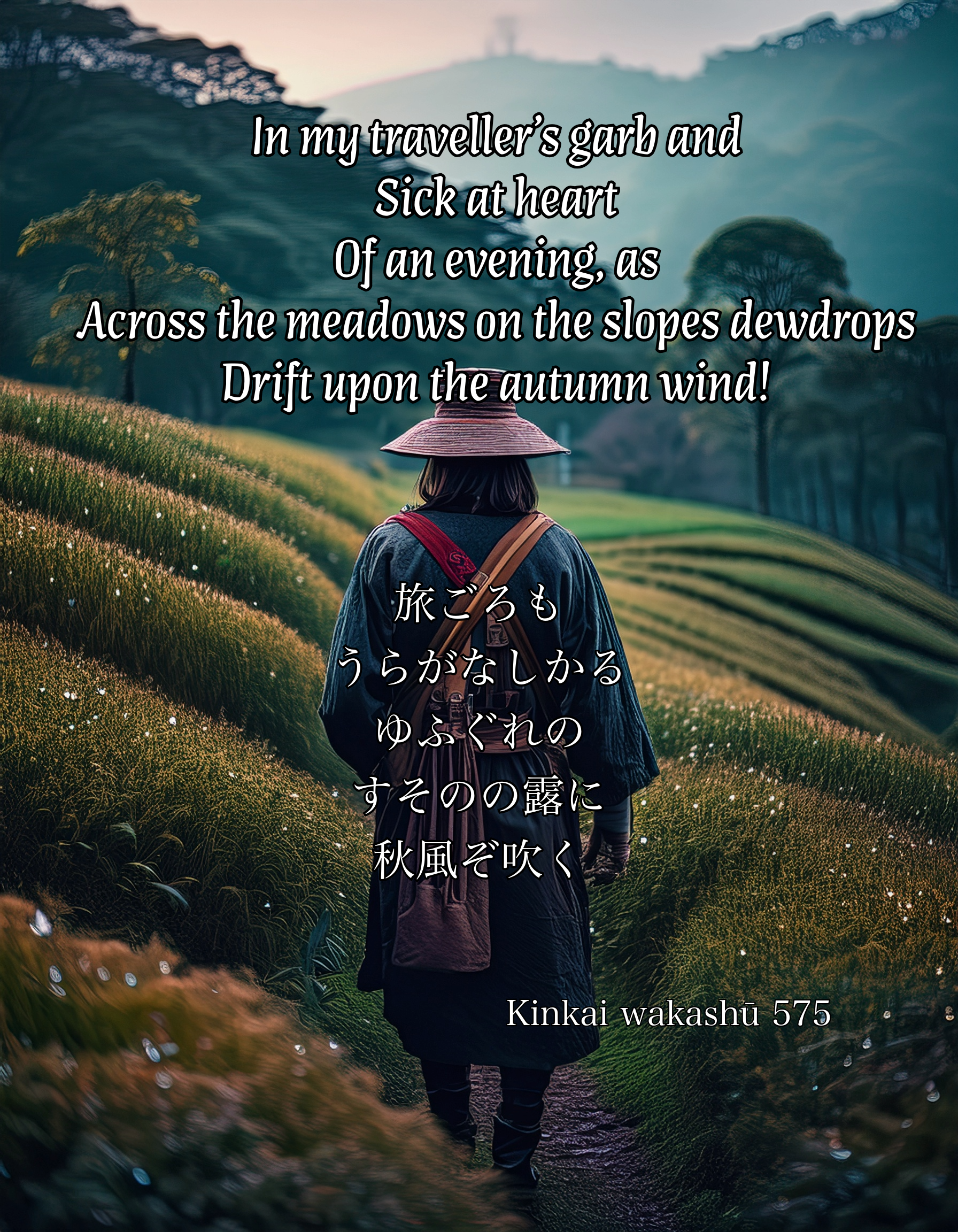
tabigoromo uraganashikaru yūgure no susono no tsuyu ni akikaze zo fuku
In my traveller’s garb and Sick at heart Of an evening, as Across the meadows on the slopes dewdrops Drift upon the autumn wind! [i]
575
[i] See: 旅ごろもうらがなしさにあかしかね草の枕は夢もむすばず tabigoromo / uraganashisa ni / akashikane / kusa no makura wa / yume mo musabazu ‘In my traveller’s garb / My heart-sickness / I cannot lift, for / My grassy pillow / Brings no dreams, at all…’ Hikaru Genji (Genji monogatari 223); and: たびごろもうらがなしかるあさぢふによはのしぐれよいかにせよとぞ tabigoromo / uraganashikaru / asajū ni / yowa no shigure yo / ika ni seyo to zo ‘In my traveller’s garb and / Sad at heart among / The clumps of cogon grass, / O, midnight shower, / Tell me, what I am I to do?’ Jakuchō (Sumiyoshi-sha uta’awase kaō ni-nen 54)
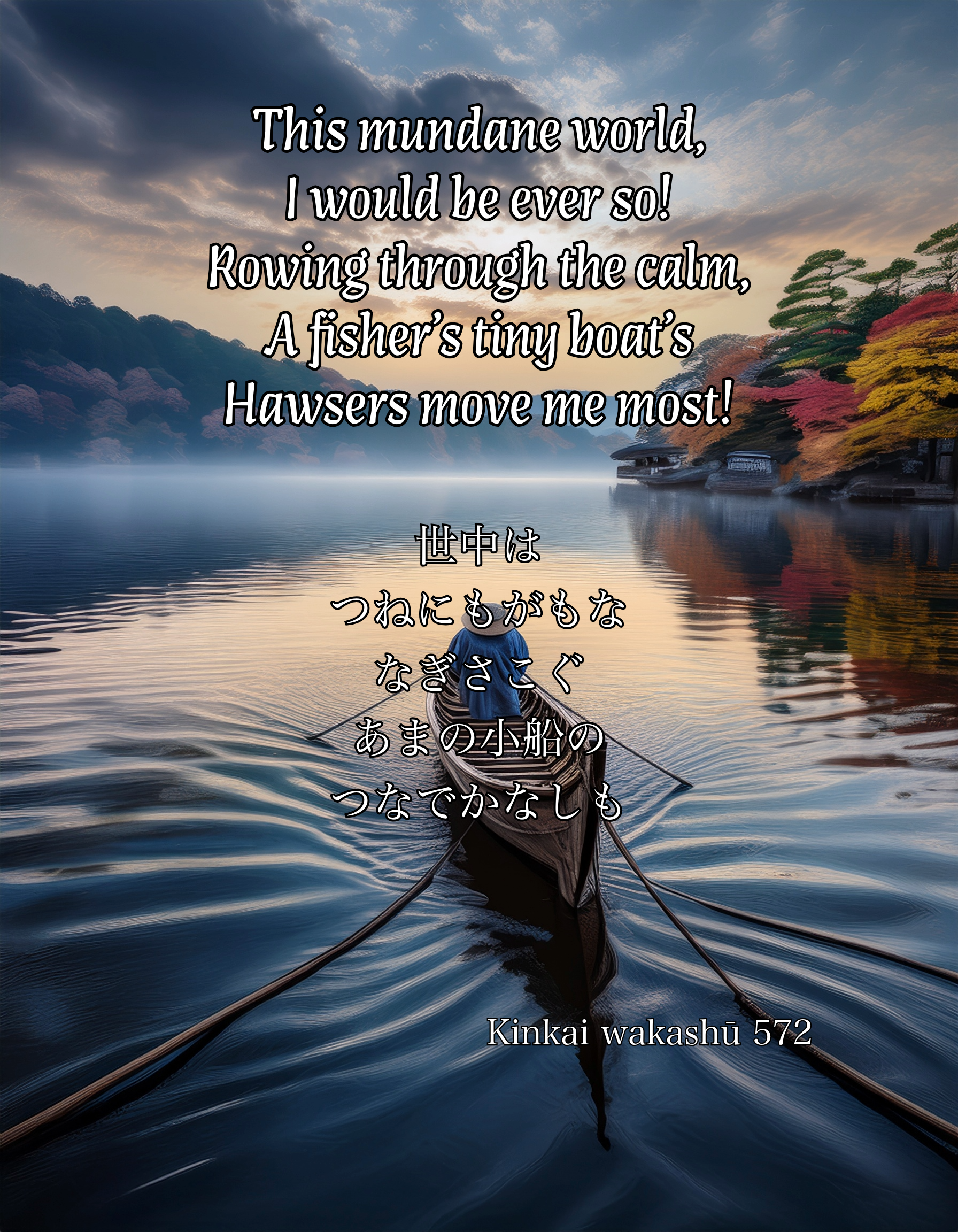
yo no naka wa tsune ni mogamo na nagisa kogu ama no obune no tsunade kanashi mo
This mundane world, I would be ever so! Rowing through the calm, A fisher’s tiny boat’s Hawsers move me most! [i]
572
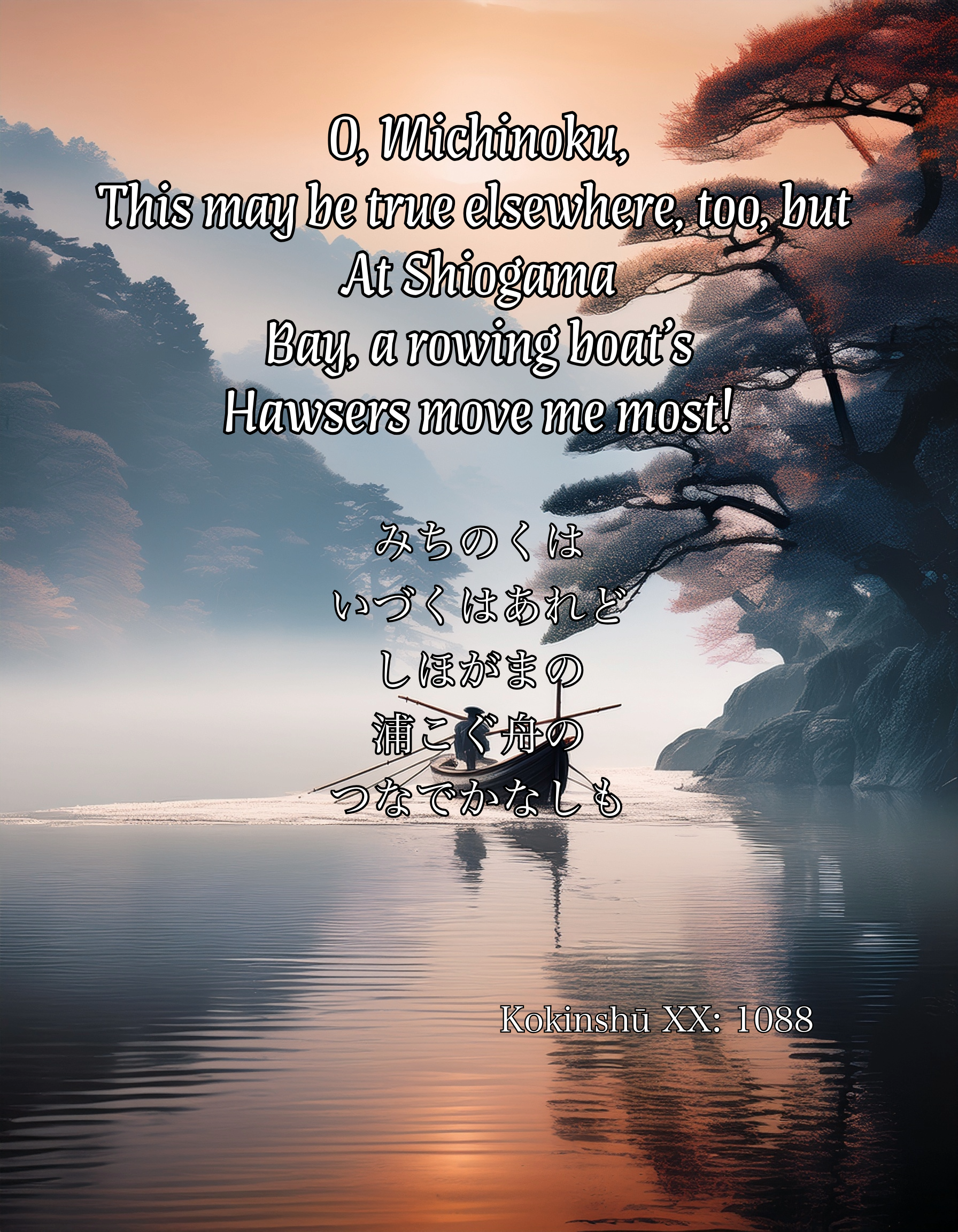
[i] See: A poem from Michinoku. みちのくはいづくはあれどしほがまの浦こぐ舟のつなでかなしも michinoku wa / izuku wa aredo / shiogama no / ura kogu fune no / tsunade kanashi mo ‘O, Michinoku, / This may be true elsewhere, too, but / At Shiogama / Bay, a rowing boat’s / Hawsers move me most!’ Anonymous (Kokinshū XX: 1088)