Topic unknown.
鳴く声はたかまの山の時鳥とをちの里の人も聞くらん
| naku koe wa takama no yama no hototogisu tōchi no sato no hito mo kikuran | Calling, crying, On Takama Mountain A cuckoo On the estate of Tōchi Might even be heard. |
Dharma Master Shōchō
Round Twenty-Four
Left (Tie)
覚束なたれきけとてか時鳥さよふけ方の雲に鳴くらん
| obotsukana tare kike tote ka hototogisu sayo fukegata no kumo ni nakuran | I do not understand— Who is it that you demand hears you, O, cuckoo? Toward brief night’s dawn, Calling from within the clouds… |
Tomoshige
47
Right
待ちかねしよはも昔にかはらねばことしもつらし山時鳥
| machikaneshi yowa mo mukashi ni kawaraneba kotoshi mo tsurashi yamahototogisu | Eagerly awaiting Midnight, to find—as long before— It all unchanged, so This year, too, how cruel is The mountain cuckoo! |
Dharma Master Zenshin
48
Both Left and Right sound suitable. So, they should tie.


Round Twenty-Three
Left (Tie)
時鳥山よりをちの里人はまたでや夜半の初音きくらん
| hototogisu yama yori ochi no satobito wa matade ya yowa no hatsune kikuran | O, cuckoo, Far from the mountains, Will villagers Without waiting, at midnight Ever hear your first cry? |
Chikanari
45
Right
うちしめる花橘の五月雨に軒もる夜半のほととぎすかな
| uchishimeru hanatachibana no samidare ni noki moru yowa no hototogisu kana | When utterly drenched is The orange blossom by The summer showers. Dripping from the eaves at midnight is A cuckoo’s call! |
Ie’kiyo
46
The Right’s poem has ‘Dripping from the eaves at midnight is a cuckoo’s call!’—this sounds like it conveys the conception, but yet is stylistically unclear. The Left’s poem takes up the conception of ‘On the leg-wearying / Mountains’ far side / Folk dwell—I wonder / Do they not have to wait for the autumn / Moon to fill their gaze?’,[1] doesn’t it? Neither has any real point worth making, so they tie.


[1] This poem is: Topic unknown. あしびきの山のあなたにすむ人はまたでや秋の月をみるらんashihiki no / yama no anata ni / sumu hito wa / matade ya aki no / tsuki o miruran Former Emperor Sanjō (SKKS IV: 382).
Round Twenty-Two
Left (Win)
五月雨にやすらふ暮の時鳥そなたの雲に声なへだてそ
| samidare ni yasurau kure no hototogisu sonata no kumo ni koe na hedate so | In a summer shower, Hesitating, at twilight, O, cuckoo, Let not the intervening clouds Interrupt your song! |
Shō
43
Right
過ぎぬなりさやはちぎりし時鳥なく音ばかりはこぞにかはらで
| suginunari saya wa chigirishi hototogisu naku ne bakari wa kozo ni kawarade | And so you’ve flown by— Is that what you vowed, O, cuckoo? For only the sound of your song Is unchanged from the year before… |
Nagatsuna
44
The Left’s poem doesn’t seem bad. The Right poem’s ‘For only the sound of your song is unchanged from the year before’ is somewhat difficult to grasp—if the cuckoo’s call has not changed, then what has? After all, cuckoos have ‘the voice of yesteryear’[1]—among other references—so it’s obvious that their calls don’t change, so the Left is somewhat better, I think.


[1] KKS III: 137
Round Twenty-One
Left (Win)
しがらきの外山の末の郭公たが里ちかき初音なるらん
| shigaraki no toyama no sue no hototogisu ta ga sato chikaki hatsune naruran | In Shigaraki At the foothills’ end A cuckoo By whose estate Might let out his first cry? |
Takasuke
41
Right
橘のにほひを空に尋ねきて山時鳥なかぬ日ぞなき
| tachibana no nioi o sora ni tazunekite yamahototogisu nakanu hi zo naki | Orange blossom’s familiar Scent within the skies I seek out, while The mountain cuckoo Fails to sing on not a single day… |
Shimotsuke
42
The Left poem’s ‘near whose estate does it first call’ does not sound bad. The Right’s poem, too, seems to have no faults to mention, yet the Left still wins by a hair.


Round Twenty
Left (Win)
あけぼのは涙やもろき時鳥なくねにおつる杜の下露
| akenbono wa namida ya moroki hototogisu naku ne ni otsuru mori no shitazuyu | With the dawn Are you swiftly to tears moved By the cuckoo’s Calling cries, falling from The forest drip dewdrops? |
Dōchin
39
Right
今もかも昔やこふる橘の花ちる里になく郭公
| ima mo kamo mukashi ya kouru tachibana no hana chiru sato ni naku hototogisu | I wonder, is she now, As in days gone by, beloved Where orange Blossom falls on the estate— The calling cuckoo?[1] |
Dharma Master Nyokan
40
Both Left and Right are of the same quality, yet I wonder about the sound of the Right poem’s final section, so the Left wins.


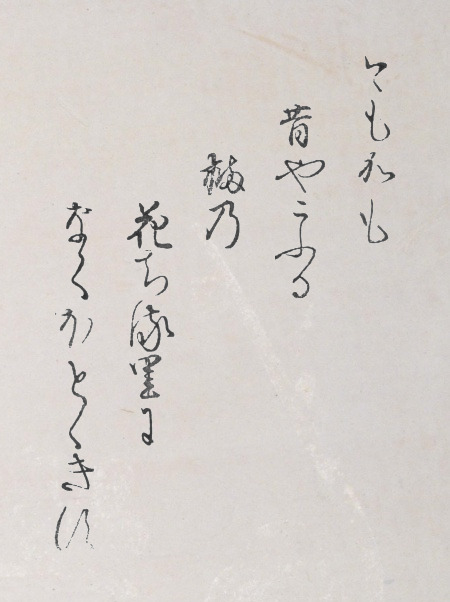
[1] An allusive variation on: A poem by the Governor-General of Dazai, Lord Ōtomo. 橘の花散る里の霍公鳥片恋しつつ鳴く日しぞ多き tachibana no / hana chiru sato no / hototogisu / kata koishitsutsu / naku hi shi zo ōki ‘Orange / Blossom scatters round my estate where / The cuckoo / For unrequited love / Does cry on many a day…’ Ōtomo no Tabito (MYS VIII: 1473)
Round Nineteen
Left (Tie)
なれをしぞあはれとはおもふ時鳥あかず過ぎても歳のへぬれば
| nare o shizo aware to wa omou hototogisu akazu sugite mo toshi no henureba | You, indeed, do Deeply move me O, cuckoo! Never sated am I Through all the passing years… |
The Supernumerary Major Counsellor
37
Right
われならで何をうしとか時鳥ことしも雲のよそに鳴くらん
| ware narade nani o ushi to ka hototogisu kotoshi mo kumo no yoso ni nakuran | Not I, but What is it distresses you so, O, cuckoo? That this year, too, from the clouds Yonder side you seem to sing… |
Lord Nobunari
38
Both Left and Right don’t sound bad, so again this is a tie.


Round Eighteen
Left (Tie)
神さぶるなげきの森の時鳥ひくしめなはもなくなくやこし
| kamu saburu nageki no mori no hototogisu hiku shimenawa mo nakunaku ya koshi | In divine Nageki’s sacred grove Does the cuckoo to Where the holy garlands Are hung not, come to sing?[1] |
The Former Minister of the Centre
35
Right
さとわかずなけや五月の郭公忍びし比は恨みやはせし
| sato wakazu nake ya satsuki no hototogisu shinobishi koro wa urami ya wa seshi | In every hamlet Sing, O, Fifth Month Cuckoo! For when you chirped before, I did not hate you for it… |
Kozaishō
36
The Left’s poem is based on ‘Prayers / Alone I seem to hear at / This shrine, indeed, but / In the end, passion to grief’s / Grove will turn, no doubt…’ and sounds pleasant. The Right’s poem says ‘For when you chirped before, / I did not hate you for it’ and has a graceful style—thus, they tie.


[1] An allusive variation on: Topic unknown. ねぎ事をさのみききけむやしろこそはてはなげきのもりとなるらめnegigoto o / sanomi kikikemu / yashiro koso / hate wa nageki no / mori to narurame ‘Prayers / Alone I seem to hear at / This shrine, indeed, but / In the end, passion to grief’s / Grove will turn, no doubt…’ Sanuki (KKS XIX: 1055)
保登等芸須 安不知能枝尓 由吉底居者 花波知良牟奈 珠登見流麻泥
ほととぎす あふちのえだに ゆきてゐば はなはちらむな たまとみるまで
| pototogisu aputi no eda ni yukite wiba pana pa tiramu na tama to miru made | If a cuckoo To the chinaberry’s branches Should come to rest, then Still would the blossoms scatter, for Gems do they but seem… |
Sent in reply on the 3rd day of the Fourth Month by Palace Attendant Ōtomo sukune Yakamochi from the capital at Kuni to his younger brother, Fumimochi.
