Tag Archives: cogon grass

Nishinomiya uta’awase 15

Cogon grass and the Same

Round Fifteen

Left

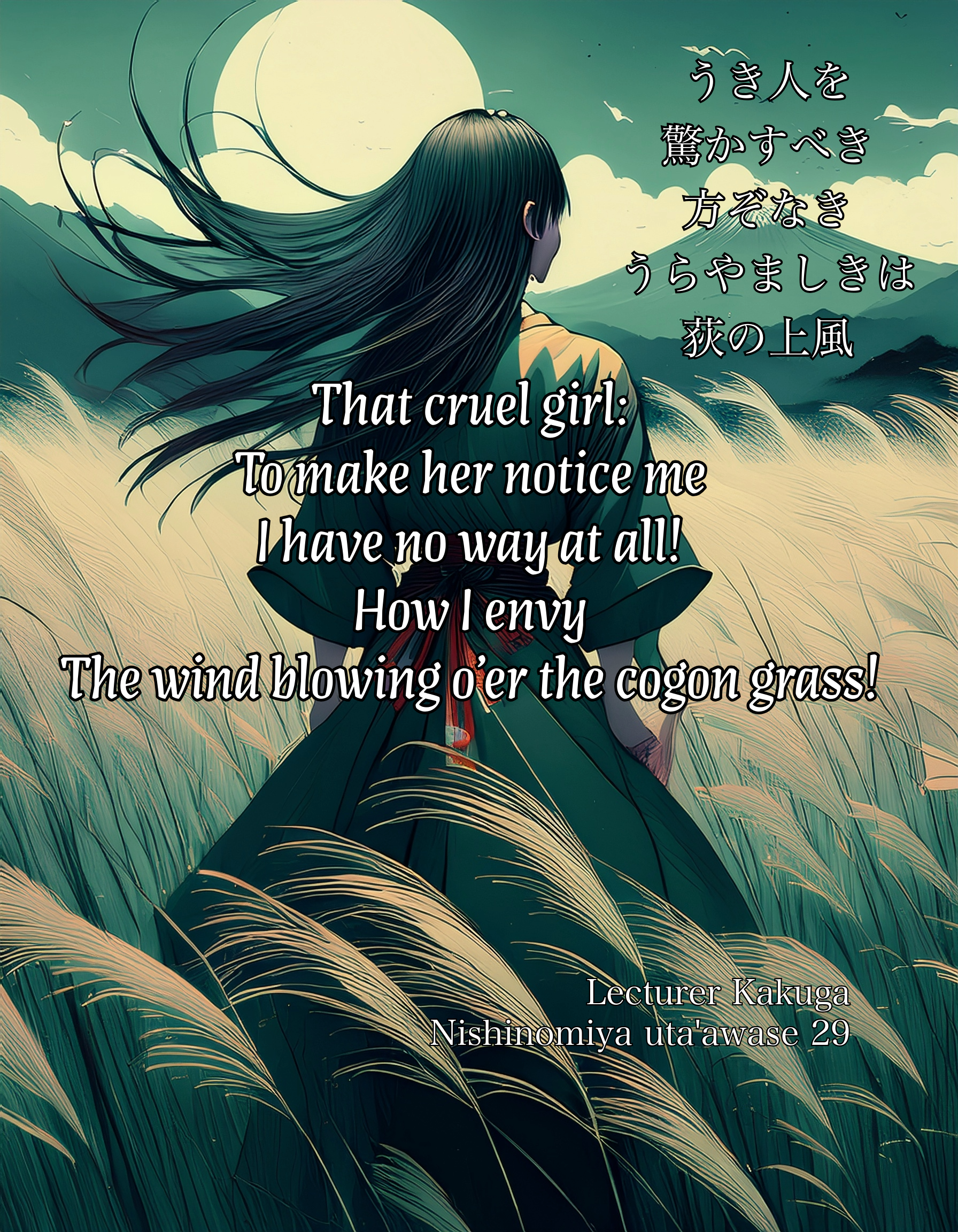
うき人を驚かすべき方ぞなきうらやましきは荻の上風

ukibito o
odorokasubeki
kata zo naki
urayamashiki wa
ogi no uwakaze
That cruel girl:
To make her notice me
I have no way at all!
How I envy
The wind blowing o’er the cogon grass!

Lecturer Kakuga
29

Right

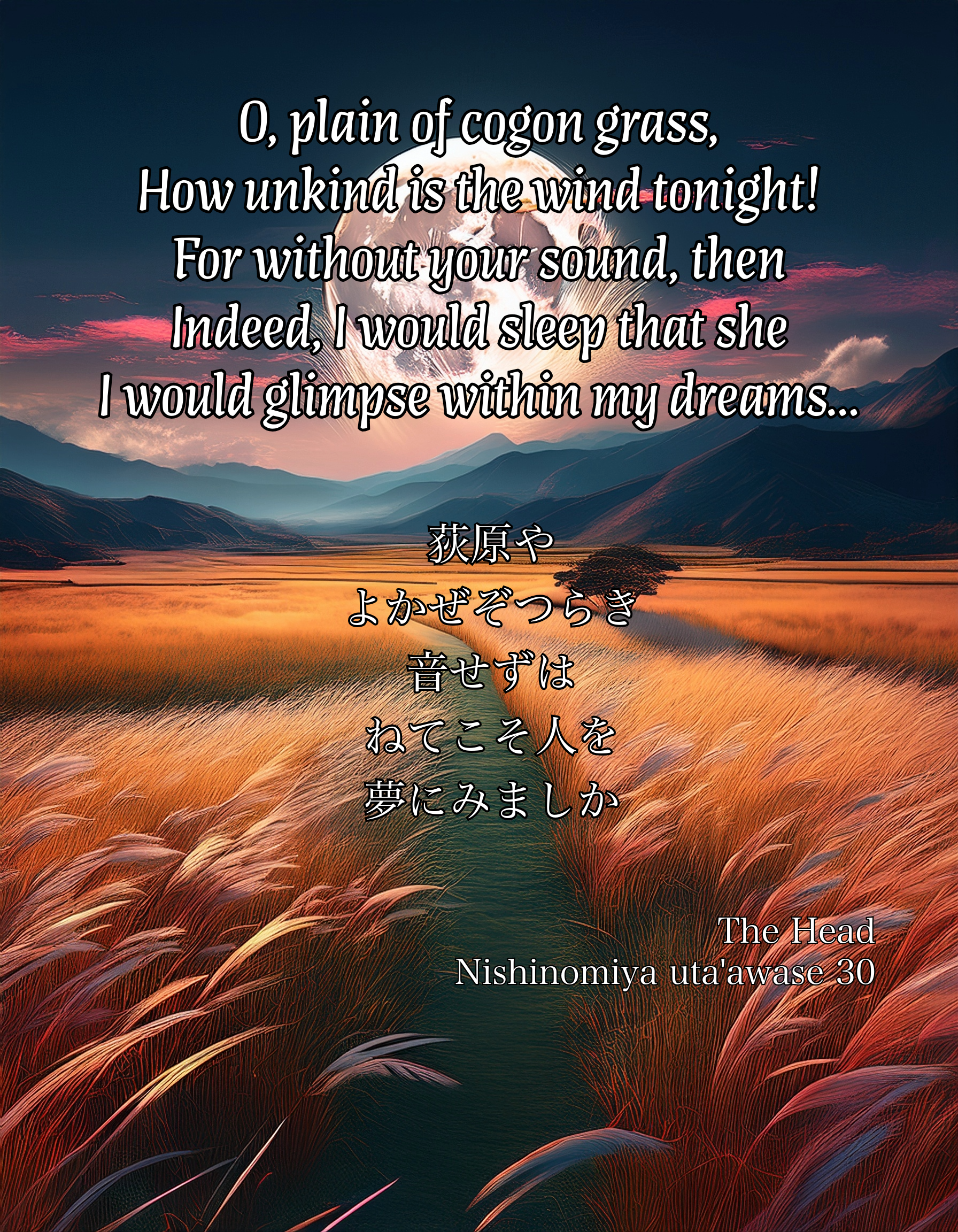
荻原やよかぜぞつらき音せずはねてこそ人を夢にみましか

ogiwara ya
yokaze zo tsuraki
oto sezu wa
nete koso hito o
yume ni mimashika
O, plain of cogon grass,
How unkind is the wind tonight!
For without your sound, then
Indeed, I would sleep that she
I would glimpse within my dreams…

The Head
30

The conception of love sounds superior at present in envying the ‘wind blowing o’er the cogon grass’ than it does in the ‘unkind is the wind tonight’.
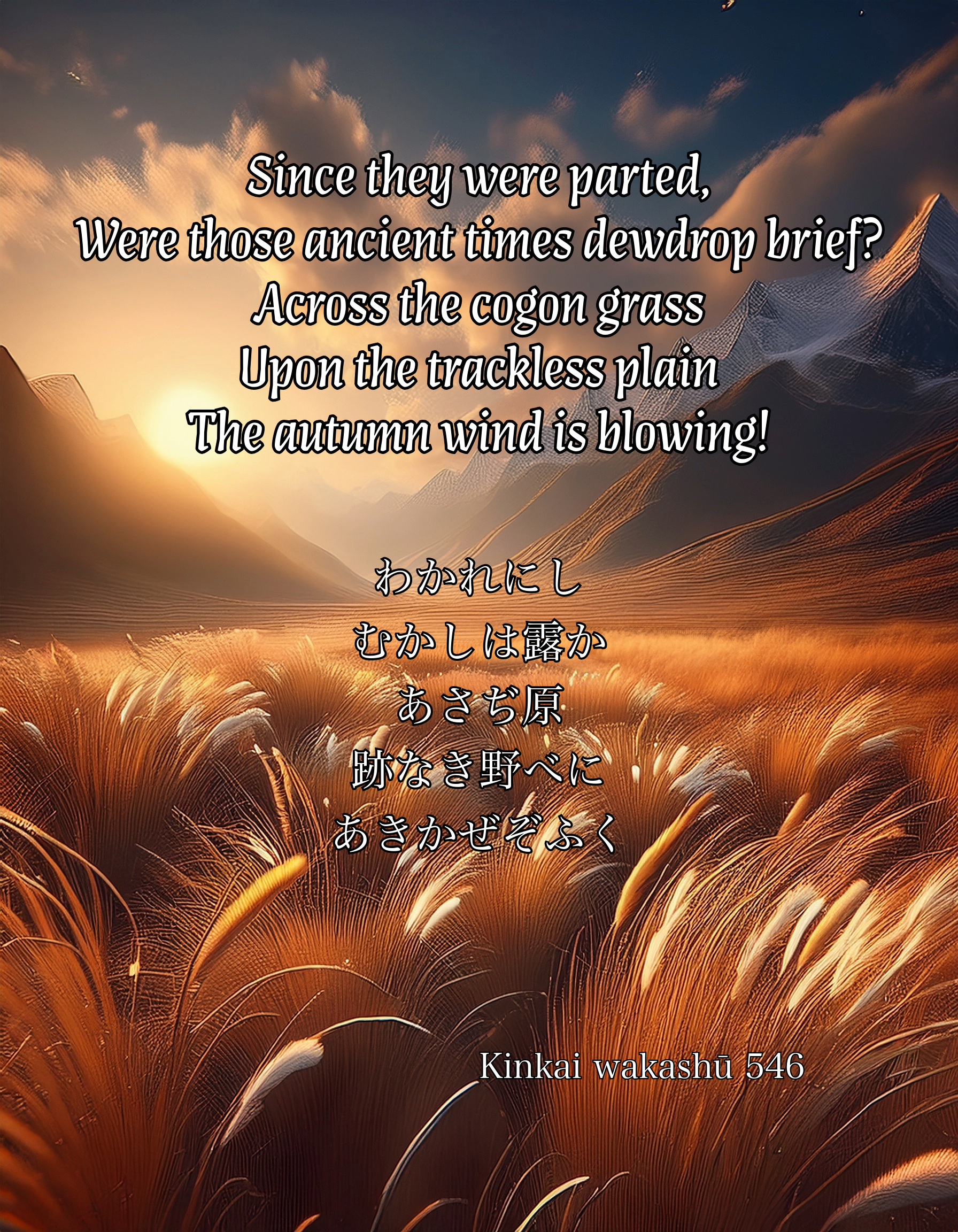
Kinkai wakashū 546

Love and tales.[i]

わかれにしむかしは露かあさぢ原跡なき野べにあきかぜぞふく

wakarenishi
mukashi wa tsuyu ka
asajiwara
ato naki nobe ni
akikaze zo fuku
Since they were parted,
Were those ancient times dewdrop brief?
Across the cogon grass
Upon the trackless plain
The autumn wind is blowing!

546


[i] The ‘tale’ here is the Song of Everlasting Woe about the doomed love between Yang Guifei and Emperor Xuanzong

Sumiyoshi-sha uta’awase kaō ni-nen 27

Round Two

Left (Win)

ならしばのたびのいほりにおとづれてしぐれもいまぞやまめぐりする

narashiba no
tabi no iori ni
otozurete
shigure mo ima zo
yama megurisuru
Oak boughs make
My traveller’s hut, where
I am visited by the sound of
Showers—they, too, now
Are on pilgrimage through the mountains.[1]

Shōkaku
53

Right

たびごろもうらがなしかるあさぢふによはのしぐれよいかにせよとぞ

tabigoromo
uraganashikaru
asajū ni
yowa no shigure yo
ika ni seyo to zo
In my traveller’s garb and
Sad at heart among
The clumps of cogon grass,
O, midnight shower,
Tell me, what I am I to do?[2]

Jakuchō
54

While both Left and Right sound pleasant, I make the Left the winner, because it sounds slightly more moving at present, with a traveller’s hut being visited by showers.


[1]Alluding to: Composed when caught in a shower, while making a pilgrimage to one hundred temples in Higashiyama.  もろともに山めぐりするしぐれかなふるにかひなき身とはしらずや morotomo ni / yamamegurisuru / shigure kana / furu ni kainaki / mi to wa shirazu ya  ‘Together with me / On my mountain pilgrimage are / The showers! / ‘Tis pointless to fall / On my sorry self, don’t you know!’ Master of the Left Capital Office Michimasa (SKS IV: 149)

[2] Alluding to: 旅ごろもうらがなしさにあかしかね草の枕は夢もむすばず tabigoromo / uraganashisa ni / akashikane / kusa no makura wa / yume mo musubazu  ‘In my traveller’s garb / My heart-sickness / I cannot lift, for / My grassy pillow / Brings no dreams, at all…’ Hikaru Genji (Genji monogatari 223)