uchiharau makura no chiri mo kakurenaku aretaru yado o terasu tsukikage
Needing to be swept away, The dust upon my pillow Cannot be concealed In my dilapidated dwelling, when The moonlight shines within…
Taifu 37
Right
秋の夜の月みる袖におく露やひるにかはれるしるしなるらん
aki no yo no tsuki miru sode ni oku tsuyu ya hiru ni kawareru shirushi naruran
On an autumn night Upon my sleeves, when gazing at the moon, Fall dewdrops— That all is changed from daytime Might they be a sign?
Yorisuke 38
In both the moon is bright, and I feel they reflect the essential meaning of the topic, but as its diction is currently slightly more familiar, I make the Left the winner. It would be possible to call this a tie, too, though.
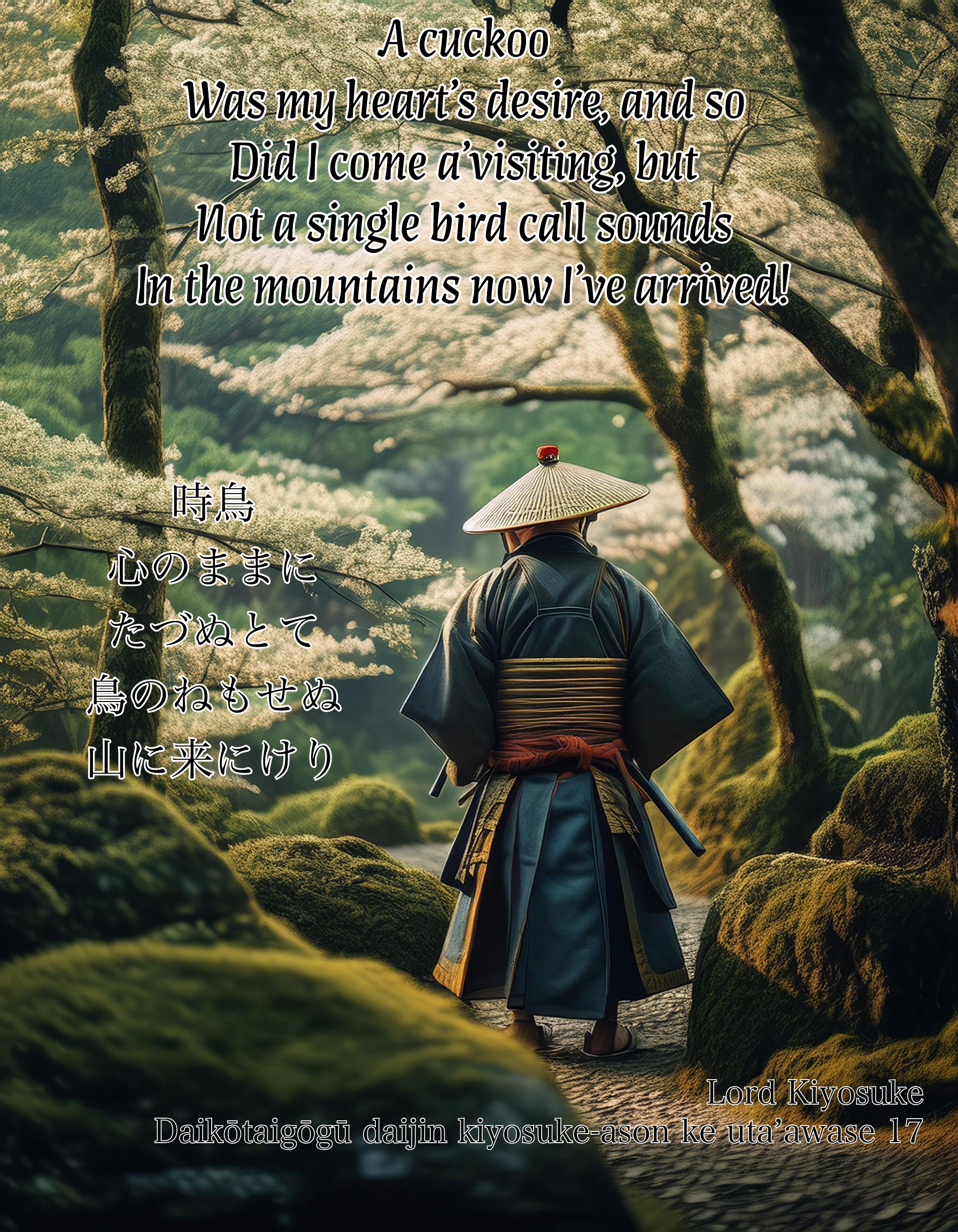
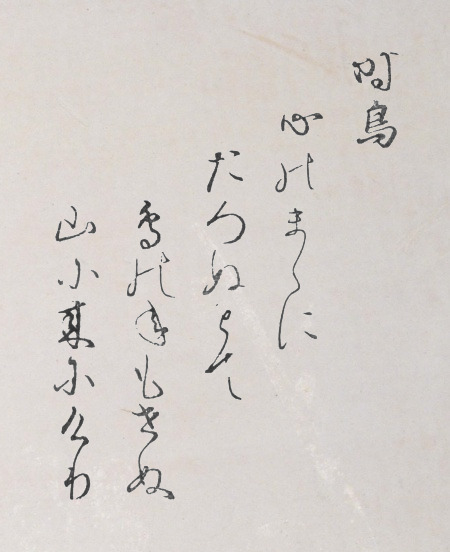
hototogisu kokoro no mama ni tazunu tote tori no ne mo senu yama ni kinikeri
A cuckoo Was my heart’s desire, and so Did I come a’visiting, but Not a single bird call sounds In the mountains now I’ve arrived!
Lord Kiyosuke 17
Right
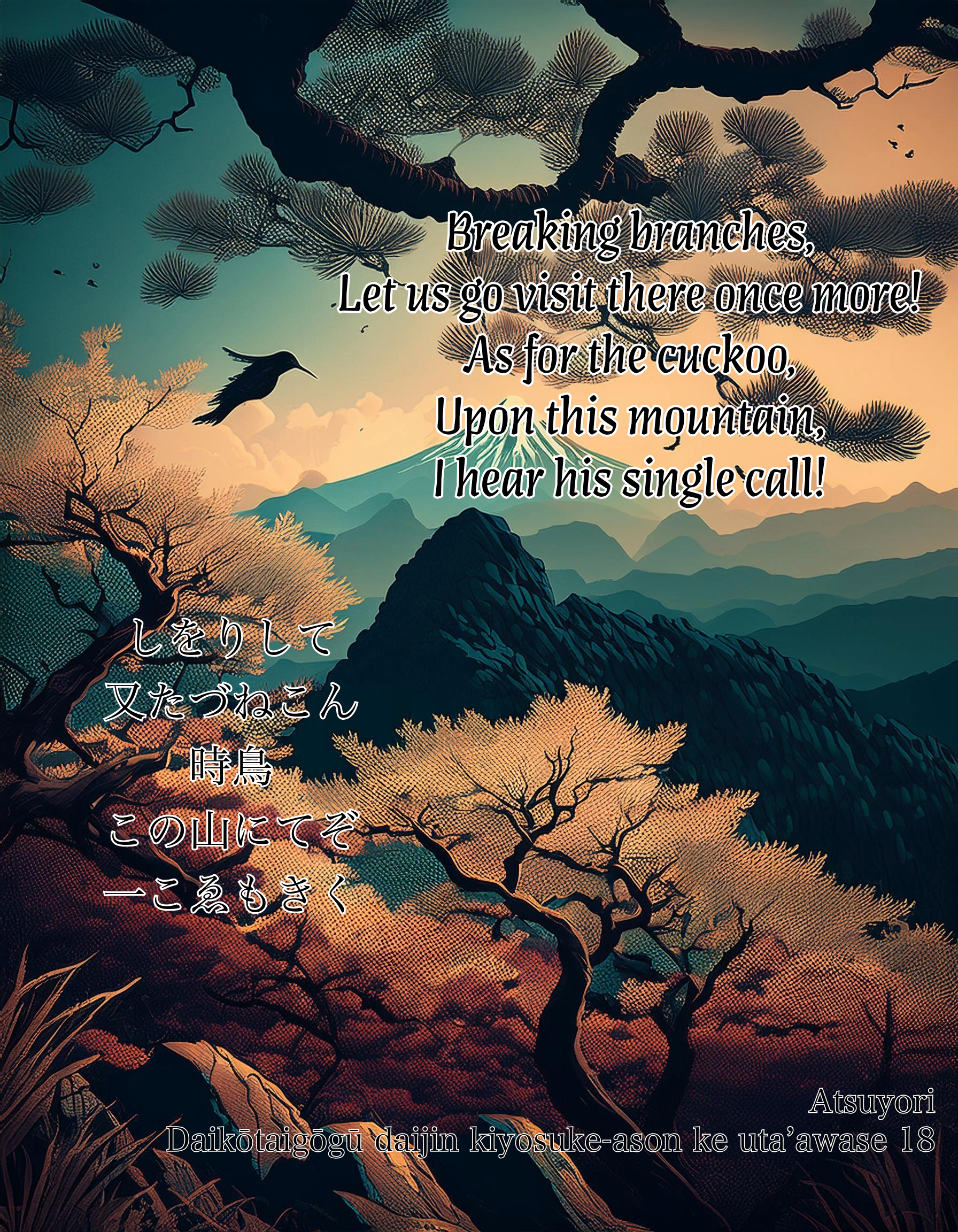
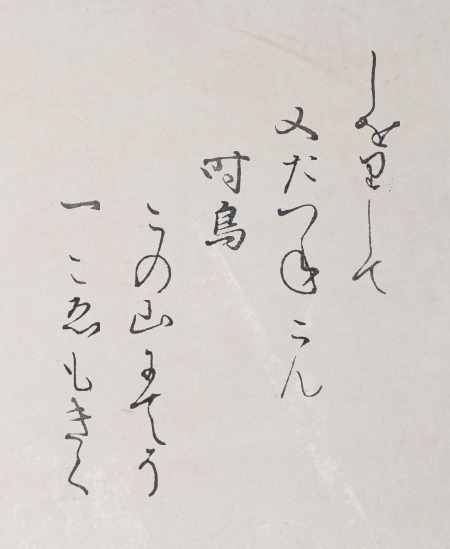
しをりして又たづねこん時鳥この山にてぞ一こゑもきく
shiorishite mata tazunekon hototogisu kono yama nite zo hitogoe mo kiku
Breaking branches, Let us go visit there once more! As for the cuckoo, Upon this mountain, I hear his single call!
Atsuyori 18
The Left has a strong conception of visiting but has ‘cuckoo’ initially and then follows this with ‘bird’, which is a fault, isn’t it? However, it appears there are some earlier instances of this, and thus I would not wish to say that this is not good expression. The Right’s poem has nothing to indicate, but as an earlier example, in the ‘Poetry Match held at the Kaya Palace’, Lord Michitoshi recited
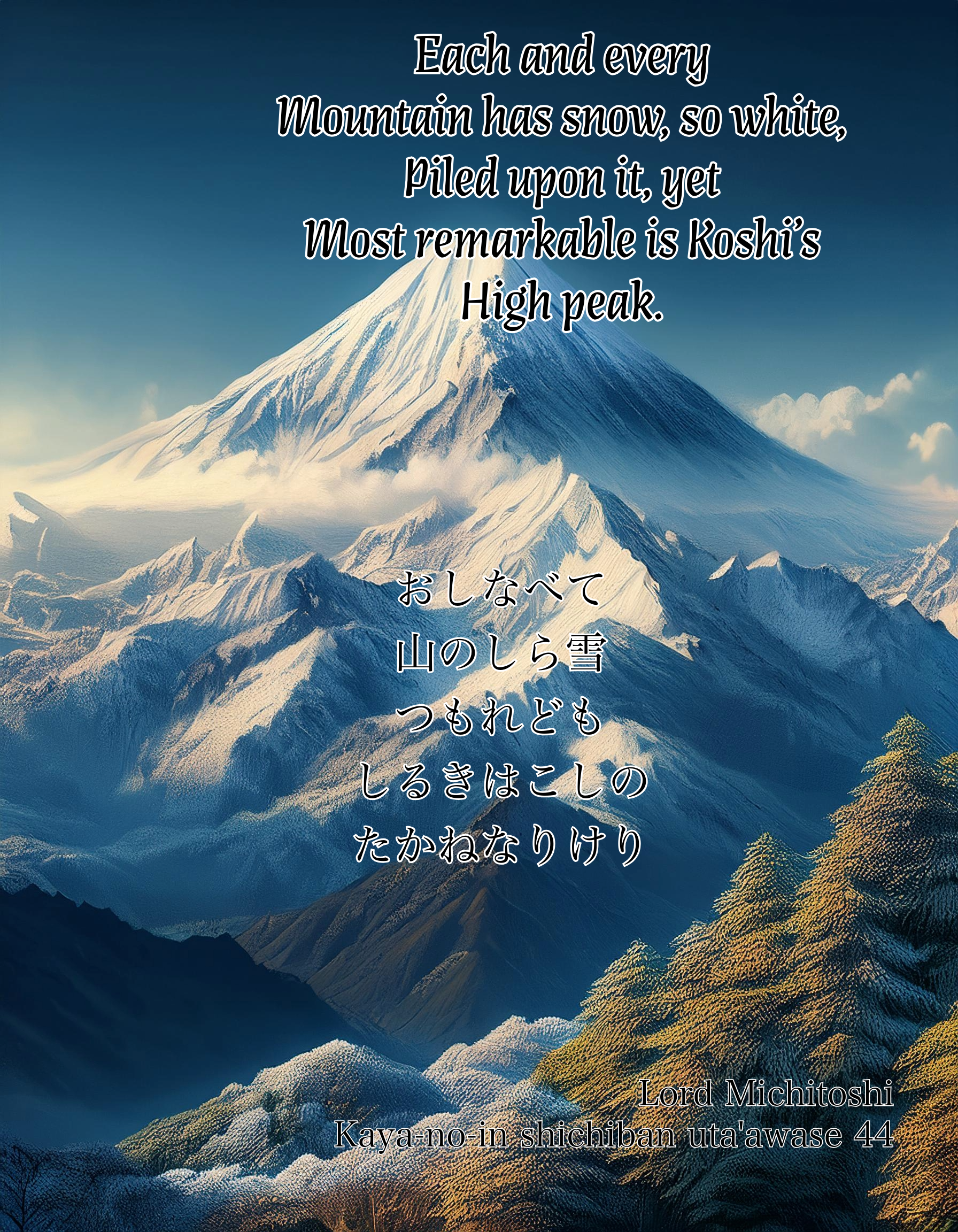
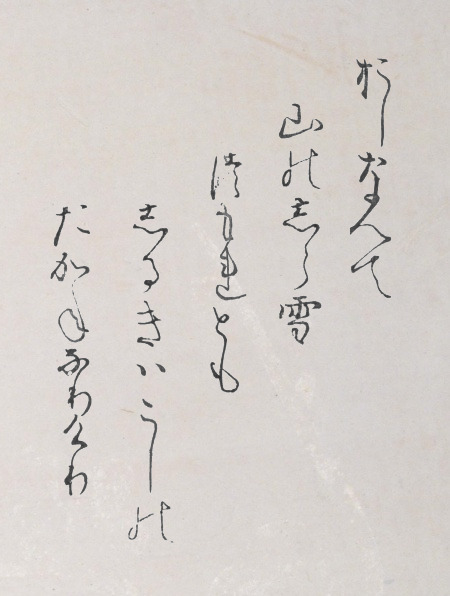
おしなべて山のしら雪つもれどもしるきはこしのたかねなりけり
oshinabete yama no shirayuki tsumoredomo shiruki wa koshi no takane narikeri
Each and every Mountain has snow, so white, Piled upon it, yet Most remarkable is Koshi’s High peak.
Kaya-no-in shichiban uta’awase 44
Koshi Peak is a mountain, making this a precedent, and moreover this was not felt to be a fault at the time.[1] In addition, there are also many examples of poems referring to both warblers and cuckoos, are there not?
[1] The judge in the contest says Michitoshi’s poem is ‘straightforwardly beautiful’.