Category Archives: Poetry Competitions

Yōzei’in miko futari uta’awase 18

Left

したひもをゆふつけどりのこゑたちてけさのわかれになきぞわびぬる

shitahimo o
yūtsukedori no
koe tachite
kesa no wakare ni
naki zo wabinuru
Underbelt
Tying with the cockerel’s
Crow, arising,
At this morning’s parting
I weep, all forlorn!

34

Right

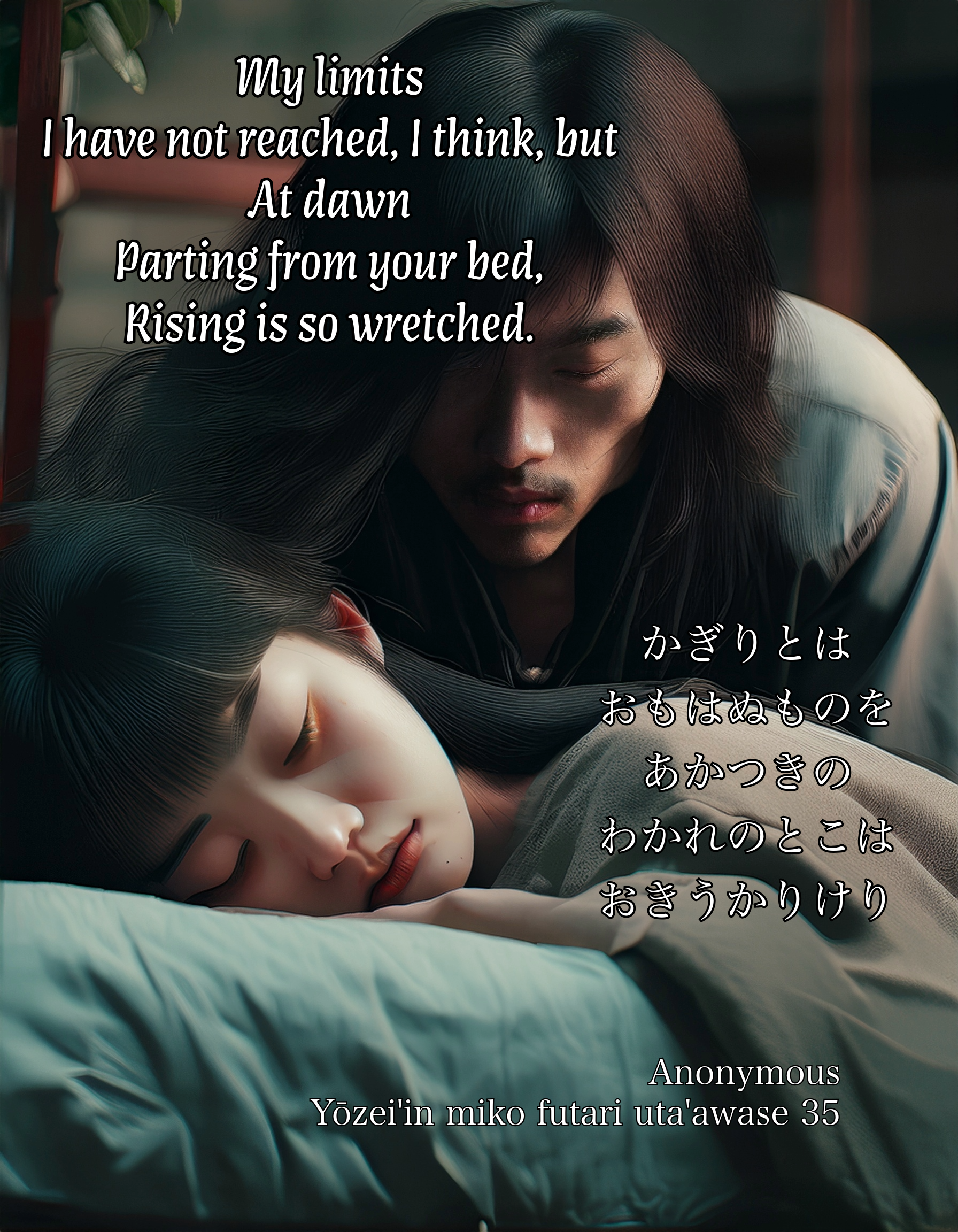
かぎりとはおもはぬものをあかつきのわかれのとこはおきうかりけり

kagiri to wa
omowanu mono o
akatsuki no
wakare no toko wa
oki’ukarikeri
My limits
I have not reached, I think, but
At dawn
Parting from your bed,
Rising is so wretched.

35

Yōzei’in miko futari uta’awase 17

Left

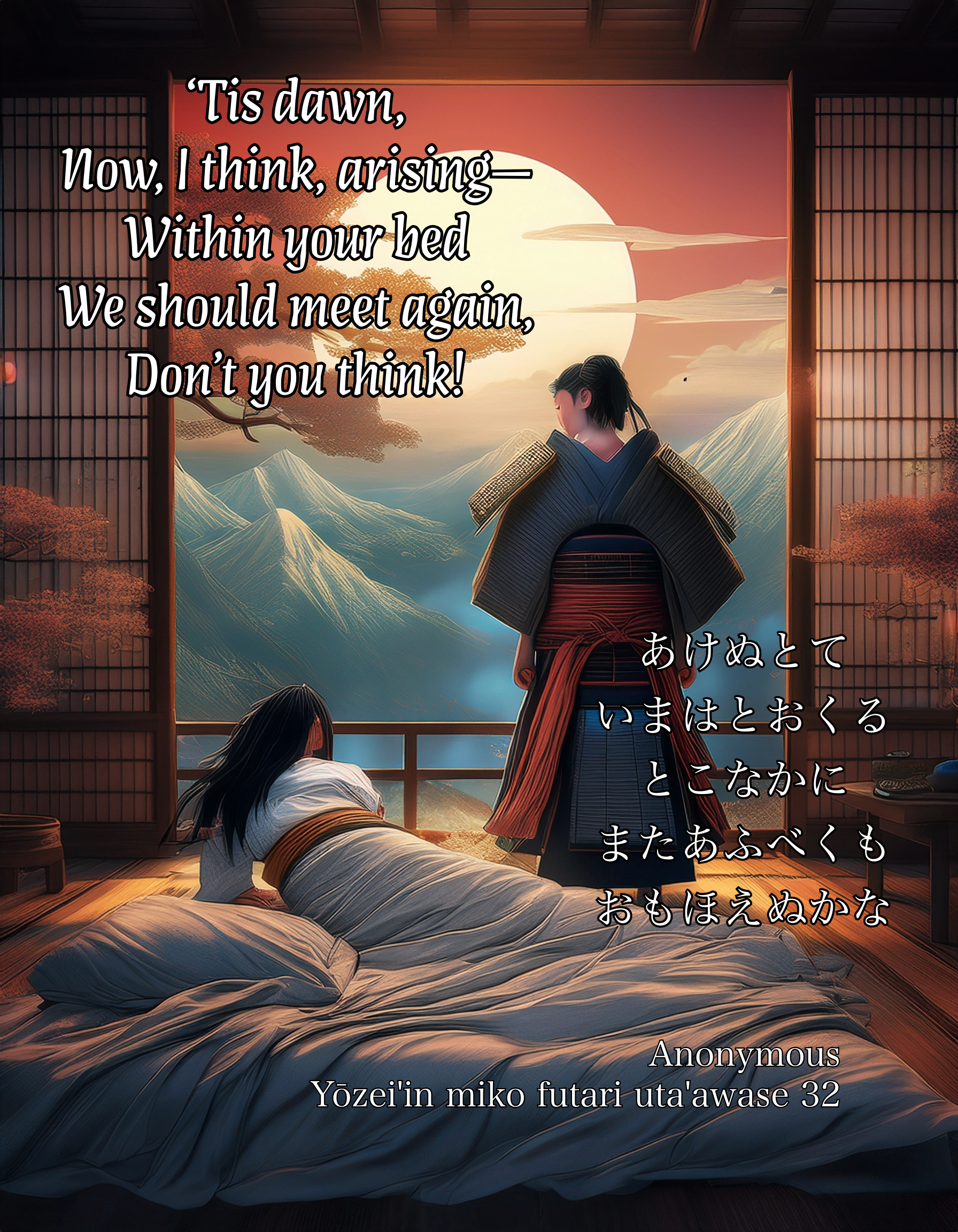
あけぬとていまはとおくるとこなかにまたあふべくもおもほえぬかな

akenu tote
ima wa to okuru
toko naka ni
mata aubeku mo
omohoenu kana
‘Tis dawn,
Now, I think, arising—
Within your bed
We should meet again,
Don’t you think!

32

Right

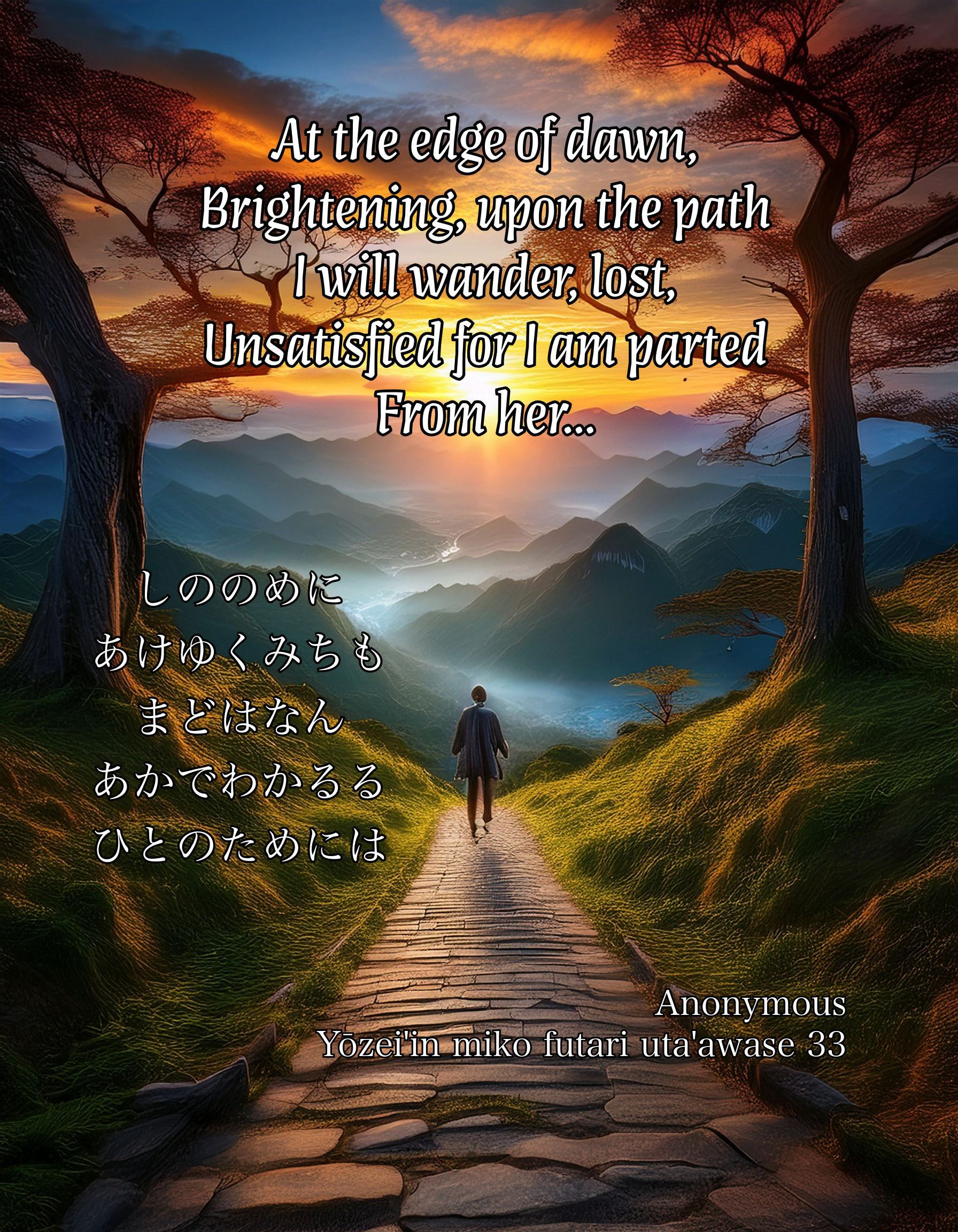
しののめにあけゆくみちもまどはなんあかでわかるるひとのためには

shinonome ni
akeyuku michi mo
madowanan
akade wakaruru
hito no tame ni wa
At the edge of dawn,
Brightening, upon the path
I will wander, lost,
Unsatisfied for I am parted
From her…

33

Nishinomiya uta’awase 18

Round Eighteen

Left

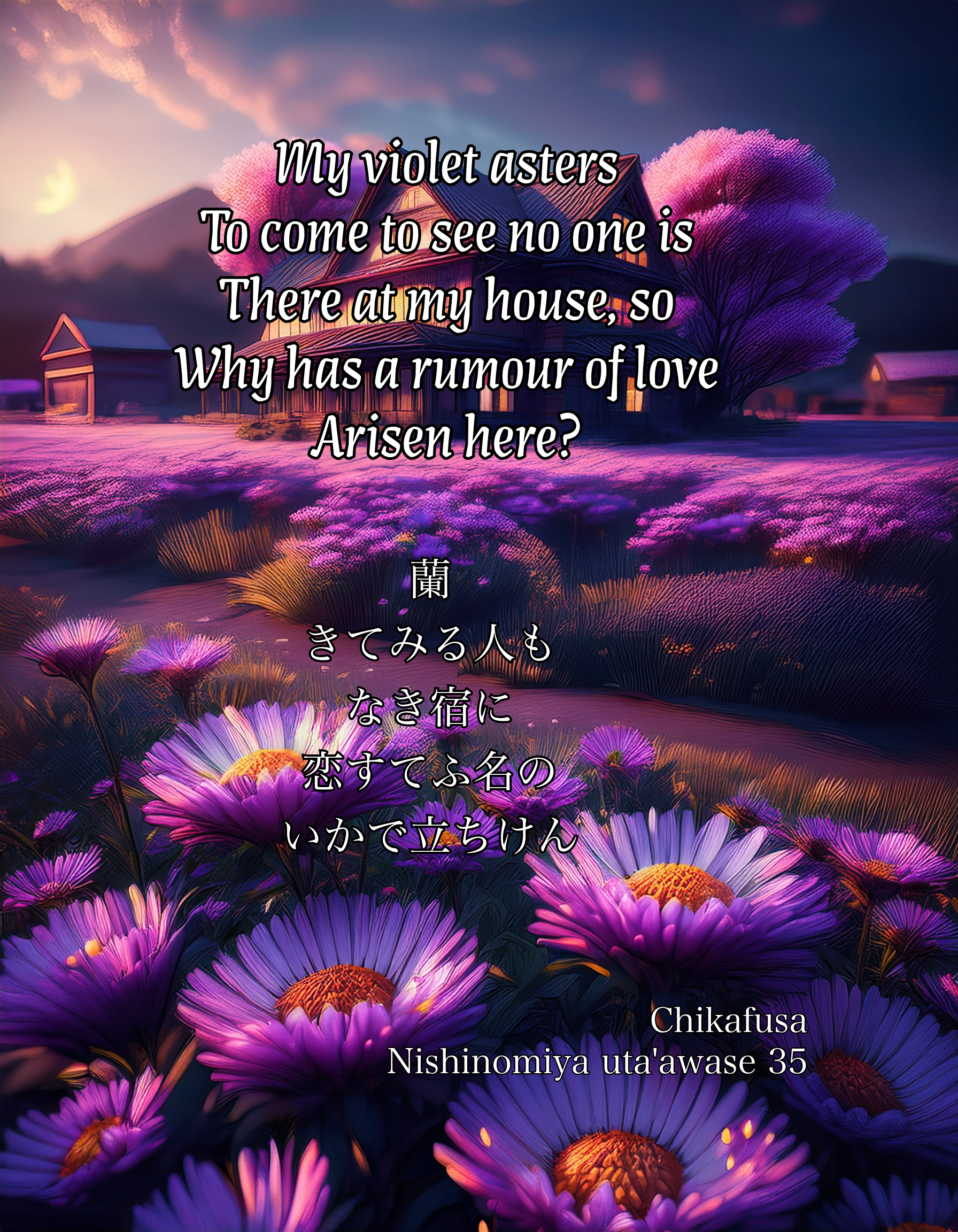
蘭きてみる人もなき宿に恋すてふ名のいかで立ちけん

fujibakama
kitemiru hito mo
naki yado ni
koisu chō na no
ikade tachiken
My violet asters
To come to see no one is
There at my house, so
Why has a rumour of love
Arisen here?

Chikafusa
35

Right

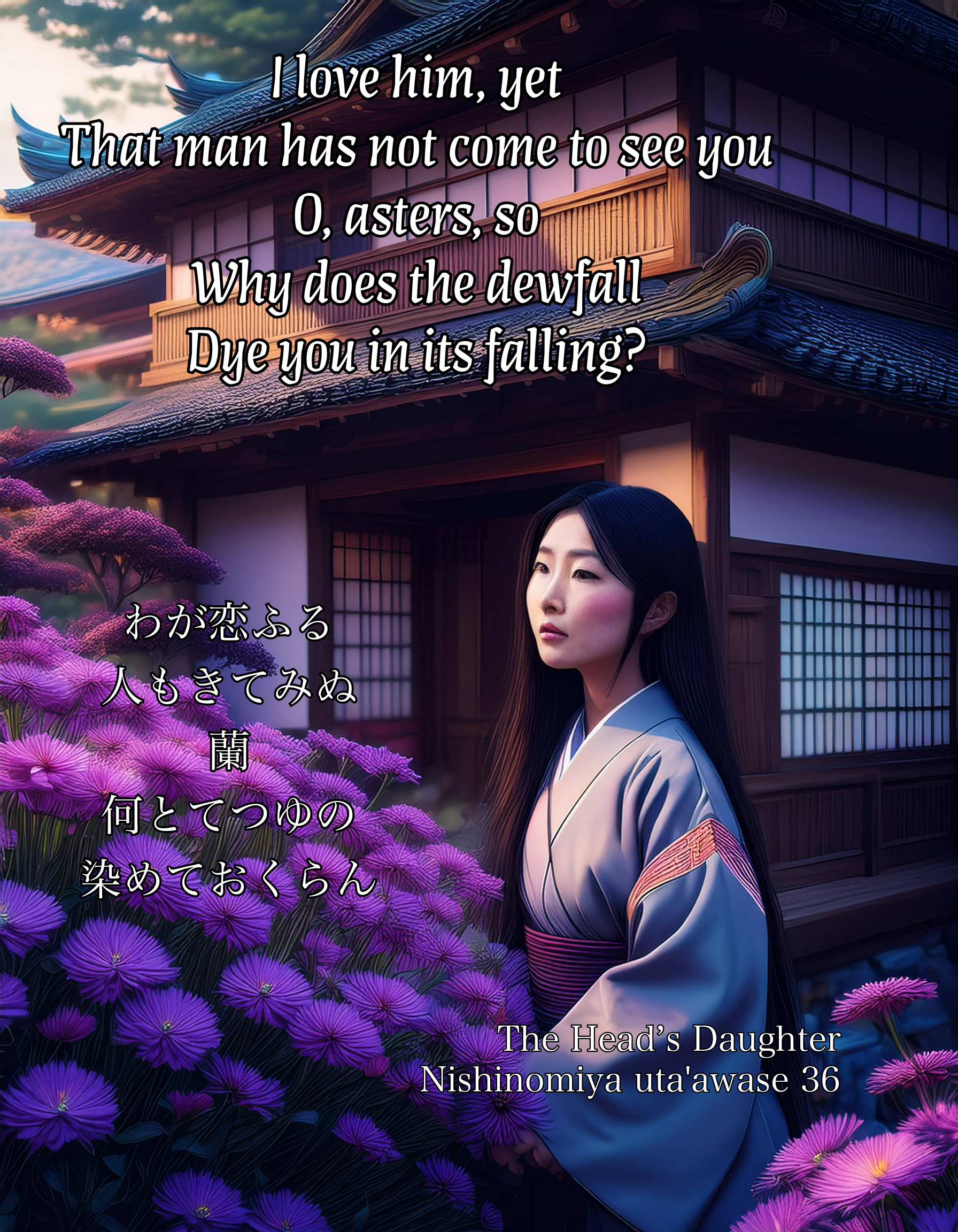
わが恋ふる人もきてみぬ蘭何とてつゆの染めておくらん

wa ga kouru
hito mo kiteminu
fujibakama
nani tote tsuyu no
somete’okuran
I love him, yet
That man has not come to see you
O, asters, so
Why does the dewfall
Dye you in its falling?

The Head’s Daughter
36

The Left’s overall impression is not bad, but I am curious about why a rumour of love should darken the door of a house, if it’s one where ‘no one comes to see’. Then, the Right uses ‘Why does the dewfall / Dye you in its falling?’—this seems like an excessive use of diction and the sequencing doesn’t sound smooth, so these seem of about the same standard.

Nishinomiya uta’awase 17

Asters and the Same

Round Seventeen

Left

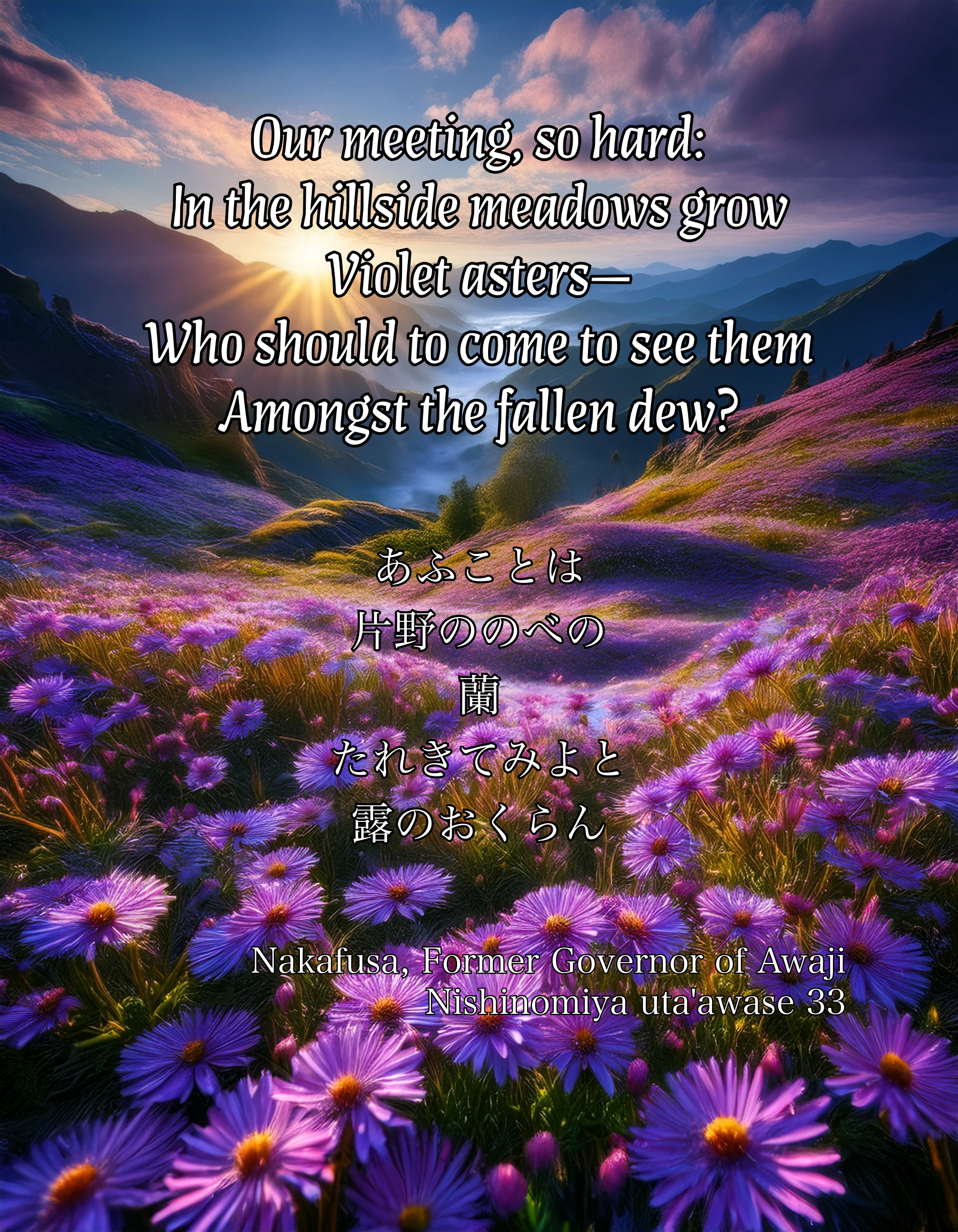
あふことは片野ののべの蘭たれきてみよと露のおくらん

au koto wa
katano no nobe no
fujibakama
tare kitemiyo to
tsuyu no okuran
Our meeting, so hard:
In the hillside meadows grow
Violet asters—
Who should to come to see them
Amongst the fallen dew?

Nakafusa, Former Governor of Awaji
33

Right

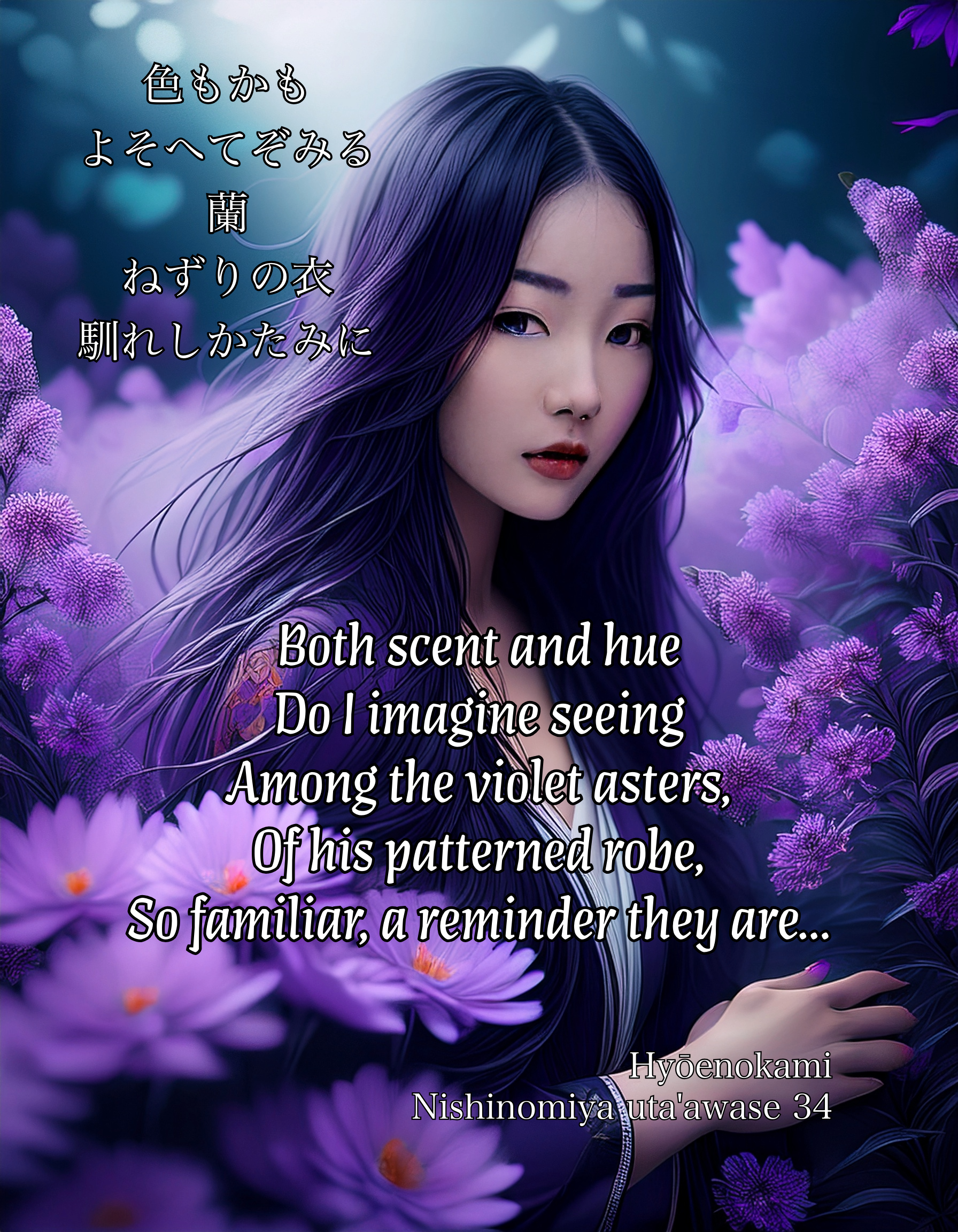
色もかもよそへてぞみる蘭ねずりの衣馴れしかたみに

iro mo ka mo
yosoete zo miru
fujibakama
nezuri no koromo
nareshi katami ni
Both scent and hue
Do I imagine seeing
Among the violet asters,
Of his patterned robe,
So familiar, a reminder they are…

Hyōenokami
34

These poems, both Left and Right, appear to be of about the same quality, but while I am familiar with robes patterned with purple gromwell, I do wonder what it is that is patterning the robes here. Is the poet composing on asters imagining them to be gromwell? Even if that’s the case, the conception is not particularly apparent, so I have to say that the Left is better.

Nishinomiya uta’awase 16

Round Sixteen

Left

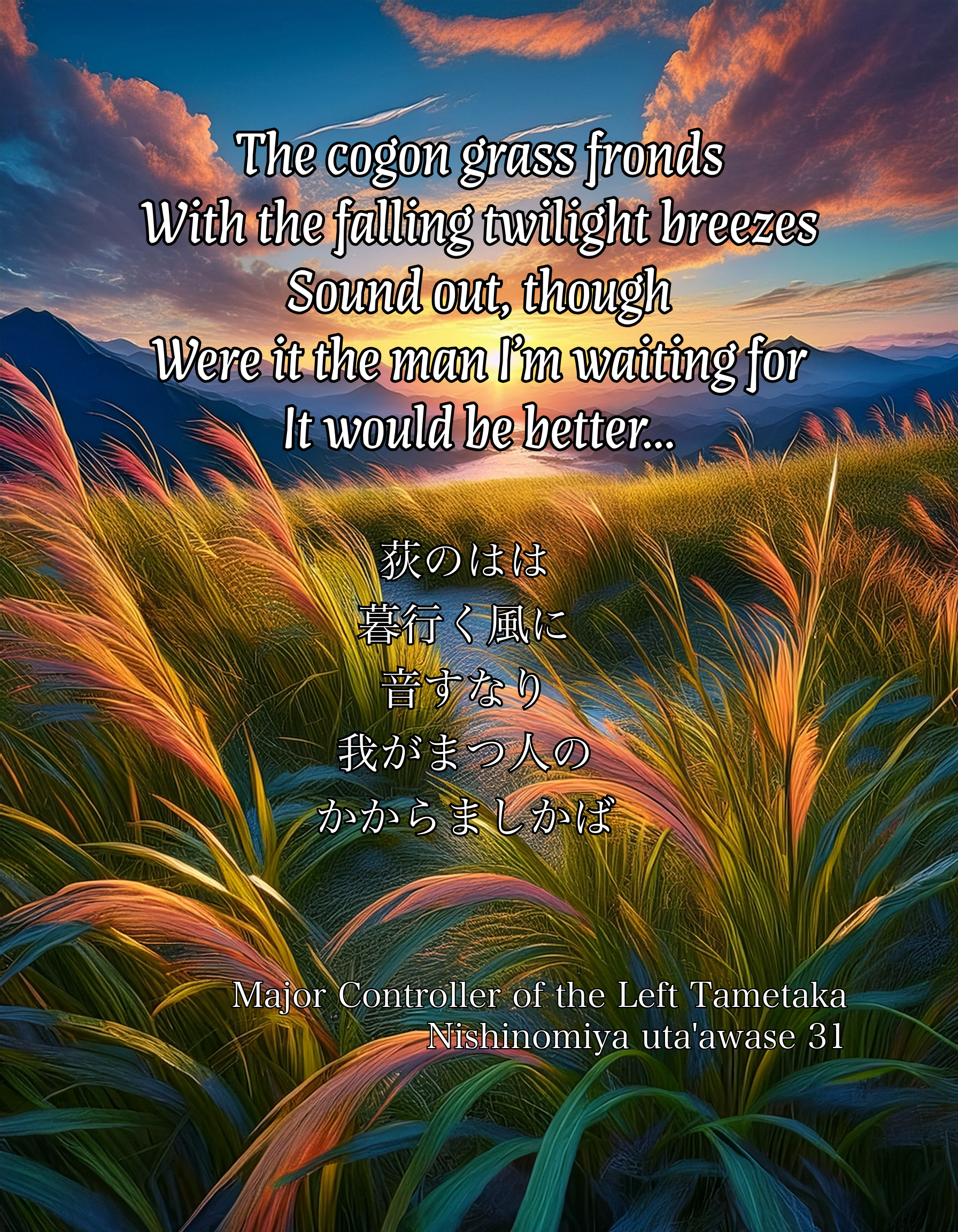
荻のはは暮行く風に音すなり我がまつ人のかからましかば

ogi no ha wa
kureyuku kaze ni
otosu nari
wa ga matsu hito no
kakaramashikaba
The cogon grass fronds
With the falling twilight breezes
Sound out, though
Were it the man I’m waiting for
It would be better…

Major Controller of the Left Tametaka
31

Right

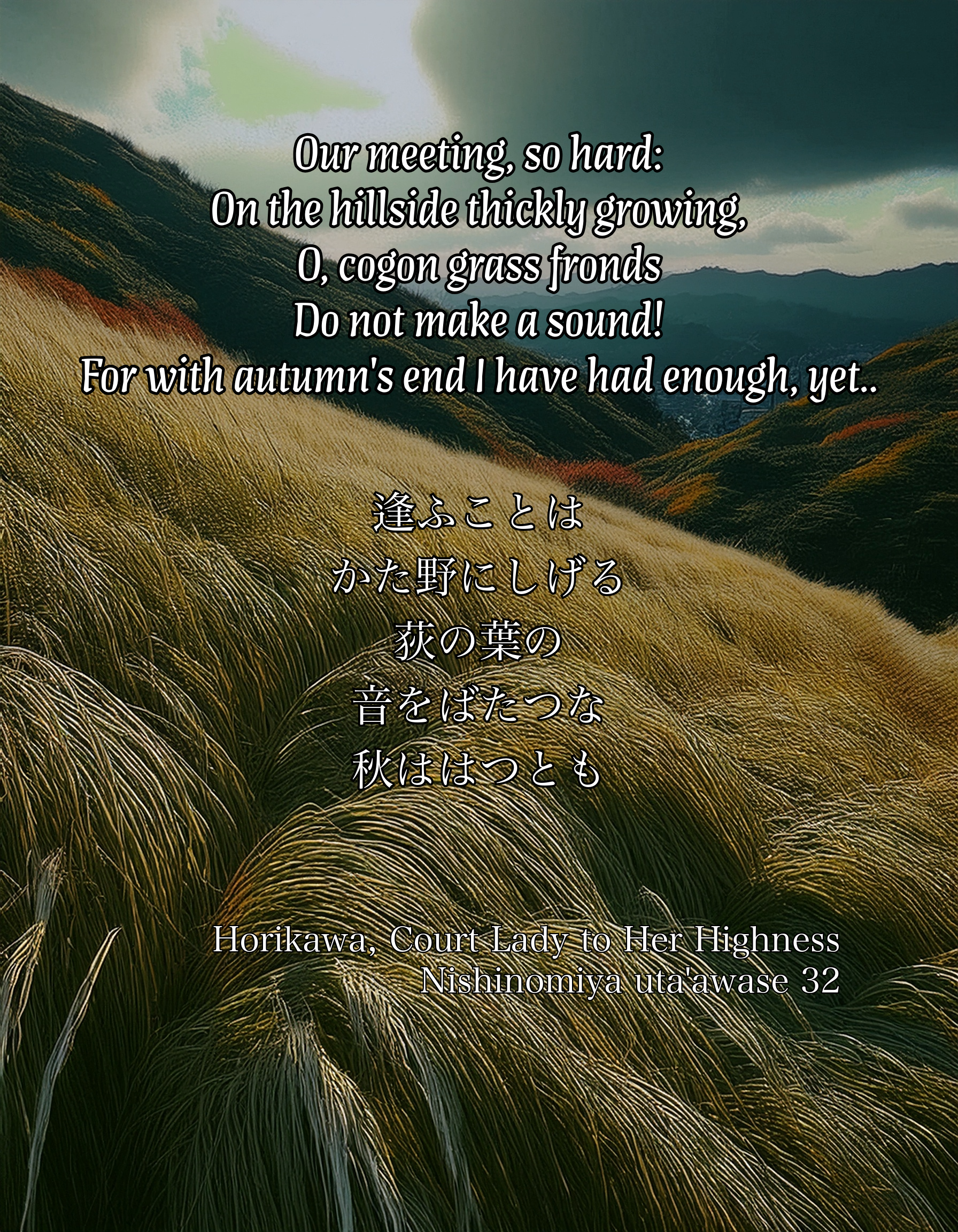
逢ふことはかた野にしげる荻の葉の音をばたつな秋ははつとも

au koto wa
katano ni shigeru
ogi no ha no
oto oba tatsu na
aki wa hatsu tomo
Our meeting, so hard:
On the hillside thickly growing,
O, cogon grass fronds
Do not make a sound!
For with autumn’s end I have had enough, yet..

Horikawa, Court Lady to Her Highness
32

I feel that the emotions encompassed by the sound of the wind in ‘Were it the man I’m waiting for / It would be better’ sounded more striking than ‘On the hillside thickly growing, / O, cogon grass fronds’.

Nishinomiya uta’awase 15

Cogon grass and the Same

Round Fifteen

Left

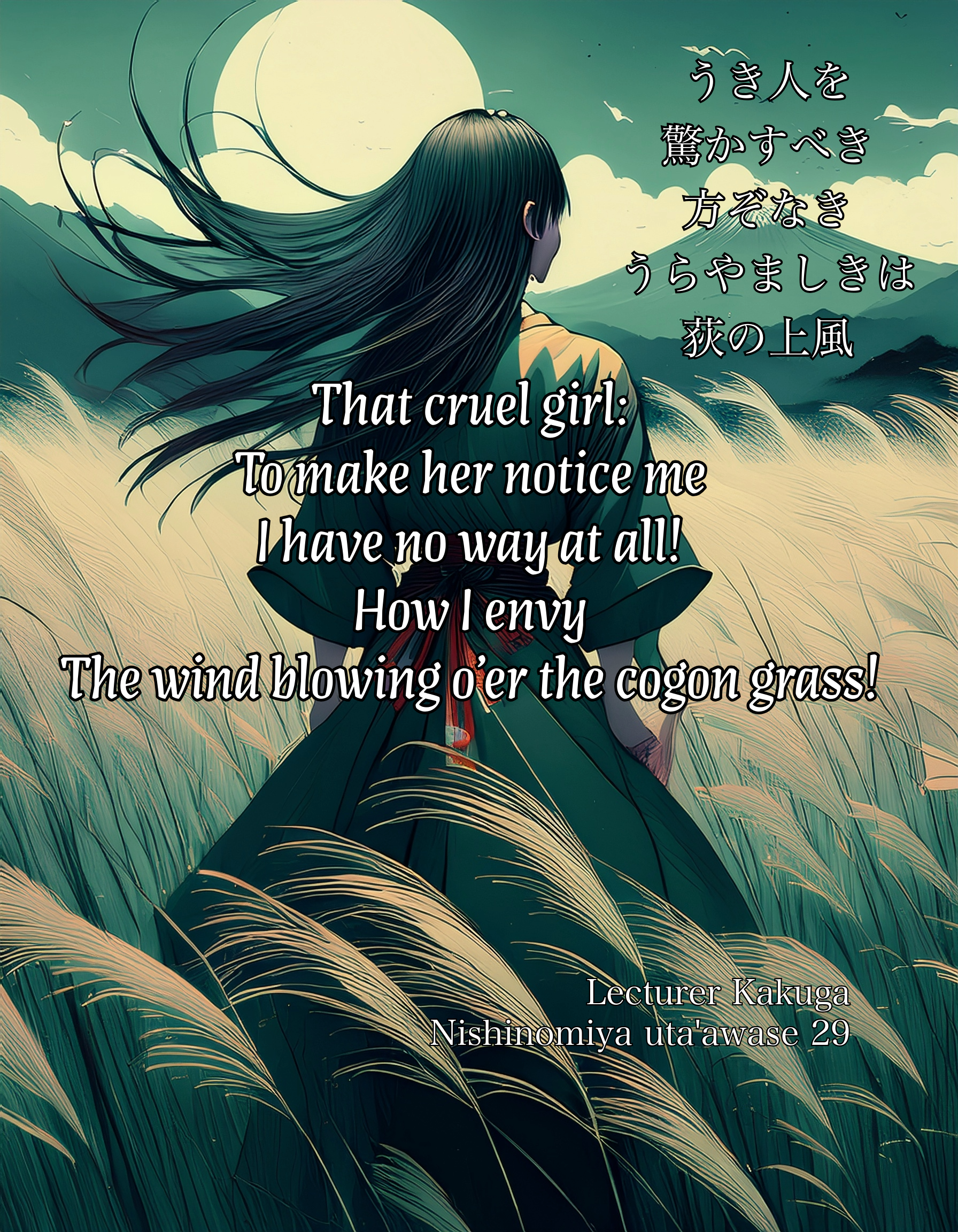
うき人を驚かすべき方ぞなきうらやましきは荻の上風

ukibito o
odorokasubeki
kata zo naki
urayamashiki wa
ogi no uwakaze
That cruel girl:
To make her notice me
I have no way at all!
How I envy
The wind blowing o’er the cogon grass!

Lecturer Kakuga
29

Right

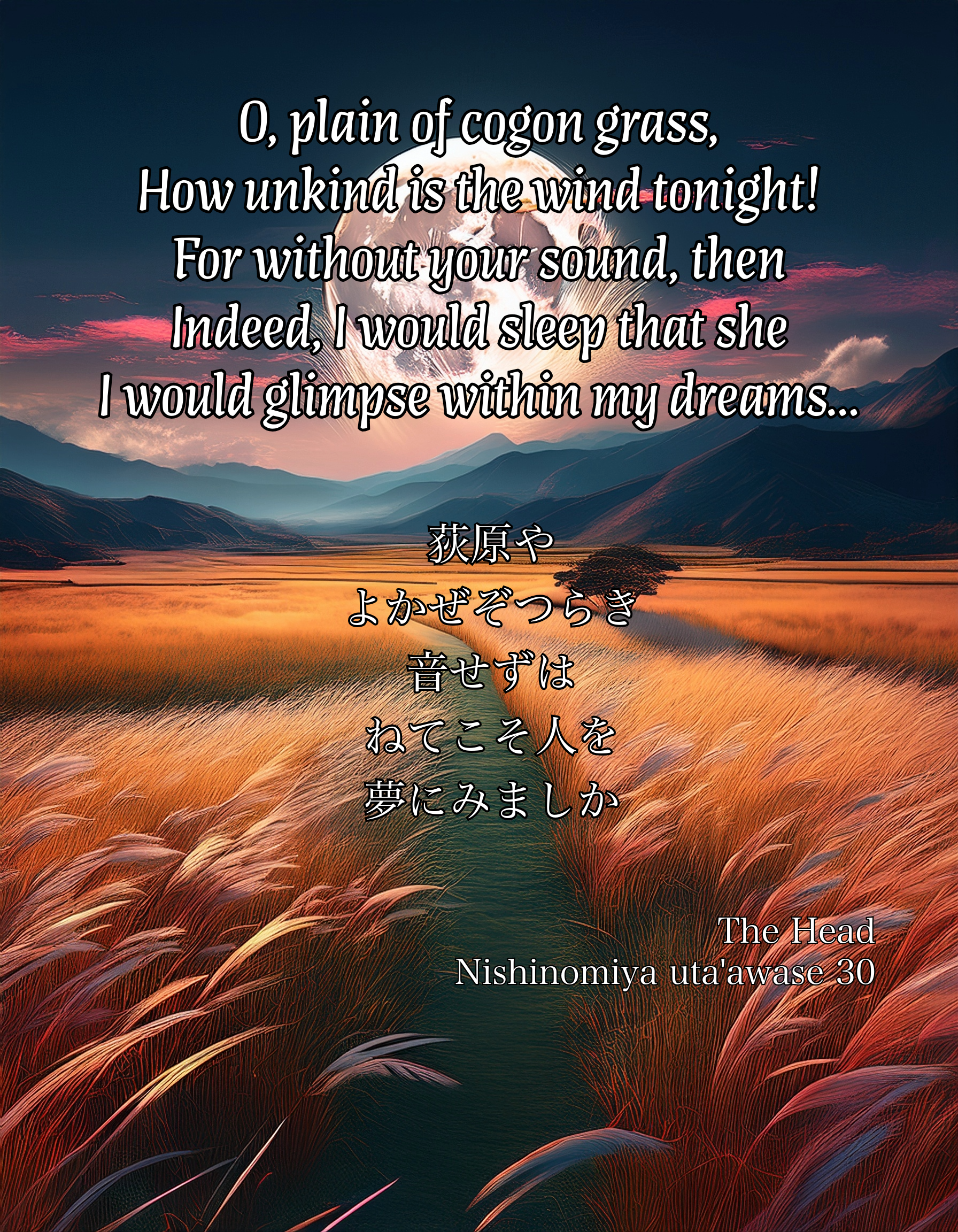
荻原やよかぜぞつらき音せずはねてこそ人を夢にみましか

ogiwara ya
yokaze zo tsuraki
oto sezu wa
nete koso hito o
yume ni mimashika
O, plain of cogon grass,
How unkind is the wind tonight!
For without your sound, then
Indeed, I would sleep that she
I would glimpse within my dreams…

The Head
30

The conception of love sounds superior at present in envying the ‘wind blowing o’er the cogon grass’ than it does in the ‘unkind is the wind tonight’.

Nishinomiya uta’awase 14

Round Fourteen

Left

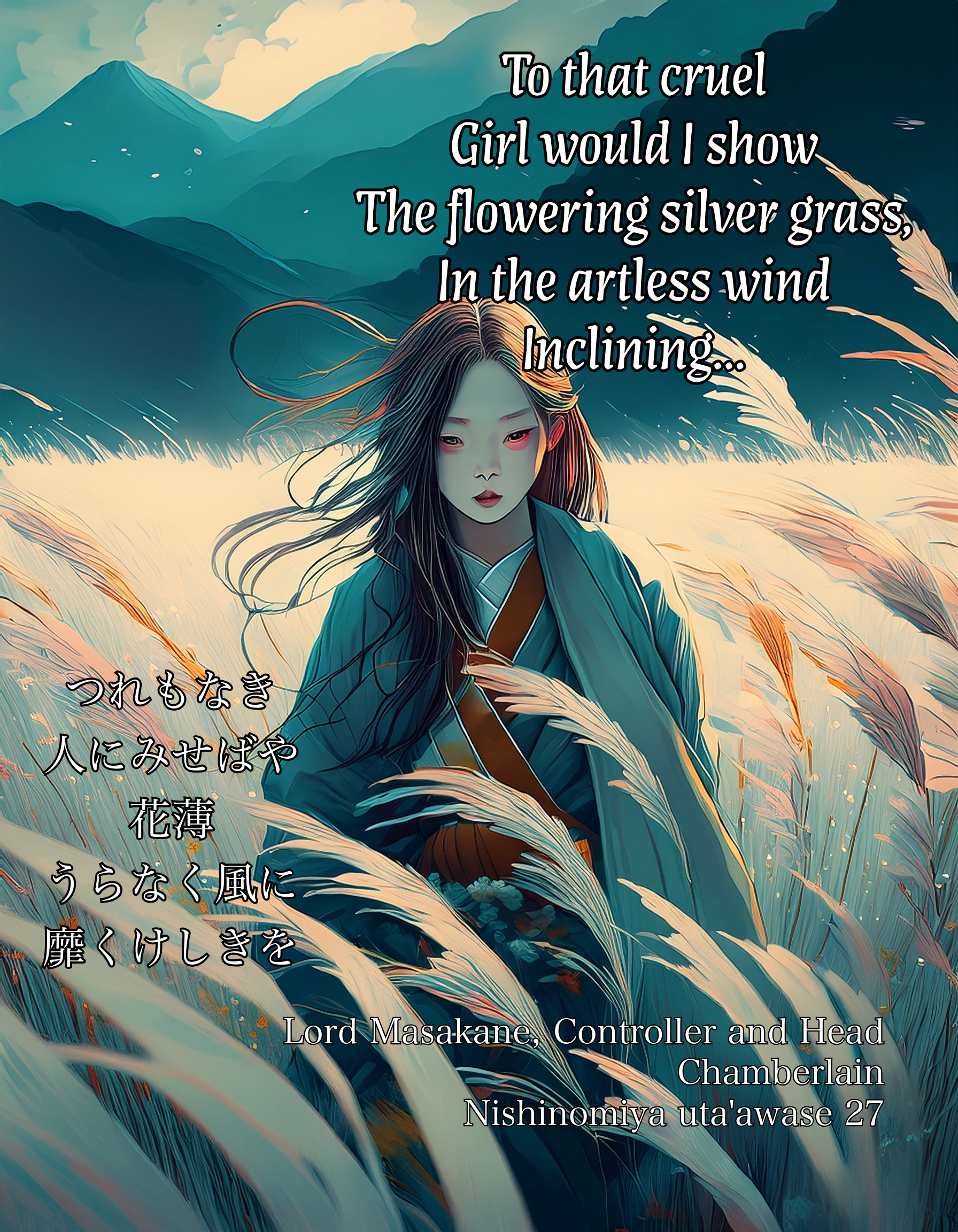
つれもなき人にみせばや花薄うらなく風に靡くけしきを

tsure mo naki
hito ni miseba ya
hanasusuki
uranaku kaze ni
nabiku keshiki o
To that cruel
Girl would I show
The flowering silver grass,
In the artless wind
Inclining…

Lord Masakane, Controller and Head Chamberlain
27

Right

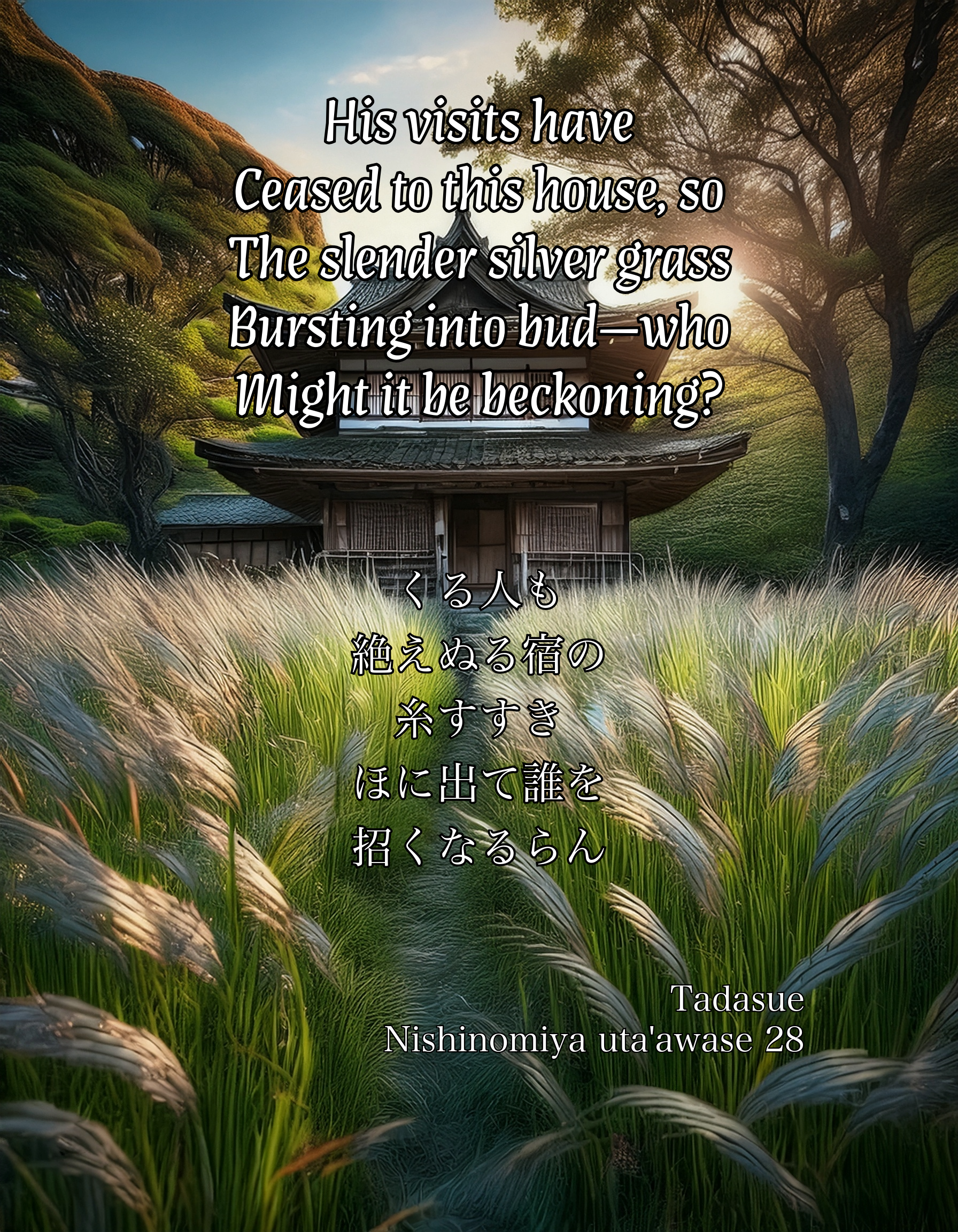
くる人も絶えぬる宿の糸すすきほに出て誰を招くなるらん

kuru hito mo
taenuru yado no
itosusuki
ho ni idete tare o
maneku naruran
His visits have
Ceased to this house, so
The slender silver grass
Bursting into bud—who
Might it be beckoning?

Tadasue
28

The Left’s poem, up to ‘would I show’ is poetic, but I do not feel that the expression ‘In the artless wind / Inclining’ is elegant. For the topic of love, it seems to me that both the beginning and the end of the poem is a slight case of ‘As a bamboo stalk / Has joints, from years gone by old-fashioned phrases’ lingering! The Right’s ‘Ceased to this house, so / The slender silver grass’ lacks anything remarkable about it, and seems excessively overgrown, so it’s impossible to decide on anyone as the winner or loser here.

Nishinomiya uta’awase 13

Silver Grass and the Same

Round Thirteen

Left

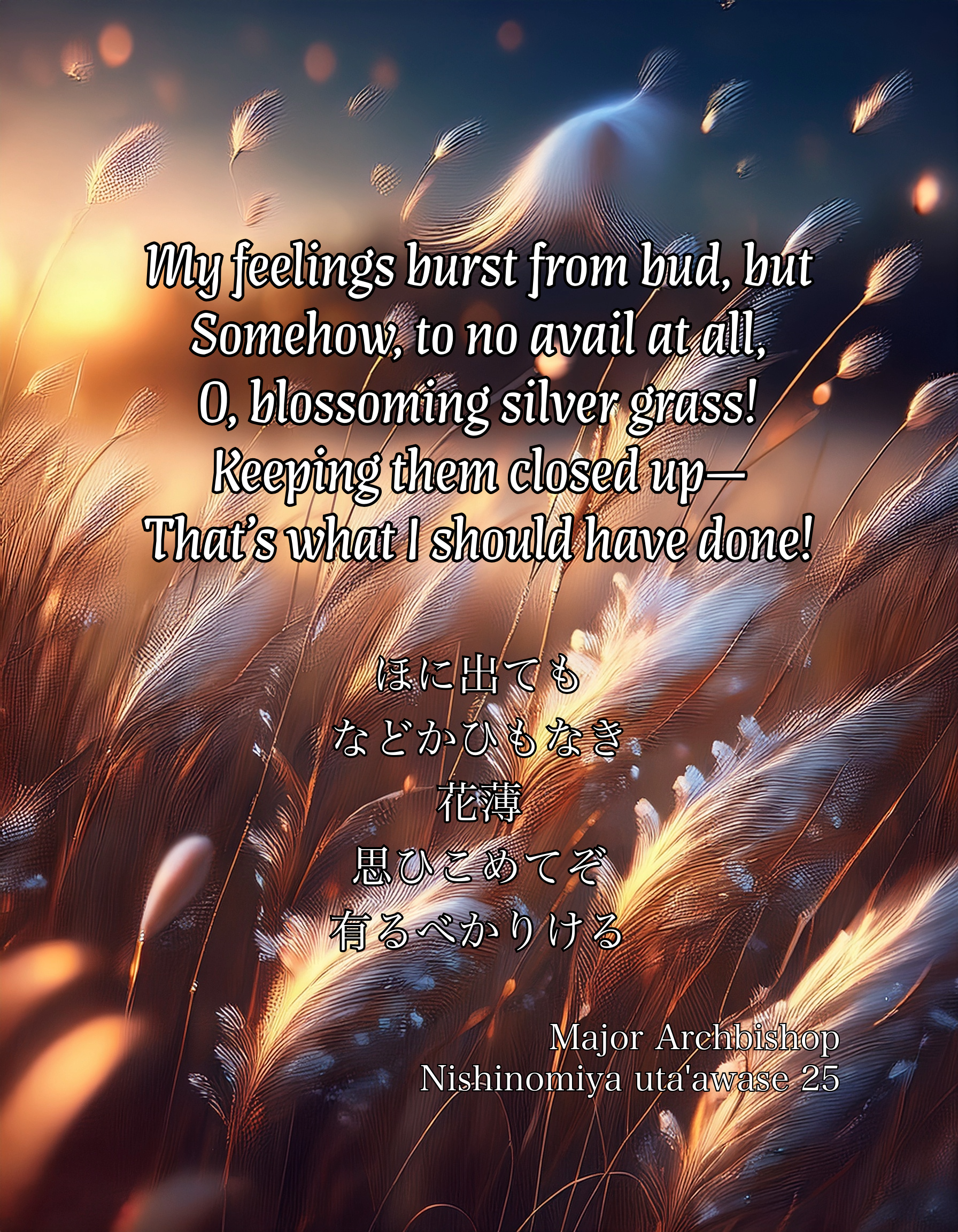
ほに出てもなどかひもなき花薄思ひこめてぞ有るべかりける

ho ni idetemo
nadoka kai mo naki
hanasusuki
omoikomete zo
arubekarikeru
My feelings burst from bud, but
Somehow, to no avail at all,
O, blossoming silver grass!
Keeping them closed up—
That’s what I should have done!

Major Archbishop
25

Right

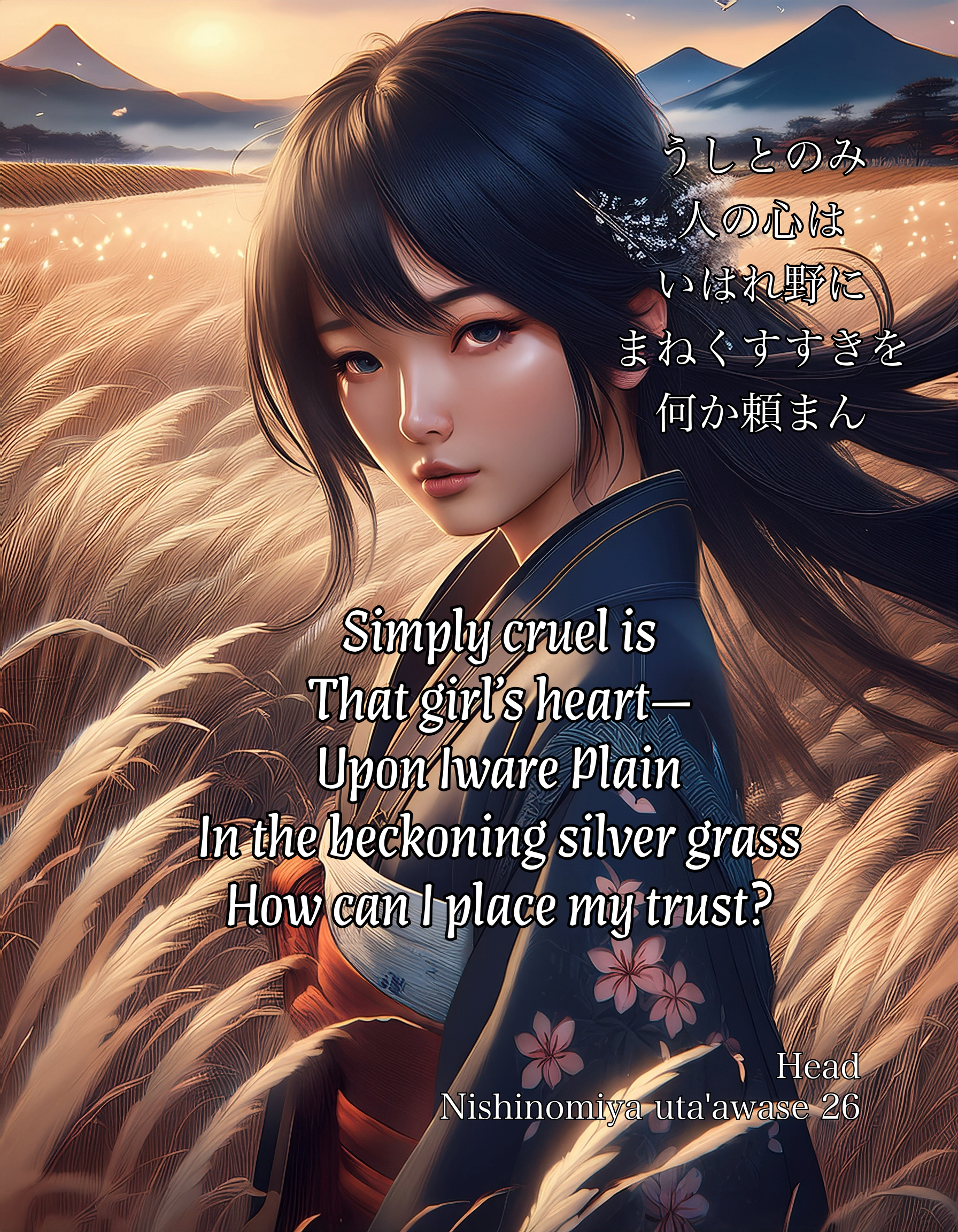
うしとのみ人の心はいはれ野にまねくすすきを何か頼まん

ushi to nomi
hito no kokoro wa
iwareno ni
maneku susuki o
nanika tanoman
Simply cruel is
That girl’s heart—
Upon Iware Plain
In the beckoning silver grass
How can I place my trust?

Head
26

Left and Right appear to be of about the same standard.

Yōzei’in miko futari uta’awase 16

Left

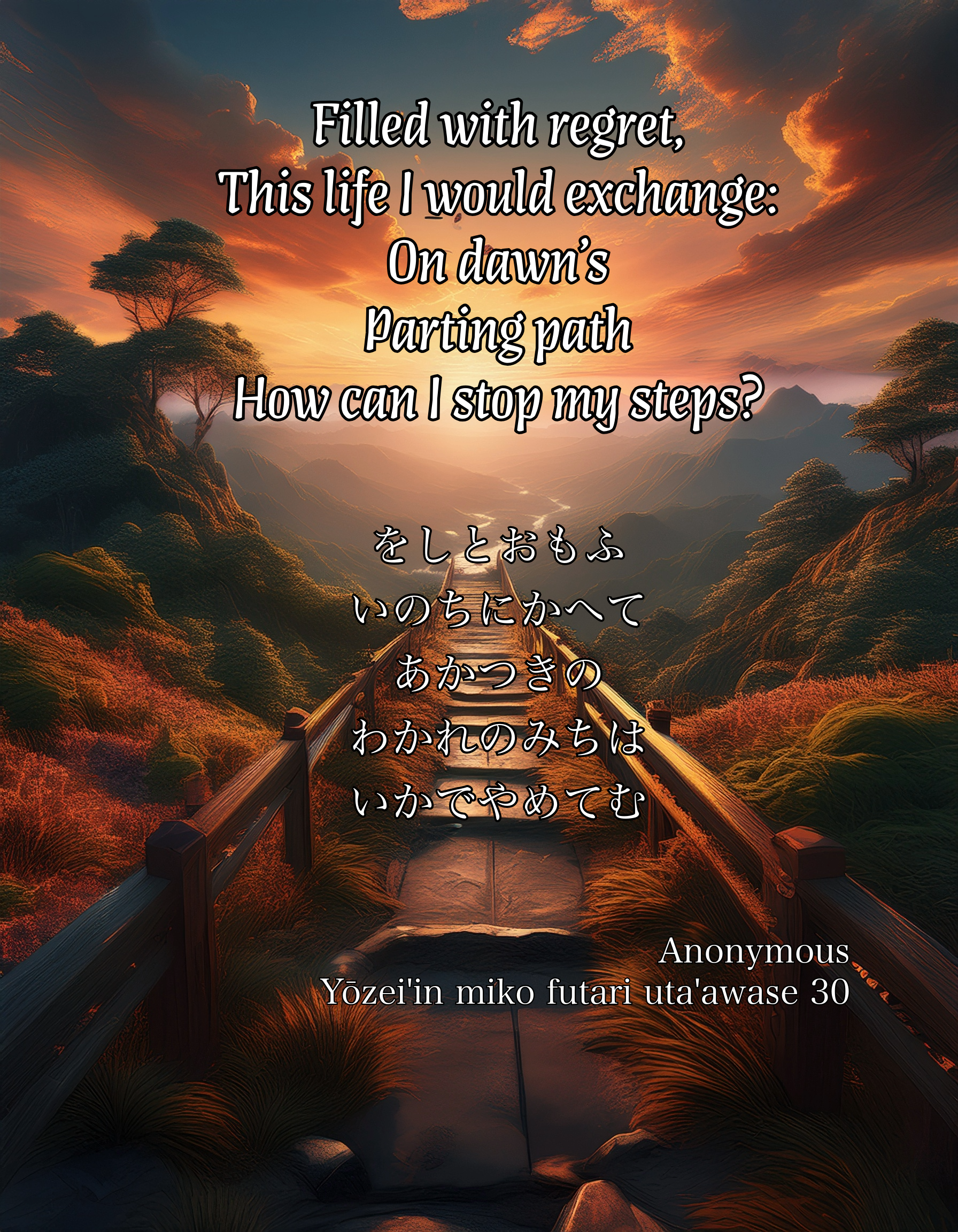
をしとおもふいのちにかへてあかつきのわかれのみちはいかでやめてむ

oshi to omou
inochi ni kaete
akatsuki no
wakare no michi wa
ikade yametemu
Filled with regret,
This life I would exchange:
On dawn’s
Parting path
How can I stop my steps?

30

Right

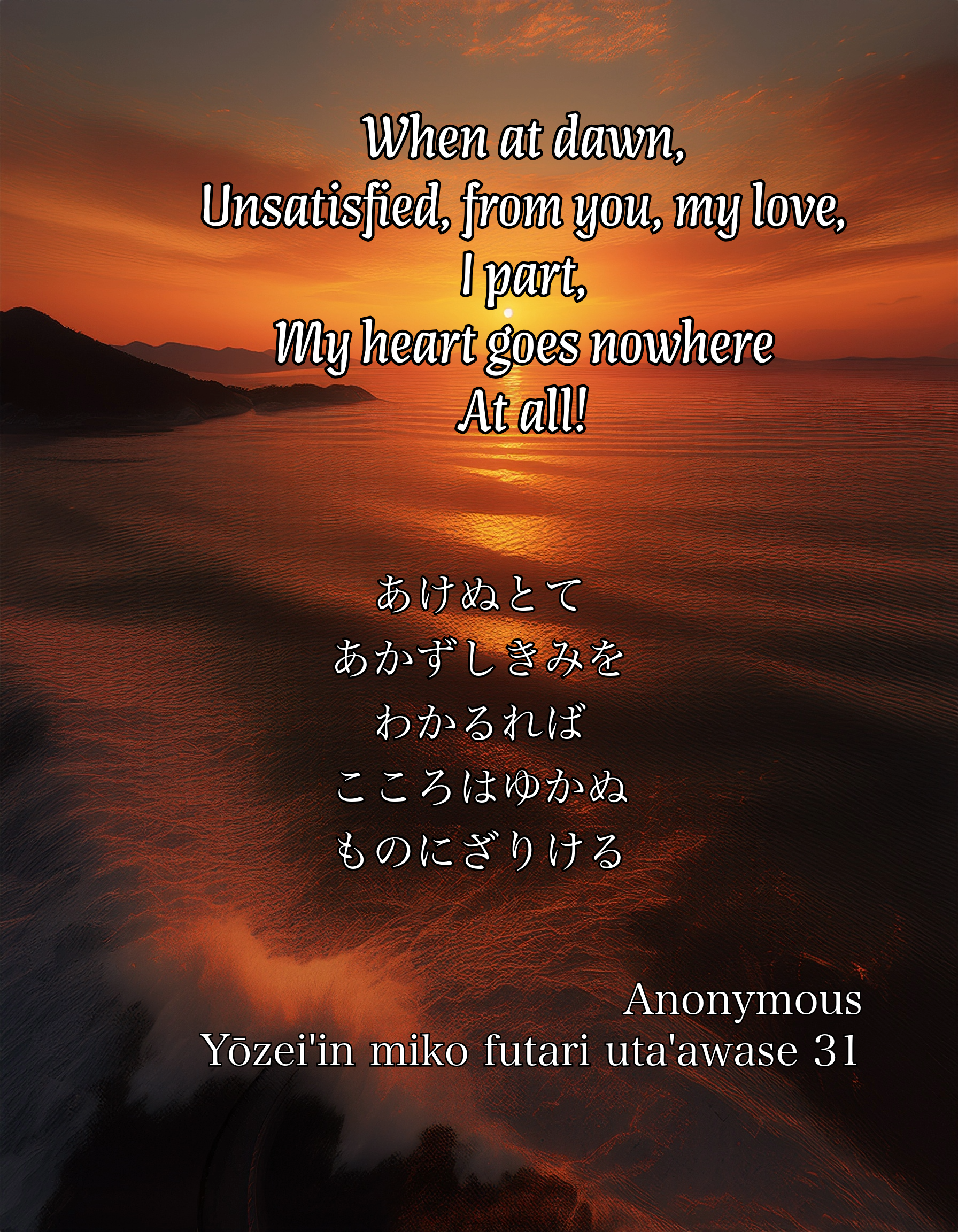
あけぬとてあかずしきみをわかるればこころはゆかぬものにざりける

akenu tote
akazu shi kimi o
wakarureba
kokoro wa yukanu
mono ni zarikeru
When at dawn,
Unsatisfied, from you, my love,
I part,
My heart goes nowhere
At all!

31

Yōzei’in miko futari uta’awase 15

Left

きみをわれおきてしゆけばあさつゆのきえかへりてもあはむとぞおもふ

kimi o ware
okiteshi yukeba
asatsuyu no
kiekaerite mo
awamu to zo omou
With you, my love, I
Having risen and departed
With the morning dew,
Vanishing away, only
To meet once more, I feel.

28

Right

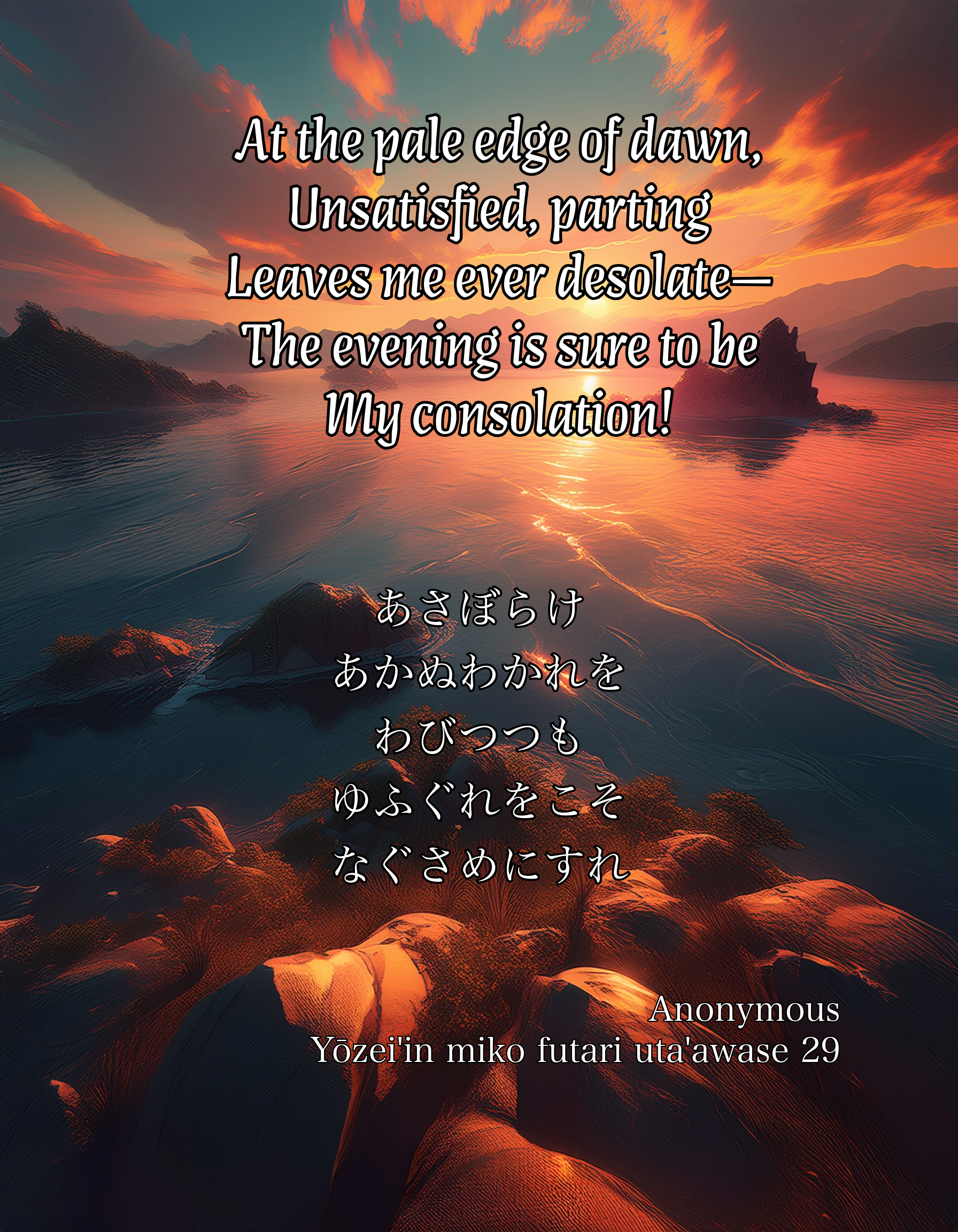
あさぼらけあかぬわかれをわびつつもゆふぐれをこそなぐさめにすれ

asaborake
akanu wakare o
wabitsutsu mo
yūgure o koso
nagusame ni sure
At the pale edge of dawn,
Unsatisfied, parting
Leaves me ever desolate—
The evening is sure to be
My consolation!

29