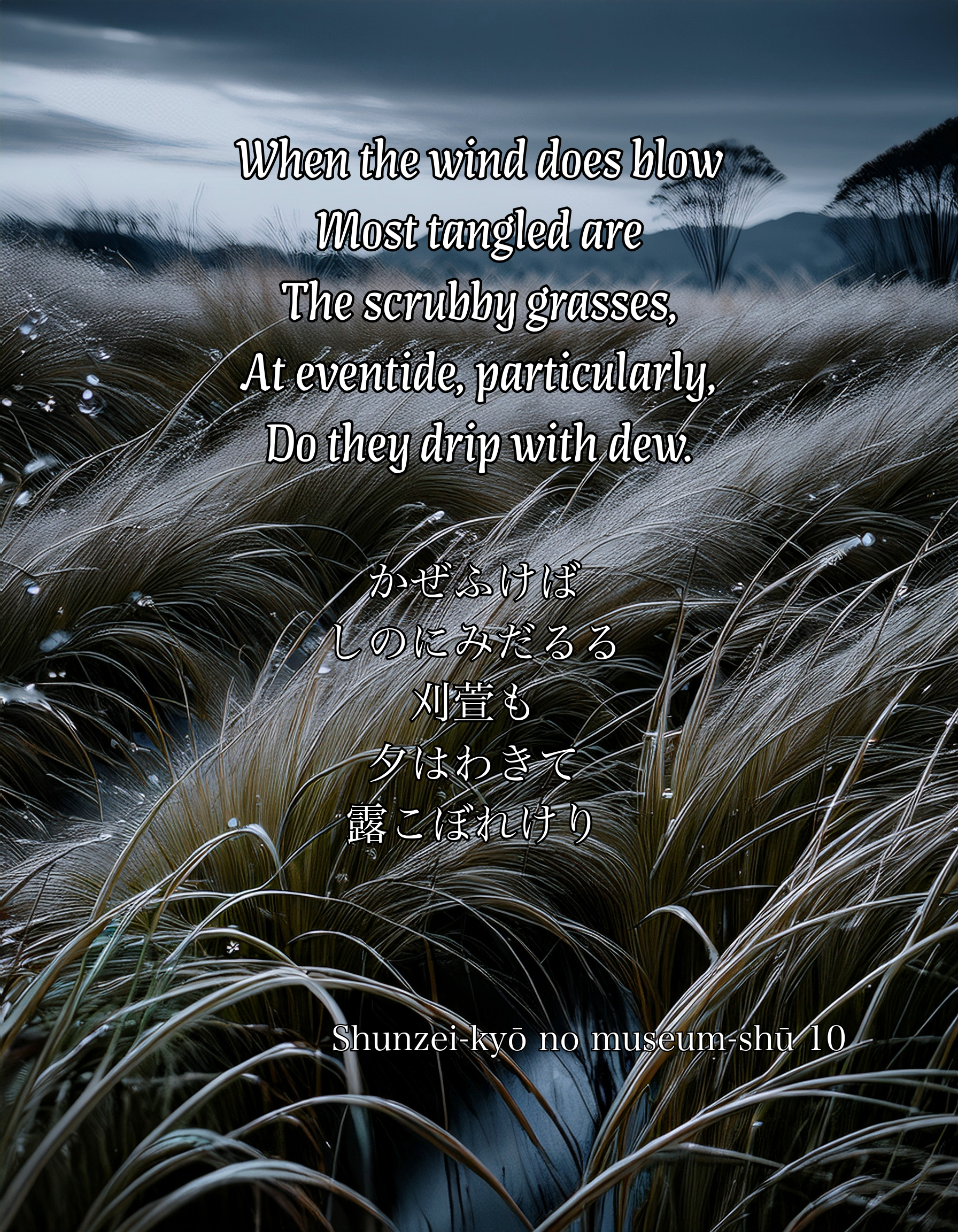
kaze fukeba shino ni midaruru karukaya mo yū wa wakite tsuyu koborekeri
When the wind does blow Most tangled are The scrubby grasses, At eventide, particularly, Do they drip with dew.[i]
10
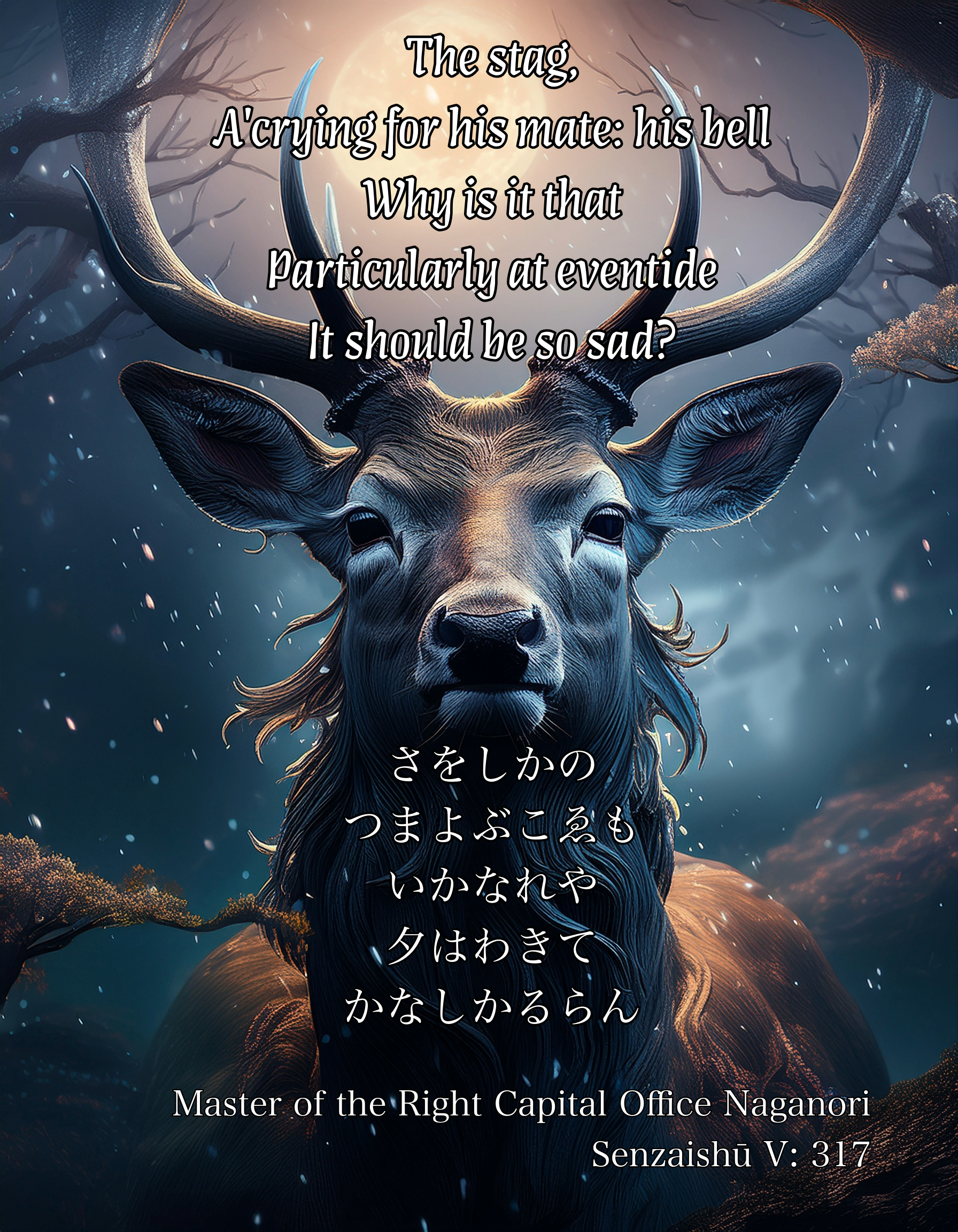
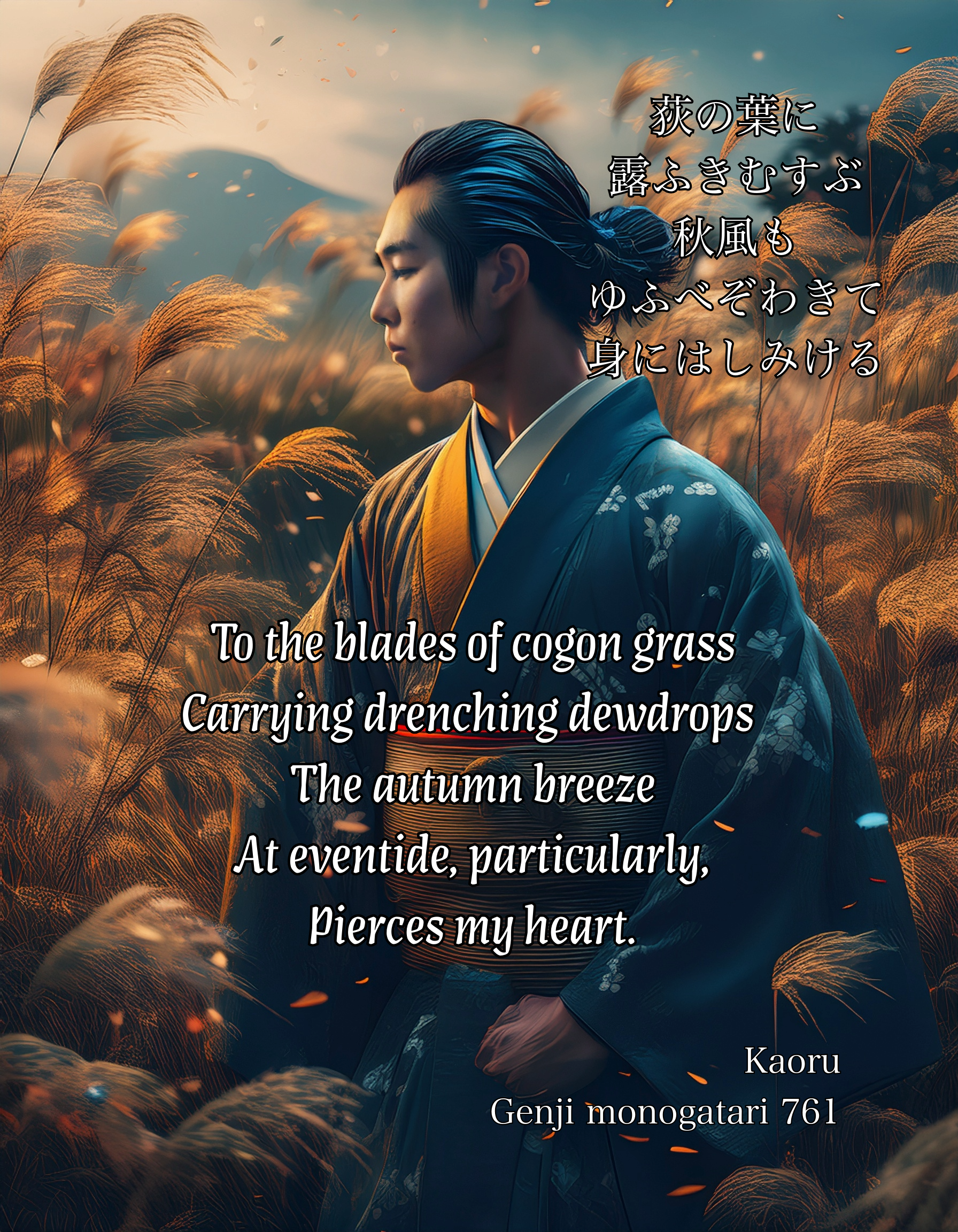
[i] See: 荻の葉に露ふきむすぶ秋風もゆふべぞわきて身にはしみける ogi no ha ni/ tsuyu fukimusubu / akikaze mo / yūbe zo wakitem / mi ni wa shimikeru‘To the blades of cogon grass / Carrying drenching dewdrops / The autumn breeze / At eventide, particularly, / Pierces my heart.’ Kaoru (Genji monogatari 761); and: Composed as a poem on stags. さをしかのつまよぶこゑもいかなれや夕はわきてかなしかるらん saoshika no / tsuma yobu koe mo / ika nare ya / yū wa wakite / kanashikaruran ‘The stag, / A’crying for his mate: his bell / Why is it that / Particularly at eventide / It should be so sad?’ Master of the Right Capital Office Naganori (Senzaishū V: 317)
kaze samumi yūkage kusa ni kakuroete hataorumushi no koe kikoyu nari
Chill the wind Upon the evening grasses, from Whence, concealed, The crickets’ Cries I hear.
Chikafusa 15
Right
誰がためとあやめも見えぬ夕ざれにはたおる虫の声聞ゆらん
ta ga tame to ayame mo mienu yūzare ni hataorumushi no koe kikoyuran
For whose sake Amidst the gloam Of eventide, might The crickets’ Cries I hear?
Lady Hȳoe 16
At present, ‘Amidst the gloam / Of eventide’ appears to have a bit more conception than ‘the evening grasses, from / Whence, concealed, / The crickets’.